


VIOOH today added more than 38,000 American digital screens to its supply-side platform through a partnership with Screenverse, a monetisation partner that represents outdoor media owners rather than owning the screens itself. The inventory generates over 7.7 billion monthly impressions, according to the announcement issued from London on 25 August 2026. It amounts to roughly 27% of the network Screenverse says it controls.
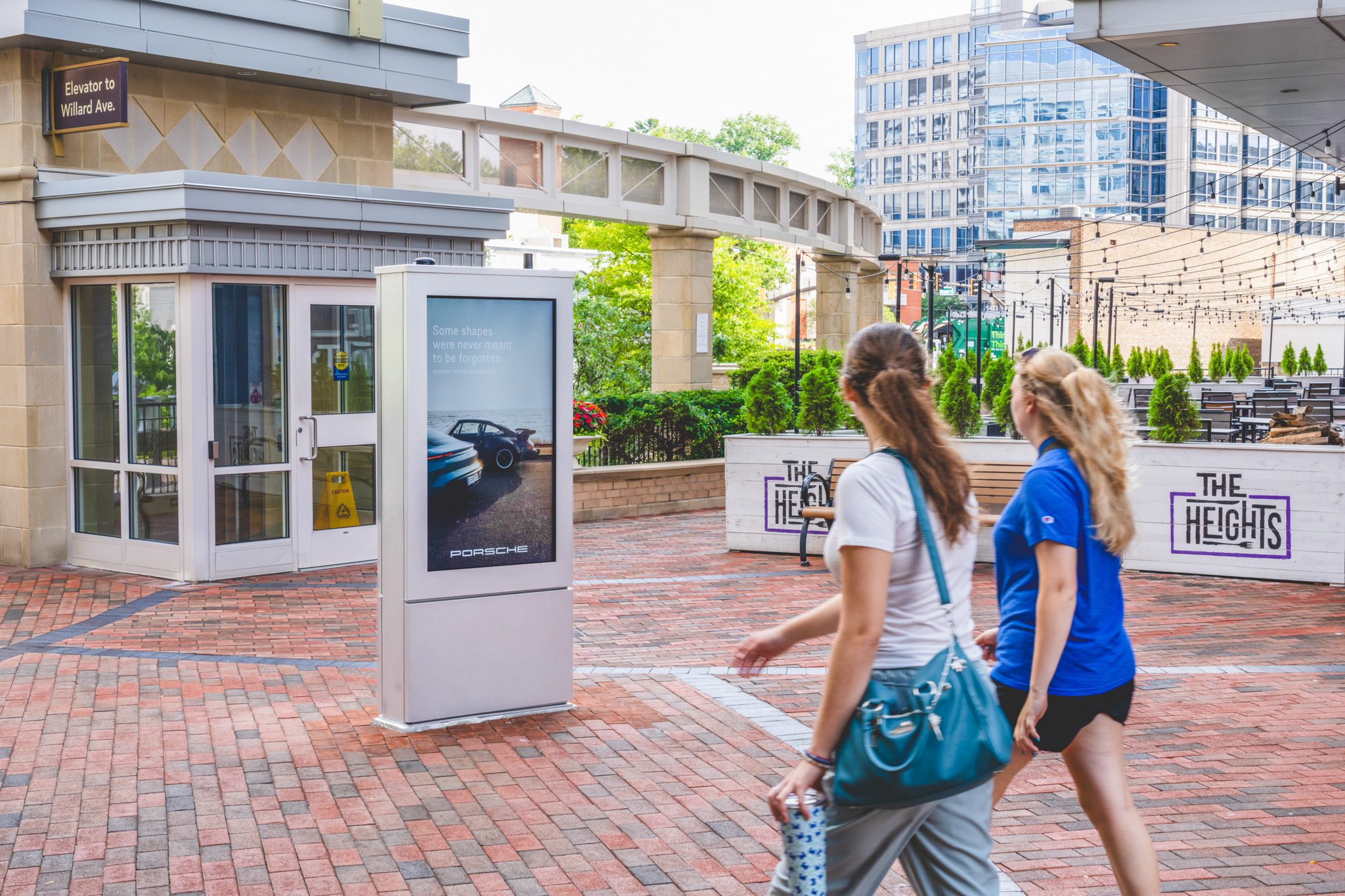
The arrangement continues a pattern of American supply accumulation that has defined VIOOH's commercial activity for the past year. What separates this deal from most of its predecessors is the counterparty. Screenverse does not own billboards. Established in 2020, the company describes itself as a partner for DOOH media owners, specialising in monetisation and ad management systems that scale programmatic revenue for the operators whose screens it represents.
That distinction carries practical weight for buyers. An integration with a media owner brings a defined, exclusive pool of panels into programmatic reach. An integration with an aggregation and monetisation layer brings a portfolio assembled from multiple owners, each of whom may hold separate relationships with other platforms.
What the integration covers
According to VIOOH, the partnership delivers access to more than 38,000 digital screens across the United States. Inventory sits across major markets including New York, Los Angeles, Chicago, Washington D.C., Dallas-Fort Worth and Philadelphia.
Screenverse brings inventory spanning retail, residential and office environments, alongside transit, entertainment and healthcare venues. The company states that its full network runs to more than 140,000 digital screens across 29 networks, covering billboards, urban panels, retail sites and residential buildings.
The gap between those two figures is the most concrete unanswered question in the announcement. The 38,000 screens made available to VIOOH represent approximately 27% of the network Screenverse claims. Neither company has disclosed which networks are included, which are excluded, or whether the remaining inventory becomes available on any timetable. The release contains no phased rollout, no financial terms and no exclusivity provision.
The impression arithmetic
Divide 7.7 billion monthly impressions by 38,000 screens and the result is roughly 202,600 impressions per screen per month. That number is diagnostic. It places the Screenverse inventory firmly in the indoor and place-based category rather than the roadside bracket.
The comparison with VIOOH's own recent American deals makes the point. The OUTFRONT partnership announced in March 2026 brought 18 billion monthly impressions from 7,600 screens, a per-screen yield of roughly 2.37 million. Those are roadside billboards, street furniture and transit displays positioned in front of continuous vehicle and pedestrian traffic.
By contrast, the Vengo integration from August 2025 produced 13 billion monthly impressions from 65,000 screens, or exactly 200,000 per screen. Firefly's 60,000 vehicle-mounted screens, added in April 2026, generated approximately 216,700 each. The Screenverse figure sits between them.
For a planner building reach curves, that ratio matters more than the headline impression total. High-yield roadside panels deliver frequency against broad populations. Lower-yield indoor screens deliver dwell time against narrower, more defined audiences. The two behave differently inside a campaign, and 7.7 billion impressions distributed across 38,000 low-yield placements is not interchangeable with 7.7 billion drawn from a smaller roadside set.
The executives on record
Gavin Wilson, Global Chief Commercial Officer at VIOOH, framed the deal in terms of geographic position. He described the United States as "one of the most important programmatic DOOH markets globally," and characterised the Screenverse network as offering buyers "a fast, flexible route to premium inventory in the spaces that matter most."
Montana Accavallo, Senior Vice President of Programmatic and Client Strategy at Screenverse, described the objective as making "our premium inventory available through all the pathways our clients prefer to buy."
Accavallo also stated that the collaboration works by "complementing our existing platform relationships." That clause is the single most operationally significant line in the announcement, and it confirms what the aggregator model implies. Screenverse inventory remains available through other buying paths. The VIOOH integration adds a route; it does not replace the ones already in place.
Why non-exclusivity is a working concern
Multi-homed supply is standard practice in programmatic display and video, and it is becoming standard in outdoor. The consequence is that the same physical screen can be reachable through several supply-side platforms at once, each presenting it as newly available inventory.
Buyers running budget across more than one platform therefore face a duplication question the announcement does not address. If a Screenverse-represented screen in Chicago is accessible through VIOOH and through a competing route simultaneously, a campaign activated on both paths can bid against itself. Neither company has published deal identifiers, network-level mapping or any documentation that would let a trading desk deduplicate at the screen level.
The same issue applies inside VIOOH's own American supply. The platform has spent eighteen months assembling overlapping inventory pools: Vengo's 65,000 indoor screens, Dolphin OOH's 5,000 grocery and transit placements added in January 2026, Atmosphere TV's 60,000 place-based streaming venues, BIG OUTDOOR's large-format sites, OBM's 2,281 urban panels and Firefly's mobile fleet. Because Screenverse represents third-party media owners, some proportion of its 38,000 screens may already have reached VIOOH through one of those earlier integrations. The announcement does not quantify the overlap or state that none exists.
VIOOH's expanding market footprint
The company reports that it now trades programmatically in 46 markets and connects to more than 50 demand-side platforms globally. That market count has moved quickly. Coverage from November 2025 recorded 35 markets. By June 2026 the figure stood at 37. Nine additional markets have been added in the eleven weeks since.
VIOOH launched in 2018 with JCDecaux backing and headquarters in London. Its parent group's reporting supplies the clearest available read on whether the supply expansion is converting into revenue. JCDecaux reported first-half 2026 programmatic revenue of 102.8 million euros, up 30.9% organically and equal to 12.3% of digital sales, against 10.1% a year earlier.
The geographic build-out has run in parallel across continents. JCDecaux Ireland brought 288 screens and 32% of the Irish digital market into programmatic reach in February 2026. VENDO Media opened more than 550 Canadian billboards in May. i-media connected 1,200 British motorway screens generating 2.9 billion monthly impressions in June. Abode Media added residential building interiors in London, Manchester and Birmingham. JCDecaux completed programmatic coverage across 4,600 Latin American screens in July.
Each addition follows the same commercial logic. New inventory increases the addressable universe for demand-side platforms already integrated with VIOOH, without requiring any of them to build a fresh technical connection.
The demand backdrop
American outdoor spending has been rising, and the digital segment has been doing the rising.
United States out-of-home advertising revenue reached $3.16 billion in the second quarter of 2026, up 10.7% and the first quarter above $3 billion, according to figures from the Out of Home Advertising Association of America. Digital out-of-home rose 18.5% year over year within that total and accounted for 38.4% of quarterly revenue. Full-year 2025 revenue set a record at $9.46 billion.
Agency-tracked spending shows a similar split on a different base. Guideline projected US out-of-home spend of $4 billion for 2026, with digital growing 14.5% against 1.5% for traditional formats. The two datasets measure different things and produce different absolute levels, but they agree on direction.
The Guideline analysis also identified a specific constraint: limited DOOH inventory acting as a structural brake on adoption. Supply-side integrations of the kind announced today address exactly that bottleneck, which is the strongest available argument for why partnerships of this shape keep appearing.
Demand-side intent has been documented separately. VIOOH's own 2026 State of the Nation report, based on a survey of 1,050 advertisers and agencies conducted with MTM, forecast programmatic DOOH featuring in 48% of campaigns globally within 18 months, up from 34%. American respondents projected the steepest trajectory of any market surveyed, reaching 52% adoption, with average investment uplift of 49%.
Those numbers originate with a supplier that benefits from the trend they describe. They function as a statement of commercial intent more reliably than as independent measurement.
What the announcement does not contain
The release describes buyer benefits in general terms: enhanced flexibility, precision targeting and improved efficiency through an established programmatic buying workflow. It names no supported transaction types. Whether Screenverse inventory trades through open auction, private marketplace, preferred deals or programmatic guaranteed is unstated.
Also absent: any measurement or attribution framework, any creative specification, any pricing indication, any statement on audience data sources, and any breakdown of the 38,000 screens by environment. A media planner cannot determine from the announcement how many of those screens sit in healthcare waiting rooms versus office lobbies versus retail corridors, though those environments carry materially different audience profiles and dwell characteristics.
Neither company disclosed a live date. The wording indicates buyers can access the inventory now.
Why this matters for media buyers
The practical effect is incremental rather than structural. American programmatic outdoor supply has been consolidating onto a small number of platforms for two years, and a further 38,000 screens does not alter the shape of that market.
What it does alter is the calculation of how much American DOOH inventory a single VIOOH connection reaches. For an agency that has already completed one integration, the marginal cost of adding these screens to a plan is close to zero. That is the mechanism by which supply-side platforms accumulate value, and it explains the cadence of announcements rather than the significance of any individual one.
The measurement gap remains the constraint that partnership announcements do not resolve. Research published in October 2025 found out-of-home delivering a marginal return of $7.58 per incremental dollar while capturing under 1% of media budgets. The distance between that return figure and that budget share has persisted through every integration announced since. Screens becoming buyable is a necessary condition for closing it, and demonstrably not a sufficient one.
Timeline
- 2018 - VIOOH launches in London with JCDecaux backing
- 2020 - Screenverse is established as a monetisation and ad management partner for DOOH media owners
- 26 August 2025 - VIOOH partners with Vengo, adding 65,000 US screens and 13 billion monthly impressions, representing 9% of the US digital OOH market
- 24 October 2025 - Research finds out-of-home delivering $7.58 marginal return per incremental dollar against under 1% of media budgets
- 5 November 2025 - BIG OUTDOOR integrates large-format US inventory into VIOOH's platform
- 6 November 2025 - VIOOH enters Brazil through RZK Digital, trading in 35 markets at that point
- 20 November 2025 - VIOOH reports 0.041g CO2e per impression for 2024
- Full year 2025 - US out-of-home revenue reaches a record $9.46 billion, according to the OAAA
- 8 January 2026 - VIOOH adds 5,000 Dolphin OOH screens across US grocery stores and transit hubs
- 15 January 2026 - Atmosphere TV brings 60,000 place-based streaming venues to VIOOH
- 24 February 2026 - VIOOH and JCDecaux Ireland open 32% of the Irish digital OOH market to programmatic buyers
- 9 March 2026 - OUTFRONT connects 7,600 screens and 18 billion monthly impressions, covering roughly 25% of the US DOOH market
- 9 March 2026 - Guideline projects US out-of-home spend of $4 billion for 2026, digital growing 14.5%
- 21 March 2026 - VIOOH's State of the Nation report forecasts pDOOH in 48% of global campaigns within 18 months
- 26 March 2026 - OBM adds 2,281 urban US screens and 6.3 billion monthly impressions
- 23 April 2026 - Firefly puts 60,000 vehicle-mounted screens inside VIOOH's SSP
- 6 May 2026 - Abode Media opens 250 UK residential building screens to programmatic buyers
- 12 May 2026 - VENDO Media brings more than 550 Canadian billboards into programmatic reach
- 14 June 2026 - i-media connects 1,200 UK motorway screens delivering 2.9 billion monthly impressions
- 27 June 2026 - VIOOH reports its Seller Agent automated more than 100 DOOH deals in the first half, trading in 37 markets
- 20 July 2026 - JCDecaux completes programmatic coverage across 4,600 Latin American screens
- 30 July 2026 - JCDecaux reports first-half programmatic revenue of 102.8 million euros, up 30.9% organically
- 18 August 2026 - OAAA reports second-quarter US out-of-home revenue of $3.16 billion, digital up 18.5%
- 25 August 2026 - VIOOH and Screenverse announce a partnership covering more than 38,000 US screens and over 7.7 billion monthly impressions
Related PPC Land coverage
- VIOOH and OUTFRONT just unlocked a quarter of the US DOOH market - The March 2026 deal that brought 7,600 roadside and transit screens and 18 billion monthly impressions into programmatic reach.
- VIOOH partners with Vengo for US programmatic advertising expansion - The August 2025 integration covering 65,000 indoor screens and 9% of the US digital outdoor market.
- Firefly puts 60,000 moving screens inside VIOOH's programmatic SSP - Vehicle-mounted inventory with a per-screen impression yield comparable to the Screenverse network.
- VIOOH locks down 5,000 screens in US grocery stores and transit hubs - The Dolphin OOH partnership covering ten American metropolitan markets.
- VIOOH adds 2,281 urban US screens and 6.3bn monthly impressions via OBM deal - Urban panel and interactive kiosk formats added in March 2026.
- VIOOH just unlocked 60,000 streaming TV screens in bars and gyms for programmatic ads - The Atmosphere TV integration covering place-based streaming venues.
- BIG OUTDOOR adds US inventory to VIOOH programmatic platform - Large-format American signage brought onto the platform in late 2025.
- pDOOH investment set to surge 44% as programmatic takes over half of campaigns - VIOOH's survey of 1,050 advertisers projecting 52% US adoption.
- US out-of-home ad spend hits $4B in 2026 - but digital screens face a slowdown - Guideline data identifying limited inventory as a structural constraint on DOOH growth.
- VIOOH's Seller Agent automated 100+ DOOH deals in H1 2026 - How VIOOH assembles curated packages from its accumulated supply layer.
- JCDecaux gains 5.7% revenue growth as profit nearly doubles in H1 - Parent company results showing programmatic revenue at 12.3% of digital sales.
- Out-of-home delivers higher ROI than digital channels, research shows - The $7.58 marginal return finding against a sub-1% budget share.
Summary
Who: VIOOH, the London-based digital out-of-home supply-side platform launched in 2018 with JCDecaux backing, and Screenverse, an American monetisation and ad management partner for DOOH media owners established in 2020. Gavin Wilson, Global Chief Commercial Officer at VIOOH, and Montana Accavallo, Senior Vice President of Programmatic and Client Strategy at Screenverse, are quoted in the announcement.
What: A partnership giving VIOOH buyers programmatic access to more than 38,000 American digital screens generating over 7.7 billion monthly impressions. The inventory spans retail, residential, office, transit, entertainment and healthcare environments, and represents roughly 27% of the 140,000-screen network Screenverse says it operates across 29 networks. Screenverse retains its existing platform relationships, meaning the inventory is not exclusive to VIOOH.
When: Announced on 25 August 2026 from London, with inventory described as accessible to buyers immediately. No phased rollout, financial terms or exclusivity provisions were disclosed.
Where: Across the United States, with named coverage in New York, Los Angeles, Chicago, Washington D.C., Dallas-Fort Worth and Philadelphia. VIOOH now trades programmatically in 46 markets and connects to more than 50 demand-side platforms.
Why: American digital out-of-home revenue grew 18.5% year over year in the second quarter of 2026 to hold 38.4% of a $3.16 billion quarterly market, while Guideline analysis has identified limited inventory as a structural constraint on adoption. Adding supply is the mechanism through which VIOOH increases the value of a single platform connection for demand-side partners already integrated with it. The deal leaves duplication questions unresolved, since Screenverse represents third-party media owners whose screens may already be reachable through VIOOH's earlier American integrations.


Discussion