
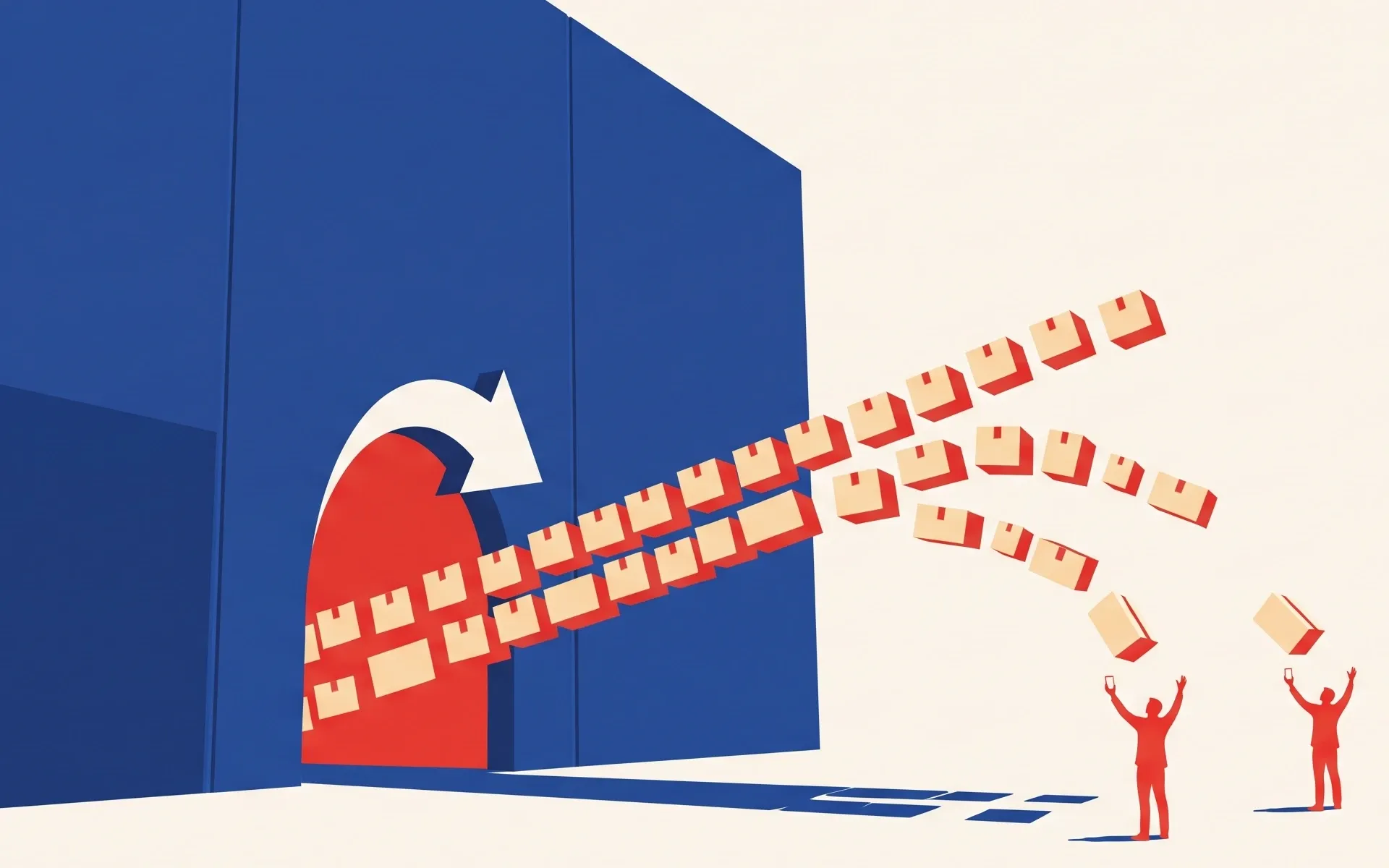

Amazon revised its off-Amazon advertising documentation today, adding creators to the list of destinations where Sponsored Products ads can run. A notice sent to advertisers sets August 10, 2026 as the start date, and campaigns are enrolled by default at their existing bids and budgets.
Amazon Ads updated the support article titled Understand Sponsored Products off-Amazon advertising on August 4, 2026. The revision is short but material: the page now states that Sponsored Products campaigns extend beyond Amazon to premium sites, apps, and creators. Until this update, the offsite inventory described in Amazon's own documentation consisted of publisher properties and applications.
The wider notice reached advertisers by email. Two Amazon advertising practitioners published the message on LinkedIn, both reproducing the same text. According to the notice, Sponsored Products campaigns may begin appearing off Amazon through creators in the Amazon Influencer Programme starting on 10 August. Current campaign settings, bids and budgets apply, and the notice states that advertisers do not need to take any action.
What the documentation now covers
The support page defines the mechanism in operational terms. Amazon uses an advertiser's existing targeting, bid, and budget settings to place ads where the system judges them most relevant. Placement is triggered when customer behaviour and browsing patterns signal interest in a product, based on factors including page context and prior shopping intent. A click on a third-party site sends the shopper to the product detail page on Amazon.
Geographic availability is listed separately. Off-Amazon placements are open to advertisers in Brazil, Canada, India, Mexico, the United States, the Middle East, North Africa and Turkey, and select European Union countries, according to the page. The United Kingdom does not appear on that list, which sits awkwardly beside the British spelling used in the advertiser notice. One commenter on the LinkedIn thread, Jon Derkits, raised exactly that point, writing that he wondered why the British spelling of the word program appeared in the announcement. Amazon has not published an explanation.
Four mechanics govern the creator layer
According to the notice, creators with verified engagement and Amazon sales history can now select advertised products to feature in product reviews, editorial content and buying guides. The document sets out four steps.
Amazon recommends products to creators aligned with a brand, based on relevance and engagement history. Creators then self-select which products to feature, and advertisers can exclude specific creators. Clicks send shoppers to Amazon, where product details and a purchase option appear. Standard Sponsored Products billing applies, and advertisers pay per ad click.
The exclusion control is the only advertiser-side lever named in the notice. Nothing in the text describes an account-level switch that removes creator inventory altogether, and nothing describes what creators are paid.
Destaney Wishon, chief executive of btr media, framed the release as a first step rather than a finished product. "They're testing lightweight partnerships first," she wrote in her post, describing the mechanism as a self-serve layer where creators with verified engagement can opt into an advertiser's products rather than a set of negotiated creator deals. She also placed the move against the competitive backdrop: "While Instagram and TikTok have owned social commerce for years, Amazon has been left behind."
Jon Elder, an Amazon and Walmart advisor, published the same notice with a different reading. "The rumors are true, and Amazon is officially pushing your ads outside the house," he wrote, adding that existing campaigns are automatically opted in and that Amazon is already matching ASINs to creators algorithmically. Elder further asserted that Gold and Platinum tier creators are picking up recommended products because Amazon is offering guaranteed earnings-per-click. That claim about creator compensation does not appear in the Amazon notice or in the support documentation, neither of which addresses how creators are paid.
Bids carry over, some adjustments do not
The bidding rules are set out plainly on the support page, and they matter more than the headline. An advertiser's maximum bid applies to all clicks, whether they happen on or off Amazon. Bid adjustments for Top of Search and Product Pages do not apply to off-Amazon placements. Dynamic bidding and other bidding strategies do apply. All clicks count toward the overall campaign budget, advertisers pay per click for every ad interaction regardless of how publishers are paid, and cost per click never exceeds the maximum bid.
Two settings sit under the campaign settings menu, in a section labelled Settings for ads served off Amazon. Increase reach is the default, and it uses a campaign's targeting settings to increase impressions and sales opportunities off Amazon. Limit off-Amazon spend controls spend by limiting ad delivery off Amazon, which the page notes may reduce impressions and sales opportunities. The setting can be changed at any point during a campaign.
Managing that toggle across large accounts became easier two months ago. Amazon added an Off-Amazon ad serving column to Sponsored Products bulksheets on June 8, 2026, giving United States advertisers a way to update offsite serving behaviour across many campaigns at once rather than one at a time. That column arrived before creators were named as inventory, and it now governs a materially different mix of placements than it did in June.
Inferred search terms on placements with no query
The limitations section contains the most technically consequential paragraph on the page. When an ad appears in an off-Amazon placement that has no search context, described on the page as social sites, Amazon will infer and provide a search term with customer context that best matches the advertised product. Those keywords qualify for negative targeting.
The practical effect is that search term reports for these campaigns will contain queries no shopper ever typed. They are system-generated descriptors attached to a browsing impression, exposed in reporting and available as negative targets. Amazon also states that certain campaign controls are not available for offsite placements, without enumerating which ones.
That inference layer is what separates creator placements from search placements on the same campaign. Elder put the distinction in blunt terms: "Off-Amazon traffic does not behave like a high-intent shopper typing 'garlic press' directly into the search bar. This is top-of-funnel, contextual browsing."
Reporting, deny lists and MRC filters
Performance data appears in three places, according to the documentation. The Sponsored Products Placement Report sits inside Campaign manager under Measuring and Reporting. The Amazon Ads API exposes the same view through the POST Reporting Reports endpoint using the Placement Classification metric. Campaign manager console reports carry MRC-accredited filter settings.
On brand safety, the page states that Amazon automatically reviews and blocks unsafe third-party websites and apps, and that advertisers can exclude specific sites or apps through deny list preferences. Whether individual creator accounts are addressable through the same deny list mechanism, or only through the creator exclusion described in the advertiser notice, is not specified.
Laurie Kacinski, writing in the thread beneath Wishon's post, pointed to a different exposure: "Old images, weak claims, or price gaps in creator content may send shoppers to an offer that does not match the brand promise." The point turns on catalogue hygiene rather than placement quality, since the destination is always the advertiser's own product detail page.
The European disclosure attached to offsite inventory
For campaigns serving ads in the European Union, the support page states that a pricing transparency report is available in the downloadable reports section, providing data on advertiser and publisher fees as part of Digital Markets Act compliance. The page adds a note that third-party publishers may receive additional funds from Amazon for offsite ad placements.
That sentence describes a payment flowing to publishers beyond the auction clearing price, disclosed inside a regulatory reporting artefact rather than in the main body of the product documentation. Amazon introduced pricing transparency reporting for its demand-side platform in March 2024, alongside a comparable set of disclosures from Google, in response to the same legislation. The extension of that reporting to Sponsored Products offsite inventory means EU advertisers can see fee breakdowns for placements they were enrolled in by default.
Practitioners divide over what the traffic will do
Reaction beneath both posts concentrated on measurement rather than reach. Kamini Sethi wrote that it will be interesting to see which product categories actually benefit from influencer-driven traffic versus traditional search intent, adding that she does not expect the winners and losers to be the same. Kagan Adair made a related point about goal-setting: "Different traffic sources need different goals because someone discovering a product behaves differently from someone already looking for it."
Sidra Fatima framed the risk in margin terms, noting that more reach is not always better when conversion quality and margins are not being tracked. Prabhat S. read the mechanism more favourably, describing it as brand outreach that improves without the advertiser taking any action.
Elder, responding in his own thread, told readers to audit their catalogue and opt in only the SKUs that perform well for lifestyle social media content, warning that advertising cost of sales would otherwise deteriorate. That framing assumes SKU-level control that the published documentation does not describe; the settings named by Amazon operate at campaign level.
Why this matters for the marketing community
The commercial context is a business that has been compounding faster than its peers. Amazon reported advertising services revenue of $19.8 billion for the second quarter of 2026, a 26% increase, with chief executive Andy Jassy naming Sponsored Products as the largest offering and a key driver of growth. Any expansion of Sponsored Products inventory changes the supply side of the format carrying most of that revenue.
Offsite Sponsored Products is not new. Amazon [extended the format to apps and websites including Pinterest, BuzzFeed, Hearst Newspapers, Raptive and Ziff Davis titles in October 2023](https://ppc.land/amazon-expands-sponsored-products-campaigns-to-apps-and-websites/), on the same automatic-participation basis. What changes on August 10 is the nature of the surface. Publisher inventory is contextual and editorial; creator content is personal, and the endorsement signal attached to a product review or buying guide is qualitatively different from a display slot beside an article.
Amazon's record in social commerce gives the move additional weight. Amazon Posts, the brand-content feed that ran on product pages, was discontinued with a complete service shutdown on July 31, 2025. Wishon referenced the closure of Inspire, the short-form video surface, and described Creator Connections as slow moving, calling the current rollout a sign of life for the company's social commerce work. The Influencer Program route sidesteps the problem that sank the earlier attempts, since it places advertiser products inside content that already has an audience rather than asking shoppers to visit a new destination.
Measurement remains the open question. Attribution for offsite conversions is structurally harder than for onsite clicks, and the retail media sector has been signalling that inconsistency is its main constraint on further investment. IAB Australia found that inconsistent metrics across networks were the largest obstacle to confident spending even as buyers lifted budgets. Creator placements add a second layer to that problem: the traffic is top-of-funnel, the search terms are inferred rather than observed, and the spend sits in the same budget line as high-intent search clicks.
Six days separate the documentation update from the start date. The controls that exist are the two campaign-level settings, the creator exclusion, and the deny list. The reporting that exists is the placement report and the Placement Classification metric in the API. Everything else about how creator inventory performs against search inventory will have to be measured after the fact.
Timeline
- October 30, 2023 - Amazon expands Sponsored Products to premium apps and websites including Pinterest, BuzzFeed, Hearst Newspapers, Raptive and Ziff Davis brands
- March 23, 2024 - Amazon introduces a pricing transparency report for its demand-side platform in response to the Digital Markets Act
- July 31, 2025 - Amazon Posts reaches complete service shutdown after deprecation
- June 8, 2026 - Amazon adds an Off-Amazon ad serving column to Sponsored Products bulksheets for United States advertisers
- July 30, 2026 - Amazon reports second-quarter advertising services revenue of $19.8 billion, up 26% year-over-year
- August 4, 2026 - Amazon Ads updates the Understand Sponsored Products off-Amazon advertising support page to include creators among offsite destinations
- August 10, 2026 - Sponsored Products campaigns begin appearing off Amazon through creators in the Amazon Influencer Program
Related PPC Land coverage
- Amazon expands Sponsored Products campaigns to Apps and Websites - Documents the October 2023 launch of offsite Sponsored Products across publisher properties on an automatic-participation basis.
- Amazon adds off-Amazon spend toggle to Sponsored Products bulksheets - Covers the June 2026 bulksheets column that lets United States advertisers change offsite serving settings at scale.
- Amazon advertising gains 26% to $19.8 billion as sports inventory sells out - Reports the second-quarter 2026 results in which Sponsored Products was named the largest advertising offering.
- Amazon Posts officially discontinued - Details the shutdown of the brand-content feed that represented an earlier Amazon attempt at social commerce.
- Transparency: New reports on Google and Amazon's advertising platforms - Explains the Digital Markets Act reporting that now extends to offsite Sponsored Products placements in the European Union.
- IAB Australia: retail media faces metrics gap as 60% of buyers lift spend - Sets out the measurement inconsistency that buyers name as the main constraint on retail media investment.
- Amazon's ad business crossed $70B TTM - and that's not even the biggest story - Provides the first-quarter 2026 revenue context and the structural position of sponsored listings within it.
Summary
Who: Amazon Ads, affecting advertisers running Sponsored Products campaigns in Brazil, Canada, India, Mexico, the United States, the Middle East, North Africa and Turkey, and select European Union countries, alongside creators enrolled in the Amazon Influencer Program.
What: Sponsored Products campaigns will begin serving inside content produced by creators with verified engagement and Amazon sales history, who self-select which advertised products to feature in product reviews, editorial content and buying guides. Existing campaign settings, bids and budgets carry over, campaigns are enrolled without advertiser action, and the named controls are a campaign-level choice between Increase reach and Limit off-Amazon spend, plus the ability to exclude specific creators.
When: Amazon updated its off-Amazon advertising support documentation on August 4, 2026, with the advertiser notice setting a start date of August 10, 2026.
Where: Creator content sits alongside premium sites and apps in Amazon's offsite inventory, with placements running outside Amazon properties and clicks routing to product detail pages on Amazon.
Why: Sponsored Products is the largest contributor to an advertising business that reached $19.8 billion in the second quarter of 2026, and extending it to creator content adds top-of-funnel, browsing-context inventory to a format built on purchase-intent search, with search terms inferred by Amazon rather than typed by shoppers on placements that carry no query.


Discussion