


Apple on October 5, 2026 told developers that any app or game submitted to the App Store from April 2027 will need to carry screenshots made for the iPhone Duo, and said apps optimized for the device can already be submitted ahead of its October 23 release, according to a post on its developer news page.
In Short
Apple has told app makers that apps and games sent to the App Store from April 2027 must come with pictures made for its iPhone Duo, and that apps built for the phone can be sent in already. Anyone who sells or promotes an app is affected, because the store page is where people decide whether to download. What changes is that another set of pictures has to be made for each submission, and Apple has published templates and content rules for them.
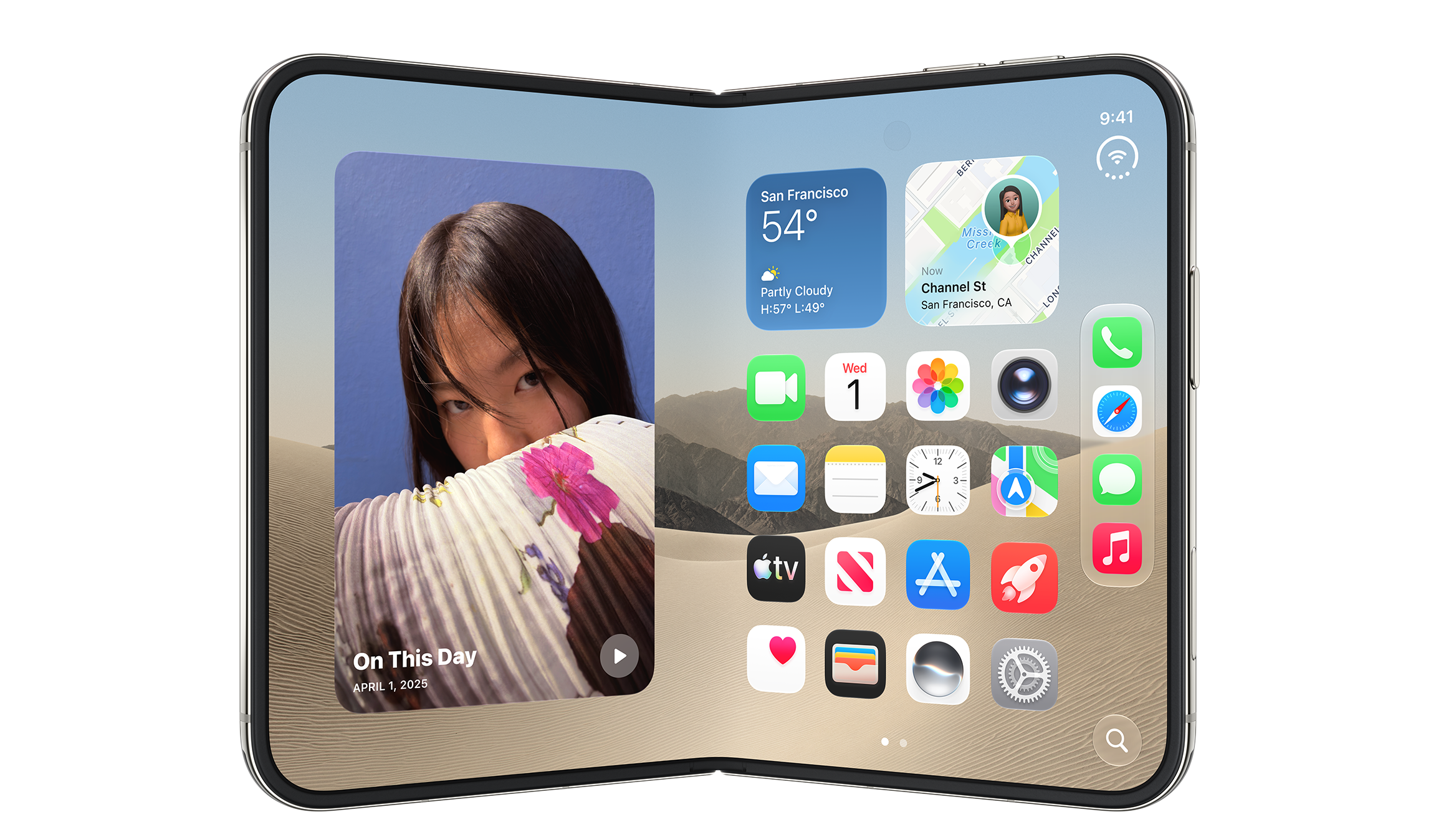
What the notice says
The post, titled "Prepare and submit your apps for iPhone Duo", lays out three tasks: build or recompile, prepare App Store assets, and submit. The iPhone Duo will be available to customers starting October 23, 2026, according to Apple, which leaves 18 days between the post and the release. Apple also said that apps and games optimized for the device can be submitted in App Store Connect at once. The one hard deadline in the post sits further out.
Build and recompile
The first instruction concerns tooling. Existing apps can be recompiled with Xcode 27.1, which, according to Apple, "adds development support for iPhone Duo". A tool called Device Hub is meant to show how an app behaves on the device "across all poses and orientations". Neither page lists the poses, so their number and nature remain undefined in the material Apple published.
A companion page titled "Get ready for iPhone Duo" gives a few hints through its video catalogue. Six videos cover design, app preparation, camera experiences, adaptive layouts, and the handling of multiple displays and scenes. Apple is also running workshops "around the world", has posted two days of group labs with more promised, and has opened question-and-answer threads on its developer forums for photos and camera work, SwiftUI and UIKit. The workshop text speaks of exploring "resizability for all screen sizes", wording that places the device inside a wider layout question rather than treating it as a one-off.
One inconsistency sits between the two pages. The news post tells developers to get the latest version of Xcode, while the overview page lists "Xcode 27.1 Release Candidate" and links to a page of betas. Neither document says whether a final Xcode 27.1 build exists.
Store assets
Apple said that updated screenshot and app preview specifications now cover its latest devices, the iPhone Duo included. Downloadable templates exist for product page headers and search result assets, as well as for app previews, screenshots and In-App Events. A preview tool in App Store Connect is meant to show how screenshots, headers and other metadata will look on an iPhone Duo product page.
The pages attached to the announcement contain no pixel dimensions. Those sit behind links labelled "View screenshot specifications" and "View app preview specifications", which makes the exact image sizes impossible to report from the notice itself.
Submission
The requirement itself takes one sentence. Starting April 2027, "any apps or games submitted will need to include screenshots for iPhone Duo", according to Apple. The post names no day within April. It also does not separate new listings from updates to existing apps, and the phrase "any apps or games submitted" leaves that question open. By the calendar, the requirement begins between five and six months after the device reaches customers.
The hardware behind the rule
The device was unveiled on September 9, 2026, as PPC Land reported on the day, with a starting price of $1,999, a 7.6-inch inner display and a 5.4-inch outer one. Pre-orders open on October 16, and the first wave of availability, on October 23, covers roughly 70 countries. A phone with two displays and several poses leaves open which views store images are meant to show, and the attached pages do not settle it. Apple's asset page carries the banner "assets optimized for iPhone Duo", yet the text beneath it describes general principles rather than device-specific rules.
Those principles still bear on the task. Apple asks that key elements be designed with a safe area in mind, to accommodate different devices and orientations, and that focal artwork sit in the centre of a composition to prevent clipping. Its advice under the heading "Keep it legible" notes that assets can appear differently across the App Store.
The asset rulebook
The best practices page, which the notice links, sorts store visuals into three groups. App previews and screenshots show an app or game in use. Creative assets, a separate class, highlight a brand, promote seasonal offerings or showcase new content, and appear in iOS 27 and iPadOS 27 and later. Limits carry over from existing practice: up to 10 screenshots and up to three app previews on a product page, with up to three of each able to surface in search results depending on orientation.
The content boundary is tight. Assets cannot carry specific prices, discounts, website URLs or copyright symbols. They cannot make claims that cannot be verified, show logos or references to other platforms or marketplaces, or reproduce Apple-designated recognitions such as Editor's Choice, App of the Day, Game of the Day or Apple Design Award winner. Everything displayed on the App Store "must meet a 4+ age rating", according to Apple, even when the app's own rating is higher. Games with violence may use action imagery but must avoid gore, graphic imagery and weapons pointed directly at a person or the audience.
Video carries its own rules. Clips autoplay and repeat, so a visible jump at the loop point recurs for every viewer. Audio is muted by default in most cases, so the visuals have to work in silence, and the poster frame, the still shown before playback, has to stand alone. In-App Events need two aspect ratios, 16:9 for the event card and 9:16 for the event details page, and one of seven badges: Challenge, Competition, Live Event, Major Update, New Season, Premiere or Special Event.
Apple offers templates in Figma, Photoshop, Pixelmator and Sketch. The Photoshop and Pixelmator files are split between header and search results variants, while the Figma and Sketch files are universal. PPC Land's coverage of the August 5 guidance named only Figma, Photoshop and Pixelmator, while the current page also lists Sketch, and neither source explains the difference.
Assets reach the store in one of two ways, according to Apple: alongside a new app version, or through the Asset Library in App Store Connect. The App Store Connect API handles uploads, and approved material appears in the library together with the placements where each item can be used. Custom product pages can use creative assets, and product page optimization can test alternative header visuals.
Why the marketing community has a stake
The creative assets format was first shown at WWDC26 on June 8, 2026, when PPC Land covered the Asset Library, the product page preview and the option to submit assets independently of an app update. Those features are optional. A device-specific screenshot set is different, because it attaches to every submission.
Context matters here. Apple has put the share of App Store downloads that follow directly after a search at nearly 65 percent, a figure PPC Land carried in January when Apple began adding multiple ad positions to search results, starting in the United Kingdom on March 3, 2026. Store images thus sit at the point where organic discovery and paid placements meet. Custom product pages, which PPC Land reported Apple tied to its search advertising in January 2022 with a ceiling of 35 pages at that time, extend the same asset pool into ad variations.
Localization compounds the work. Apple's guidance asks for text overlays in every language an app supports, so a new device class adds to a matrix of assets that already spans languages, orientations and placements. How much extra work that amounts to depends on specifications the attached pages do not print.
Several points remain unanswered. The notice does not say whether App Store Connect will accept existing iPhone images for the new device, whether updates to live apps must carry the new set, or how App Review will treat submissions that omit it. Apple has given roughly six months of notice, and the dimensions and rules sit one click away on pages not reproduced in the announcement.
Timeline
- January 2022 - Apple integrates custom product pages with Apple Search Ads, allowing up to 35 pages
- March 3, 2026 - Apple begins adding multiple ad positions to App Store search results in the United Kingdom
- June 8, 2026 - Apple shows creative assets, the Asset Library and the product page preview at WWDC26
- August 5, 2026 - Apple publishes App Store asset best practices and templates
- September 9, 2026 - Apple unveils the iPhone Duo at a starting price of $1,999
- October 5, 2026 - Apple posts its developer notice, stating that apps optimized for the device can be submitted
- October 16, 2026 - Pre-orders open for the iPhone Duo
- October 23, 2026 - The iPhone Duo becomes available to customers
- April 2027 - Submitted apps and games will need to include screenshots for the device
Related PPC Land coverage
- Apple's $1,999 iPhone Duo arrives without Siri AI in the EU - Covers the September 9, 2026 unveiling, pricing, displays and availability dates.
- Apple forces 4+ rating on App Store creative assets arriving this fall - Sets out the August 5, 2026 content rules, format limits and templates for creative assets.
- Apple turns to Google Gemini for Siri AI - and rewrites App Store marketing - Reports the June 8, 2026 WWDC26 keynote, including creative assets and the Asset Library.
- Apple will squeeze more ads into App Store search - here's what changes - Details the multiple ad positions that began rolling out on March 3, 2026.
- Apple integrates custom product pages with Apple Search Ads - Records the January 2022 link between custom product pages and ad variations.
Summary
Who: Apple, addressing developers, app publishers and marketing teams that manage App Store listings.
What: A developer notice stating that apps and games submitted from April 2027 will need to include screenshots for the iPhone Duo, together with Xcode 27.1 support, updated screenshot and app preview specifications, design templates and an App Store Connect preview tool.
When: The notice is dated October 5, 2026. The iPhone Duo reaches customers on October 23, 2026, and the screenshot requirement begins in April 2027.
Where: On the Apple Developer news page, in App Store Connect and across App Store product pages, search results and In-App Events.
Why: The notice prepares the App Store for a device with two displays and several poses, but it states no reason for the screenshot requirement itself. The documents leave open the dimensions, the treatment of updates and the enforcement approach.


Discussion