


Amazon on October 15, 2026 put two new Bee devices into its hardware line: Bee Frontier, a $74.99 wrist or clip-on wearable that summarizes conversations, and Bee Eclipse, a card-sized phone attachment from $99.99 that is not yet on sale. Both connect to Alexa+ and Amazon.com, and the Amazon.com link lets products mentioned in conversation appear as recommendations on the Amazon homepage.
In short
Amazon released a new wristband that listens to your conversations and turns them into notes, to-do lists and reminders, plus a version that sticks to the back of a phone. If you pay for the Pro plan and connect it to your Amazon account, things you mention out loud can show up as product suggestions on the Amazon homepage. Amazon says the audio is deleted right after processing and nobody at the company can read your transcripts, but the announcement leaves open how those shopping suggestions reach Amazon without Amazon seeing anything.

Two devices, two form factors
The announcement was published on Amazon's corporate news site on October 15, 2026, under the byline "Amazon Staff," with the headline "Amazon introduces 2 new AI products from Bee." It is written in Bee's voice. The first Bee device, Bee Pioneer, was "one of the original personal AI products to offer more than audio transcription," according to the post. Amazon acquired Bee in 2025, and in January 2026 the company shipped Actions, Daily Insights, Voice Notes and Templates to the device under Amazon ownership.
Bee Frontier is the direct successor. It can be worn on the wrist with a silicone band or clipped onto clothing. According to Amazon, it carries an IP67 water resistance rating, up to seven days of battery life and USB-C charging. It has dual microphones with what Amazon describes as "advanced noise filtering," intended to work "even in noisy environments like a crowded restaurant or open office." It comes in three colors: Onyx, Lavender and Sage.
The battery claim is framed as a feature of the product's design rather than a convenience. Bee Frontier "is designed to stay with you through a full week without interruption - allowing it to get smarter and more useful for you over time," according to the post. The longer the device runs, in other words, the more conversation it accumulates.
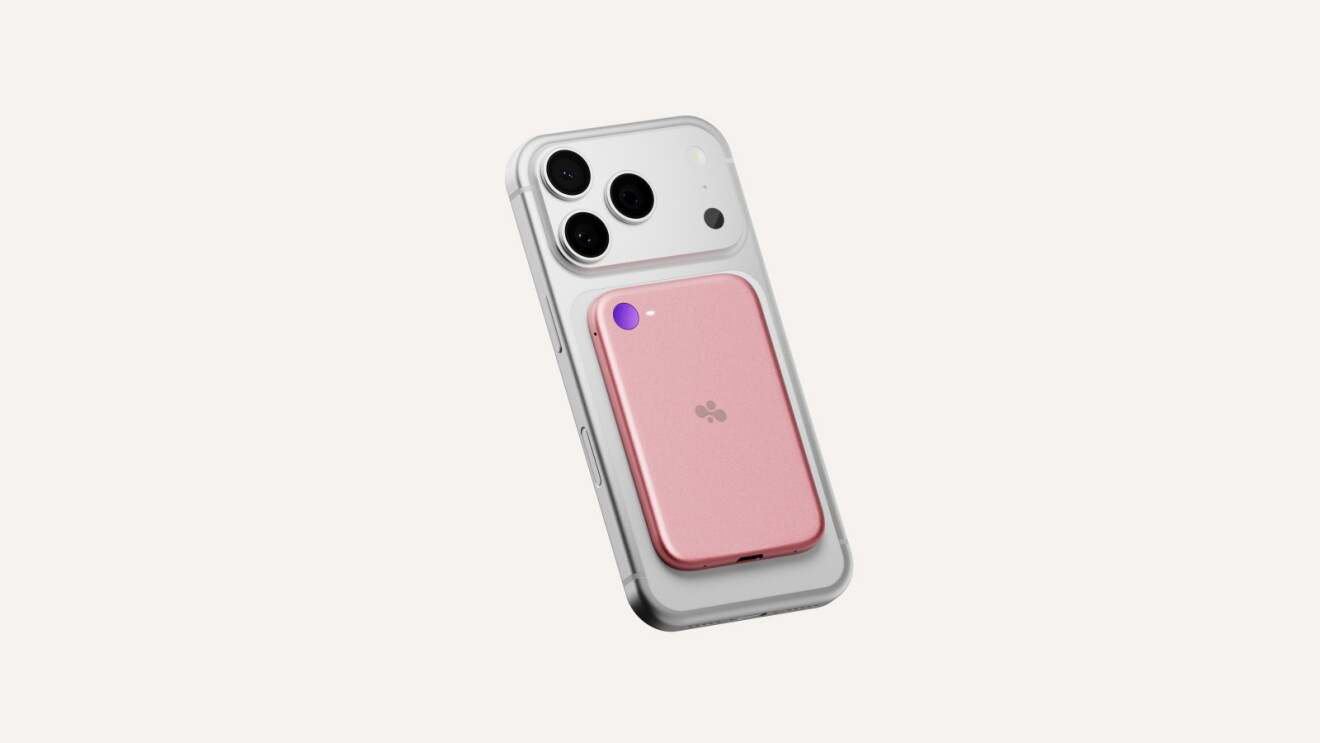
Bee Eclipse is the new form factor. Amazon describes it as "a slim, lightweight device about the size of a credit card that attaches to the back of your phone magnetically." Its battery lasts "more than 21 days" on a single charge, three times Frontier's stated maximum. The announcement does not say which phones the magnetic mount works with, or whether it relies on an existing standard such as Apple's MagSafe. The use case Amazon describes is the phone call: family members planning a vacation, with Eclipse capturing "preferred arrival times to favorite restaurants."
Eclipse is the one device in the announcement with a consent mechanism tied to other people. Users "are prompted to gain permission from call participants each time a recording is started," according to the post. No equivalent prompt is described for Frontier, which is designed for in-person conversations at meetings, cafes and offices.
Pricing and what the subscription covers
Bee Frontier is available now on Amazon.com for $74.99. Bee Eclipse "will be available soon, starting at $99.99" in Silver, Midnight, Honey and Blush. No launch date is given for Eclipse. The phrase "starting at" suggests more than one configuration, though the announcement lists only colors and does not say what a higher price would buy.
The hardware price is not the whole cost. Every Bee buyer receives conversation summaries, recaps and a 14-day memory at no additional charge, according to Amazon. Bee Pro, at $11.99 a month, adds the rest:
- unlimited recent conversation summaries
- integrations with Amazon.com and Alexa+
- integrations with third-party applications
- suggested to-dos and daily memories
- a personal chat assistant and conversation templates
- the Bee desktop application
All new customers get 30 days of Bee Pro free. At $11.99 a month, a year of Pro costs $143.88, nearly twice the price of the Frontier device. That is close to the $139 annual Prime fee, and well below the $19.99 a month that non-Prime customers pay for Alexa+, which became free for US Prime members on February 4, 2026. The announcement does not say whether Prime members receive any Bee Pro discount.
Where the announcement disagrees with itself
Read section by section, the post describes several capabilities as if they come with the device, and only the pricing section at the bottom places them behind Bee Pro.
The "How Bee works" section says users can access summaries "in the Bee mobile app, or an all-new desktop app," with templates for lectures, care plans and brainstorms. The pricing section lists both "conversation templates" and "the Bee desktop application" as Pro features.
The same section says customers "can also connect Bee to many apps they already use, including Gmail, Google Calendar, and Microsoft Outlook," and that Bee "can surface action items, draft follow-up emails, or create calendar invites." Those are third-party integrations and suggested to-dos, which the pricing section also lists as Pro-only. Apple HealthKit and photo integrations are mentioned in the same paragraph without saying which tier they belong to.
The Alexa+ and Amazon.com connections are presented in their own section as something "Bee is introducing," with no mention of a fee. The pricing section lists both as Pro features. An asterisked line at the end of the post concedes that "Some Bee features require a Bee Pro subscription."
Memory is described two ways. The body says users "can also review memories from the past few days." The pricing section says the free tier includes a "14-day memory," while "daily memories" are listed as a Pro feature. The post does not say whether these are the same thing.
The Amazon.com connection
The section that matters most for advertisers is two sentences long. "Connecting Bee to Amazon.com enables even more personalized shopping recommendations - your Bee device can surface items you mention before you forget with product recommendations on the Amazon homepage, and in the Bee mobile and desktop apps," according to Amazon.
That is a new input for Amazon's recommendation surfaces. Until now, the signals feeding the Amazon homepage have come from what customers do on Amazon properties: searches, views, purchases, voice queries to Alexa. Bee adds what a customer says out loud, to other people, away from any Amazon screen. The example Amazon chose for Frontier is mundane: "simply ensuring you purchase the dish soap you said you'd buy." On Alexa+, the example is pulling up "the name of the book your friend suggested."
The announcement does not say whether items surfaced this way can appear inside sponsored placements, whether advertisers can target against them, or whether they feed Amazon's ad systems in any form. It describes them only as "product recommendations." That distinction matters because Amazon has spent 2026 turning its AI assistants into ad inventory. Sponsored Prompts became billable under cost-per-click bidding on March 25, 2026, and on May 13, 2026 Amazon merged Rufus and Alexa+ into a single assistant called Alexa for Shopping. Amazon opened Alexa+ entertainment ads to self-service buyers on June 17, 2026, adding Alexa as an inventory source for new Sponsored Tiles line items through Amazon DSP after a managed-service launch on April 7.
The commercial logic of capturing intent earlier is already on the record. Rufus generated nearly $12 billion in incremental annualized sales in 2025, and Amazon said customers using it converted at rates more than 60% higher. Rufus, however, waits for a customer to open an Amazon app and type or speak a question. Bee listens before that point. A product mention in a phone call, logged and surfaced on the homepage later, is a shopping signal that would otherwise have been lost.
For brands selling on Amazon, the open question is what kind of mention qualifies. A brand name? A category such as "dish soap"? A friend's recommendation of a specific title? The post gives no detail on how Bee maps spoken phrases to products, which catalog items are eligible, or how ranking works among competing listings for a generic mention. Those choices would determine whether conversational mentions become a new form of first-party data with value comparable to search queries, or remain a reminder feature with a link attached.
Bee Private Compute and the Amazon question
The privacy section rests on an architecture Amazon calls Bee Private Compute, described as "a security architecture that processes your conversations inside a secure and isolated processing environment where no one, including Amazon, can access your data." The post lists five commitments:
- "No audio is ever stored. Audio is processed into insights in real time and deleted after processing."
- "Transcripts are encrypted using keys that only your device creates and controls. Transcripts are accessible only to you unless you choose to share them."
- "A single press turns on and off Bee Frontier and Bee Eclipse with an LED light to signal the device is on."
- "If you connect Bee to Alexa, your Echo device uses voice ID to recognize your voice and provide your Bee insights to you."
- "You can delete your transcripts and summaries at any time."
Users can also set Bee to turn off automatically if no sound is detected for a period, with Amazon giving 5 and 15 minutes as examples.
Several of these claims sit uneasily next to other parts of the same document. If no one, including Amazon, can access user data, it is not explained how Amazon.com receives the item mentions it then shows on its homepage. One reading is that connecting Bee to Amazon.com counts as the user choosing to share, which the transcript bullet allows. The post does not say so, and it does not say what is shared: a full transcript, a summary, or only extracted product terms.
The language around audio is also inconsistent. The post says "audio is never stored, cannot be accessed or shared," yet describes Eclipse users being prompted for consent "each time a recording is started." Elsewhere, the LED indicates when Eclipse "is summarizing a conversation." Whether Bee records, transcribes or summarizes is more than a matter of wording. US state wiretap laws turn on whether a communication is intercepted or recorded, and several states apply an all-party consent rule, under which everyone in a conversation must agree.
Voice ID on Echo devices adds another layer. Voice recognition relies on a model of the speaker's voice, a form of biometric processing that European law treats as special category data when used to identify someone. The announcement does not say whether Bee is sold outside the United States, so it is not clear whether GDPR applies to the new devices at all.
A crowded legal background for conversation capture
Bee arrives into active litigation over AI tools that listen to people who did not sign up for them. On August 15, 2025, Otter.ai was sued in the Northern District of California over allegations that its Notetaker recorded meeting participants without consent from everyone on the call and used the recordings to train AI models. On July 30, 2026, Granola faced a seven-count complaint in the same court, including two counts under the California Invasion of Privacy Act, which carries statutory damages of $5,000 per violation.
Voice assistants have their own history. In January 2026, plaintiffs sought preliminary approval of a $68 million settlement with Google over Google Assistant recordings, in a case first filed in July 2019.
Wearables face the bystander problem most directly. On September 10, 2026, the Hamburg data protection authority published a 53-page report finding that Ray-Ban Meta glasses expose bystanders, and that the device's recording LED is often too dim for people nearby to notice. On October 13, 2026, two days before the Bee announcement, the European Data Protection Board said smart glasses makers cannot rely on wearers to meet GDPR duties and pointed to visible LEDs and audio cues as possible measures. Bee Frontier has no camera, but its design question is the same one: an LED tells the wearer the device is on, and it may or may not tell the person across the table.
Amazon's approach differs from the notetaker cases on the training point. The Bee announcement makes no claim either way about whether transcripts or summaries are used to train models, which was central to both the Otter.ai and Granola complaints.
Where Bee fits in Amazon's hardware push
The Bee launch closed a run of Amazon hardware news. On October 8, 2026, Amazon put Google Play on three Alexa tablets priced from $229.99, with Alexa+ built in. The trending links on the Bee announcement page also point to a redesigned Kindle family. Since its CES announcements in January 2026, Amazon has pushed Alexa+ into Samsung televisions, BMW cars and, from May 5, 2026, Bose speakers.
Each of those devices waits for a command. Bee does not. That is the structural difference, and Amazon names it in the post: "Bee picks up on trends or themes that recur - and recommends personalized goals and actions." The device is designed to generate suggestions from context the user did not direct at it.
In January, Bee co-founder Maria de Lourdes Zollo described work and education as the uses that first drew customers to the device. The October announcement leans away from that. Its examples are coffee plans, vacation logistics, dish soap and book recommendations - personal life rather than work, and the kind of conversation where a shopping prompt has somewhere to go.
What the post does not include is equally telling for the marketing industry. There is no sales figure for Bee Pioneer, no user count, no figure for Bee Pro conversions, and no data on how often surfaced items lead to purchases. The only numbers are prices, battery life, the free-tier memory window and the trial length. Whether conversation-derived recommendations become a meaningful Amazon surface, or remain a feature on a $74.99 device that few people buy, cannot be judged from what Amazon has published.
Timeline
- July 25, 2019: Original Google Assistant privacy class action filed
- August 15, 2025: Otter.ai sued in the Northern District of California over meeting recording
- 2025: Amazon acquires Bee
- January 4, 2026: Bee ships Actions, Daily Insights, Voice Notes and Templates under Amazon ownership
- January 6, 2026: Alexa+ integrations with Samsung TVs and BMW announced at CES
- January 23, 2026: Plaintiffs seek approval of a $68 million Google voice assistant settlement
- February 4, 2026: Alexa+ becomes free for US Prime members, $19.99 a month for others
- March 25, 2026: Sponsored Prompts become billable under CPC bidding
- April 7, 2026: Sponsored Tiles reach Alexa+ Echo Show devices as a managed-service buy
- May 5, 2026: Alexa+ arrives on Bose speakers in the US
- May 13, 2026: Amazon merges Rufus and Alexa+ into Alexa for Shopping
- June 17, 2026: Alexa+ entertainment ads open to self-service Amazon DSP buyers
- July 30, 2026: Granola sued over recording meetings without consent
- September 10, 2026: Hamburg regulator publishes 53-page report on Ray-Ban Meta glasses
- October 8, 2026: Amazon opens sales of three Alexa tablets with Google Play from $229.99
- October 13, 2026: EDPB adopts statement on smart glasses and GDPR duties
- October 15, 2026: Amazon publishes the Bee Frontier and Bee Eclipse announcement; Bee Frontier goes on sale at $74.99, Bee Eclipse listed as coming soon from $99.99, Bee Pro priced at $11.99 a month
Related PPC Land coverage
- Amazon pushes Alexa+ beyond Echo devices into Samsung TVs and BMW cars - CES 2026 coverage that includes Bee's first feature update under Amazon and its no-stored-audio policy.
- Amazon makes its AI assistant free for Prime members in subscription gambit - How Alexa+ moved to free for Prime members and $19.99 a month for everyone else.
- Amazon merges Rufus and Alexa+ into one shopping assistant - The May 2026 creation of Alexa for Shopping and the advertising formats around it.
- Amazon opens Alexa+ ad inventory to self-service buyers - Conversational entertainment ads on Echo Show become available through Amazon DSP.
- Amazon's AI shopping assistant drove $12 billion in sales for 2025 - Rufus usage and the conversion uplift Amazon reported in its Q4 2025 results.
- Amazon puts Google Play on Alexa tablets from $229.99 - The October 2026 tablet line that preceded the Bee launch.
- Alexa+ lands on Bose speakers as a free Prime perk - Alexa+ reaching third-party audio hardware in May 2026.
- Granola sued for recording meetings without consent to train AI models - The July 2026 class action against an AI notetaker under CIPA and federal wiretap law.
- Otter.ai faces class action lawsuit for unauthorized meeting recording - The August 2025 case over Otter's Notetaker and all-party consent.
- Google seeks approval for $68 million voice assistant privacy settlement - Settlement terms in the long-running Google Assistant recording case.
- Hamburg regulator finds Ray-Ban Meta glasses expose bystanders without consent - A German regulator's teardown of a wearable that captures people nearby.
- EDPB says smart glasses makers can't rely on wearers to meet GDPR duties - The European board's October 13 statement on wearable capture devices.
Summary
Who: Amazon and its Bee unit, which Amazon acquired in 2025. The announcement affects Bee buyers, the people they talk to, and brands and advertisers selling on Amazon.com.
What: Amazon released Bee Frontier, a $74.99 wrist or clip-on AI wearable with up to seven days of battery life, and listed Bee Eclipse, a magnetic phone attachment from $99.99 with more than 21 days of battery, as coming soon. Both summarize conversations and can connect to Alexa+ and Amazon.com, where mentioned items can appear as homepage recommendations. Those connections require Bee Pro at $11.99 a month, though the announcement presents several Pro features earlier in the text without saying so.
When: The announcement was published on October 15, 2026. Bee Frontier is on sale now; no date was given for Bee Eclipse.
Where: Bee Frontier is sold on Amazon.com. The announcement does not name any market outside the United States.
Why: Bee gives Amazon a source of shopping intent that originates in spoken conversation rather than in searches or clicks on Amazon properties. Amazon says audio is deleted after processing and that no one, including Amazon, can access user data, but the post does not explain how the Amazon.com integration receives item mentions under that model, and it describes Eclipse as starting "a recording" while also saying audio is never stored.


Discussion