
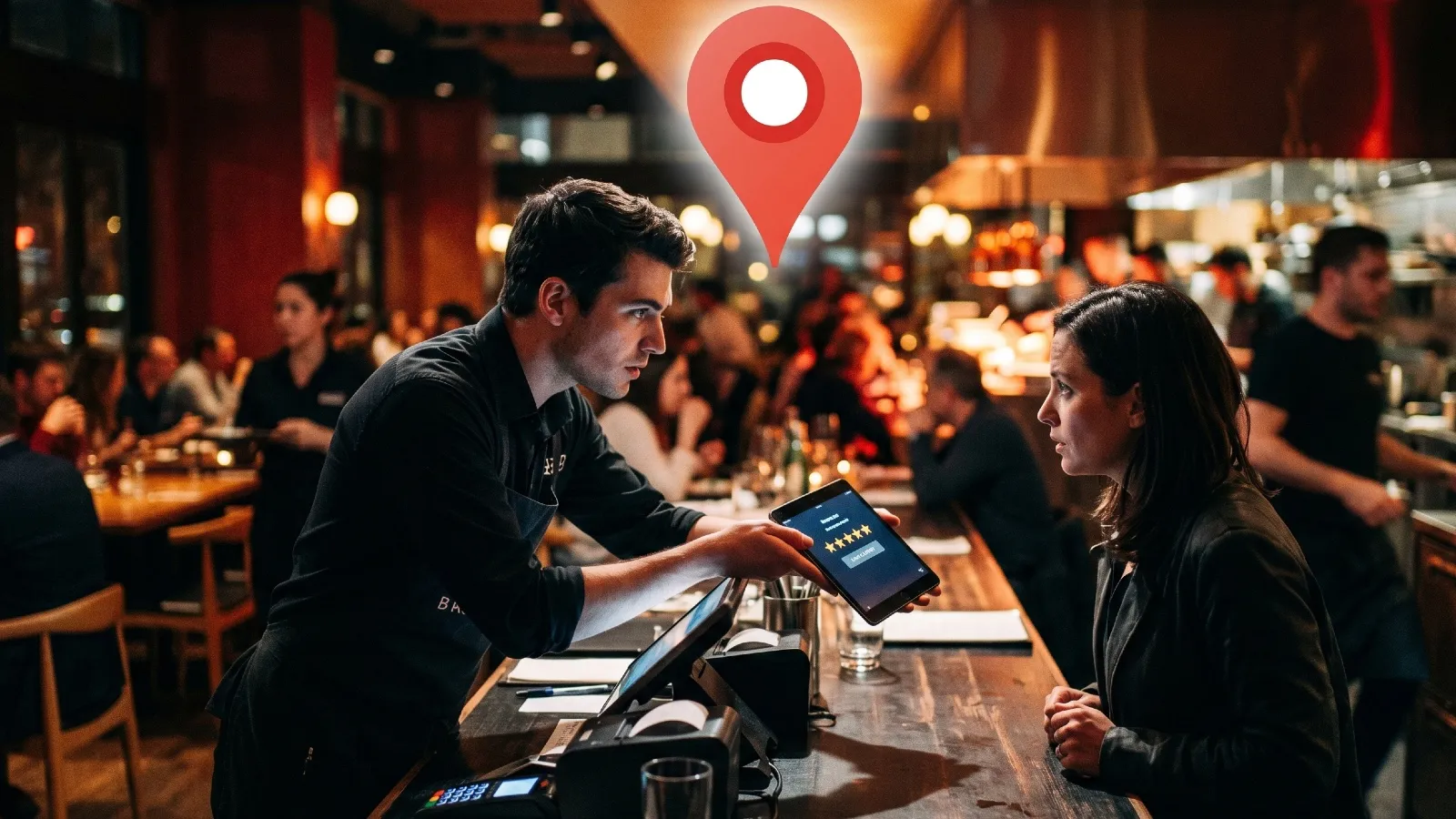

Google this month updated the Maps user-generated content policy to add explicit restrictions on how merchants can direct staff to solicit customer reviews - two new clauses that close loopholes widely used by local businesses to generate favorable ratings on Google Maps.
The change, spotted on April 17, 2026, by Amy Toman, a Google Diamond Product Expert, and shared on LinkedIn, adds two specific prohibitions to the platform's existing "Rating Manipulation" section. According to the updated policy, Google now bars "merchants requesting that staff solicit a certain number of reviews" and "merchants requesting that staff solicit reviews that include specific content, including content that identifies a staff member."
The language is precise and targets a set of common practices - review contests, staff leaderboards tied to mention counts, and scripts that instruct employees to ask customers to name them by name. Both tactics have been used by businesses to inflate perceived staff performance and overall rating scores on Maps listings.
What the policy now says
The updated Maps user-generated content policy, published by Google on its contribution policy support pages, sits within the broader "Rating Manipulation" subsection under "Fake and Misleading Content and Behavior." That section governs how contributions to Google Maps must reflect genuine experiences.
According to the policy, Google already prohibited merchants from offering incentives - "such as payment, discounts, free goods and/or services" - in exchange for reviews. It also prohibited discouraging negative reviews or selectively soliciting only positive ones. The two new clauses extend this framework specifically to staff-directed review activity.
The policy draws a clear line between what is and is not permitted. Google does allow merchants to "solicit or encourage the posting of content that does represent a genuine experience, without offering incentives to do so or attempting to influence the rating or the contents of the review." The prohibition is not on asking for reviews generally - it is on directing the volume, the content, or the inclusion of identifying information about individual staff members.
According to the policy document, when soliciting reviews, "merchants should not require or pressure users to leave ratings or write reviews while on the premises, nor should they request that specific content be included." The two new lines fall under this clause as clarifying examples of prohibited specific-content requests.
Industry reaction
Toman's LinkedIn post drew 52 reactions, 19 comments, and 9 reposts within four days. Her initial observation was direct: "Seen recently on Google's 'Prohibited and restricted content' page listings, new/defined restrictions on requesting reviews by staff, and mentioning 'specific content,' which includes staff names." She added: "I expect they've seen too many review contests or requirements."
The commentary that followed reflected a mix of concern and skepticism about enforcement. Garrett Smith, who describes himself as helping agencies and enterprises with search marketing, wrote: "This feels very Yelpian and difficult for Google to enforce reliably." The comparison to Yelp points to a long-standing criticism of platform review policies: rules are easy to write but hard to police at scale.
A separate thread in the comments raised a question about scope. Miriam Ellis, founder of Miriam Ellis Consulting, wrote: "Amy, I'd love your take on the wording of this - in saying 'reviews that include specific content' this is reading as though your staff can no longer say something like, 'We'd love your review of our new menu item.'" She asked whether Google intended this as a narrow rule against contests or a broader restriction on any content-specific prompting. Toman replied that the implications of the wording "seem extreme" and that the intent likely centered on contests, but she had not received official confirmation from Google on the scope.
Tricia Clements noted a possibly related development. According to Clements, Google has been testing a follow-up question when a review is left, asking something along the lines of: "Did the business offer any incentive for this review?" She suggested the new policy might eventually lead to an additional prompt - "Did the business ask you to mention a specific service or staff?" - though no confirmation exists that such a question is in active testing or deployment.
The concern about retroactive enforcement also emerged. Toman acknowledged: "Not sure what it means for everyone going forward, and if they'll remove reviews that have staff names. I hope not; that could really affect solo business owners."
Context: a pattern of tightening review rules
The timing of this policy update fits within a broader sequence of changes Google has made to its review and Business Profile ecosystem over the past two years.
Google shifted Local Service Ads reviews to Business Profiles management on July 11, 2025, requiring all review collection and management activities to move through centralized Business Profile systems rather than separate Local Service Ads infrastructure. That migration automatically verified all existing reviews against Google Maps Review Policies, meaning reviews that violated guidelines at the time of transfer were potentially removed.
On December 31, 2025, Google formalized the documentation for Business Profile review links and QR codes - a feature that had existed since at least March 2025 without official guidance. That belated documentation release was the first time businesses received formal instructions on how to use the tool and what the policy boundaries were. The nearly nine-month gap between feature availability and documentation publishing left businesses without clear rules during that window.
Just one day before today's policy update, on April 16, 2026, Google announced three new protective measures for Maps, including the deployment of Gemini models to block review extortion scams and catch manipulated place edits. That announcement came alongside figures from Google's 2025 Trust and Safety Report: the platform blocked or removed over 292 million policy-violating reviews while publishing more than 1 billion. It also blocked 79 million inaccurate or unverified edits to Business Profiles and removed more than 13 million fake Business Profiles during the year.
Those numbers frame the environment in which today's policy addition lands. Roughly 22 percent of all review activity on Google Maps in 2025 was classified as policy-violating - more than one in five review attempts. The platform is not a passive repository; it operates a large-scale enforcement apparatus continuously in the background.
Earlier in the Maps ecosystem, Google discontinued the Business Profile chat feature entirely by July 31, 2024, removing direct messaging between businesses and customers. In December 2025, the Q&A feature was replaced with an AI-powered Ask button, further reducing the direct, community-driven communication channels available on Maps listings. Reviews are now one of the few remaining unstructured public feedback mechanisms on the platform - which partly explains why Google continues tightening the rules around them.
Why staff-name reviews were common
The tactic of encouraging customers to mention staff members by name in reviews has roots in customer service management. For businesses like salons, dental practices, gyms, car dealerships, and restaurants, staff attribution in reviews serves a dual purpose: it provides internal performance data about individual employees and, on the customer-facing side, signals a personal service ethos that can influence booking and purchasing decisions.
Some businesses made this a formal part of their review programs. Staff would receive incentives - gift cards, team recognition, or competitive awards - based on how many reviews mentioned them by name or how highly those reviews rated them specifically. The logic was straightforward: tie review volume and content to performance metrics, and reviews accumulate faster.
Google's new policy cuts directly at that mechanism. The prohibition on directing staff to solicit a certain number of reviews targets quota-based systems. The prohibition on directing staff to solicit reviews that include specific content - including staff names - targets the naming practice specifically. Together, the two clauses eliminate the most structured, volume-driven approaches to staff-attributed review generation.
Whether Google can detect these practices at scale is a separate question. The platform's enforcement primarily relies on pattern detection - unusual volumes, timing clusters, device correlations, and behavioral signals - rather than reading the instructions a manager gave to an employee before a shift. A business that quietly coaches staff verbally, without written scripts, leaves fewer signals for automated systems to catch. Garrett Smith's Yelp comparison resonates here: both platforms have long-standing rules against review manipulation, and both face persistent gaps between policy and enforcement.
Implications for local business marketing
For marketers managing Google Business Profiles on behalf of local businesses, the policy change requires a review of existing review solicitation workflows. Any program that includes staff participation quotas, naming conventions, or scripts directing customers to mention specific employees or services now falls explicitly outside Google's permitted practices.
The policy does still allow merchants to ask for genuine reviews. Sharing a review link via email, WhatsApp, or a printed QR code - methods explicitly described in Google's own Business Profile documentation - remains permitted, as long as those requests do not attempt to influence the rating or the specific content of the response.
The practical difficulty is distinguishing between permitted encouragement and prohibited direction. A business that trains staff to say "We'd love to hear your feedback" is in a different position than one that trains staff to say "We'd love it if you mentioned me by name and gave us five stars." The first is solicitation; the second is content direction. Google's new language draws a line between them, though the enforcement mechanism for detecting the difference in practice remains unclear.
For businesses operating at scale - multi-location retail chains, franchise systems, or hotel groups - the implications are broader. Centralized review programs that incorporate staff-level metrics, content guidelines, or naming conventions across dozens of locations will need to be restructured to remove the specific elements now flagged by Google's policy.
The update also intersects with the question of what happens to existing reviews that mention staff members. Toman raised this directly in the LinkedIn thread, and acknowledged she did not have an answer. Google's policy documentation does not address retroactive action on reviews posted before the policy change. The platform's general approach - as seen in the July 2025 migration of Local Service Ads reviews - has been to apply current policies to existing content when reviews pass through enforcement systems.
Timeline
- July 31, 2024 - Google discontinues the Business Profile chat feature, removing direct messaging between businesses and customers through Google Search and Maps. PPC Land coverage
- March 2025 - Google quietly introduces Business Profile review link and QR code functionality without accompanying documentation.
- June 24, 2025 - Google bans countries and states from Business Profile service areas, requiring city or postal code designations.
- July 11, 2025 - Google shifts Local Service Ads reviews to Business Profiles management, applying Google Maps Review Policies to all transferred reviews. PPC Land coverage
- September 3, 2025 - Google updates Business Profile business links policies with stricter verification requirements and automated daily crawler checks. PPC Land coverage
- December 3, 2025 - Google announces replacement of the Business Profile Q&A feature with an AI-powered Ask button.
- December 31, 2025 - Google publishes formal documentation for Business Profile review links and QR codes, nine months after feature introduction. PPC Land coverage
- April 16, 2026 - Google releases its 2025 Trust and Safety Report for Maps, reporting 292 million policy-violating reviews blocked or removed, 79 million fake edits blocked, and 13 million fake Business Profiles removed. Gemini models deployed to block extortion scams and manipulated edits. PPC Land coverage
- April 17, 2026 - Google adds two new clauses to the Maps user-generated content policy under the Rating Manipulation section, explicitly prohibiting merchants from directing staff to solicit a set number of reviews or reviews mentioning staff names or other specific content.
Summary
Who: Google, affecting merchants, local businesses, marketing professionals, and Google Business Profile managers who use staff-based review solicitation strategies on Google Maps.
What: Google updated the Maps user-generated content policy to explicitly prohibit two practices under the Rating Manipulation section: directing staff to solicit a specific number of reviews, and directing staff to solicit reviews that include specific content, including content that identifies a staff member by name.
When: The policy change appeared on April 17, 2026, as spotted and reported by Amy Toman, a Google Diamond Product Expert, via LinkedIn.
Where: The change applies to the Maps user-generated content policy, accessible through Google's contribution policy support pages, and affects all merchants with Google Maps listings globally.
Why: Google's policy update targets structured, staff-directed review programs - including quota systems and naming conventions - that the platform classifies as Rating Manipulation. The change follows a broader enforcement trend that saw Google block or remove 292 million policy-violating reviews in 2025, representing approximately 22 percent of all review activity that year.


Discussion