


VIOOH, the London-based outdoor advertising marketplace created by JCDecaux, today signed a partnership with Adams Outdoor Advertising that puts more than 460 of the American billboard company's digital boards up for automated sale through VIOOH's platform. According to VIOOH, the screens sit along highways and commuter roads in a network spanning 14 states and generate more than 4.9 billion impressions a month. Neither company disclosed financial terms, a start date, deal types or how those impressions are counted.
In Short
VIOOH runs an online marketplace where advertisers' buying software can purchase time on digital screens, and it has signed a deal to sell ad time on more than 460 digital billboards owned by Adams Outdoor, mostly along roads in the Southeast, Midwest and Northeast of the US. Advertisers who buy online ads through automated systems can now reach these roadside boards through VIOOH, which joins a long list of buying platforms Adams already works with. The companies have not said when buying starts, what it costs or how they arrive at the 4.9 billion monthly views they claim, which makes the deal's real size hard to judge.
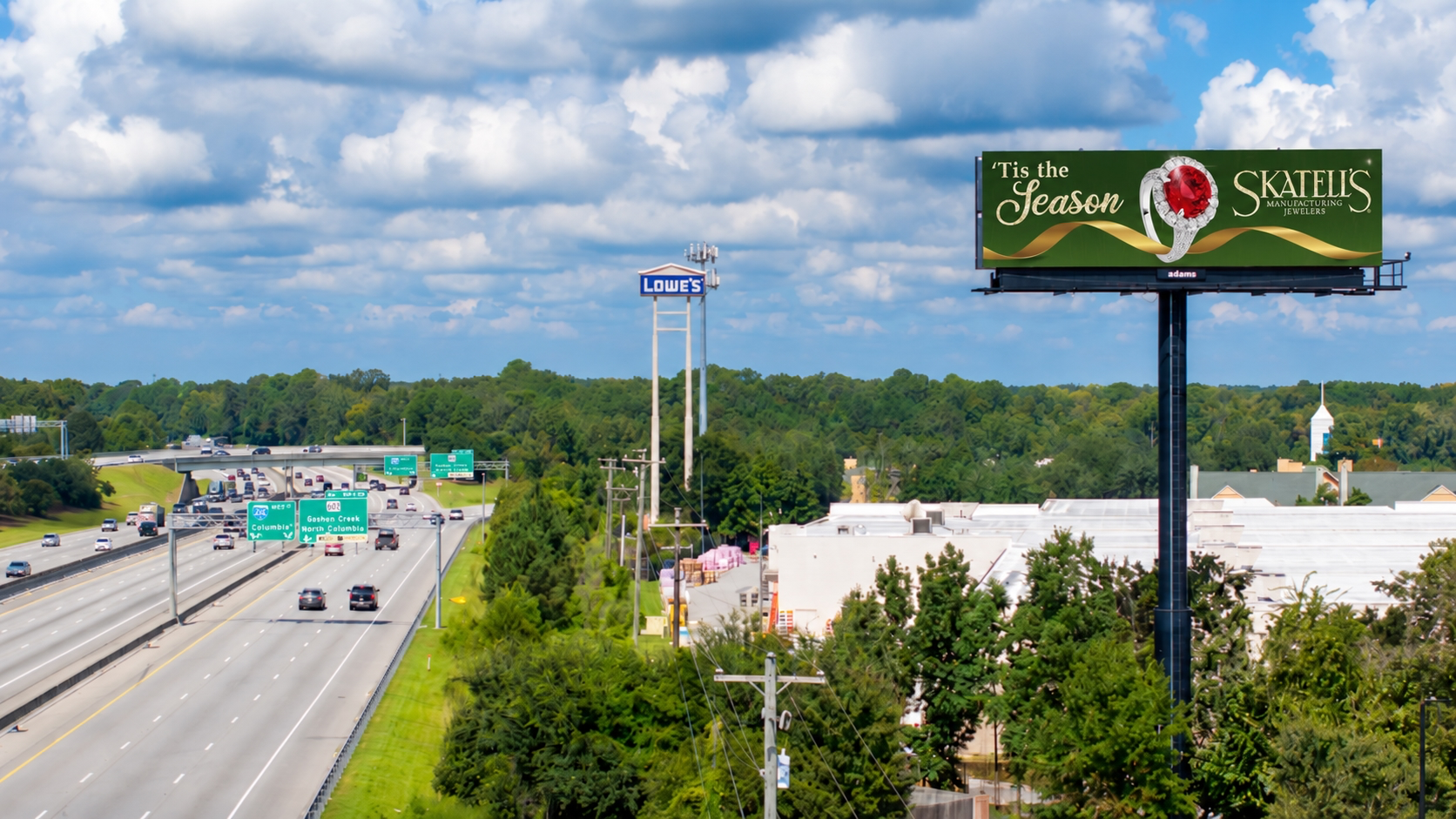
What the companies announced
The announcement was dated October 29, 2026, from London. VIOOH describes itself as a premium global digital out-of-home supply-side platform, launched in 2018 and headquartered in London. Adams Outdoor describes itself as one of the largest out-of-home media companies in the US, with more than 12,000 advertising faces, traditional and digital, across 14 states.
The inventory covered by the deal is narrower than that footprint. According to VIOOH, the partnership provides programmatic access to "more than 460 digital billboards generating over 4.9 billion monthly impressions." The companies name the markets: Charlotte, Raleigh-Durham, Charleston, Savannah, Norfolk-Virginia Beach, Detroit-Ann Arbor, Grand Rapids, Madison and what the release calls "the rapidly expanding Ohio Valley region, including Pittsburgh." Those are mostly mid-sized metropolitan areas rather than the coastal giants that dominate most outdoor deals.
Gavin Wilson, Global Chief Commercial Officer at VIOOH, framed the deal around regional reach. "Billboard advertising built Adams Outdoor's reputation over decades, and this partnership brings that same trusted, high-impact inventory into VIOOH's programmatic marketplace," Wilson said. "For media buyers, it means faster, more flexible access to some of the country's most established regional markets, reaching audiences where they live, work and drive."
Josh Scharfberg, Chief Revenue Officer at Adams Outdoor Advertising, tied it to the company's growth. "As Adams Outdoor continues to expand its footprint across the country, partnerships like this are essential to making our growing digital network more accessible to advertisers," Scharfberg said. "By combining our premium locations, strong regional presence and deep market expertise with VIOOH's programmatic technology, we're creating more opportunities for brands to connect with audiences at scale, with the flexibility and efficiency today's advertisers demand."
The release says buyers gain "greater flexibility, streamlined campaign activation and data-driven buying capabilities." Those are the companies' descriptions of what automated buying offers. They are not measured results.
What the release leaves out
Several things a buyer or a rival media owner would want to know are missing. The release does not state:
- when the inventory becomes available, or whether it already is;
- which of the 14 states host the 460-plus digital billboards, or how many boards sit in each named market;
- whether buyers can transact through open auction, private marketplace deals, programmatic guaranteed buys, or all three;
- prices, floor prices or fees;
- how impressions are counted, and by whom;
- whether the arrangement is exclusive in any way;
- whether every Adams digital billboard is included or only a subset.
The last point matters because 460 boards is a small share of Adams' total network. On the company's own figure of more than 12,000 faces, digital billboards made available through VIOOH amount to under 4% of the portfolio, by PPC Land's calculation. The deal touches a thin slice of what Adams sells.
The impression arithmetic
10.7 million per board, per month
Divide 4.9 billion monthly impressions by 460 boards and each one averages about 10.7 million impressions a month, or roughly 355,000 a day, by PPC Land's calculation. Both figures in the release are floors ("more than" and "over"), so the average is approximate.
Set against other networks VIOOH has signed, that average is high. When OUTFRONT brought more than 7,600 digital screens and 18 billion monthly impressions to VIOOH in March, its network averaged about 2.4 million impressions per screen a month. That network mixes roadside billboards with bus shelters, subway stations and rail platforms, which pulls the average down. A cleaner comparison comes from Canada. When VENDO Media joined VIOOH in May, its 175 roadside billboards were credited with 132 million monthly impressions, or about 754,000 each. The Adams average is roughly 14 times that, and about 4.5 times OUTFRONT's, by PPC Land's calculation.
Is that plausible? Possibly. Boards on major interstates see enormous traffic, and an average can be lifted by a handful of large highway sites. But the release gives no basis on which to check. It does not say whether the figure comes from Geopath, the body that produces audience estimates for US outdoor media, or from Adams' own modelling. Nor does it say whether an impression is counted once per board or once per advertiser slot in a digital rotation, where several brands share the same screen in turn. That second distinction alone could multiply or divide a count several times over.
For buyers who pay per thousand impressions, those definitions decide what a campaign costs. Without them, the 4.9 billion figure is a vendor claim rather than a comparable metric.
Who Adams Outdoor is
Adams Outdoor Advertising is privately held and headquartered in Lansing, Michigan, according to its corporate leadership page, which lists Kevin Jones as President and CEO and Scharfberg as Chief Revenue Officer. In releases distributed this year and last, the company called itself the fourth-largest out-of-home advertising company in the US; today's release uses the looser "one of the nation's largest."
The company has been buying. In October 2025, according to Business Wire, Adams acquired Scotty Outdoor, adding 132 billboard faces in the Carolinas, three of them digital. In March 2026 it bought one static and one digital billboard in Orangeburg, South Carolina, from Fairey Motor Company, according to a second release.
The largest move came in the summer. On July 31, Adams closed the purchase of Barnes Advertising Corp. and Oliver Outdoor, adding 1,040 structures, of which 72 are digital displays, across Ohio, West Virginia and Western Pennsylvania, according to Adams Outdoor. The company described the deal as one of the largest expansions in its 43-year history. It created a new Ohio Valley market run from Zanesville, Ohio, and reached into the Pittsburgh designated market area, including Butler, Kittanning and New Castle. That acquisition explains the "Ohio Valley region, including Pittsburgh" in today's market list, and Scharfberg's reference to a growing footprint.
VIOOH is one route among many
Adams already sells digital inventory through automated channels. Its programmatic services page lists integrations with more than 20 buying platforms, among them The Trade Desk, Google's DV360, StackAdapt, Yahoo, Adform, Hivestack and Vistar Media, with VIOOH also on the list. According to the same page, campaigns can often launch within 24 to 72 hours after assets and campaign parameters are approved. The page gives its own footprint as more than 12,000 units across 14 states, while an FAQ answer further down gives 13 states, 25 markets and more than 10,000 units.
So the deal does not make Adams' boards buyable by software for the first time. What it does is put them inside VIOOH's marketplace, alongside the other US networks VIOOH has assembled, and in front of the more than 50 demand-side platform partners VIOOH says it connects to globally.
VIOOH's US supply run
For VIOOH, Adams is the latest in a string of US supply deals that PPC Land has tracked since 2025. In August 2025, Vengo brought more than 65,000 venue screens, described at the time as 9% of the US digital out-of-home market. In late October 2025, BIG OUTDOOR added more than 130 screens across seven US cities, most of its 677 million monthly impressions coming from large-format spectaculars. In January, Dolphin OOH opened more than 5,000 screens in grocery stores, pharmacies and transit hubs.
March brought the biggest additions. OUTFRONT's network, about a quarter of US digital out-of-home, was announced on March 9. Later that month, OBM added 2,281 urban screens and about 6.3 billion monthly impressions across 27 cities. In April, Firefly put more than 60,000 car-top and rideshare screens into the platform. On August 25, the Screenverse deal added more than 38,000 US screens and 7.7 billion monthly impressions, in a release that also quoted Wilson.
A pattern runs through those deals. Most of the inventory was urban, indoor or venue-based, and the cities named were the largest: New York, Los Angeles, Chicago, Dallas-Fort Worth. Adams adds something different, roadside boards in markets such as Grand Rapids, Madison and Savannah. Wilson's emphasis on "established regional markets" reflects that gap.
The demand side has grown more slowly in VIOOH's disclosures. On October 15, AdXact's DSP switched on access to VIOOH's screens, an announcement that, like today's, carried no figures on spend. VIOOH's count of DSP partners has stayed at "more than 50" in every announcement this year, while its market count rose from 35 in January to 46 by late August. Today's release repeats both: 46 markets, more than 50 DSPs.
How VIOOH packages deals
VIOOH has been pushing curated deals rather than open bidding. In June, the company said its Seller Agent had processed more than 100 curated private marketplace deal package requests in the first half of 2026, using conversational briefs and geographic targeting to assemble inventory. Whether Adams' boards will be offered through those packages, or through open auction, the release does not say.
The money behind the screens
VIOOH's parent provides one of the few public readings of the business. When JCDecaux reported first-half 2026 results on July 30, programmatic revenue rose 30.9% organically to EUR 102.8 million, or 12.3% of digital sales, and VIOOH turned cash-flow positive for the first time. JCDecaux held 93.5% of VIOOH's capital when it launched the platform in the UK and the US in 2018, with data firm Veltys holding the rest. VIOOH's owner is itself an outdoor media owner, and the platform sells inventory on behalf of other media owners, Adams now among them.
The wider US market is growing. According to the Out of Home Advertising Association of America, US out-of-home revenue reached $3.16 billion in the second quarter of 2026, up 10.7% year on year and the first quarter above $3 billion. Digital accounted for 38.4% of spending and grew 18.5%.
Programmatic remains a fraction of that. In its first global count, the World Out of Home Organization put programmatic digital out-of-home at $1.339 billion in 2025, just 7% of global digital out-of-home spend. US programmatic spend was $545.5 million, a 15.9% share of a digital base of about $3.4 billion, and 29.8% of US programmatic spend went through open auction. Globally, about three quarters went through private marketplace deals. Outdoor environments took 52.8% of global programmatic spend, and WOO estimated that roadside billboards made up 44.8% of that outdoor category, an indicative figure rather than a measured one.
Those numbers frame what VIOOH and Adams are competing for. Roadside billboards are a large share of a small automated market, and most of that money moves through curated deals with specialist platforms. Each new supply deal adds inventory to a marketplace; whether it adds spend depends on how many buyers choose that route over the 20-odd others Adams already offers.
Why this matters for marketers
For advertisers who buy outdoor media through software, the deal widens what is available inside VIOOH to include regional roadside boards in the Carolinas, Georgia, Virginia, Michigan, Wisconsin and the Ohio Valley. Automated access could make those markets easier to add to a multi-market plan.
It also shows how crowded the supply chain has become. The same Adams board may be reachable through VIOOH, Vistar Media, Hivestack, DV360 and The Trade Desk, among others. For buyers, that raises familiar questions from web advertising about duplicated paths to the same inventory and the fees taken along each one.
And it leaves the measurement question open. A board average of 10.7 million monthly impressions, if it holds, would make Adams' digital network one of the most impression-dense VIOOH has signed. If it rests on a different counting method from OUTFRONT's or VENDO's, the comparison is meaningless. The release does not say which.
Timeline
- June 17, 2018 - JCDecaux launches VIOOH in the UK and the US, holding 93.5% of its capital.
- August 26, 2025 - VIOOH adds more than 65,000 Vengo screens in the US.
- October 2025 - Adams Outdoor acquires Scotty Outdoor, adding 132 billboard faces in the Carolinas.
- October 28, 2025 - BIG OUTDOOR adds more than 130 screens in seven US cities to VIOOH.
- January 8, 2026 - Dolphin OOH opens more than 5,000 US screens through VIOOH.
- March 9, 2026 - OUTFRONT brings more than 7,600 screens and 18 billion monthly impressions to VIOOH.
- March 2026 - Adams Outdoor buys one static and one digital billboard in Orangeburg, South Carolina.
- March 26, 2026 - OBM adds 2,281 urban US screens to VIOOH.
- April 23, 2026 - Firefly puts more than 60,000 moving screens into VIOOH.
- May 12, 2026 - VENDO Media's Canadian billboards join VIOOH, with 175 roadside boards credited with 132 million monthly impressions.
- June 26, 2026 - VIOOH says its Seller Agent processed more than 100 curated deal package requests in H1 2026.
- July 30, 2026 - JCDecaux reports H1 programmatic revenue of EUR 102.8 million; VIOOH turns cash-flow positive.
- July 31, 2026 - Adams Outdoor closes its purchase of Barnes Advertising Corp. and Oliver Outdoor, adding 1,040 structures and creating an Ohio Valley market.
- August 18, 2026 - OAAA reports US out-of-home revenue of $3.16 billion for Q2 2026.
- August 25, 2026 - Screenverse adds more than 38,000 US screens to VIOOH; VIOOH cites 46 markets.
- September 2026 - WOO puts global programmatic digital out-of-home at $1.339 billion for 2025, with the US at $545.5 million.
- October 15, 2026 - AdXact's DSP gains access to VIOOH's screens.
- October 29, 2026 - VIOOH and Adams Outdoor announce their partnership covering more than 460 digital billboards.
Related PPC Land coverage
- VIOOH and OUTFRONT just unlocked a quarter of the US DOOH market - The March deal that brought more than 7,600 OUTFRONT screens, including roadside billboards, into VIOOH.
- VIOOH gains 7.7 billion monthly US impressions in Screenverse deal - More than 38,000 US screens added in August, when VIOOH's market count reached 46.
- VIOOH adds 2,281 urban US screens and 6.3bn monthly impressions via OBM deal - Urban panels and spectaculars across 27 US cities.
- AdXact DSP gains programmatic access to VIOOH's outdoor screens - A demand-side integration announced two weeks ago without spend or screen figures.
- VIOOH brings Canada's biggest DOOH network into programmatic reach - VENDO Media's roadside network, with only 33 of 550 billboards enabled at launch.
- BIG OUTDOOR adds US inventory to VIOOH programmatic platform - Large-format spectaculars in seven US cities.
- VIOOH locks down 5,000 screens in US grocery stores and transit hubs - The Dolphin OOH deal that opened VIOOH's 2026.
- Firefly puts 60,000 moving screens inside VIOOH's programmatic SSP - Car-top and rideshare screens added in April.
- VIOOH's Seller Agent automated 100+ DOOH deals in H1 2026 - How VIOOH assembles curated private marketplace packages.
- Programmatic DOOH hit $1.339bn in 2025, just 7% of digital OOH, WOO finds - The first global count of programmatic outdoor spend, by deal type and format.
- US out-of-home revenue tops $3 billion for first time, up 10.7% - OAAA's second-quarter 2026 figures for the US market.
- JCDecaux gains 5.7% revenue growth as profit nearly doubles in H1 - VIOOH's parent reports programmatic revenue and VIOOH's first positive cash flow.
Summary
Who: VIOOH, the London-based digital out-of-home supply-side platform created by JCDecaux, and Adams Outdoor Advertising, a privately held billboard company headquartered in Lansing, Michigan. Gavin Wilson, Global Chief Commercial Officer at VIOOH, and Josh Scharfberg, Chief Revenue Officer at Adams Outdoor, are quoted.
What: A partnership that makes more than 460 Adams digital billboards, credited with over 4.9 billion monthly impressions, available through VIOOH's programmatic marketplace. No start date, deal types, prices, terms or impression methodology were disclosed.
When: Announced today, from London.
Where: A network spanning 14 US states, with named markets in Charlotte, Raleigh-Durham, Charleston, Savannah, Norfolk-Virginia Beach, Detroit-Ann Arbor, Grand Rapids, Madison and the Ohio Valley, including Pittsburgh.
Why: Adams has expanded through acquisitions, including 1,040 structures in the Ohio Valley this summer, and wants its digital boards in front of more automated buyers. VIOOH has spent 2026 adding mostly urban and venue-based US supply, and Adams gives it regional roadside inventory, though the same boards are already listed with more than 20 other buying platforms.


Discussion