Canada's $91B Google ad tech case clears its biggest legal hurdle yet
Canada's Competition Tribunal dismissed Google's constitutional challenge on March 3, clearing the path for the country's largest-ever ad tech case to proceed.


Canada's Competition Tribunal dismissed Google's constitutional challenge on March 3, clearing the path for the country's largest-ever ad tech case to proceed.
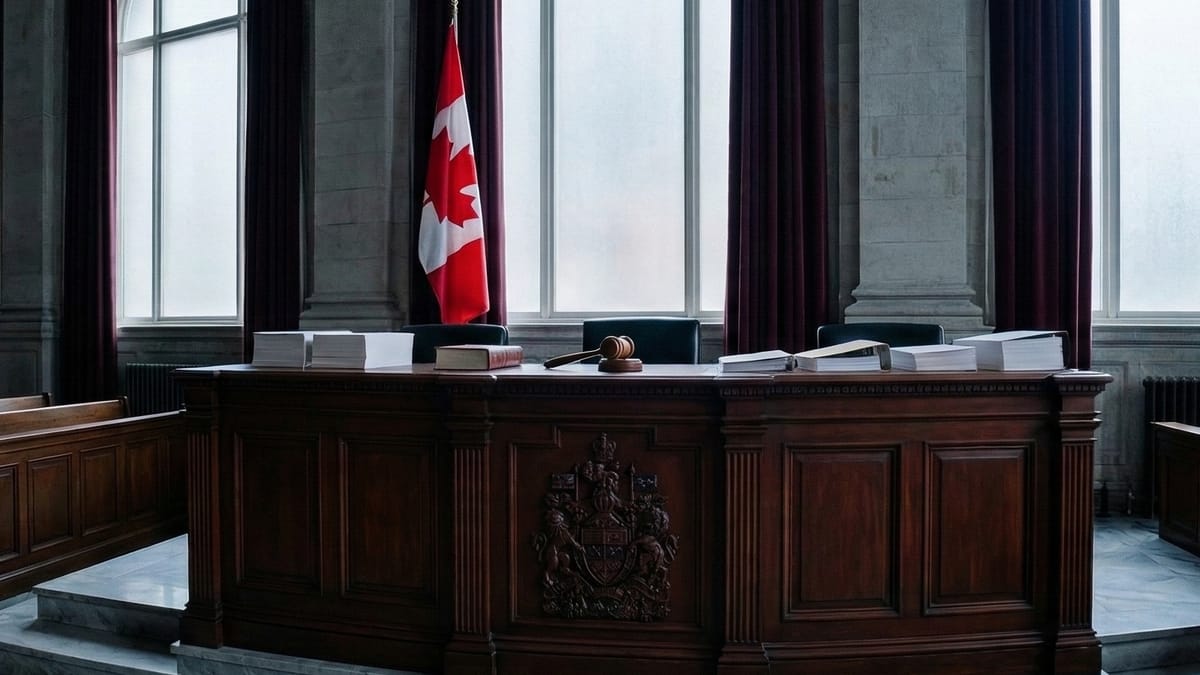
The Canadian Competition Tribunal dismissed Google's attempt to halt a major abuse of dominance case on constitutional grounds on March 3, 2026, removing what had been the single largest procedural obstacle in Canada's most consequential ad tech enforcement action to date. The ruling, issued by Justice Andrew D. Little, rejected arguments that the financial penalties the Bureau might seek could reach a level so severe as to trigger criminal protections under the Canadian Charter of Rights and Freedoms. The case - file number CT-2024-010 - now continues toward a full liability hearing.
The outcome matters considerably for anyone operating in Canada's digital advertising market. Advertisers, publishers, and ad tech intermediaries all stand to be affected by whatever structural or financial remedies the Tribunal ultimately orders, should it find Google liable.
According to the Competition Bureau's November 28, 2024 Notice of Application, Google has engaged, and continues to engage, in conduct in the digital space of online advertising that constitutes reviewable conduct under section 79 of the Competition Act. The Bureau's investigation concluded that Google abused its dominant position as the largest provider of ad tech tools across the Canadian supply chain. The alleged conduct is said to have begun as early as 2008.
At the heart of Google's constitutional challenge was paragraph 79(3.1)(b) of the Competition Act, the provision that sets the ceiling for an administrative monetary penalty (AMP). Under that provision, the maximum AMP is the greater of a fixed amount - currently C$25 million for a first order - and either three times the value of the benefit derived from the anti-competitive practice, or, if that benefit cannot be reasonably determined, 3% of the person's annual worldwide gross revenues.
Google argued that this formula, applied to its own financial scale, could produce a penalty of over C$91 billion. That figure, Google contended, would constitute a "true penal consequence" under the test established by the Supreme Court of Canada in R v Wigglesworth, thereby triggering section 11 Charter rights - including the right to a fair trial as if the matter were a criminal proceeding. Had the Tribunal agreed, much of the evidence already gathered could have been excluded from the record, and the case might have been stayed entirely.
Ron Zember, Senior Finance Manager and Global Head of Finance for Google Network at Google LLC, filed an affidavit setting out annual gross worldwide revenue figures for the company from 2008 to 2024. According to the affidavit, revenues ranged from approximately US$21.8 billion in 2008 to US$348.2 billion in 2024. Cumulatively over that period, 3% of such annual gross worldwide figures amounted to approximately US$66.9 billion, which Google converted into Canadian dollars to arrive at the figure exceeding C$90 billion. Zember also noted that Canadian revenues are not separately identified in Alphabet's annual reports and are considered to be less than 5-6% of annual worldwide gross revenues.
Google filed 29 volumes of materials to support its challenge, including expert reports on antitrust economics, affidavits on reputational harm, and extensive submissions on constitutional law.
Justice Little applied the two-part test from Wigglesworth, which asks first whether the proceedings are criminal in nature, and second whether they could give rise to a true penal consequence. The parties agreed that section 79 proceedings are not criminal in nature. The Tribunal's jurisdiction under Part VIII of the Competition Act covers civil, reviewable matters. There is no charge, no information, no arrest, and no resulting criminal record.
On the true penal consequence test, Justice Little applied the four factors identified in the Supreme Court's 2015 decision in Guindon v Canada: the magnitude of the penalty; to whom it is paid; whether its magnitude is determined by regulatory rather than criminal sentencing considerations; and whether stigma attaches.
On magnitude, the Tribunal found that Google's C$91 billion figure was "hypothetical at best" and dependent on numerous contingencies that have not yet occurred. Before any AMP could be ordered, the Tribunal would need to find: that Google engaged in anti-competitive conduct between 2008 and 2024; that the conduct substantially lessened or prevented competition; that an order under subsections 79(1) or (2) is warranted; that the benefit derived from the conduct cannot be reasonably determined; and that the 2022 and 2023 amendments to the Competition Act apply retrospectively across the full period.
None of those findings has been made. The Tribunal has never ordered an AMP under section 79 in any previous proceeding.
Justice Little also examined how Parliament constructed the AMP regime. When the 2022 Budget Implementation Actadded paragraph 79(3.1)(b), it did so into an existing framework. Subsection 79(3.2) lists mandatory factors the Tribunal must weigh when setting any AMP: the effect on competition in the relevant market; gross revenue from sales affected by the practice; actual or anticipated profits; the financial position of the respondent; any amounts already ordered under subsection 79(4.1); and the history of compliance. Subsection 79(3.3) then states, expressly, that the purpose of an AMP is "to promote practices by that person that are in conformity with the purposes of this section and not to punish that person."
For paragraph 79(3.1)(b) to apply at all, a respondent must have either derived a benefit exceeding C$8.33 million from the anti-competitive practice, or - if that benefit cannot be reasonably determined - must have annual worldwide gross revenues exceeding C$833.3 million. The provision is structurally targeted at large, well-resourced commercial entities for whom a fixed cap could otherwise function as merely a cost of doing business.
According to Justice Little's order and reasons, the amendments enacted in 2022 were designed to address concerns that fixed penalty caps "could limit the effectiveness of a remedy" and that well-resourced global firms might simply absorb smaller AMPs as an operating cost. A government publication from November 2022, The Future of Competition Policy in Canada, described the reforms as ensuring AMPs are "proportionate to the negative impact of the conduct in the relevant market, with maximums that are effective as a remedy."
On the third Guindon factor, the Tribunal found that the factors governing an AMP under section 79 differ materially from criminal sentencing principles. Criminal sentencing under sections 718, 718.1, 718.2, and 718.21 of the Criminal Coderequires courts to consider denunciation, moral blameworthiness, and punishment for wrongs done to society at large. No such considerations apply to an AMP under section 79. While some overlap exists - both regimes consider the financial benefits of the conduct and the respondent's financial position - the Tribunal identified those overlaps as insufficient to transform a regulatory penalty into a criminal one.
On stigma, Google filed evidence from Laura Pearce, Country Marketing Director for Google in Canada, and an expert report from Rupert Younger, Director of the Oxford University Centre for Corporate Reputation. Younger testified that a penalty amounting to billions of dollars for "abusive conduct" could stigmatize Google in its dealings with employees, investors, suppliers, and regulatory counterparts. The Tribunal accepted that reputational harm could follow from a large AMP but distinguished that from the stigma associated with a criminal conviction. Younger's report did not compare potential stigma to that of a criminal record, nor did it assess the impact of more than 20 regulatory penalties Google has received in other jurisdictions since 2017.
Google engaged Professor Keith Hylton of Boston University School of Law to argue that the penalty formula in paragraph 79(3.1)(b) creates "inefficient overdeterrence" - meaning it would punish Google at a level exceeding what is economically justified to deter monopolistic conduct. Hylton examined the provision through the lens of the Chicago School and a Dynamic Competition Model, concluding that both the three-times-benefit multiplier and the 3%-of-worldwide-revenues formula would produce penalties far exceeding the optimal deterrence level.
The Commissioner engaged Professor Steve Tadelis of the Haas School of Business at the University of California, Berkeley, who contested those conclusions. Tadelis argued that Hylton's analysis relied on the internalization approach - which models the price at which a firm would choose to monopolize - while the more appropriate framework is the deterrence approach, which focuses on eliminating the expected profit from anti-competitive conduct. Because the probability of detection and enforcement of abuse of dominance in Canada is low, Tadelis argued, a higher multiple is necessary to ensure the penalty actually deters rather than merely prices the conduct.
Justice Little did not resolve the dispute between the experts on the merits of antitrust economics. He found their opinions "highly conceptual, abstract and theoretical" and unsuited for resolution on a preliminary constitutional motion. Hylton, he noted, had not reviewed subsections 79(3.2) or 79(3.3) before writing his reports, nor examined section 78's definition of anti-competitive acts, nor considered the Commissioner's Abuse of Dominance Enforcement Guidelines. The expert evidence on both sides was found more relevant to a hypothetical remedy hearing, not a Charter challenge.
The case now proceeds under a bifurcated structure the Tribunal established in its Bifurcation and Scheduling Order of May 7, 2025. Liability will be determined first; if liability is found, a separate remedy stage will follow. The oral hearing on Google's constitutional challenge took place across four days: September 29 and October 1, 2, and 3, 2025, before Justice Little. Additional written submissions were filed in February 2026 at the Tribunal's direction, addressing a federal government publication.
Acting Commissioner of Competition Jeanne Pratt issued a statement on March 4, 2026, welcoming the ruling. "The Tribunal's decision reinforces its clear authority to order administrative monetary penalties to promote compliance and deter anti-competitive behaviour," she said. "We continue to stand by our investigative findings that, through its anti-competitive conduct, Google has been able to entrench its dominance, prevent rivals from competing, inhibit innovation, inflate advertising costs and reduce publishers' revenues."
Google said it was evaluating the decision. Dan Taylor, vice-president of global ads, stated: "Our advertising technology tools help websites and apps fund their content, and enable businesses of all sizes to effectively reach new customers. Google remains committed to creating value for our publisher and advertiser partners in this highly competitive sector. The [Competition Bureau's] complaint ignores the intense competition where ad buyers and sellers have plenty of choice."
The Canadian Anti-Monopoly Project also welcomed the ruling. According to executive director Keldon Bester, the decision is "an important signal that new powers under Canada's recently strengthened Competition Act are here to stay." Bester added: "Financial penalties will always be secondary to structural remedies that promote competition, but they remain an important tool for deterring conduct that harms competition."
Costs from the constitutional motion have been reserved. Both parties were unable to agree on quantum by the February 17, 2026 deadline and will file written submissions.
Canada's ad tech case sits within a crowded global enforcement landscape. In the United States, Judge Leonie Brinkema of the Eastern District of Virginia ruled on April 17, 2025 that Google had violated federal antitrust law by monopolizing publisher ad server and ad exchange markets. A remedies trial concluded in November 2025, with the Department of Justice seeking divestiture of Google's AdX exchange and the DFP publisher ad server. Google proposed behavioral remedies instead.
Separately, a series of private antitrust lawsuits followed the Virginia liability ruling. Index Exchange filed suit on November 10, 2025, alleging Google's conduct artificially suppressed the Canadian ad exchange's growth across markets worth over US$104 billion annually. Raptive filed a complaint on October 17, 2025, seeking damages for alleged manipulation of ad auctions across thousands of websites. Dotdash Meredith sued on August 29, 2025, alleging Google controlled over 90% of the publisher ad server market.
The European Commission separately fined Google nearly €3 billion in September 2025 over self-preferencing practices in ad tech. India's Competition Commission expanded its own investigation in January 2025 after new complaints about Google's Ad Manager fee structures, which reportedly increased from 9% to over 30%.
In Canada specifically, advertisers have already experienced direct financial pressure tied to Google's market position. Google implemented a 2.5% Canada DST Fee on ads served in Canada from October 1, 2024, a surcharge passed on to buyers to offset digital services tax compliance costs.
For publishers and ad tech buyers, the Canadian case is particularly significant because the Bureau's allegations directly concern the supply chain infrastructure - the ad servers, exchanges, and demand-side platforms that govern how display advertising is transacted. The Bureau has alleged that Google's dominance has inflated advertising costs and reduced publishers' revenues. If the Tribunal ultimately finds liability and orders structural or financial remedies, the effects on programmatic advertising pricing and publisher yield in Canada could be substantial.
The Tribunal's dismissal of Google's constitutional challenge also has a broader regulatory significance. By upholding Parliament's authority to impose large AMPs under the reformed Competition Act - including the 2022 and 2023 amendments that removed fixed penalty caps - the decision validates the enforcement tools available to the Bureau for future investigations involving dominant digital platforms. Those amendments also introduced subsection 79(4.1), which came into force in June 2025 and allows private parties to bring abuse of dominance cases against large companies. In January 2026, the Tribunal separately rejected a private challenge to Google's dominance in search brought by a Toronto-based independent game developer under those new provisions.
The main ad tech case has no confirmed trial date for the liability stage at the time of writing. The Tribunal's bifurcated structure and the volume of evidence - including Google's own 29 volumes of materials filed for the constitutional motion alone - suggest proceedings will extend well into 2026 and potentially beyond.
Who: Canada's Competition Bureau, represented by Acting Commissioner of Competition Jeanne Pratt, and Google Canada Corporation and Google LLC, respondents in Competition Tribunal file CT-2024-010. Justice Andrew D. Little of the Competition Tribunal decided the motion.
What: The Competition Tribunal dismissed Google's constitutional challenge to paragraph 79(3.1)(b) of the Competition Act, which would have allowed Google to argue that potential administrative monetary penalties constitute a criminal proceeding under the Canadian Charter of Rights and Freedoms. The Tribunal found the penalties are regulatory, not penal, in purpose and effect. Google had argued it could face an AMP exceeding C$91 billion.
When: The Order and Reasons were issued on March 3, 2026. The oral hearing on the constitutional challenge took place September 29 to October 3, 2025. The underlying abuse of dominance application was filed November 28, 2024.
Where: The Competition Tribunal in Ottawa. The underlying conduct concerns the supply of online advertising technology services in Canada, spanning Google's operations across the Canadian ad tech supply chain from 2008 onward.
Why: The Competition Bureau's investigation concluded that Google abused its dominant position as the largest provider of ad tech tools across the Canadian supply chain, with alleged effects including inflated advertising costs, reduced publisher revenues, and inhibited innovation. The constitutional challenge, if successful, would have ended or severely restricted the case before any hearing on liability. Its dismissal preserves the Bureau's ability to proceed to a full trial and, if liability is found, to seek significant financial penalties calibrated to Google's scale.