


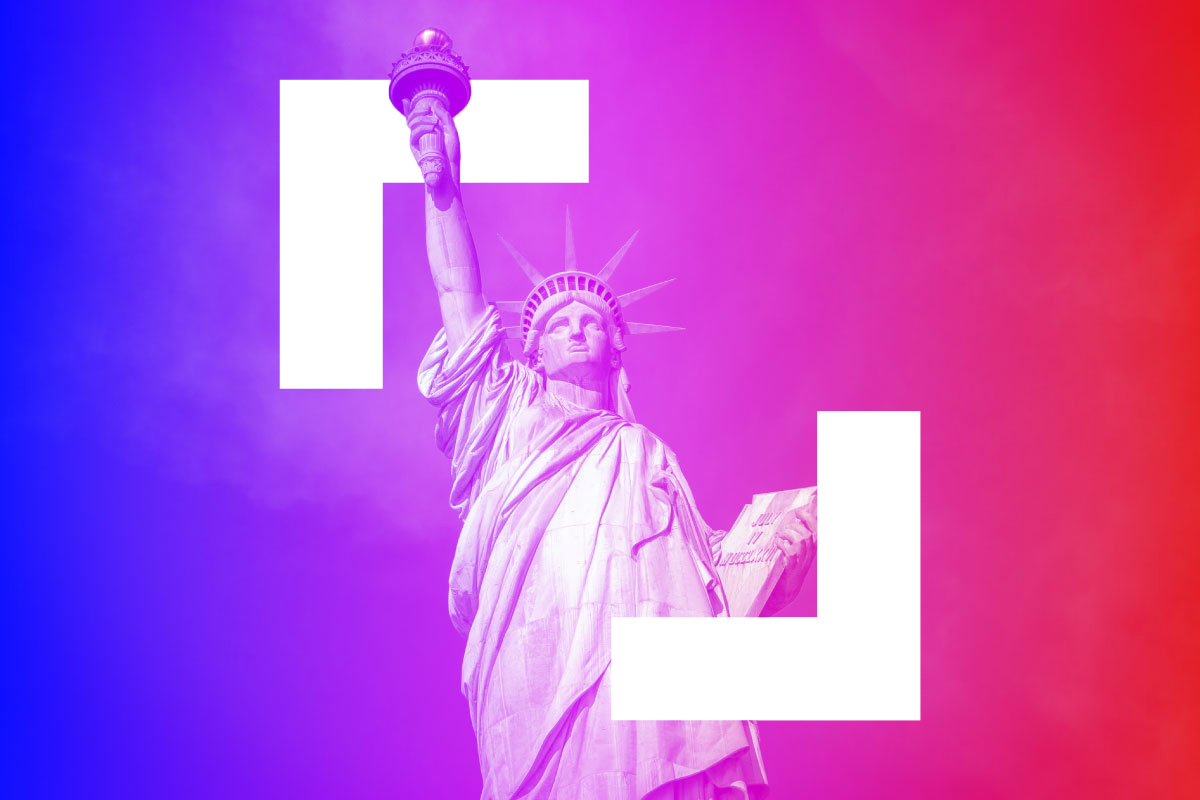
Flipboard on October 1, 2026 set out the details of Vote 2026, a package of election Magazines assembled by its own editors, and anchored it in the home view of its app for the 33 days before the US midterm elections on November 3. The post, written by North America managing editor Carl Sullivan, also brings back a weekly politics newsletter from October 6 and points readers who want partisan coverage towards outlets on both the right and the left.
In Short
Flipboard, an app that gathers news stories from many websites, has made a set of election news pages picked by its own editors and given them a fixed spot on the app's home view in the weeks before the US midterms on November 3. That matters to the news outlets whose stories get chosen and to advertisers, because election news is exactly the kind of content many brands' safety settings steer their ads away from. From October 6 a politics email also goes out every Tuesday, and the company says its software keeps sources it considers misinformation out of its wider politics feed.
Seven Magazines and a promise about people
Flipboard describes Vote 2026 as "a collection of topical Magazines, all curated by our experienced editorial team." A parenthesis follows: "yep, we still believe in humans." That aside carries most of the pitch. A Magazine on Flipboard is a themed page into which articles from other publishers are gathered, and the company is setting editorial selection against the automated ranking that governs most social feeds.
Seven are named. Three are new for this cycle - The Economy Election, The ICE Election and The AI Election - while four more cover The House, The Senate, State and Local and Fact Check. A How to Vote Magazine appears later in the post, in a passage on voter registration, but it is not listed with the others, and the company does not say whether it belongs to the package. Every Magazine is available in the app and on flipboard.com, according to Flipboard.
The standards are stated briefly. Content is "accurate, timely" and drawn from "vetted, reputable publishers," according to the post. "We're going heavy on fact checks, explainers and analysis; and light on the name-calling and clickbait," Sullivan wrote. The package also gives prominence, according to the company, to independent outlets and to journalists who have left larger organisations to work on their own. No publisher is named in that passage. Nor is there a count of the outlets that passed vetting, or a description of how vetting works.
Sullivan's sign-off sets out his own remit. He co-curates Flipboard's Politics Desk, which also runs Magazines titled 2028 White House, LGBTQ+ Issues and The Courts.
Why the economy, immigration enforcement and AI
The three new titles map onto issues that recur in this year's voter research. In the political cut of Adtaxi's 2026 survey, released in June, 48.6% of respondents named the economy and inflation as the issues mattering most to them, with healthcare second at 17.2%.
The AI Election sits beside a line in the post's opening that lists "Secretive data center deals with no community input" among the year's grim headlines. That subject has moved from planning committees into campaigns: local opposition blocked or delayed $156bn of data centre projects in 2025, and siting has become a live issue in states that host significant capacity.
The ICE Election, named after US Immigration and Customs Enforcement, is the only one of the three titled after a government agency rather than a subject. The post does not describe its editorial scope beyond the title.
Partisan feeds and a filtered firehose
Vote 2026 is one of three routes into political coverage set out in the post. The second is openly partisan. Flipboard points readers to publications from the right and the left, naming National Review, Raw Story, The Washington Times and Daily Kos, whose coverage can be followed into the personalised For You feed. Two of the four are generally placed on each side, and the post presents the list as a matter of reader preference.
The third route is the #Politics topic, which Sullivan calls "more of the firehose of political journalism and commentary." Here automation does more of the selecting, and the post gives the only technical detail it offers about Flipboard's systems: "even here our machine learning team takes special care to avoid publishers who spout misinformation or disinformation."
That sentence leaves the mechanics open. The post defines neither misinformation nor disinformation, names no excluded publisher, does not say whether exclusion happens at the level of a domain or of individual articles, and describes no process through which a publisher could learn of a decision or contest it. Is a model deciding, or a team using one? The wording supports either reading.
The approach differs from that of the largest social platform. Meta set out plans on January 7, 2025 to end its US third-party fact-checking programme, which closed on April 7, 2025, with user-written Community Notes taking its place. Four years earlier, in an August 16, 2022 post on preparing for that year's midterms, Meta said it worked with 10 US fact-checking partners, five of them covering Spanish-language content. Flipboard enters this cycle with a dedicated Fact Check Magazine; Meta enters it without the programme it described in 2022.
Audience research suggests a two-track design - a curated core plus opt-in partisan feeds - matches a divided appetite. The Reuters Institute's 2026 Digital News Report found that 45% of respondents across 48 countries prefer news from sources without a particular point of view, a plurality rather than a majority. People who prefer news that agrees with them are a minority, but a disproportionately engaged, politically active and commercially valuable one, according to the report's analysis. Country splits are wide: in Germany, 64% prefer impartial news against 10% who want aligned coverage, while in Nigeria the balance runs the other way.
A newsletter for four Tuesdays
The Politics Rundown newsletter returns on Tuesday, October 6 and runs weekly, according to Flipboard. Users receive it by following #Politics or the Vote 2026 Magazine inside the app, or by selecting Politics Rundown on the company's newsletter sign-up page.
The calendar is short. Editions on October 6, 13, 20 and 27 fall before Election Day, and a fifth Tuesday is November 3 itself. The post describes the newsletter as being brought back, but it does not say when it was paused, how many people received earlier editions or whether it carries advertising.
Email has been part of Flipboard's distribution for smaller publishers this year. When the company set out its support for independent outlets in February, it said human editors spotlight their stories in its Daily Edition, elsewhere in the app and in email newsletters. Newsletters have drawn advertising money as well. According to Paved, its 2026 report found that newsletter publishers on its marketplace earned 30% more revenue than in 2024, while marketers ran 40% more newsletter campaigns - figures from a company that sells the channel.
How the post frames the election
Coverage that promises to be light on name-calling opens in a pointed register. "Since the 2024 election, the headlines have been bleak," the post begins, before listing "Ever-rising gas prices and grocery bills," "Nasty ICE encounters and deportations," "A never-ending war with Iran" and the data centre line. Those are Flipboard's characterisations. Readers on different sides of each issue are likely to read them differently, and they come from the editor who co-curates the Politics Desk.
The post ties that mood to people switching off. "It's no wonder many of us have reduced our news consumption, either out of disgust or to protect our mental health," Sullivan wrote. Industry data point in a similar direction, at least for publishers' own properties: the same Reuters Institute report found news websites and apps were the only category it tracked to lose users between 2023 and 2026, down 5 percentage points.
One claim in the post concerns the courts. "Despite a concerted campaign to end mail-in ballots, the Supreme Court recently stopped those efforts," it states, without naming a case. The most recent ruling matching that description came on September 14, 2026, when the court refused a Trump administration request to let a US Postal Service rule on ballot mail take effect, leaving a lower court's injunction in place, according to NPR. Justices Samuel Alito and Clarence Thomas would have granted the request. The decision covers only November's elections, according to CNBC. The administration had argued in court that the rule imposed limited requirements on envelope design and voter information, according to NBC News, and three weeks earlier, on August 24, the court had allowed key portions of the president's mail-voting executive order to proceed, according to ABC News. Flipboard's sentence compresses that contested, months-long sequence into a single line.
The February template
Vote 2026 extends a position Flipboard took publicly on February 13, 2026. In a statement titled "Our Ode to Independent Media," Sullivan described onboarding dozens of independent publishers, among them NOTUS, Bolts, 404 Media, Defector, Hell Gate and The Lever, days after deep cuts at The Washington Post's newsroom. Bolts covers local elections, the territory of the State and Local Magazine.
The mechanics set out then were twofold. Flipboard's algorithm team adjusted ranking so that lower-volume outlets had a better chance of surfacing, while editors promoted their stories by hand. The company also said it ingests hundreds of RSS feeds from smaller sites its editors find independently, without any formal publisher relationship. The October post describes the same blend: editors for the package, machine learning for the firehose.
Flipboard has also tied itself to the open social web. It is among the services that connect over the ActivityPub protocol alongside Mastodon, WordPress and Ghost, and it runs a separate app, Surf, for browsing those networks. The sidebar on the October 1 post lists a third season of its Dot Social podcast, published on March 18, 2026 with eight interviews with social web experts.
Advertisers have had a route to the Flipboard audience through Microsoft's B2B channel for more than three years. LinkedIn added Flipboard, Microsoft News and MSN.com to its Audience Network in January 2023, saying the addition gave advertisers up to 25% more reach and up to nine times more monthly touchpoints.
Why this matters for marketers and publishers
Political money looks for environments
The midterm cycle carries large sums. Madison and Wall projected $13.8 billion in midterm-focused political advertising, 9% above the 2022 midterms, according to MediaPost's report of the estimate, with half assigned to digital platforms. AdImpact works from a lower total of $11.6 billion, including $2.7 billion projected for connected television.
Much of the ad tech built for this cycle concerns who is reached rather than where. Deep Sync and MiQ said on April 2, 2026 that voter file data could be activated in under an hour. Digital Remedy assembled a political desk with more than 17 data partners in May, and PharosGraph and AdImpact paired ad tracking with voter narrative measurement in June. Flipboard's package belongs to the other half of the equation: a defined editorial setting built around the vote.
Where voters go for that coverage is contested. Adtaxi's survey of more than 1,100 US adults found social media was the top source for political news at 29%, ahead of broadcast television at 17.4% and streaming at 13.7%. Trust runs the other way. A survey for the Video Advertising Bureau, the television industry's marketing body, fielded by Dynata in December 2025, found potential voters six times more likely to trust TV news than social media, with 51% naming social media as the top source of fake or misleading information. An aggregator promising vetted sources sits between those two findings: social in its mechanics, edited in its selection.
The pages many brands avoid
Election Magazines concentrate the subject matter that brand suitability settings are most often configured to exclude. When Microsoft Advertising documented its Excluded content terms control on August 6, 2026, the optional categories supplied by Integral Ad Science included Politics and a Sensitive social issues category covering immigration, abortion, euthanasia and vaccines. In practice that set works less as a safety floor than as a dial for avoiding news. The term control itself accepts up to 1,000 page-title terms per account, and terms entered in one campaign apply to every campaign automatically. The ICE Election falls squarely inside the immigration definition, and The House and The Senate inside the political one.
Blunt filters carry costs for publishers. Vodafone said in July 2025 that revised suitability settings cut its block rates by 41% and opened 10% more news inventory, figures supplied by the company and its verification vendor. The tools to filter election-season content have existed for some time: DoubleVerify added an Inflammatory Politics and News category for Meta's platforms in September 2024.
Flipboard's post says nothing about advertising. It does not state whether Vote 2026 Magazines carry ads, whether political advertisers can buy alongside them, or how the pages are classified for verification vendors. Topic pages of this kind are, in principle, natural inventory for contextual advertising, because the subject of each page is declared in its title. The same declaration makes them simple to exclude. Which effect will dominate before November 3? The post offers no data to judge.
A route around Google for small publishers
For publishers, the question is distribution. Google Discover has become the largest source of Google referrals to news sites, while Chartbeat data showed search referral traffic falling 60% for small publishers, 47% for medium ones and 22% for large ones over two years. On September 18, 2026 Google began testing a Dive deeper button in Discover that opens a Google-written overview, with links to publishers listed beneath it.
An edited aggregator sends readers to the article itself. That is the value Flipboard claims for the outlets it selects, though it has not published referral volumes for publishers in either its February statement or this one. Other news businesses are packaging the election too: MS NOW opened a $7.99 news app in September with a feed that ends, built around named anchors, a polling series and swing-state forums.
What the post leaves out
The gaps are mostly numerical. The post gives no figure for Flipboard's users, for followers of any Vote 2026 Magazine or for newsletter subscribers. It sets no end date for the home-view placement. It names none of the vetted publishers and none of those filtered out of #Politics, and it gives no account of how the machine learning screening works or how often it is reviewed. Advertising goes unmentioned.
Flipboard's February statement left the same hole, publishing no traffic data for the independent outlets it promoted. For an advertiser judging the environment, or a publisher judging the channel, audience size is the number that matters most - and it is the one the company has not supplied.
Timeline
- August 16, 2022 - Meta says it works with 10 US fact-checking partners ahead of that year's midterms
- January 2023 - LinkedIn adds Flipboard, Microsoft News and MSN.com to its Audience Network
- September 6, 2024 - DoubleVerify adds an Inflammatory Politics and News category for Meta's platforms
- January 7, 2025 - Meta sets out plans to end US third-party fact-checking
- April 7, 2025 - Meta's US fact-checking programme ends, replaced by Community Notes
- July 15, 2025 - Vodafone reports 41% lower block rates and 10% more news inventory after revising suitability settings
- During 2025 - Local opposition blocks or delays $156bn of US data centre projects
- December 2025 - Dynata fields the VAB survey finding 51% of potential voters name social media as the top source of misleading information
- January 22, 2026 - Paved publishes its 2026 Newsletter Ad Performance Report, with 40% more campaigns
- February 13, 2026 - Flipboard publishes "Our Ode to Independent Media," onboarding dozens of independent publishers
- March 18, 2026 - Flipboard publishes the third season of its Dot Social podcast, with eight interviews
- April 2, 2026 - Deep Sync and MiQ cut voter file activation to under an hour
- April 18, 2026 - Chartbeat data shows small publishers lost 60% of search referral traffic over two years
- May 20, 2026 - MediaPost reports Madison and Wall's $13.8 billion midterm political advertising projection
- May 21, 2026 - Digital Remedy sets up The Political Desk with more than 17 data partners
- June 3, 2026 - PharosGraph and AdImpact pair ad tracking with voter narrative measurement
- June 15, 2026 - The Reuters Institute publishes its 2026 Digital News Report, covering 48 countries
- June 22, 2026 - Adtaxi finds social media leads political news sources at 29%
- August 6, 2026 - Microsoft Advertising documents Excluded content terms, capped at 1,000 terms per account
- September 2026 - MS NOW opens a $7.99 news app with election-season features
- September 18, 2026 - Google begins testing a Dive deeper button in Discover
- October 1, 2026 - Flipboard publishes "Time to Tune In for the Midterms" and anchors Vote 2026 in its app's home view
- October 6, 2026 - First weekly edition of the returning Politics Rundown newsletter
- November 3, 2026 - US midterm elections
Related PPC Land coverage
- Flipboard bets on indie journalism as Washington Post demolishes its newsroom - Flipboard's February 2026 onboarding of independent publishers and the mix of ranking adjustments and editorial promotion behind it.
- LinkedIn includes Flipboard, Microsoft News and MSN.com in the Audience Network - The January 2023 change that opened Flipboard inventory to LinkedIn advertisers.
- Ghost's social web integration - How ActivityPub connects Ghost, Mastodon, WordPress, Flipboard and Surf.
- News sites are dying - social media and chatbots are eating the audience - The Reuters Institute's 2026 data on news sources, chatbot use and the preference for impartial news.
- Meta ends fact-checking program in favor of community notes - The April 2025 close of Meta's US fact-checking programme.
- Meta loses New Mexico Facebook trial as jury finds 43.9 million violations - Includes Meta's 2022 midterm statement on its 10 US fact-checking partners.
- Microsoft lets advertisers block ads next to 1,000 page titles - Account-wide title blocking and the IAS categories covering politics and immigration.
- Vodafone increases news ad inventory 10% with AI brand suitability strategy - Company-reported effects of narrowing keyword blocking on news reach.
- DoubleVerify's AI-powered brand safety tool for Meta advertisers - The 2024 category built to filter inflammatory political content.
- 37% of undecided US voters say they decline cookies, Nano Interactive finds - Competing projections of 2026 midterm political ad spending.
- Social media overtakes TV for political news at 29%, Adtaxi survey finds - Where US adults say they get political news this cycle.
- Voters trust TV news 6x more than social media, VAB finds - Television industry research on trust and misleading information.
- 40% of Americans switch to lower-cost brands, Adtaxi finds - The economic issue rankings from the same Adtaxi fieldwork.
- Local opposition blocked or delayed $156bn of data centre projects in 2025 - Data centre siting as a midterm campaign issue.
- Deep Sync and MiQ cut voter data activation from days to hours - Voter file activation speed in programmatic political buying.
- Digital Remedy's Political Desk ahead of the 2026 midterms - A cross-channel political unit with more than 17 data partners.
- PharosGraph and AdImpact's real-time voter narrative tool for the 2026 midterms - Ad tracking paired with neighbourhood-level narrative measurement.
- Small publishers lost 60% of search traffic as AI reshapes the web - Chartbeat data on referral losses by publisher size.
- Google Discover test button sends readers to AI overview, not publisher - The September 2026 Discover test that places Google summaries ahead of publisher links.
- MS NOW opens a $7.99 news app with a feed that ends - Another election-season news product competing for the same readers.
- Newsletter ad spending surged 40% as brands flee walled gardens - Vendor data on newsletter advertising growth in 2026.
Summary
Who: Flipboard, the news curation app, through a post by Carl Sullivan, its North America managing editor, who co-curates the company's Politics Desk. The package draws on publishers Flipboard describes as vetted, and names National Review, Raw Story, The Washington Times and Daily Kos as partisan options.
What: Vote 2026, seven editor-picked Magazines - three new ones on the economy, ICE and AI, plus The House, The Senate, State and Local, and Fact Check - anchored in the app's home view from October 1. The post also brings back the weekly Politics Rundown newsletter and says machine learning screens misinformation publishers out of the #Politics topic, without disclosing criteria, audience figures or advertising terms.
When: The post was published on October 1, 2026. The newsletter returns on Tuesday, October 6, leaving four editions before Election Day on November 3.
Where: In the Flipboard app and on flipboard.com, covering US federal, state and local races in the 2026 midterm elections.
Why: Flipboard argues that many readers have stepped back from political news and that edited, fact-checked selection can bring them back before the vote. For marketers and publishers, the package concentrates election content that many brand suitability settings exclude, at a time when political advertising projections run from $11.6 billion to $13.8 billion and small publishers are seeking routes to readers that do not depend on Google.


Discussion