Microsoft Clarity reveals how AI assistants are reshaping website traffic patterns
Microsoft Clarity's December 18 analysis shows AI referrals grew 155% in eight months while converting 11 times better than search despite under 1% traffic share.


Microsoft Clarity's December 18 analysis shows AI referrals grew 155% in eight months while converting 11 times better than search despite under 1% traffic share.
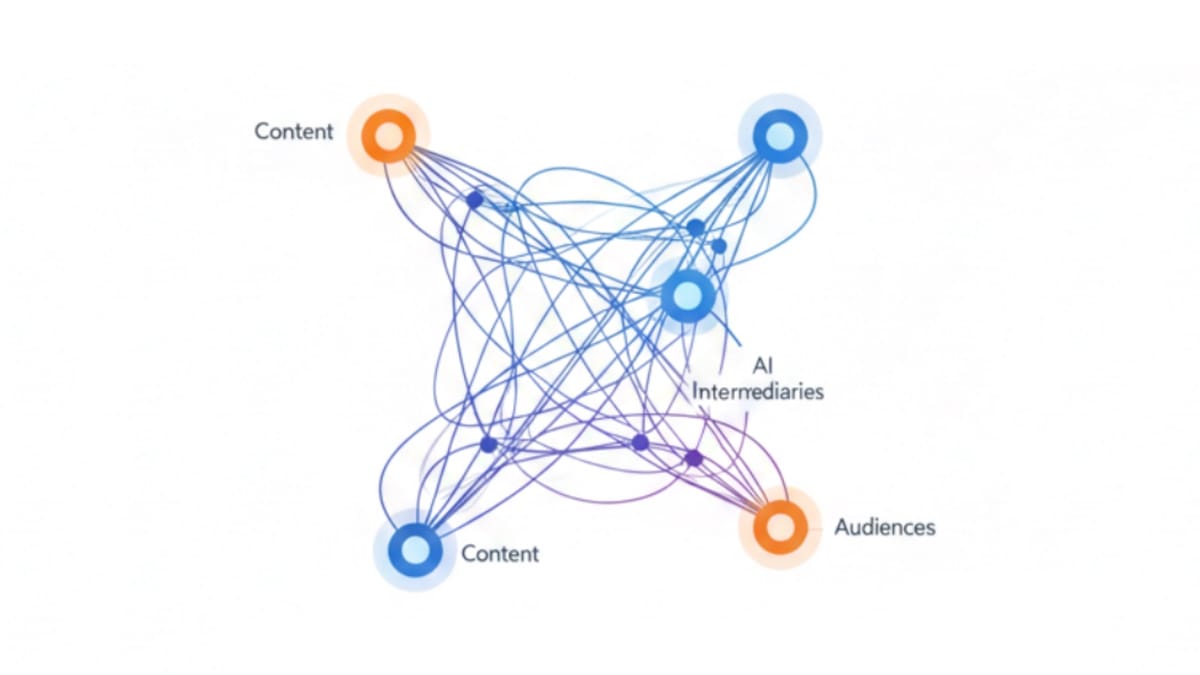
Microsoft Clarity published research on December 18, 2025, examining how artificial intelligence assistants are creating fundamental shifts in website analytics and user behavior patterns. The analytics platform's anniversary analysis introduces what it calls the "Agentic Web," where content increasingly reaches audiences through AI intermediaries rather than direct human navigation.
The study reveals traffic from platforms including ChatGPT, Microsoft Copilot, Google Gemini, and similar tools exploded by 155% over an eight-month period, according to Ravi Yada, Director of Product at Microsoft Clarity. This growth rate significantly exceeds traditional channels, with search traffic expanding 24% and social media traffic growing 21% during the same timeframe.
Despite this acceleration, AI-driven referrals account for less than 1% of total website visitors across the analyzed dataset. The small volume masks conversion performance that challenges conventional understanding of traffic quality. Clarity's data showed AI-sourced visitors convert to sign-ups at 1.66% compared to 0.15% from organic search, representing an 11-fold advantage.
"What happens when the first interaction with your content isn't a user tapping a link, but an AI reading your page, summarizing it, or recommending it?" Yada wrote in the announcement. "Welcome to the Agentic Web: a world where your content has two audiences (humans and AI), your user journeys start mid-funnel, and the signals that matter are changing fast."
Subscribe PPC Land newsletter ✉️ for similar stories like this one
The conversion patterns extend across multiple engagement types. Subscription conversions from AI traffic reached 1.34% while search managed 0.55%, direct traffic 0.41%, and social media 0.37%, according to the platform's analysis. These metrics suggest visitors arriving from AI assistants demonstrate stronger intent than those following traditional discovery paths.
The behavioral differences appear rooted in how AI platforms pre-qualify users before directing them to websites. AI traffic converts at 3x higher rates than traditional channels earlier showed similar patterns, with research indicating AI visitors arrive further along in their research journey compared to search engine users.
Microsoft Clarity analyzed data from over 1,200 publisher and news websites to establish these benchmarks. The platform introduced AI traffic filters in August 2025, separating visits from known AI referrer URLs into dedicated analytics categories. This measurement infrastructure enables publishers to track ChatGPT, Copilot, Perplexity, Gemini, and Claude as distinct traffic sources comparable to organic search or social media.
The December 18 announcement positions AI assistants as creating "zero-click" consumption patterns where users receive answers without visiting source websites. "Often, the AI will answer the user's question directly using content it read from one or multiple websites," according to the analysis. "The user skips the click entirely. This means your site could be influencing people who never show up in your page view counts."
When AI platforms do generate website visits, they typically direct users to specific pages deep within site hierarchies rather than homepages. This navigation pattern bypasses traditional user journey structures, with visitors entering "mid-funnel" on pages containing exact answers to their queries. The shift challenges conventional analytics frameworks designed around homepage entry points and sequential page flows.
Microsoft Clarity documented this behavior through session recordings and heatmaps comparing AI-referred visitors against traditional channel traffic. The platform's analysis suggests AI-directed users demonstrate different engagement patterns, potentially reading more content because AI systems prime them with context before referral.
The measurement challenges extend beyond behavioral analysis to attribution questions. Traditional analytics registers zero activity when AI tools consume content without directing users to source websites. "Content creators deserve credit (and potentially compensation, but that's another story) for the value their content provides, even when delivered via an AI," the announcement states.
Microsoft Clarity proposes developing new attribution methodologies for AI consumption, including partnerships with AI providers to receive feedback signals about content usage. The platform suggests server-side analytics capable of logging AI agent access even when no human visitor follows could address measurement gaps.
Google Analytics now suggests tracking AI chatbots in custom channel groups in August 2025, providing regex patterns for identifying traffic from ChatGPT, Gemini, Copilot, Claude, and Perplexity. The guidance represents Google's first official recognition of AI tools as distinct traffic sources requiring specialized measurement.
Bot traffic has surged alongside generative AI adoption, with some analyses indicating AI models crawl websites at rates thousands of times higher than human visits. Microsoft Clarity emphasizes distinguishing beneficial bot activity from abusive scraping, enabling publishers to filter measurement noise while capturing legitimate AI engagement.
Buy ads on PPC Land. PPC Land has standard and native ad formats via major DSPs and ad platforms like Google Ads. Via an auction CPM, you can reach industry professionals.
The platform categorizes AI traffic into two measurement types. AI Platform captures organic visits from chat tools, while Paid AI Platform tracks ad-driven visits within AI experiences. This structure creates comparable performance metrics across organic and paid AI channels without requiring additional setup configurations.
Similarweb launches dual tracking platform for AI search optimization in July 2025, combining brand visibility tracking with traffic analysis across ChatGPT, Perplexity, Gemini, Grok, and Copilot. The toolkit addresses marketer demands for measuring both brand mentions in AI responses and actual website visits from these platforms.
Microsoft Clarity's analysis projects AI-mediated web traffic following adoption curves similar to mobile internet usage, which took years to overtake desktop traffic despite early indicators. "Today it might be <1%, but in a few years it could be 10% or 20% – especially as AI assistants get integrated into phones, cars, AR glasses, you name it," according to the announcement.
The research identifies three emerging metric categories for AI-influenced analytics. AI citation counts measure how frequently content appears in assistant responses. AI-to-human handoff rates track conversion from AI interactions to website visits. Multi-turn conversion metrics examine whether AI conversations ultimately result in website conversions.
Ahrefs study finds AI search visitors convert 23x higher than organic traffic published June 16, 2025, analyzing 30-day patterns showing AI search traffic accounting for just 0.5% of total website visits yet generating 12.1% of all signups. The conversion efficiency demonstrates commercial value despite minimal traffic share.
E-commerce performance presents different patterns. ChatGPT traffic underperforms Google in e-commerce study examining 973 websites with $20 billion combined revenue found ChatGPT referrals demonstrated conversion rates inferior to all channels except paid social media. The research suggests AI traffic quality varies significantly across industry verticals.
Microsoft Clarity recommends content creators implement structured data and FAQ sections that AI systems can easily parse and present. This optimization approach mirrors search engine optimization practices but targets AI consumption rather than traditional ranking algorithms. The platform describes this emerging discipline as "AI Experience Optimization," distinguishing it from conventional SEO.
The measurement infrastructure continues developing as platforms expand AI integration. ChatGPT holds two-thirds market share as Gemini and Grok gain ground released December 22, 2025, showing competitive dynamics among AI platforms that publishers must track as distinct traffic sources.
Microsoft Copilot achieves 73% higher click-through rates in advertising study published August 6, 2025, demonstrated conversational AI platforms generating stronger advertising performance metrics than traditional search placements. The research showed customer journeys through Copilot measured 33% shorter than conventional search paths.
The December 18 announcement envisions analytics dashboards displaying AI assistant impact metrics alongside traditional traffic sources. "This week, AI assistants (ChatGPT, Copilot, etc.) delivered 4,500 impressions of your content (times your site was used in answers), resulting in 300 click-throughs to your site," the hypothetical dashboard example states.
Microsoft Clarity positions its platform evolution around providing visibility into both human and AI consumption patterns. The analytics infrastructure separates AI platform traffic from traditional sources while enabling behavioral analysis through session recordings and heatmaps comparing visitor types.
The broader industry response includes Microsoft details how generative AI reshapes search and advertising landscapepublished July 2, 2025, revealing conversational search transforming keyword-based queries into multi-step interactions that better match human communication patterns.
Attribution frameworks face disruption as AI platforms compress customer journeys while obscuring traditional touchpoint visibility. Meta tests GA4 integration for cross-platform tracking in ads demonstrates platforms developing alternative measurement pathways operating independently of native attribution systems.
Microsoft Clarity's December 18 analysis arrives as marketing professionals navigate measurement complexity created by privacy regulations, platform changes, and AI adoption. The research suggests organizations developing AI traffic expertise early will establish competitive advantages as consumption patterns shift toward AI-mediated discovery.
"The future of analytics is one where humans and AI are both first-class citizens in our data," according to the announcement. "With Microsoft Clarity, you won't miss a beat – whether it's a person scrolling your homepage, or a robot quoting your site in an answer."
The platform provides free access without traffic limits, positioning its analytics infrastructure as addressing emerging measurement needs created by AI assistant proliferation. Microsoft Clarity's evolution reflects industry-wide adaptation to fundamental changes in how users discover, consume, and interact with web content.
Subscribe PPC Land newsletter ✉️ for similar stories like this one
Subscribe PPC Land newsletter ✉️ for similar stories like this one
Who: Microsoft Clarity, an analytics platform celebrating its fifth anniversary, published research authored by Ravi Yada, Director of Product. The analysis examined data from over 1,200 publisher and news websites tracking visitor behavior from AI platforms including ChatGPT, Microsoft Copilot, Google Gemini, Perplexity, and Claude.
What: The research revealed AI referral traffic grew 155% over eight months while converting to sign-ups at 1.66% compared to 0.15% from organic search, representing an 11-fold conversion advantage. Despite superior conversion rates, AI referrals account for less than 1% of total traffic. The analysis introduces the concept of the "Agentic Web" where content reaches audiences through AI intermediaries rather than direct human navigation. Microsoft Clarity proposes new measurement methodologies including AI citation counts, AI-to-human handoff rates, and multi-turn conversion metrics to track this emerging traffic pattern.
When: The announcement was published December 18, 2025, analyzing eight months of traffic data from the platform's analytics infrastructure. The research coincides with Microsoft Clarity's fifth anniversary and builds on AI traffic filters the platform introduced in August 2025.
Where: The analysis covers global website traffic patterns across publisher and news properties using Microsoft Clarity's analytics platform. The research examines referral patterns from AI assistants operating across web browsers, mobile applications, and integrated platform experiences in Microsoft's ecosystem and competing services.
Why: Traditional analytics frameworks designed around direct website visits and sequential page flows fail to capture emerging consumption patterns where AI assistants mediate content discovery. Users increasingly receive answers through AI platforms without visiting source websites, creating "zero-click" consumption that traditional page view metrics cannot measure. The shift requires new attribution methodologies, measurement infrastructure, and optimization strategies as AI platforms integrate into phones, browsers, and devices while potentially reaching 10-20% of total traffic within years.