


YouTube yesterday announced four new features for YouTube Premium subscribers, covering adaptive playback speed, motion-aware audio controls, expanded high-quality audio on televisions, and AI-generated playlists in YouTube Music. The announcement was made by Rob from TeamYouTube through an official post on the YouTube Community Help Center, describing a rollout that begins on Android with iOS availability following at different intervals.
The update extends a pattern of incremental Premium feature expansion that the platform has been executing across 2024 and 2025. Previous Premium expansions in September 2025 introduced 256kbps audio for music videos on mobile, granular playback speed controls up to 4x in 0.05-increment steps, and Jump Ahead for smart TVs - all features that had graduated from experimental testing phases. Today's batch follows a similar structure: Android first, iOS later, with some features tied specifically to device context such as motion detection.
Auto speed: adaptive playback without manual adjustment
The most technically distinctive feature in today's announcement is auto speed, a mode that adjusts playback rate dynamically rather than holding to a single user-selected speed. The feature is positioned at podcast listeners, students, and viewers of educational or long-form content.
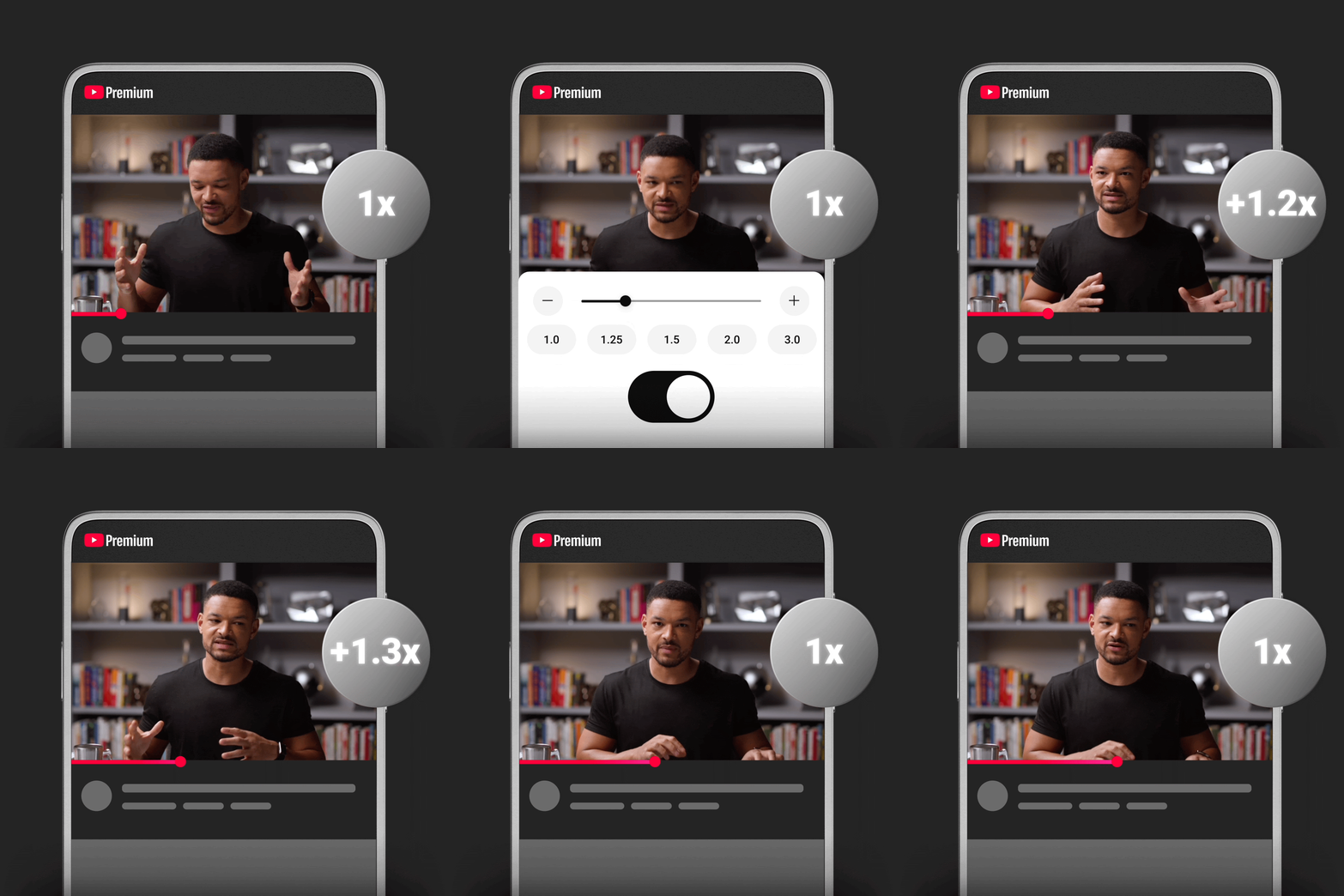
According to YouTube, auto speed "intelligently adjusts playback speed during relevant moments like slower speech or lengthy introductions, and automatically returns to your baseline speed during faster speech segments." The mechanism works in both directions: it slows down during low-density speech passages to ensure nothing is missed, then accelerates again during faster-paced segments. The user sets a minimum baseline - any speed between 1.0x and 4.0x - and auto speed adjusts upward or downward from that point depending on what the audio analysis detects.
Activating the feature requires navigating to video player settings, then selecting Playback speed, and toggling Auto speed on. Users then choose their baseline. The ceiling of 4.0x aligns with the maximum speed that YouTube introduced in its September 2025 platform expansion, when granular increments of 0.05x were made broadly available across Android, iOS, and web.
Auto speed is currently restricted to Android. YouTube says iOS support is coming "later this year," without specifying a quarter or month.
The context for this feature matters. Educational content, podcasts, and interview-format programming often contain natural variation in speech density - an introduction may run slowly with deliberate pacing, while a rapid-fire Q&A can compress a great deal of information in a short span. Manual speed adjustments exist, but they require the viewer to interrupt playback. Auto speed removes that friction by making the adjustment without prompting. Whether the algorithm reliably identifies those boundaries - and avoids jarring mid-sentence speed transitions - will determine how broadly it gets used.
On-the-go: motion-triggered audio mode
The second feature, on-the-go, replaces an existing set of Premium controls for background listening. The trigger mechanism is physical: the feature activates automatically when the device detects motion such as walking or running while a video is playing with the phone unlocked. It can also be activated manually through video player settings.
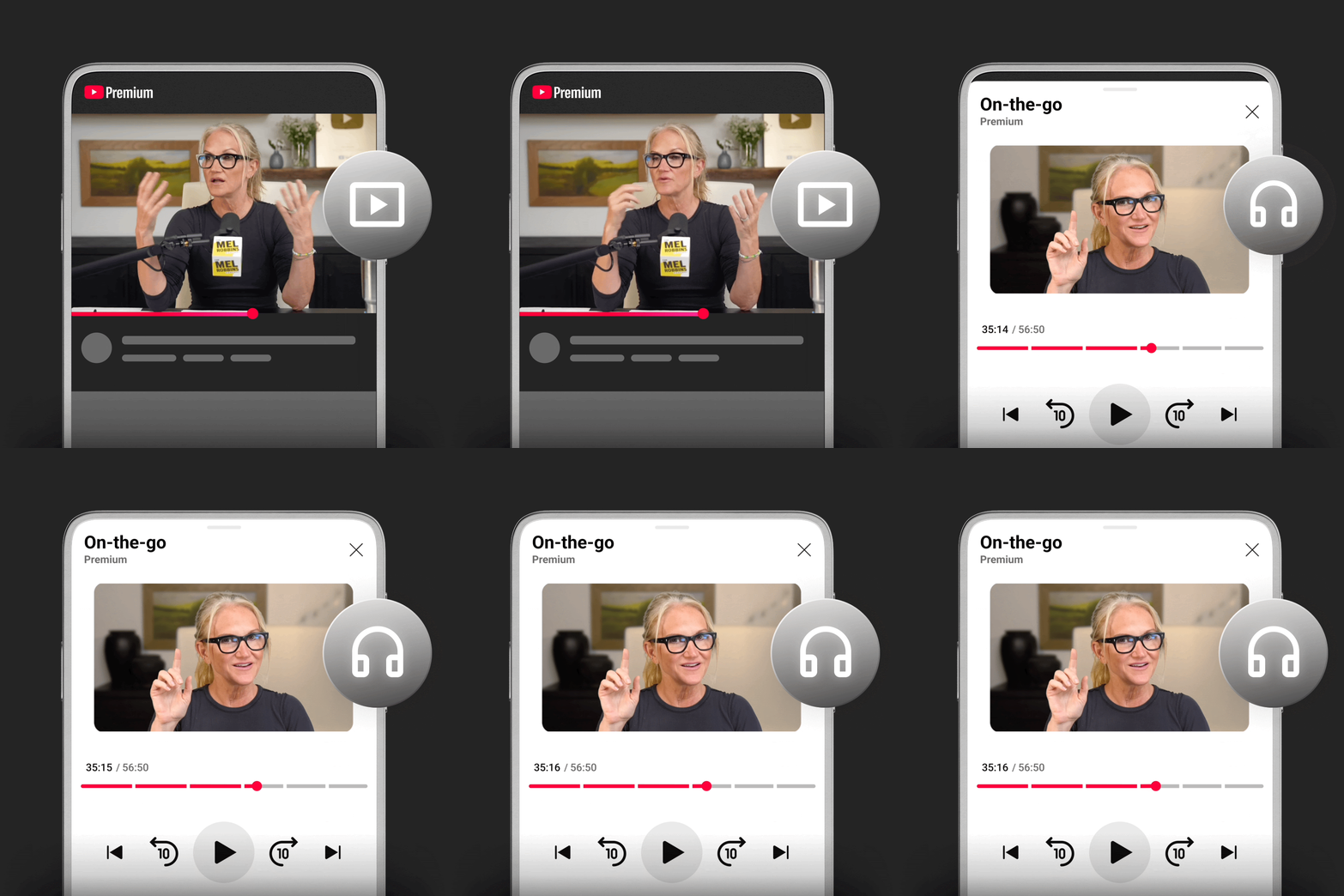
According to YouTube, on-the-go mode enables users to "toggle between video and audio, jump to a different chapter, easily skip forward or backwards even with your screen locked, and more." The description positions it as a companion to podcast, talk show, and true crime content - formats where the video element is largely optional and the audio is the primary value.
The practical mechanics differ from standard background playback in one key respect: the interface optimizes for one-handed or glanceable control, making it possible to navigate within a video without unlocking the phone or opening the app fully. Chapter navigation in particular becomes relevant for longer episodes with distinct segments - a listener can jump to a specific discussion point without returning to the full player interface.
On-the-go is available now for YouTube Premium users on Android. iOS support is described as coming "in the next few months," a shorter runway than the "later this year" framing used for auto speed.
The feature directly replaces the existing Premium controls, meaning it is not an additive option layered on top of previous functionality. Users who were already using the prior set of background controls will find their workflow replaced rather than supplemented.
High-quality 256kbps audio reaches smart TVs and gaming consoles
The third feature is narrower in technical scope but significant for Premium subscribers who use YouTube on television hardware. High-quality audio at 256kbps - the same bitrate tier that YouTube expanded to Android and iOS in September 2025 - is now available on Smart TVs and gaming consoles through YouTube's main app.
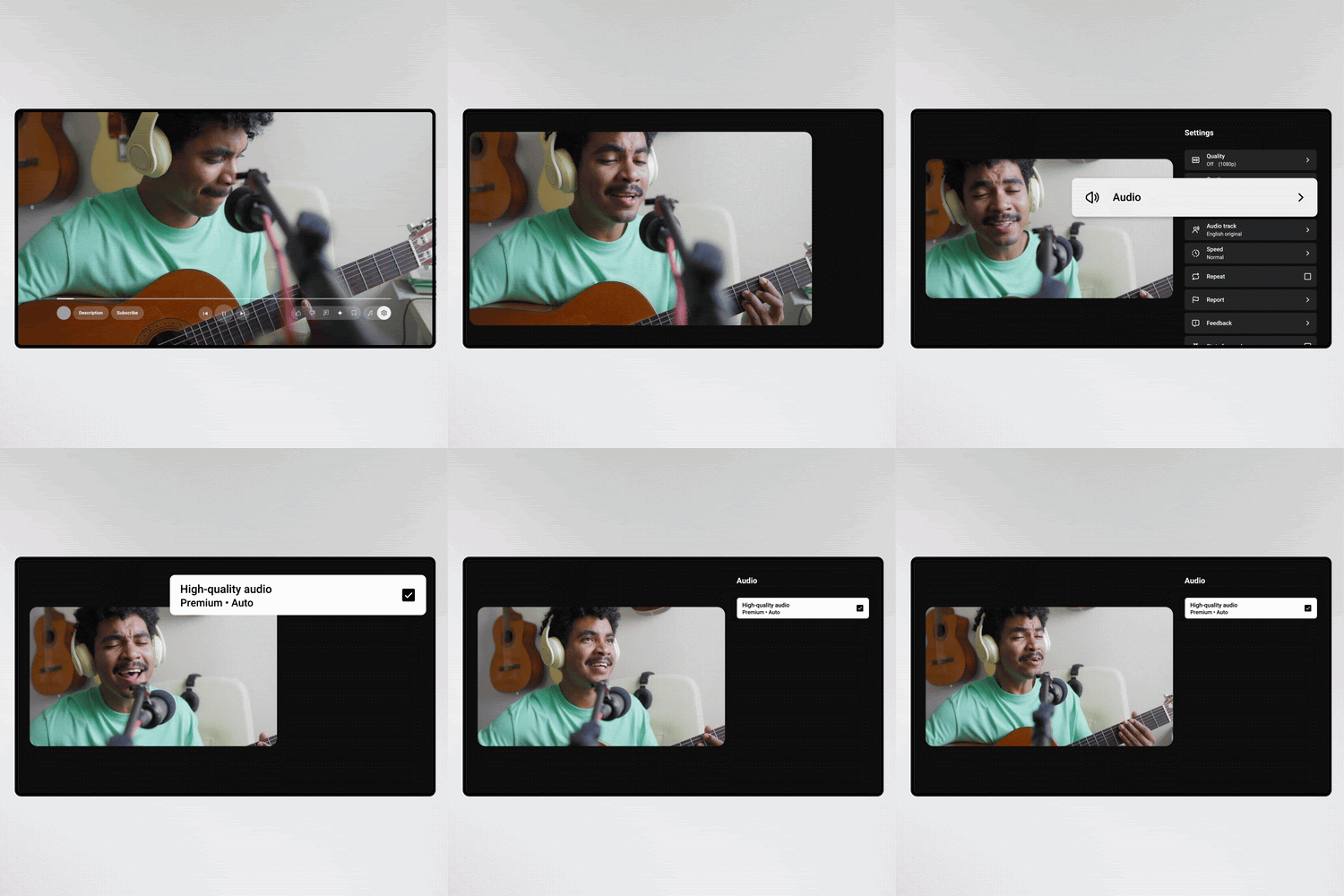
According to YouTube, "high quality audio lets you enjoy high-quality 256kbps audio on music videos with more clarity and depth." The feature applies specifically to music videos in the main YouTube app - not YouTube Music - and requires users to navigate to Audio settings on their TV and check the "High-quality audio" box.
The addition of TV as a supported platform closes a gap that existed after the September 2025 rollout. At that point, the 256kbps tier was confirmed for Android and iOS but was not documented for television clients. The specification of "music videos" as the applicable content type is consistent with earlier platform documentation, which restricted the high-quality tier to official music videos and Art Tracks rather than general video content.
To understand the significance of the 256kbps figure: standard audio on YouTube streams at 128kbps using AAC or OPUS codecs, while the high-quality tier doubles that figure. It is the same ceiling figure that YouTube introduced during the January 2025 experimental phase, when the platform first announced Premium testing of 256kbps encoding. That earlier announcement covered the encoding side; today's update extends the delivery of that quality to the living-room screen.
For the advertising community, this development carries a secondary implication. The audience advertisers cannot buy on YouTube - the Premium subscriber base - is the same audience that now receives enhanced audio on television hardware. That 125-million-subscriber group, noted by PPC Land in January 2026, has effectively opted out of advertising across devices. The expansion of premium features to the TV environment strengthens the value proposition of that subscription tier, potentially drawing more high-income viewers out of the ad-supported inventory and into the walled garden of Premium.
AI playlists in YouTube Music
The fourth feature applies to YouTube Music rather than the main video platform. According to YouTube, Premium subscribers "can now effortlessly use AI to generate playlists based on whatever you're feeling at the moment." The mechanism is text-prompt based: a user describes the kind of playlist they want, and the system generates a selection from that description.
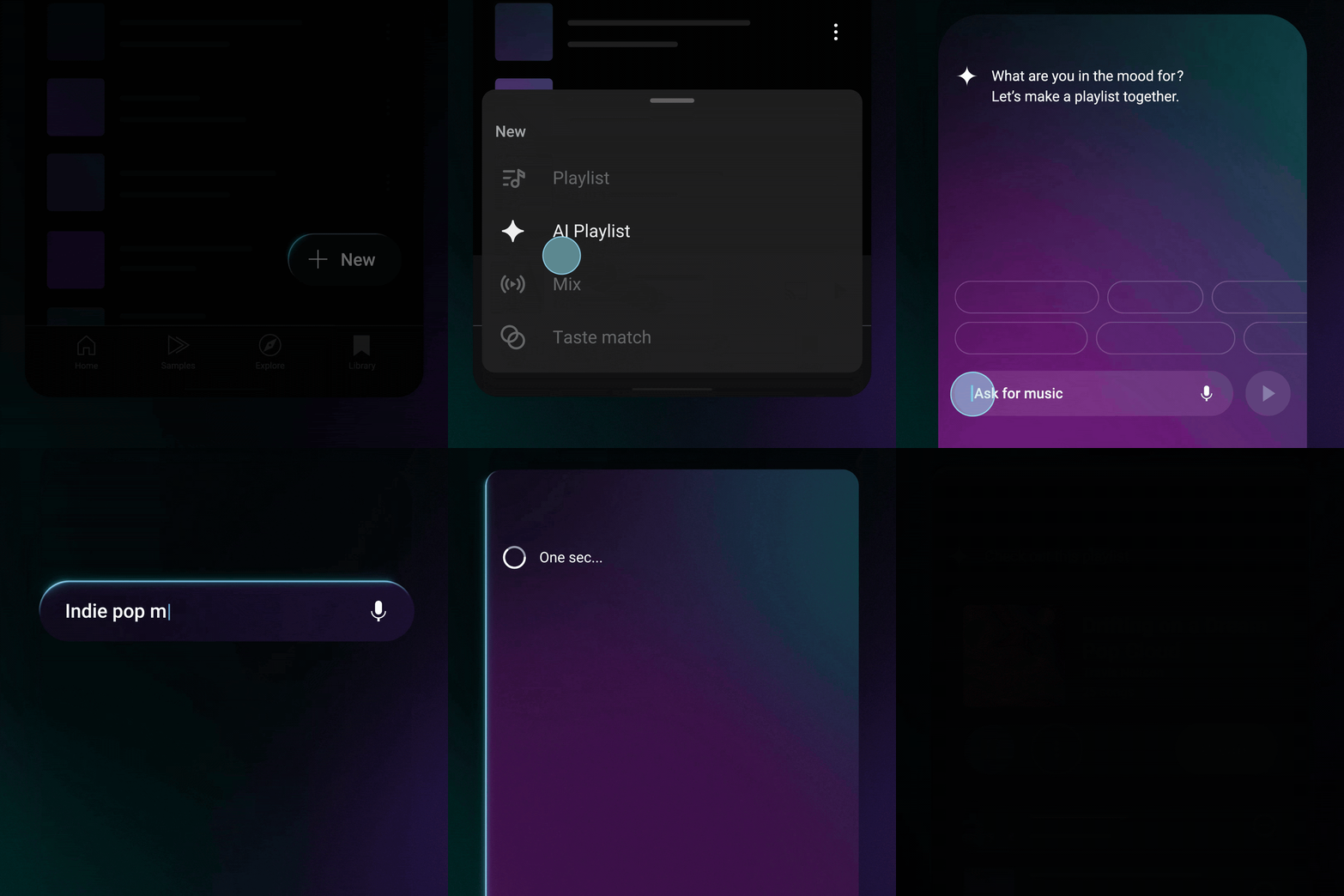
The announcement does not specify which underlying model powers the generation, nor does it describe how the system resolves ambiguous prompts, handles niche genres, or handles contradictory inputs. The description is functional and user-facing rather than technical.
This feature is not a complete first for the platform. YouTube Music had been experimenting with AI-assisted discovery features over an extended period. The Q4 2024 YouTube Music update, reported by PPC Land in December 2024, documented AI-powered music discovery additions alongside collaborative playlists. The AI playlist generator described today appears to be a further step in that lineage - moving from discovery assistance to direct playlist generation from a blank prompt.
Competing platforms have pursued similar functionality. Spotify launched Prompted Playlists for premium users. Amazon Music and Deezer have both deployed AI-driven playlist or radio creation features. YouTube's entry into this space brings the feature to a subscription service that also includes ad-free video, background playback, and downloads - a bundle that Spotify does not replicate.
The YouTube Music feature is described as currently available for Premium members without a specific device restriction mentioned in the announcement, in contrast to the Android-first framing of auto speed and on-the-go.
Subscription context and platform strategy
The four features announced today sit within a broader pattern of Premium investment that YouTube has been executing across an extended period. By the third quarter of 2025, YouTube had crossed 300 million paid subscriptions across Google One, YouTube Premium, and YouTube Music. Earlier in 2025, YouTube Music and Premium combined had exceeded 100 million subscribers including trial accounts - a figure that reached 125 million by March 2025.
For advertisers and media buyers, the growth of Premium creates a structural tension. YouTube's advertising revenue reached $9.8 billion in Q2 2025, representing 13% year-over-year growth. The platform has been pressing to capture larger shares of traditional television budgets - a case it made most explicitly at Brandcast 2026 in April 2026. But a larger Premium subscriber base means a larger share of the platform's most engaged audience sits behind a paywall, unreachable through advertising at any price.
The TV-side audio enhancement is particularly relevant to that dynamic. More than half of YouTube's watch time now occurs on television screens, a figure PPC Land has documented in multiple coverage pieces. Features that improve the television viewing experience - whether audio quality or navigation controls - deepen the value of Premium membership in the context where YouTube is competing most directly against traditional broadcast and streaming services for advertising dollars.
The YouTube Premium Lite rollout to Belgium, Venezuela, Peru, and Guatemala in April 2026 demonstrated a parallel strand of strategy: a lower-cost ad-removal tier that excludes music content, targeting audiences whose primary consumption is general video rather than music. Today's features, by contrast, sit firmly in the full Premium tier and span both the video platform and YouTube Music - reinforcing the value differential between the two subscription levels.
Device availability summary
The rollout is staged, with Android receiving three of the four features immediately and iOS on a delayed schedule. Auto speed arrives on iOS "later this year." On-the-go arrives on iOS "in the next few months." High-quality audio on TV and the YouTube Music AI playlist feature carry no iOS-specific deferral in the announcement text, suggesting broader device availability for those two.
The staged rollout reflects the platform's standard practice for Premium feature deployment. The January 2025 experimental testing phase documented by PPC Land showed YouTube running simultaneous experiments on discrete features across different device populations before broader release. The September 2025 expansion formalized several of those experiments across platforms. Today's announcement follows that same trajectory: Android as the initial deployment target, with iOS following at intervals measured in months.
Timeline
- November 14, 2014 - YouTube Premium launches as Music Key, the subscription service's original form
- January 22, 2025 - YouTube Premium begins experimental testing of 256kbps audio encoding and 4x playback speed controls, documented by PPC Land
- September 26, 2025 - YouTube Premium formalizes expanded features across devices, including 256kbps audio for mobile, Jump Ahead for smart TVs, and 4x playback speed in 0.05-increment steps, as covered by PPC Land
- December 22, 2024 (reported December 26, 2024) - YouTube Music Q4 2024 update introduces collaborative playlists and AI-powered music discovery features, reported by PPC Land
- January 12, 2026 - PPC Land publishes analysis of the Premium subscriber base as an audience unreachable by advertisers, noting 125 million Premium and Music subscribers as of March 2025, in The audience advertisers can't buy on YouTube
- April 11, 2026 - YouTube Premium Lite rolls out to Belgium, Venezuela, Peru, and Guatemala, marking continued geographic expansion of the lower-cost ad-removal tier, covered by PPC Land
- April 2026 - YouTube presents Brandcast 2026 at Lincoln Center, citing $100 billion paid to creators and making the case for television advertising budget allocation, covered by PPC Land
- May 28, 2026 - YouTube announces auto speed, on-the-go audio mode, high-quality audio for Smart TVs and gaming consoles, and AI playlist generation in YouTube Music, initially for Android Premium subscribers
Summary
Who: YouTube, the Google-owned video platform, announced the features through Rob from TeamYouTube in the YouTube Community Help Center. The update applies to YouTube Premium subscribers globally, with initial rollout on Android devices.
What: Four new Premium features were announced: auto speed (dynamic playback speed adjustment between 1.0x and 4.0x based on speech density); on-the-go (motion-triggered audio mode replacing existing Premium background controls, with chapter navigation and screen-locked skip controls); high-quality 256kbps audio for Smart TVs and gaming consoles in the main YouTube app; and AI-generated playlists in YouTube Music via text prompt.
When: The announcement was published today, May 28, 2026. Auto speed and on-the-go are rolling out now on Android, with iOS availability described as "later this year" and "in the next few months" respectively. High-quality TV audio and AI Music playlists are rolling out now across supported devices.
Where: The features are available within the YouTube and YouTube Music applications on Android devices, Smart TVs, and gaming consoles, depending on the feature. The YouTube Community Help Center served as the publication point for the announcement.
Why: The update continues YouTube's strategy of adding value to the full Premium tier - distinct from the lower-cost Premium Lite offering - at a moment when the platform is actively growing its paid subscriber base past 125 million Music and Premium accounts. Improvements to the television viewing experience align with YouTube's broader push to compete for traditional TV advertising budgets, while the AI playlist feature responds to competitive pressure from Spotify, Amazon Music, and Deezer, all of which have deployed similar functionality.


Discussion