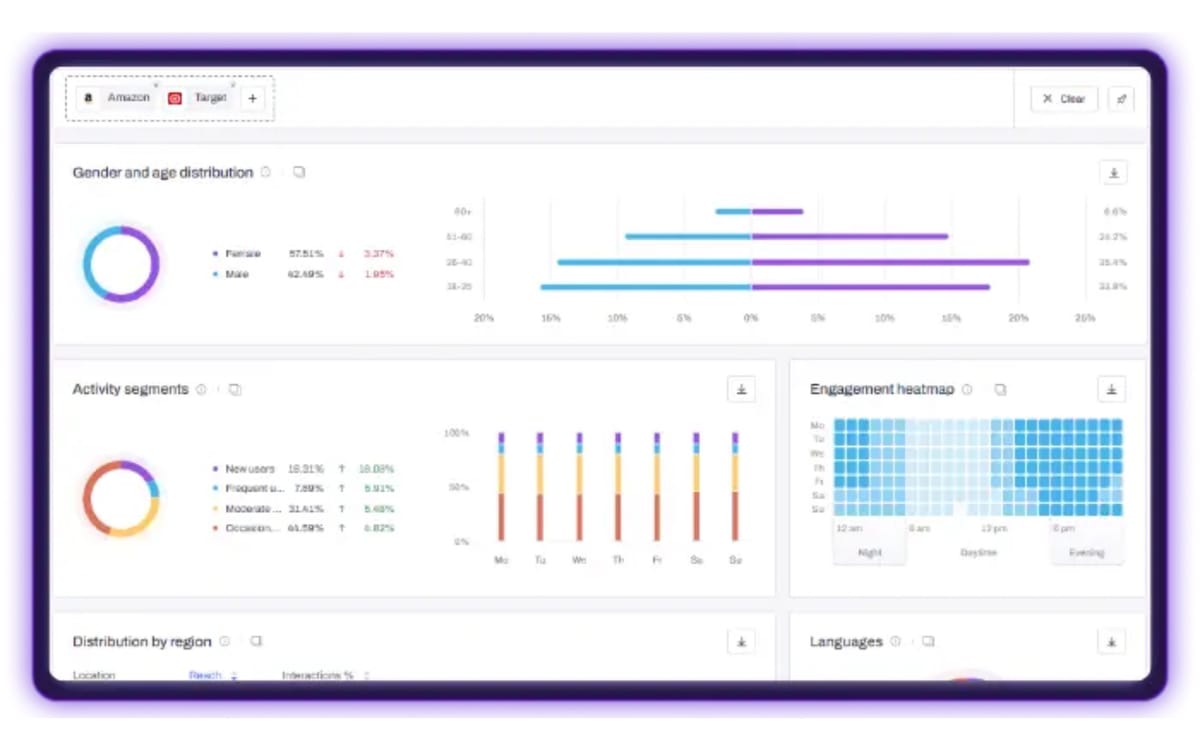
AdClarity adds click-through rate benchmarking to ad intelligence platform
BIScience launched CTR competitive intelligence for AdClarity on December 5, 2025, enabling advertisers to benchmark engagement across display, video, social and in-app ads.

BIScience announced the launch of Ad Click-Through Rate Competitive Intelligence for its AdClarity platform on December 5, 2025, introducing engagement measurement capabilities to its existing ad intelligence suite. The new feature draws data from BIScience's 30 million-user global panel to track actual click behavior across display, video, social, mobile, and in-app advertising formats.
The enhancement provides advertisers with granular CTR benchmarking at multiple levels: individual ads, complete campaigns, brand portfolios, and geographic segments including US designated market areas and cities. According to BIScience, the feature enables marketers to analyze which creative executions and messaging strategies generate measurable engagement rather than relying solely on impression-based metrics.
AdClarity's platform already measured ad spend, impressions, cost per thousand impressions, and share of voice across digital channels. The addition of click-through rate data completes what BIScience describes as a comprehensive view of campaign performance, allowing users to compare their results against competitors and broader market benchmarks.
Subscribe PPC Land newsletter ✉️ for similar stories like this one
The CTR intelligence capability operates across 51 markets where BIScience maintains its opt-in user panel. Panel members have agreed to share their online behavior data across all devices, creating what the company positions as a representative sample of actual consumer engagement with digital advertising. This approach differs from platform-reported metrics by measuring clicks from real users rather than estimated or modeled data.
Daniel Junowicz, VP of Sales at BIScience, stated that the release addresses timing challenges in competitive analysis. "Ad Click-Through Rate Competitive Intelligence provides a clear view of engagement, enables apples-to-apples benchmarking across markets, and supports data-driven optimization in real time," Junowicz said.
The measurement methodology tracks clicks at the creative level, allowing advertisers to identify which specific ad units drive higher engagement rates within campaign structures. Users can filter CTR data by creative format, messaging approach, call-to-action placement, and visual design elements to determine which combinations produce measurable responses from target audiences.
For advertisers managing campaigns across multiple geographic markets, the platform breaks down CTR performance by location. The US market receives particular granularity, with data available at the DMA level—the standard geographic units used by Nielsen for television and media planning—and individual city level. This geographic segmentation helps marketers understand how creative resonates differently across regional audiences.
The competitive intelligence component allows users to access CTR data for campaigns run by other brands within their category. Advertisers can identify top-performing campaigns by engagement rate, examine the creative and messaging strategies employed, and compare their own CTR performance against category averages. This benchmarking extends across different product categories, providing context for whether engagement rates meet, exceed, or fall short of relevant industry standards.
BIScience built the CTR measurement into AdClarity's existing cross-channel tracking infrastructure, which monitors advertising activity across traditional display networks, video platforms, social media properties, mobile web, and in-app environments. The company applies artificial intelligence technologies to process and categorize the volume of advertising data collected from its user panel.
The platform serves more than 2,000 brands according to BIScience, including hundreds of Fortune 500 companies alongside research firms, agencies, retailers, publishers, and investment firms. The company operates offices in New York, Tel Aviv, and Sydney, reflecting a global client base for its intelligence products.
Beyond AdClarity, BIScience offers Consumer Behaviors for audience insights and Purchase Data for transaction analysis. The three products share the underlying panel infrastructure, allowing clients to combine advertising intelligence with behavioral and transactional data for integrated analysis.
The announcement positions CTR measurement as particularly valuable for understanding creative effectiveness before committing significant budget to campaigns. Advertisers can test which creative approaches generate engagement in competitive environments, refine messaging based on observed performance, and allocate spending toward proven strategies rather than assumptions about what might work.
The timing of this launch reflects broader industry pressure on digital advertising metrics. Privacy regulations and platform changes have complicated traditional measurement approaches, creating demand for panel-based alternatives that track actual user behavior while maintaining consent and transparency standards. BIScience emphasizes that its panel consists of opt-in users who have agreed to data collection.
For agencies managing multiple client accounts, the platform offers category-level benchmarking that helps set realistic performance expectations. Rather than comparing a financial services campaign directly to e-commerce performance, users can filter CTR data by vertical to understand typical engagement rates within specific industries.
The feature also tracks CTR trends over time, allowing advertisers to monitor whether engagement rates improve, decline, or plateau as campaigns run. This temporal data helps identify creative fatigue—the point at which audiences stop responding to ad units they have seen repeatedly—and signals when creative refreshes may be necessary.
Mobile and in-app advertising receive particular attention in the new feature, reflecting the growing share of digital ad spending allocated to mobile environments. The platform separately tracks CTR for mobile web and in-app placements, recognizing that these environments often produce different engagement patterns than desktop display advertising.
Social media advertising CTR data spans major platforms where users spend significant time and attention. The measurement captures clicks on both feed-based ads and story formats, two distinct creative canvases with different engagement behaviors and user expectations.
Video advertising CTR tracking measures clicks on both pre-roll and mid-roll placements, along with social video ads and display video units. Video presents unique measurement challenges since clicks may indicate genuine interest or accidental taps, particularly on mobile devices. BIScience has not detailed how its methodology distinguishes between intentional and accidental engagement.
The competitive intelligence framework raises questions about data privacy and transparency. While BIScience states its panel members opt in to data collection, individual advertisers whose campaigns are being measured and benchmarked by competitors have not explicitly consented to this analysis. Industry practices have established competitive intelligence as standard practice, though some advertisers express concern about detailed performance data becoming available to rivals.
The platform's ability to drill down to individual ad creative performance means advertisers can examine not just whether competitors are running campaigns, but precisely which creative elements drive measurable engagement. This level of detail exceeds what marketers could traditionally glean from competitive analysis.
BIScience has not disclosed pricing for the CTR intelligence feature or whether it is included in existing AdClarity subscriptions or requires additional fees. The company directs interested parties to its website for more information about accessing the capability.
The announcement comes as digital advertising measurement faces significant industry scrutiny. Platforms have reduced data availability, regulators have imposed stricter data collection rules, and advertisers have demanded greater transparency into campaign performance. Panel-based measurement offers one alternative to platform-provided metrics, though panels introduce their own limitations around sample size, representativeness, and potential biases.
For publishers and media sellers, the CTR data provides evidence of inventory quality and engagement potential. Publishers can demonstrate that ads placed on their properties generate higher click-through rates than competitors, supporting premium pricing arguments. However, this same data could reveal underperforming inventory, creating pressure to discount rates or improve ad placements.
The feature's real-time optimization capability suggests that advertisers can make campaign adjustments based on CTR performance while campaigns are still running, rather than waiting for post-campaign analysis. This compressed feedback loop potentially accelerates testing cycles and reduces waste on underperforming creative.
Subscribe PPC Land newsletter ✉️ for similar stories like this one
Subscribe PPC Land newsletter ✉️ for similar stories like this one
Who: BIScience, the company operating AdClarity platform, launched the new feature for its client base of more than 2,000 brands including Fortune 500 companies, agencies, publishers, and research firms. Daniel Junowicz, VP of Sales at BIScience, provided commentary on the announcement.
What: Ad Click-Through Rate Competitive Intelligence adds engagement measurement to AdClarity's existing ad intelligence capabilities. The feature tracks actual user clicks across display, video, social, mobile, and in-app advertising formats using data from BIScience's 30 million-user global panel. Users can benchmark CTR at ad, campaign, brand, and geographic levels including US DMA and city breakdowns.
When: BIScience announced the launch on December 5, 2025, adding the capability to its existing AdClarity platform that already measured ad spend, impressions, CPM, and share of voice.
Where: The measurement operates across 51 markets where BIScience maintains its opt-in user panel, with particular geographic granularity in the United States at DMA and city levels. BIScience operates offices in New York, Tel Aviv, and Sydney.
Why: The launch addresses advertiser demand for engagement metrics beyond impression-based measurements, particularly as privacy regulations and platform changes have complicated traditional measurement approaches. The feature enables competitive benchmarking of creative effectiveness, helps identify top-performing campaigns and messaging strategies, and supports real-time optimization based on actual user behavior rather than estimated or modeled data.