
Amazon and NVIDIA team up to put smarter AI assistants inside your car
Amazon and NVIDIA today announced a collaboration to bring multimodal Alexa Custom Assistant to vehicles via NVIDIA DRIVE AGX, with automaker demos planned for early 2027.

Amazon and NVIDIA today announced a collaboration to bring multimodal Alexa Custom Assistant to vehicles via NVIDIA DRIVE AGX, with automaker demos planned for early 2027.
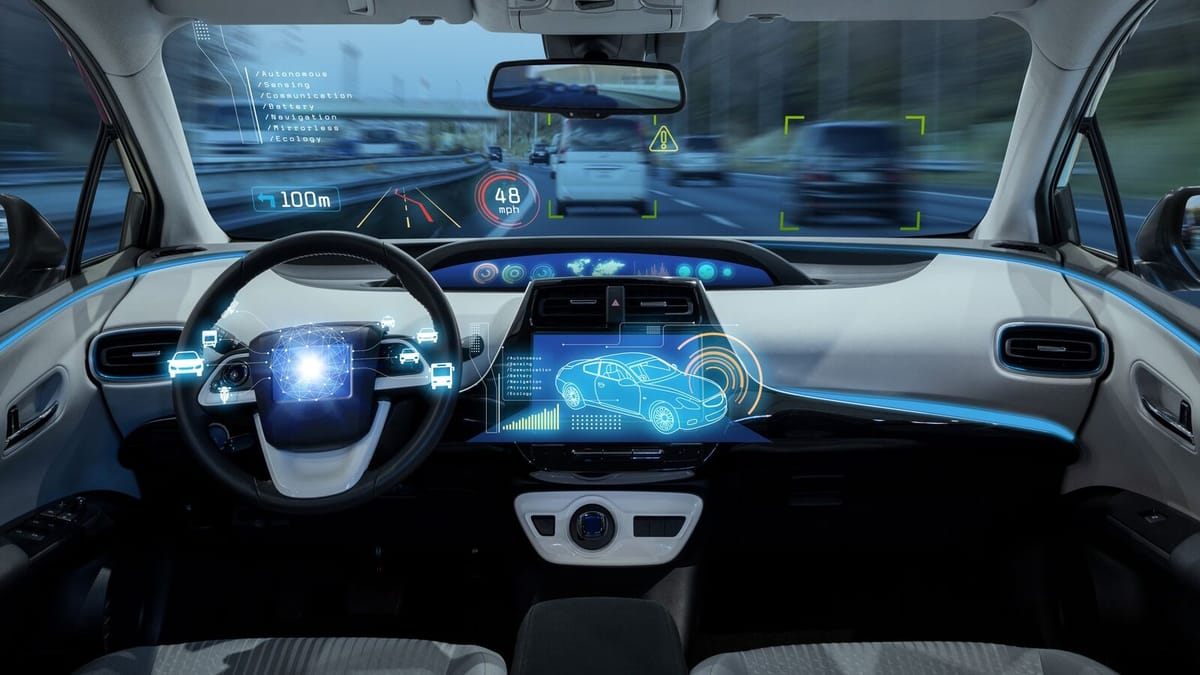
Amazon yesterday announced a collaboration with NVIDIA to advance multimodal artificial intelligence assistant technology for automotive environments, pairing Amazon's Alexa Custom Assistant with NVIDIA's DRIVE AGX automotive computing platform. The announcement, published March 16, 2026, by Amazon Staff on the Amazon News press center, describes a technical integration designed to allow car manufacturers to deploy branded in-car voice assistants capable of processing requests locally on the vehicle while also connecting to cloud-based services.
The proposed system is not yet commercially available. According to the announcement, it is planned to be available for automaker evaluation in early 2027, with a private demo process open through the Amazon Alexa Custom Assistant team.
At its core, the integration combines two distinct processing layers. Edge processing - running AI models directly on the vehicle's hardware - handles tasks requiring low latency and privacy sensitivity, such as understanding natural conversation and ambient cabin context. Cloud processing handles a broader range of requests, including music streaming, smart home device control, shopping, and services booking.
The vehicle computing hardware in question is the NVIDIA DRIVE AGX platform, a high-performance automotive computer used by several automakers for advanced driver assistance and in-cabin AI workloads. On top of that hardware, Amazon's Alexa Custom Assistant (ACA) functions as a service layer that enables automakers to build their own branded voice assistants sitting on top of Alexa+ - Amazon's next-generation AI assistant. The ACA is not a consumer-facing Alexa product in itself; it is a B2B offering directed at original equipment manufacturers, or OEMs.
According to Anes Hodžić, vice president of Amazon Smart Vehicles, "Automakers are telling us they want their vehicles to act as a smart assistant and understand passengers the way passengers understand each other, through conversation, context, and awareness of the world around them." Hodžić added that the collaboration has demonstrated what he described as "extraordinary capabilities" when combining the two companies' technologies through a "multi-modal, multi-model, and multi-agent technology stack on the edge and in the cloud."
NVIDIA's characterization of the challenge is more technical. Rishi Dhall, vice president of Automotive at NVIDIA, described the vehicle cabin as "the most demanding AI inference environment in consumer technology - real-time speech, vision language models, and multimodal reasoning, all running locally under strict privacy requirements." The proposed solution, according to Dhall, delivers an experience that is "both deeply intelligent and inherently private."
The in-car environment poses distinct challenges compared to smart speaker or smartphone AI deployments. Road noise, multiple simultaneous speakers, and safety requirements that prohibit visual attention to screens during driving all complicate voice interface design. The acoustic profile inside a moving vehicle changes significantly with speed, road surface, and open windows, making speech recognition harder than in typical home environments.
Multimodal processing - combining voice input with visual context from cameras or sensors - adds another layer of complexity. For an assistant to understand "ambient context," as both companies describe, it needs to process what is happening around the car in real time alongside what a passenger is saying. This requires vision language models operating alongside speech recognition, all within tight latency requirements.
According to industry data cited in market research published by The Business Research Company, the in-car voice assistant market was valued at $3.27 billion in 2026 and is projected to reach $5.49 billion by 2029, at a compound annual growth rate of 13.9%. A separate figure from Global Market Insights places the global automotive voice recognition market at $3.7 billion as of 2024, with projected growth at a CAGR of 10.6% through 2034.
Latency is a central engineering concern. Top-tier voice assistants aim for end-to-end latency of under 500 milliseconds, with some edge-deployed systems achieving under 250 milliseconds, according to research cited by Deepgram. A study by MoldStud found that 70% of users expect voice assistant commands to execute in under one second. The Amazon-NVIDIA approach specifically addresses this through local processing on DRIVE AGX, reducing dependence on round-trip cloud requests for time-sensitive queries.
The Amazon collaboration sits within a significantly larger set of automotive announcements from NVIDIA. On the same day - March 16, 2026 - NVIDIA announced at its GTC conference that BYD, Geely, Isuzu, and Nissan are building level 4-ready vehicles on the NVIDIA DRIVE Hyperion platform, a broader end-to-end autonomous vehicle architecture that includes compute, sensors, networking, and safety systems.
NVIDIA also announced an expanded partnership with Uber to launch a fleet of fully autonomous vehicles powered by the DRIVE AV software stack across 28 cities and four continents by 2028, beginning with Los Angeles and the San Francisco Bay Area in the first half of 2027.
The DRIVE Hyperion platform sits one level above DRIVE AGX in NVIDIA's automotive stack. While DRIVE AGX is the physical computing module, DRIVE Hyperion is the full reference architecture that integrates hardware and software for production autonomous driving. The Alexa Custom Assistant collaboration specifically targets DRIVE AGX for in-cabin intelligence rather than the autonomous driving stack itself, though both share underlying computing infrastructure.
NVIDIA also introduced Alpamayo 1.5 at GTC on March 16, a major upgrade to its open portfolio of AI models for autonomous vehicles. Building on the Alpamayo 1 model, version 1.5 takes driving video, ego-motion history, navigation guidance, and natural language prompts as inputs, outputting driving trajectories with reasoning traces. Since launching earlier in 2026, the Alpamayo portfolio has been downloaded by more than 100,000 automotive developers worldwide.
A further technical announcement was NVIDIA Halos OS, a unified safety architecture built on ASIL D-certified DriveOS foundations. It integrates safety middleware and deployable safety applications - including an NCAP five-star active safety stack - providing the guardrails needed for reasoning-based AI systems to operate at automotive-grade integrity at scale.
The BMW Group announced at CES 2026 on January 5, 2026, that it would be the first automaker to integrate Amazon Alexa+ into its vehicles, specifically through the new BMW iX3 - the first production model built on BMW's Neue Klasse software-defined vehicle platform. The technology is planned to launch first in Germany and the United States in the second half of 2026, then roll out across the full BMW model range.
According to BMW's announcement, the integration runs through the BMW Intelligent Personal Assistant, which has been part of the BMW iDrive system since 2018. Amazon's Alexa Custom Assistant was first added to BMW vehicles in 2022. The Alexa+ integration represents a deeper upgrade - enabling complex multi-part questions and follow-up queries in natural language, rather than the command-and-response model of earlier voice systems.
The BMW system also unlocks extended capabilities when linked to a personal Amazon account, including music search, message retrieval, and other content functions. According to Stephan Durach, BMW Group Senior Vice President for Development, Digital Services, Infotainment, and Connected Company, the partnership has "resulted in a product that sets new standards in the naturalness of human-vehicle interaction through the use of artificial intelligence."
The BMW iX3 launch is separate from the broader Amazon-NVIDIA multimodal collaboration, which targets early 2027 for automaker evaluation. BMW's current deployment uses Alexa Custom Assistant without the DRIVE AGX edge computing integration described in the newer announcement.
PPC Land covered the BMW and Alexa+ announcement at CES 2026 in January, noting that the automotive implementation represents the first time Alexa+ operates as built-in software on non-Amazon hardware at production scale.
The Amazon-NVIDIA collaboration lands against the wider context of the automotive AI surge observed at CES 2026, held in Las Vegas in January. A report published by Frost & Sullivan analysts Praveen Narayanan and Ajit Chander, dated January 23, 2026, characterized CES 2026 as a "decisive inflection point" where the industry narrative moved from software-defined vehicles toward what the report described as AI-defined vehicles - competitive advantage determined by the ability to deploy, validate, monitor, update, and monetize AI safely at scale.
At CES, Amazon highlighted the growing adoption of Alexa Custom Assistant, noting integrations with HERE Technologies and TomTom navigation platforms. These allow OEMs to add agentic navigation experiences where conversational AI operates within mapping and routing software. The Frost & Sullivan report also noted that Cerence, a competing in-vehicle AI provider, demonstrated its xUI platform on a BYD concept vehicle at CES, with Geely Auto named as the first OEM to adopt a cloud-heavy version.
The competitive landscape for in-vehicle AI assistants in 2026 includes Mercedes-Benz's MBUX powered by ChatGPT and Gemini, Tesla's Grok integration, Lucid's SoundHound-powered assistant with offline capability, and Volkswagen's IDA enhanced with Cerence and ChatGPT. Amazon's position - described in the Frost & Sullivan report as "the primary non-Google choice for in-vehicle voice assistants" - depends on the combination of agentic AI with smart home and broader ecosystem integrations that competing platforms do not offer.
According to SoundHound, 76% of U.S. drivers surveyed say they would be likely to use voice generative AI capabilities in their vehicle if available - a 52% increase from the previous year.
The phrase "multimodal, multi-model, and multi-agent" used in Amazon's announcement describes three distinct dimensions of the proposed system. Multimodal means the assistant processes more than one input type simultaneously - in practice, voice combined with visual or sensor data from the vehicle's surroundings. Multi-model refers to using different AI models for different sub-tasks rather than a single monolithic model, which allows optimization for specific functions such as speech recognition, intent classification, and response generation independently. Multi-agent means the system can coordinate multiple specialized AI agents handling different domains - navigation, smart home controls, shopping, or vehicle systems - through a central orchestration layer.
This architecture matches what NVIDIA is building more broadly. The Frost & Sullivan CES 2026 report noted that "agentic AI is emerging as a defining in-vehicle paradigm," with orchestrators becoming the next significant focus in automotive AI. An orchestration layer uses conversational AI to bring together multiple agents across domains, delivering a seamless cloud and edge experience.
A report from Data Insights cited in market research projects the automotive AI chatbot market at a compound annual growth rate of 25% from 2026 to 2033, reaching an estimated $25 billion by 2033.
The development carries longer-term consequences for digital advertising and commerce. In-vehicle AI assistants capable of natural, multi-turn conversations represent a new access point for location-based commerce. Voice interfaces suit driving contexts precisely because visual attention must remain on the road, creating moments where conversational queries about nearby restaurants, fuel stations, parking, or services are natural rather than incidental.
Amazon's broader advertising revenue hit $21.3 billion in Q4 2025, representing 23% year-on-year growth, with the company's first-party data infrastructure underpinning targeting across its ecosystem. Extending Alexa into vehicles deepens that data infrastructure with location and mobility signals. PPC Land has noted that LiveOne's renewal of its DAX audio advertising partnership projects a 30% increase in programmatic audio revenue for 2026, partly driven by in-car connected audio environments where listeners show heightened engagement during commutes.
The advertising implications of the Amazon-NVIDIA partnership remain underdeveloped in the current announcement. Amazon has not disclosed whether Alexa Custom Assistant in vehicles will carry sponsored content or commerce integrations in the same way its consumer Alexa devices do. The OEM-branded nature of ACA - where each automaker builds its own assistant identity on top of Alexa+ - could complicate how advertising inventory is structured and sold across different vehicle brands.
Separately, the Amazon Ads MCP Server entered open beta in February 2026, allowing external AI platforms to connect to Amazon Ads API functionality through a natural language interface. That infrastructure development is distinct from the in-vehicle announcement but reflects Amazon's broader strategy of connecting AI agents across its ecosystem to commerce and advertising workflows.
Who: Amazon and NVIDIA announced the collaboration. Key figures include Anes Hodžić, vice president of Amazon Smart Vehicles, and Rishi Dhall, vice president of Automotive at NVIDIA. BMW is the first OEM deploying Alexa+ in vehicles, with the iX3. BYD, Geely, Isuzu, and Nissan are separately adopting NVIDIA DRIVE Hyperion for level 4 vehicle programs.
What: Amazon and NVIDIA are collaborating to integrate Amazon's Alexa Custom Assistant with NVIDIA's DRIVE AGX automotive computing platform, enabling multimodal, edge-plus-cloud AI assistant capabilities for vehicle manufacturers. Separately, NVIDIA announced DRIVE Hyperion adoption by four major automakers, Alpamayo 1.5, Halos OS safety architecture, and an expanded Uber autonomous vehicle partnership across 28 cities.
When: The Amazon-NVIDIA collaboration was announced on March 16, 2026. Automaker evaluation availability is planned for early 2027. BMW's consumer launch of Alexa+ on the iX3 is planned for the second half of 2026 in Germany and the United States.
Where: The announcement was published on Amazon News. NVIDIA's related announcements were made at GTC, NVIDIA's annual developer and product conference. BMW's CES 2026 announcement was made in Las Vegas in January 2026. Planned vehicle deployments are initially targeting Germany and the United States.
Why: Automakers are under pressure to differentiate through in-cabin digital experiences as vehicle hardware commoditizes. Conversational AI that can handle natural, multi-turn queries without memorized commands addresses a gap that earlier voice systems failed to close. For Amazon, extending Alexa into vehicle environments deepens its data infrastructure and creates new potential commerce touchpoints. For NVIDIA, the collaboration strengthens the role of DRIVE AGX as the preferred computing platform for both autonomous driving and in-cabin AI workloads.