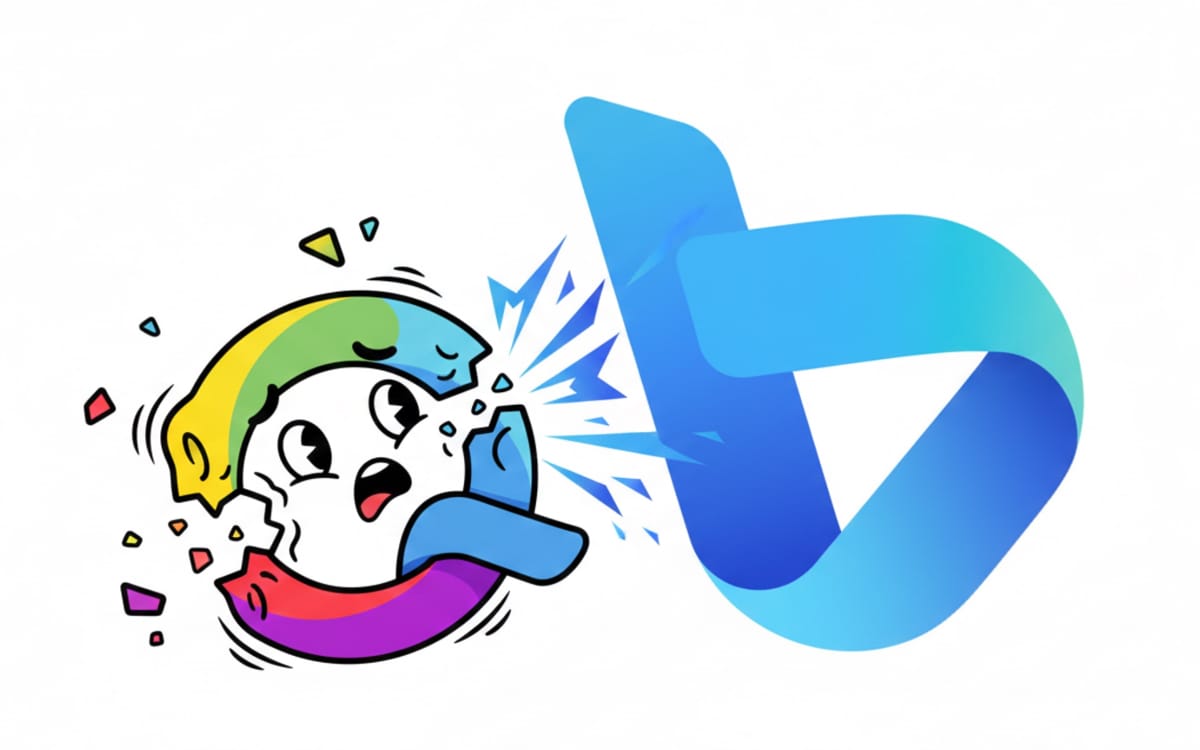
French regulator sides with Microsoft over Qwant in high-stakes search battle
France's Autorité de la concurrence rejected Qwant's antitrust complaint against Microsoft on November 27, finding insufficient evidence of dominance in search syndication markets.
France's competition authority rejects Qwant antitrust complaint against Microsoft Bing syndication.
France's competition authority rejects Qwant antitrust complaint against Microsoft Bing syndication.
France's competition authority rejected a complaint filed by privacy-focused search engine Qwant against Microsoft on November 27, 2025, determining that the company failed to provide sufficient evidence demonstrating Microsoft holds a dominant position in the search syndication market or that Qwant operates in a state of economic dependence on the tech giant.
The Autorité de la concurrence issued its decision following an investigation into allegations that Microsoft Corporation abused both a dominant position and a situation of economic dependence in which Qwant was allegedly kept. The French watchdog also dismissed Qwant's request for interim measures attached to the complaint.
According to the regulatory decision published on November 27, "The Autorité considers that Qwant failed to provide sufficient evidence to demonstrate that Microsoft is in a dominant position in the market described in its complaint or that the conditions for abuse of economic dependence are met."
PPC Land Newsletter
Subscribe PPC Land newsletter ✉️ for similar stories like this one
Qwant accused Microsoft of engaging in exclusivity and tied selling practices that restricted the search engine's ability to develop an artificial intelligence model while discriminating against Qwant in access to search-related online advertising. The Paris-based company, which operates in the general online search services sector and markets itself as respectful of user privacy, has partly relied on Microsoft technology since 2016 through the Bing search engine.
The complaint centered on four specific practices Qwant alleged constituted abuse: exclusivity in the supply of advertising, the tied selling of organic and paid search results, discrimination in access to advertising, and restrictions on the development of an AI model. The Autorité examined each practice and concluded there was insufficient evidence to support any of the allegations.
Competition lawyer Thomas Höppner commented on the decision in a LinkedIn post published on November 27, stating "While I was not involved in the investigation, I am not surprised by the outcome." According to Höppner, "If carried out by a dominant firm, the conduct described would likely have constituted an abuse. But given the ultra-dominance of Google in search and search advertising, arguing that Microsoft held a dominant position in search syndication was always going to be an uphill battle."
The Autorité's analysis revealed a critical factor undermining Qwant's dominance claim: Google's overwhelming presence in search-related online advertising fundamentally shapes competitive dynamics in the syndication market. According to the decision, "any syndication market would also be dependent on the search-related online advertising market, in which, according to the Commission, Google holds an ultra-dominant position."
This finding reflects broader market realities documented across global jurisdictions. Federal courts in the United States ruled that Google monopolized the search market in August 2024, with Judge Amit Mehta finding the company controls approximately 90% of the online search market overall and 95% on smartphones. The ruling noted Google paid $26.3 billion in 2021 alone to ensure its search engine remained the default option on smartphones and browsers.
The French authority's reasoning emphasized that Google also provides syndication services, and any search engine whose service is based on syndication agreements displays paid results in addition to organic results, thereby generating revenue. According to the investigation findings, "the relevance, quality, variety and volume of available advertising contribute to the attractiveness of an operator providing syndication services for a search engine."
Google's preeminent position on the revenue-generating side of the market therefore exerts strong competitive pressure on the syndication side, ruling out any hypothesis of Microsoft's dominance in the absence of contrary evidence in the case file.
Search syndication market explained
The general online search market comprises two interdependent sides linked by strong network effects: the more users a search engine attracts, the more the engine can improve the relevance and targeting of its advertising and thus increase its advertising revenues.
When a user makes a query on a search engine, the engine delivers two types of results, according to the regulatory decision. Algorithmic search results are ranked solely according to their relevance thanks to sophisticated algorithms developed by the search engine provider. Paid results are selected through an auction process managed by advertising platforms, where advertisers submit bids for the display of their advertisements. The two main advertising platforms for search-related advertising are Google Ads and Microsoft Advertising.
Other than Google and Microsoft, very few operators have the technology to generate results, whether organic or paid. The other search engines acquire and then integrate the results into their own search interface under "syndication" agreements. These agreements can be concluded between two search engines when one does not have its own search technology or its technology does not provide sufficiently efficient or accurate responses to certain queries. They can also be arranged between a search engine and a website publisher, which integrates a search bar into its site, or for the benefit of a third-party company for use other than as a search tool, particularly to ground the results of a generative AI model.
Google and Bing represent the two main suppliers of syndication services for organic and paid search results. Brave, Mojeek and, since June 2025, European Search Perspective also provide syndication services, limited to organic search results. European Search Perspective launched as a joint venture between Qwant and Ecosia to reduce European dependency on American search providers.
For a situation of economic dependence to exist, the relationship between two companies must meet several objective criteria, according to French competition law. These include the share of the company in question in the revenue of its partner, the size of its market share, its reputation, and the absence of technically or economically equivalent solutions.
While the criterion relating to the significance of the results provided by Microsoft in Qwant's revenue was met, the Autorité determined the other criteria were not satisfied.
Regarding brand reputation, the Autorité noted that although Bing is perceived by market players and alternative search engines as one of the only companies capable of providing a complete syndication service, this reputation is relative given Google's dominance and much higher profile than Bing in the general search and search-related online advertising markets.
The authority found Qwant's claim that it would be impossible to find an alternative solution that was technically and economically equivalent to Microsoft's offering within a reasonable timeframe contradicted by several observations. Not only does Qwant have its own search capabilities, but it is also the only search engine contractually authorized by Microsoft to develop its own search technology for syndication.
Furthermore, in June 2025, Qwant launched a joint syndication offering with Ecosia based on their own search technology. Ecosia commenced delivering search results from its own European-based search index to users in France on August 7, 2025, aiming to serve 50 percent of French search queries through the new infrastructure by the end of 2025.
The Autorité therefore concluded that Qwant is not economically dependent on Microsoft.
Implications for European digital sovereignty
The decision arrives amid broader efforts by European search engines to reduce dependency on American technology infrastructure. Microsoft's dramatic increase in Bing API pricing during 2023 forced many European search engines to reconsider their reliance on American providers. Microsoft retired its Bing Search and Bing Custom Search APIs on August 11, 2025, with the recommended replacement costing between 40% and 483% more.
According to documentation from European Search Perspective, Microsoft's pricing changes specifically impacted Qwant's business model and contributed to the decision to develop independent search capabilities. Current data indicates that approximately 99 percent of European search queries are handled by just two American companies, with the remainder supplied by a Russian state-owned entity.
The French Ministry of Defense began using Qwant as its default search engine in October 2018, followed by aerospace company Safran deploying Qwant across 91,000 users in January 2019. The National Centre for Space Studies implemented Qwant as the default search engine across all four centers in April 2019, including the Guiana Space Centre.
Competition lawyer Höppner observed in his LinkedIn commentary that "by denying that Microsoft plays a major role in search syndication, the AdlC has indirectly reinforced the case for why Google should be required to grant access to its search index and search data."
He also noted that following Microsoft's designation as a company with "paramount significance for competition across markets" in Germany, Qwant might have taken a closer look at Section 19a paragraph 2 of the German Act Against Restraints of Competition.
The substantial increase in search advertising revenue contributed to Microsoft's More Personal Computing segment generating $13.5 billion in the fourth quarter, representing 9% growth compared to the same period in fiscal 2024. Microsoft's total advertising revenue across all businesses surpassed $20 billion over the last 12 months, marking a significant milestone as the company continues to gain market share with its Bing search engine and Edge browser while incorporating AI capabilities into its advertising offerings.
Chief Financial Officer Amy Hood emphasized during the company's earnings call that search advertising growth stemmed from "volume and revenue per search across Edge and Bing." The company's AI-powered search capabilities, particularly through its Copilot integration, have driven increased user engagement and advertiser demand.
Despite this growth, Microsoft's Bing search engine maintains a modest global market share. According to Cloudflare's Q2 2024 Search Engine Referral Report, Google captured 89.487% of clicks originating from search engines, while Bing trailed at 2.750%.
Competitive landscape for alternative search engines
The decision highlights the challenging competitive environment facing alternative search engines attempting to compete with Google's infrastructure advantages. Competition lawyers have proposed a "ladder of investment" approach that would enable search engines to gradually develop proprietary infrastructure in five distinct phases, from complete reliance on Google's systems to full independence.
Federal courts in the United States have ordered Google to share its closely guarded "Glue" data system with competitors, representing one of the most significant data-sharing requirements in modern antitrust enforcement. The September 2, 2025 ruling requires Google to provide access to what the court described as a "super query log" that captures detailed information about user searches and their interactions with results.
DuckDuckGo CEO Gabriel Weinberg delivered sharp criticism of court-ordered remedies against Google on September 2, 2025, declaring that the measures fall short of addressing what his company describes as illegal monopolistic behavior. According to Weinberg's statement, the remedies fail to prevent Google from leveraging its monopoly position to suppress competition, particularly in AI search.
The competitive dynamics in search syndication reflect broader patterns across digital advertising markets. Index Exchange filed a federal lawsuit against Google on November 10, 2025, seeking damages for the company's decade-long manipulation of ad exchange markets through practices including First Look, Last Look, and Project Poirot.
Marketing implications and future outlook
For marketing professionals, the decision reinforces the concentrated nature of search infrastructure where only two companies possess the technological capabilities to provide comprehensive syndication services at scale. This concentration creates dependencies that limit competitive options for advertisers seeking alternatives to Google's advertising platforms.
The case demonstrates the difficulty of establishing antitrust violations in markets where one competitor maintains ultra-dominant position that exerts competitive pressure across adjacent markets. Google's dominance in search advertising effectively constrains Microsoft's ability to establish dominance in the syndication market, even as Microsoft operates one of only two comprehensive syndication services globally.
The development of European Search Perspective and independent search infrastructure represents ongoing efforts to create alternatives to American technology dependencies, though these initiatives face significant technical and economic barriers. The joint venture between Qwant and Ecosia must compete against Google's comprehensive indexing infrastructure that captures nine times more queries than all rivals combined, according to U.S. court findings.
France's National Commission on Informatics and Liberty issued a legal reminder to Qwant in February 2025, clarifying that data processed by the search engine to Microsoft constituted personal data rather than anonymous information. This ruling highlighted privacy concerns surrounding European search engines' relationships with American technology providers.
The rejection of Qwant's complaint against Microsoft, combined with ongoing antitrust enforcement against Google across multiple jurisdictions, illustrates the complex competitive dynamics shaping search markets. While regulators have successfully established Google's illegal monopolization of search services, the French decision demonstrates that Microsoft's position in adjacent syndication markets does not rise to the level of dominance given Google's overwhelming presence in search advertising.
PPC Land Newsletter
Subscribe PPC Land newsletter ✉️ for similar stories like this one
Who: The Autorité de la concurrence, France's competition authority, issued the decision affecting Qwant S.A.S., a privacy-focused search engine, and Microsoft Corporation, which operates the Bing search engine and provides syndication services.
What: The French competition regulator rejected Qwant's antitrust complaint alleging Microsoft abused both a dominant position and a situation of economic dependence through exclusivity practices, tied selling, discrimination in advertising access, and restrictions on AI model development. The authority also dismissed Qwant's request for interim measures.
When: The Autorité de la concurrence published its decision on November 27, 2025, following an investigation into allegations stemming from Qwant's business relationship with Microsoft that began in 2016.
Where: The decision was issued in France but has implications for European search markets and digital sovereignty efforts, particularly affecting the European Search Perspective joint venture between Qwant and Ecosia launched in June 2025.
Why: The authority determined Qwant failed to provide sufficient evidence demonstrating Microsoft holds a dominant position in search syndication markets, finding that Google's ultra-dominant position in search advertising exerts strong competitive pressure on syndication markets. The decision also found Qwant is not economically dependent on Microsoft given the company's own search capabilities, contractual authorization to develop proprietary technology, and launch of independent syndication services through its Ecosia partnership.
Share this article
The link has been copied!
Your link has expired. Please request a new one.
Your link has expired. Please request a new one.
Your link has expired. Please request a new one.
Great! You've successfully signed up.
Great! You've successfully signed up.
Welcome back! You've successfully signed in.
Success! You now have access to additional content.