Google adds one-click GCP deployment to tag gateway arsenal
Description: Google Tag Manager integrates Google Cloud Platform deployment for tag gateway, expanding beyond Cloudflare with automated External Application Load Balancer configuration.


Description: Google Tag Manager integrates Google Cloud Platform deployment for tag gateway, expanding beyond Cloudflare with automated External Application Load Balancer configuration.
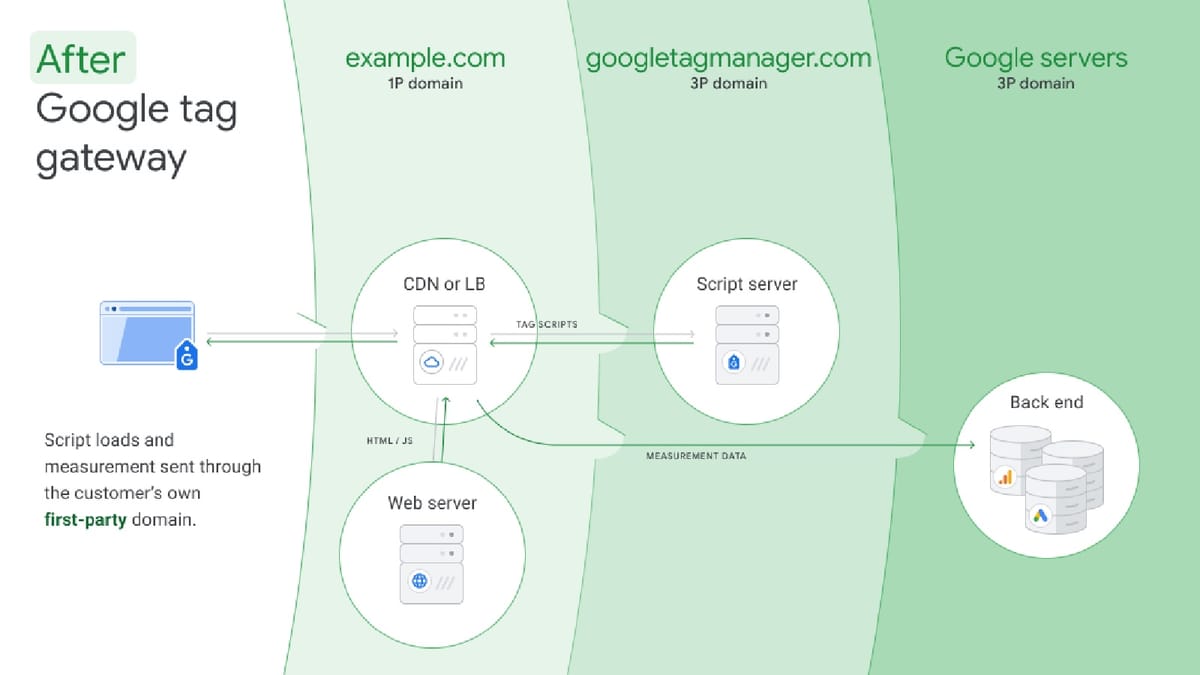
Google has introduced a Google Cloud Platform integration for its tag gateway feature, marking the first expansion beyond the Cloudflare-exclusive deployment option that launched last year. The development enables advertisers to implement first-party tracking infrastructure through GCP's External Application Load Balancer with what Google describes as a "one-click" setup process.
According to the Google Tag Manager release notes published January 5, 2026, the feature entered beta availability with streamlined deployment directly through GTM and Google tag settings. The integration configures Google tag and tag containers to transmit data through first-party web infrastructure before relaying to Google's measurement servers.
Industry practitioners highlighted the announcement through LinkedIn discussions, with analytics professionals Simo Ahava and Johan Strand analyzing the GCP deployment option in January. According to Ahava's analysis, the integration establishes an External Application Load Balancer with routing rules for gateway path traffic directing to a backend service handling measurement data.
The GCP implementation relies on External Application Load Balancer architecture rather than content delivery network configurations. According to Google's developer documentation, the setup involves creating routing rules that direct tag gateway path requests to designated backend services managing Google measurement traffic.
This architectural approach differs fundamentally from the Cloudflare integration, which functions as a CDN-layer proxy. The load balancer method provides granular control over traffic routing within cloud infrastructure already managed by organizations using GCP for web hosting or application deployment. For websites already operating on Google Cloud Platform, the integration consolidates measurement infrastructure within existing cloud environments.
The automated setup process initiates through Google Tag Manager's admin interface. According to Google's help documentation, users navigate to the tag gateway section, select their Google Cloud project containing relevant domains, and customize measurement paths not conflicting with existing website routes. The system then configures load balancer components without requiring manual backend infrastructure management.
Organizations can override preselected domains and customize measurement paths during configuration. According to Google's setup documentation, the measurement path should avoid conflicts with existing website structures. Suggested paths include combinations like "/metrics," "/securemetric," or "/analytics," though any unused alphanumeric combination functions correctly.
The tag gateway architecture addresses persistent measurement challenges created by browser tracking restrictions and content blocking technologies. Traditional Google tag implementations request scripts from Google domains and transmit measurement data directly to Google servers. Browser privacy features like Safari's Intelligent Tracking Prevention and Firefox's Enhanced Tracking Protection restrict these cross-domain interactions, limiting cookie lifespan and degrading attribution accuracy.
By routing tag requests and measurement transmissions through advertiser-owned domains, the gateway approach presents tracking technologies as first-party resources to browsers. Safari and Firefox treat same-origin scripts differently than third-party tracking, allowing longer cookie durations and more persistent user identification. The technical shift maintains measurement continuity across browser sessions that would otherwise fragment under cross-site restrictions.
Google previously reported an 11% signal uplift for advertisers implementing tag gateway configurations. According to internal data shared during the May 2025 announcement of the Cloudflare integration, routing measurement through first-party infrastructure improved conversion data accuracy, enhanced bidding optimization, and strengthened return on ad spend calculations.
The measurement improvements stem from extended cookie persistence and reduced signal loss. Ad blocking browser extensions typically maintain blocklists targeting known advertising and analytics domains. When scripts load from advertiser domains instead of recognized tracking services, blocklists require domain-specific configuration rather than blanket blocking rules. This technical reality reduces the percentage of traffic affected by blocking technologies.
Buy ads on PPC Land. PPC Land has standard and native ad formats via major DSPs and ad platforms like Google Ads. Via an auction CPM, you can reach industry professionals.
Google launched tag gateway for advertisers on May 8, 2025, transitioning the feature from beta to general availability. The initial release supported only Cloudflare integration for automated deployment, requiring manual CDN configuration for organizations using alternative infrastructure providers.
Manual implementation demanded specific technical expertise. According to Google's manual setup documentation, deploying tag gateway without automated integration required configuring backend services that determine visitor geographic location, establishing routing rules in existing load balancers, setting appropriate Host headers pointing to Google's first-party serving endpoints, and transmitting geolocation data through specific header parameters.
The manual configuration complexity created adoption barriers for organizations lacking dedicated DevOps resources or unwilling to modify production CDN configurations. Cloudflare customers accessed simplified deployment through dashboard interfaces, but websites hosted on competing platforms faced significantly higher implementation costs.
The Cloudflare integration became available in October 2024 through closed beta before expanding to general availability. The automated setup handled DNS configuration, routing rule creation, and backend service establishment without requiring manual intervention in Cloudflare's infrastructure. This streamlined approach enabled marketers to activate first-party measurement without engaging engineering teams.
The first-party routing architecture affects how data protection regulations apply to Google tag implementations. European privacy frameworks like GDPR impose stricter requirements on third-party data collection compared to first-party analytics conducted by website operators themselves. By establishing measurement infrastructure under advertiser domains, tag gateway shifts the technical classification of data collection.
However, the regulatory interpretation remains complex. Data flowing through advertiser infrastructure ultimately transmits to Google's servers for processing. Whether this constitutes first-party collection by the advertiser or third-party collection by Google depends on legal frameworks governing data controller versus data processor relationships. Website operators remain responsible for obtaining proper consent regardless of routing architecture.
Tag gateway configurations still require consent management platform integration for compliance in privacy-regulated markets. Google launched integrated CMP setup solutions in August 2024, simplifying consent banner deployment and consent mode implementation through tag interfaces. The automated consent handling works with providers including consentmanager, Cookiebot by Usercentrics, iubenda, and Usercentrics.
The routing approach provides compliance advantages through enhanced data control. Organizations managing their own infrastructure determine data retention policies, implement security controls, and establish processing agreements more directly than when relying entirely on third-party measurement services. This architectural control addresses concerns raised by European data protection authorities regarding transatlantic data transfers.
Google's documentation indicates tags set up with tag gateway will soon receive confidential computing capabilities by default. According to the help documentation, this provides added security and transparency regarding how data collection and processing occur. The confidential computing integration represents additional privacy protections beyond basic first-party routing.
Deploying tag gateway through GCP requires specific technical prerequisites beyond existing Google tag implementation. According to Google's setup documentation, organizations need access to Google tag settings through Google Tag Manager, Google Ads, Google Analytics, or Campaign Manager 360. They must maintain a Google Cloud project where tag gateway infrastructure will operate and possess necessary Google Cloud permissions to configure and manage resources, typically requiring Google Cloud administrator roles.
The setup process checks whether websites already use GCP External Application Load Balancer. According to the configuration workflow documented in Google's help materials, users either enter website URLs for compatibility scanning or manually select Google Cloud Load Balancer from provided options. This verification ensures the automated setup integrates properly with existing cloud architecture.
For organizations without GCP infrastructure, implementing tag gateway requires either establishing new Google Cloud Platform accounts or reverting to manual CDN configuration methods. The automated deployment specifically targets websites already operating within Google's cloud ecosystem, limiting immediate applicability to the subset of advertisers using GCP for web hosting.
The feature's beta status indicates potential limitations and ongoing development. According to Google's documentation, beta features may experience changes as the company gathers implementation feedback and identifies technical improvements. Early adopters should anticipate possible configuration adjustments as the integration moves toward general availability.
Analytics professionals have noted the strategic significance of expanding automated deployment beyond single-vendor exclusivity. According to Johan Strand's LinkedIn analysis published January 3, the GCP integration represents Google's movement toward standardizing first-party tagging rather than maintaining it as an advanced configuration requiring specialized expertise.
The multi-platform approach reduces implementation friction for large-scale deployments across varied infrastructure environments. Organizations managing websites across different hosting providers previously faced inconsistent tag gateway availability. Cloudflare-hosted properties accessed automated setup while sites on alternative platforms required manual configuration. The GCP integration narrows this deployment gap for Google Cloud customers.
Simo Ahava highlighted that the approach delivers similar effects to properly configured server-side Google Tag Managerbehind load balancers but in more lightweight implementation. Server-side tagging provides comprehensive data governance, security controls, and enrichment capabilities beyond basic first-party script serving. However, the additional complexity requires significant technical investment compared to tag gateway's automated configuration.
The expansion signals Google's commitment to making first-party measurement accessible across infrastructure environments. CDN partnerships beyond Cloudflare remain anticipated, with Fastly and additional providers mentioned in earlier announcements. The GCP integration suggests Google prioritizes supporting major hosting platforms where substantial advertiser websites already operate.
For global deployments across multiple regions and properties, the automated GCP setup removes friction from bulk implementations. According to industry practitioners commenting on the announcement, centralizing governance and smoothing deployment processes become particularly valuable for enterprise advertisers managing numerous web properties.
Tag gateway operates distinctly from server-side Google Tag Manager despite serving complementary measurement objectives. Server-side tagging moves tag execution from browser environments to cloud servers, enabling comprehensive data transformation, enrichment, and governance before transmission to measurement endpoints. Organizations maintain full control over data processing logic through custom server-side container configurations.
Tag gateway specifically addresses script delivery and measurement routing without relocating tag execution logic. The tags themselves continue running in browser contexts, but the scripts load from first-party domains and transmit data through first-party infrastructure. This architectural distinction means tag gateway implementations don't provide the data transformation capabilities available through server-side tagging.
Google's documentation recommends combining both approaches for maximum measurement durability. According to guidance for server-side tagging setups, organizations should map custom domains to server containers and load first-party scripts through tag gateway. This dual implementation establishes comprehensive first-party measurement across both tag delivery and server-side processing.
The complementary relationship reflects different technical optimization strategies. Tag gateway primarily targets browser-based tracking restrictions and ad blocking technologies by establishing same-origin resource loading. Server-side tagging addresses data quality, security, and processing control by removing sensitive operations from client-side JavaScript execution.
For organizations evaluating deployment options, the technical complexity and maintenance requirements differ substantially. Tag gateway's automated setup requires minimal ongoing management once configured, functioning as transparent routing infrastructure. Server-side tagging demands container configuration, template development, and ongoing maintenance of server-side processing logic.
The beta designation indicates Google continues developing tag gateway capabilities. According to the release notes, the company likely will introduce additional features as implementation feedback accumulates. Potential developments could include expanded CDN partner support, enhanced configuration options, or integration with additional Google advertising products.
Documentation availability remains limited as the feature enters beta. Practitioners have noted that detailed GCP-specific setup instructions have not yet appeared in comprehensive form within Google's developer documentation. The primary references exist within Tag Manager release notes and basic help articles, suggesting expanded technical documentation will emerge as beta testing progresses.
Organizations considering early adoption should evaluate their existing cloud infrastructure and measurement requirements. Websites already operating on Google Cloud Platform gain immediate access to simplified deployment. Sites hosted on alternative platforms should assess whether GCP migration makes strategic sense or whether waiting for additional CDN partner integrations better serves their technical architecture.
The timing coincides with ongoing browser privacy developments affecting cross-site tracking. Safari's Intelligent Tracking Prevention continues restricting third-party cookies and cross-site identifiers. Google Chrome announced IP address protection features for Incognito mode starting May 2025. These browser-level restrictions increase the strategic importance of first-party measurement infrastructure.
For marketing organizations dependent on conversion measurement accuracy, tag gateway represents a defensive technical adaptation to evolving privacy restrictions. The infrastructure investment becomes more critical as browsers tighten tracking limitations and reduce the effectiveness of traditional third-party measurement approaches.
Subscribe PPC Land newsletter ✉️ for similar stories like this one
Subscribe PPC Land newsletter ✉️ for similar stories like this one
Who: Google announced the feature for advertisers using Google Tag Manager, Google Ads, Google Analytics, or Campaign Manager 360. The integration serves websites already operating on Google Cloud Platform infrastructure.
What: A beta integration enabling automated tag gateway deployment through Google Cloud Platform's External Application Load Balancer. The feature configures first-party routing for Google tags and measurement data through advertiser-owned domains, bypassing browser tracking restrictions.
When: Announced January 5, 2026 through Google Tag Manager release notes. The feature entered beta availability immediately, though documentation suggests gradual rollout across accounts.
Where: Available within Google Tag Manager admin interfaces and Google tag settings. The infrastructure deploys on Google Cloud Platform using External Application Load Balancer architecture for websites already hosted on GCP.
Why: Browser privacy restrictions and ad blocking technologies degrade measurement accuracy for traditional third-party tracking implementations. First-party routing through advertiser infrastructure extends cookie lifespans, reduces signal loss, and improves conversion attribution. The GCP integration expands automated deployment beyond Cloudflare exclusivity, reducing implementation friction for cloud-hosted websites.