Google buys Intersect for $4.75B to solve AI's power crisis
Alphabet acquires Intersect for $4.75 billion in cash to accelerate data center energy capacity. Deal includes multiple gigawatts of projects under construction.


Alphabet acquires Intersect for $4.75 billion in cash to accelerate data center energy capacity. Deal includes multiple gigawatts of projects under construction.
Google's parent company announced December 22, 2025, a definitive agreement to acquire Intersect for $4.75 billion in cash plus the assumption of debt. The acquisition brings multiple gigawatts of energy and data center projects to Alphabet as major technology companies struggle to secure sufficient power for artificial intelligence infrastructure.
According to the press release, Google already owns a minority stake in Intersect from a previously announced funding round. The deal includes Intersect's team and "multiple gigawatts of energy and data center projects in development, or under construction" from the company's existing partnership with Google. Intersect will operate separately under its own brand, led by founder and CEO Sheldon Kimber.
The transaction excludes Intersect's existing operating assets in Texas and its operating and in-development assets in California, which will continue as an independent company supported by investors TPG Rise Climate, Climate Adaptive Infrastructure, and Greenbelt Capital Partners. According to the announcement, "Intersect expects a seamless transition and service continuity for customers of those assets."
Sundar Pichai, CEO of Google and Alphabet, stated in the release: "Intersect will help us expand capacity, operate more nimbly in building new power generation in lockstep with new data center load, and reimagine energy solutions to drive US innovation and leadership."
Subscribe PPC Land newsletter ✉️ for similar stories like this one
Intersect's business model co-locates industrial demand with dedicated gas and renewable power generation. The company claims $15 billion of assets in operation or under construction across the United States. Portfolio documents show projects ranging from 105 megawatts to 1.6 gigawatts of solar photovoltaic capacity, combined with battery energy storage systems ranging from 320 megawatt-hours to 4.6 gigawatt-hours.
The largest project listed in Intersect's portfolio is Darden in Fresno County, California, with 1.6 gigawatts of solar PV capacity and 4.6 gigawatt-hours of battery storage currently in development. Operating projects include Lumina in Scurry County, Texas (828 MW PV + 640 MWh BESS) and Oberon in Riverside County, California (684 MW PV + 1 GWh BESS).
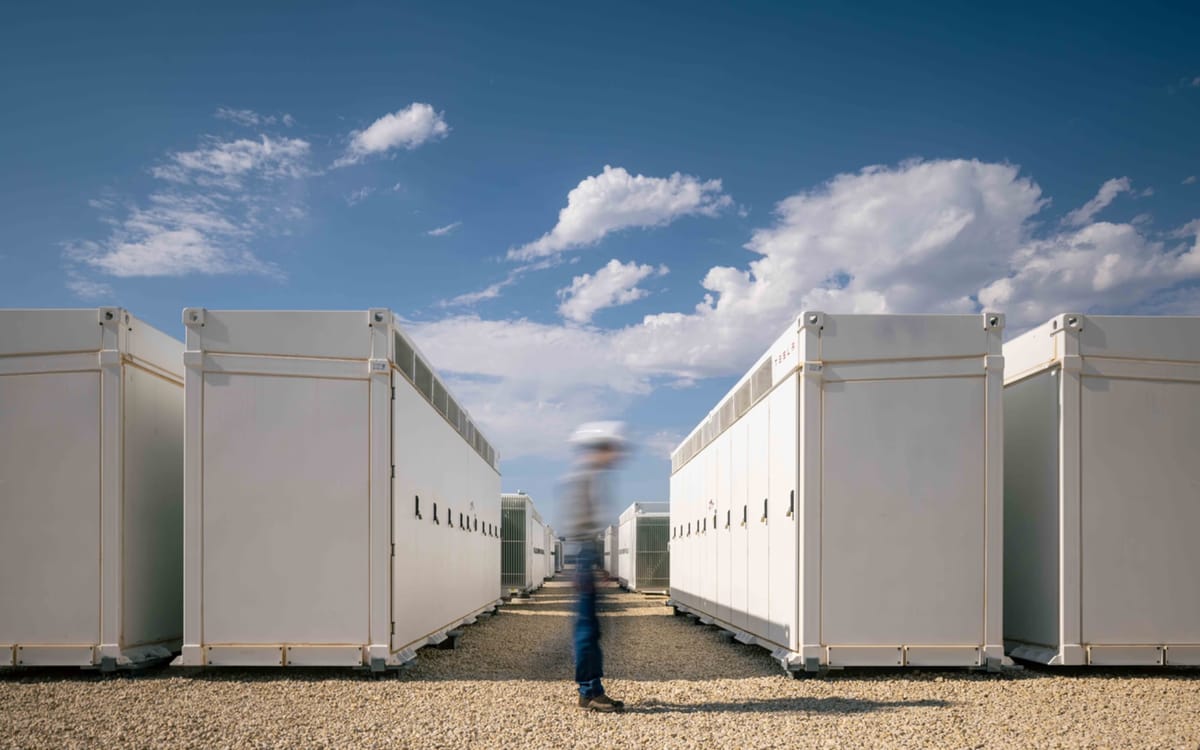
According to company materials, Intersect secured 17.7 gigawatt-hours of Tesla Megapacks, making it "one of the world's largest buyers of this cutting-edge battery energy storage technology." The company also maintains a multi-billion dollar partnership with First Solar for American-made solar technology.
The acquisition includes the companies' first announced co-located data center and power site under construction in Haskell County, Texas. Documents identify this project as Quantum, featuring 840 MW of solar PV capacity and 1.3 GWh of battery energy storage.
Alphabet commits through this acquisition to advancing "rapid commercialization of advanced energy technologies — including advanced geothermal, long duration energy storage and gas with carbon capture and storage," according to the press release.
The announcement states Alphabet is deploying AI "to accelerate the grid connection of new power plants and helping scale energy efficiency and affordability programs in data center communities." This addresses grid interconnection delays that have constrained data center development across the United States.
Sheldon Kimber, founder and CEO of Intersect, stated: "Modern infrastructure is the linchpin of American competitiveness in AI. We share Google's conviction that energy innovation and community investment are the pillars of what must come next."
The deal reinforces Alphabet's commitment to "partnering with utilities and energy developers across the sector to unlock abundant, reliable, affordable energy supply that enables the buildout of data center infrastructure without passing on costs to grid customers," according to the release.
Buy ads on PPC Land. PPC Land has standard and native ad formats via major DSPs and ad platforms like Google Ads. Via an auction CPM, you can reach industry professionals.
Meta announced on July 14, 2025, plans to invest "hundreds of billions of dollars" in AI infrastructure, including the Prometheus cluster targeting 1+ gigawatt capacity and the Hyperion facility eventually reaching 5 gigawatts. Those facilities will consume energy equivalent to 4-5 million American homes annually.
Google previously signed on August 18, 2025, a landmark collaboration with Kairos Power and Tennessee Valley Authority to deploy the first Generation IV advanced nuclear reactor connected to the US electricity grid. That partnership established a power purchase agreement for the Hermes 2 Plant in Oak Ridge, Tennessee, marking the first commercial deployment under Google's broader 500-megawatt nuclear capacity initiative.
Data centers currently account for 2% of US emissions at 105 million metric tons of carbon annually, according to the Environmental and Energy Study Institute. Major tech companies now invest hundreds of billions in AI infrastructure, creating additional strain on electricity grids.
Alphabet reported in July 2025 that free cash flow declined to $5.3 billion from $13.5 billion in the prior year quarter, primarily due to increased capital expenditure for AI infrastructure. Research and development expenses reached $13.8 billion, up 16% from the previous year, reflecting continued investment in AI capabilities and infrastructure.
Meta's $64-72 billion 2025 AI investment positions it competitively against Amazon's $100 billion, Microsoft's $80 billion, and Google's $75 billion infrastructure spending. CNBC analysis shows this represents a 46% increase from 2024's $223 billion combined spending across major tech companies.
Company materials describe Intersect's approach as delivering "the fastest, cheapest, cleanest and most reliable energy and infrastructure solutions for our customers and the inevitable scale of what comes next." The portfolio shows 10.8 gigawatts in operation or construction by late 2028.
Projects under construction include Meitner in Gray and Roberts Counties, Texas (700 MW PV + 500 MW Wind), Easley in Riverside County, California (406 MW PV + 1.4 GWh BESS), and Aramis in Alameda County, California (105 MW PV + 400 MWh BESS).
In-development projects include Roman in Deaf Smith County, Texas, featuring 462 MW of solar PV capacity and 670 MW of wind generation. The company's executive team includes Chief Commercial Officer Simon Ross, Chief Financial Officer Katrina Rymill, and Chief Operating Officer John K. Martinez.
Board members include Edward Beckley (Partner, TPG Rise Climate), Steven Mandel (Partner, TPG Rise Climate), Glenn Jacobson (Managing Partner, Greenbelt Capital Partners), and Bill Green (Managing Partner, Climate Adaptive Infrastructure).
The deal is subject to customary closing conditions and anticipated to close in the first half of 2026, according to the announcement. Forward-looking statements in the release caution that factors could cause actual results to differ materially from expectations.
Risk factors include the possibility that closing conditions will not be satisfied, including requisite regulatory approvals. The definitive agreement could be terminated prior to closing. The acquisition might not complete in the expected timeframe or at all.
Additional risks involve potential adverse effects to the businesses during the pendency of the acquisition, the ability to successfully integrate Intersect, and the ability to achieve expected benefits. The company warns the benefits might take longer to achieve than expected or fail to materialize entirely.
Alphabet maintained a 32.4% operating margin on $96.4 billion in revenues during the most recent reported quarter, demonstrating the company's ability to scale AI features while preserving profitability. The financial position remains robust with $95.1 billion in cash, cash equivalents, and marketable securities as of June 30, 2025.
Long-term debt increased to $23.6 billion from $10.9 billion at the end of 2024, primarily due to senior unsecured notes issued in May 2025 for $12.5 billion in net proceeds. This acquisition will add assumed debt from Intersect to Alphabet's balance sheet.
The marketing community's dependence on data center infrastructure for advertising technology, campaign management platforms, and analytics tools creates direct connections to energy consumption patterns. As companies announce massive infrastructure investments to support AI development, the cumulative energy demands affect municipal planning in host communities.
Meta confronted sustainability tensions in September 2025 when publishing its 2025 Sustainability Report outlining commitments to net zero emissions by 2030, while concurrent AI infrastructure announcements planned "hundreds of billions" in data center investments requiring unprecedented energy resources.
Google transferred in October 2025 water storage infrastructure to The Dalles, Oregon, deeding both physical assets and legal rights to the municipality rather than retaining private access to enhanced capacity. That model addressed concerns about corporate control of essential resources in communities where tech infrastructure concentrates.
Water cooling requirements drive consumption at these facilities. In 2021, Google operations in The Dalles consumed almost 275 million gallons of water, according to a 2023 data center water profile. The company noted this volume roughly equals annual consumption by three large Oregon cherry farms.
Advertising platforms require the underlying data center infrastructure to process programmatic bidding, serve creative assets, and measure campaign performance. The vertical integration of energy generation with data center operations could provide competitive advantages in cost structure and reliability for advertising technology platforms.
Intersect's partnership with First Solar represents "a multi-billion dollar commitment to American-made technology and is one of the largest investments in the domestic energy supply chain," according to company materials. The materials state: "For us, building a resilient domestic supply chain is not an option; it is a prerequisite for delivering the speed, scale, and certainty our projects demand."
The strategic partnership with Tesla for battery energy storage technology provides access to Megapack systems at scale. These large-format batteries enable storage of renewable energy generation for use during periods when solar and wind output declines.
Intersect's approach of co-locating data center demand with dedicated power generation addresses grid interconnection challenges that have slowed traditional data center development. Rather than waiting years for utility grid connections, the model builds both generation and consumption infrastructure simultaneously.
The company formed a strategic partnership with Google in 2024, "representing one of the most innovative collaborations at the nexus of energy and data," according to company materials. The materials describe how "Google's expertise in hyperscale computing blended with our track record of large-scale power development delivers certainty, speed, and impact."
The acquisition positions Alphabet to compete more effectively with hyperscale cloud providers building their own energy infrastructure. Amazon, Microsoft, and Meta have each announced multi-billion dollar investments in data center capacity requiring dedicated energy supplies.
OpenAI CEO Sam Altman argued in February 2025 that spending energy on AI research could solve humanity's climate challenges more effectively than restricting the technology's development. During a panel discussion at Technische Universität Berlin on February 7, 2025, Altman defended current AI energy efficiency, claiming modern language models operate with "incredibly efficient" performance per query basis.
Altman's position reflects broader industry arguments that AI infrastructure investments will accelerate energy technology breakthroughs, including fusion energy research. Critics counter that current energy consumption should be weighed against uncertain future benefits.
The transaction demonstrates how control of energy infrastructure has become strategic for technology companies competing in artificial intelligence. Companies that secure reliable, cost-effective power supplies gain advantages in training larger models and serving more users.
Intersect's portfolio focuses primarily on solar, wind, and battery storage rather than fossil fuel generation. The emphasis on renewable energy aligns with corporate sustainability commitments while addressing energy security concerns around long-term fuel availability and price volatility.
The deal requires customary regulatory approvals before closing. Antitrust review will examine whether the acquisition substantially lessens competition in energy infrastructure or data center markets. The Federal Trade Commission and Department of Justice share jurisdiction over merger reviews.
Utility regulation at the state level could affect how Intersect's assets operate under Alphabet ownership. Some jurisdictions restrict vertical integration between energy generators and consumers. The structure keeping Intersect as a separate entity may address regulatory concerns about utility control.
The excluded Texas and California assets suggest regulatory considerations influenced the transaction structure. Those states have different regulatory frameworks for energy generation and data center operations that may have complicated the acquisition.
Forward-looking statements in the announcement caution that "the risk that the requisite regulatory approvals will not be obtained" could prevent the transaction from closing. The first half of 2026 timeline provides approximately six months for regulatory review processes.
Subscribe PPC Land newsletter ✉️ for similar stories like this one
Subscribe PPC Land newsletter ✉️ for similar stories like this one
Who: Alphabet announced through its Google subsidiary an agreement to acquire Intersect, an energy infrastructure company founded by Sheldon Kimber. The transaction excludes certain assets that will continue operating independently with investors TPG Rise Climate, Climate Adaptive Infrastructure, and Greenbelt Capital Partners.
What: A definitive agreement to acquire Intersect for $4.75 billion in cash plus the assumption of debt. The acquisition includes Intersect's team, multiple gigawatts of energy and data center projects in development or under construction, and ongoing partnership projects including a co-located facility in Haskell County, Texas. Intersect's $15 billion of assets in operation or under construction across the United States will support Google's data center expansion.
When: Announced December 22, 2025, with closing anticipated in the first half of 2026 subject to customary conditions and regulatory approvals. Google already holds a minority stake in Intersect from a previously announced funding round.
Where: Intersect operates projects across multiple US states, with the acquisition including developments in Texas (Haskell County co-located facility) and other locations. Excluded from the transaction are Intersect's existing operating assets in Texas and its operating and in-development assets in California, which will continue as an independent company.
Why: The acquisition addresses mounting energy challenges facing technology companies as artificial intelligence and data center operations drive unprecedented electricity demand. Alphabet seeks to "expand capacity, operate more nimbly in building new power generation in lockstep with new data center load, and reimagine energy solutions to drive US innovation and leadership," according to CEO Sundar Pichai. The deal enables faster deployment of data center and generation capacity while advancing energy development through technologies including advanced geothermal, long duration energy storage, and gas with carbon capture and storage.