Google exec says AI search needs same SEO while publishers lose traffic
Nick Fox tells publishers to optimize for AI search like normal SEO on December 15 while rejecting standardized licensing deals for struggling small outlets.


Nick Fox tells publishers to optimize for AI search like normal SEO on December 15 while rejecting standardized licensing deals for struggling small outlets.
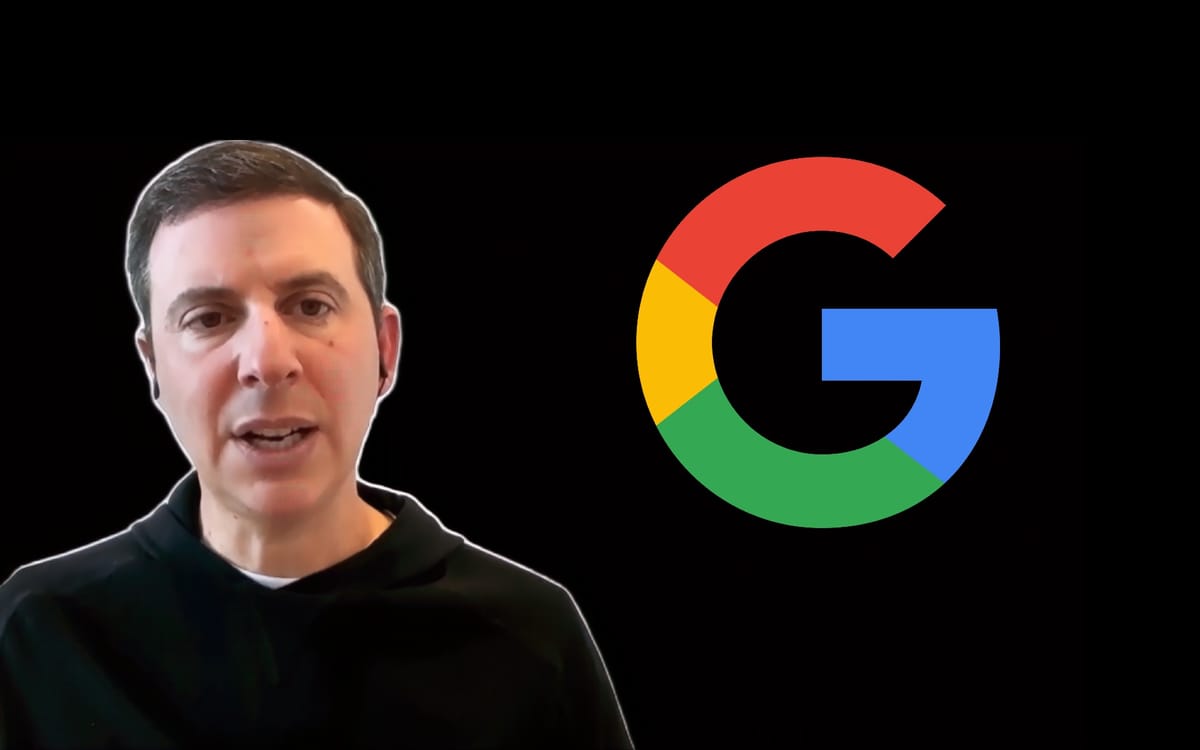
Nick Fox, Google's SVP of Knowledge and Information, told publishers on December 15, 2025, that optimizing for artificial intelligence search requires no changes from traditional search engine optimization. According to Fox, who oversees Search, Ads, and Commerce at Google, the approach remains identical despite fundamental shifts in how AI-powered features redirect traffic away from independent websites.
"The way to optimize to do well in Google's AI experiences is very similar, I would say, the same as how to perform well in traditional search," Fox stated during his appearance on the AI Inside podcast with Jason Howell and Jeff Jarvis. "And it really does come down to build a great site, build great content."
Subscribe PPC Land newsletter ✉️ for similar stories like this one
The December 15 interview marked Fox's return to the podcast seven months after his previous appearance in May 2025. During both conversations, Fox defended Google's position that "the web is thriving" despite mounting evidence from publishers experiencing catastrophic traffic declines.
When Jarvis asked whether publishers should view their content differently for AI search, Fox responded with an unequivocal "no." This guidance came as research analyzing 300,000 keywords found that AI Overviews reduce organic clicks by 34.5% when present in search results, according to analysis published by Ahrefs.
Fox dismissed concerns about these traffic declines, characterizing third-party research as "one-offs" and "cherry-picked analyses." He claimed that statistics "will vary by site" and referenced internal studies showing some websites gained traffic from AI features. "You know, one of the ones that sort of stuck with me was a site was saying, or I think there was a report of a site that had double-digit decreases maybe over 50% decrease in traffic," Fox explained. "And it was claimed that was associated with AI and search, but it was actually, you know, that the decrease in traffic was before we had even announced AI overviews."
The Google executive emphasized partnerships with over 3,000 organizations, publishers, and publications in 50 countries. "To your point, it's not just one or two at the head but rather there's a wide range," Fox said. "There's local coverage."
Yet when Jarvis presented a detailed proposal for standardized licensing deals that would allow smaller publishers to participate in AI content agreements, Fox rejected the concept. According to Barry Schwartz at Search Engine Roundtable, Fox said the "short answer is no" for coming up with a standard licensing model for all publishers.
Jarvis outlined five arguments during the interview for why publishers should embrace AI through standardized licensing: journalists face moral obligations to include news in AI, AI doesn't truly need news content as synthetic data improves, training likely qualifies as fair use under existing law, AI will become the primary discovery mechanism, and no financial windfall awaits publishers through litigation.
"I'm arguing that news must wake up in the next year and say we need to be there. We need to be in AI," Jarvis stated. He proposed that news organizations create APIs for AI companies, facilitating responsible inclusion with proper attribution and branding.
Fox avoided direct engagement with this proposal. "I think your broadest point is we need to figure out how to work together," Fox responded. "I strongly agree with that." But he framed the relationship primarily around traffic generation rather than content licensing structures accessible to smaller publishers.
"We partner with organizations primarily in two ways," Fox explained. "I would say number one, the primary one, is driving clicks. And I believe that continues. I believe that users will continue to click through and read underlying sources." He added that "there's also commercial partnerships around the financial side of it as well. But it really needs to be both and I believe the core of the way that Google will partner with news organizations and websites overall will be through traffic and links within these experiences."
This positioning contradicts the experiences of publishers facing existential traffic declines. Dotdash Meredith reported during first quarter 2025 earnings that "AI Overviews appear on roughly a third of search results related to DDM's content" with observable performance declines. The company experienced a 3% year-over-year decline in core user sessions, causing drops in programmatic ad revenue.
Fox acknowledged during the December 15 interview that "for sure there are sites that are struggling" and expressed "empathy for those sites." He emphasized that Google depends on the health of the web. "Ultimately we're a search engine, right? And we're a web search engine and so we depend on the health of the web," Fox stated. "We deeply believe that the longevity, the vibrance of the web, is critical."
Yet this acknowledgment came without concrete proposals for addressing underlying structural issues beyond encouraging publishers to "build great content." Fox emphasized fundamental market realities that position publisher concerns as resistance to inevitable technological progress. "You can't fight users right if users are looking for an experience you need to deliver the experience that users are looking for," Fox stated.
The executive announced that AI Mode, Google's conversational search interface, reached 75 million daily active users globally. Fox characterized this growth as an "expansionary moment" for both search and the web. "People are using the web more than ever before," he claimed, citing internal metrics showing 45% increases in new pages Google's crawlers discovered when comparing April 2025 versus April 2023.
Buy ads on PPC Land. PPC Land has standard and native ad formats via major DSPs and ad platforms like Google Ads. Via an auction CPM, you can reach industry professionals.
These page creation statistics obscure critical distinctions between content volume and publisher sustainability. The number of pages indexed bears no direct relationship to whether individual publishers can maintain viable businesses when AI features systematically reduce their traffic.
Fox provided details about user behavior patterns in AI Mode. "The types of questions that people are doing are now different," he explained. "People are asking longer questions. We see questions that are two to three times as long in terms of their queries. People are using words like I and me and asking sort of much more personal questions and sort of specifying much more deeply what they're looking for."
These longer, more complex queries represent exactly the type of informational searches that historically drove traffic to independent publishers. AI Mode satisfies these needs within Google's interface, reducing incentives for users to visit original sources even when those sources contain substantially more detailed information.
Fox described AI Mode as occupying "a space between a chatbot and a search engine," combining conversational capabilities with web connectivity and factuality. "What's neat about it is people can type their query into the omnibar and then you hit tab, it takes you over to the AI mode button," Fox explained. "You hit tab and enter and it takes you directly into AI mode."
The executive revealed that personal context features, which Google announced at I/O in May 2025, remain unavailable to general users. These features would allow AI search to access information from Gmail, Drive, and other Google services to provide personalized responses. "This is an area we continue to work on," Fox said. "You know, it's important that we get it right. It's important that we do this in a way that's actually useful. And, you know, again, we need to get the user permissions right with this."
Fox highlighted adoption patterns across different markets. "We see the most mature adoption in a market like the US as a result of it being the first in which we launched," he explained. The executive noted particularly strong resonance in India, Brazil, and Indonesia, where less developed web content in local languages makes AI responses more valuable.
"Markets that have a somewhat less developed web where there's less content on the web, the AI response can be kind of helpful because it doesn't have to worry about necessarily was there content created in that language in that country but rather it sort of becomes a little bit more cross language cross border," Fox stated. This admission reveals that AI responses substitute for publisher content rather than complementing it.
Fox emphasized that user adoption takes months to mature. "There is this user learning effect which actually takes time it takes sort of on the order of months," he explained. "You know, search is a product that people have used in some cases for you know multiple decades and so there's established muscle memory there's established patterns and so you know it takes some amount of time for users to adapt."
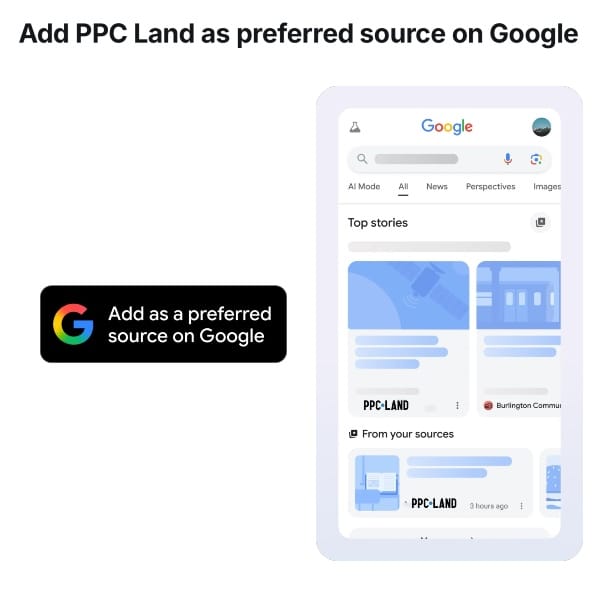
The executive announced several improvements to AI experiences. "Earlier this week, we announced a number of improvements to search related to how we can help websites really thrive through this moment," Fox stated. He highlighted Preferred Sources, a feature that "enables users to specify the sites that they care about, the sites that they want to see more content from."
According to Fox, "if you've selected a site as a preferred source, it will show much more prominently within the top stories unit within search." This feature requires users to actively designate publications, transforming what was previously a passive algorithmic relationship into an active audience development challenge for publishers.
 Luis Rijo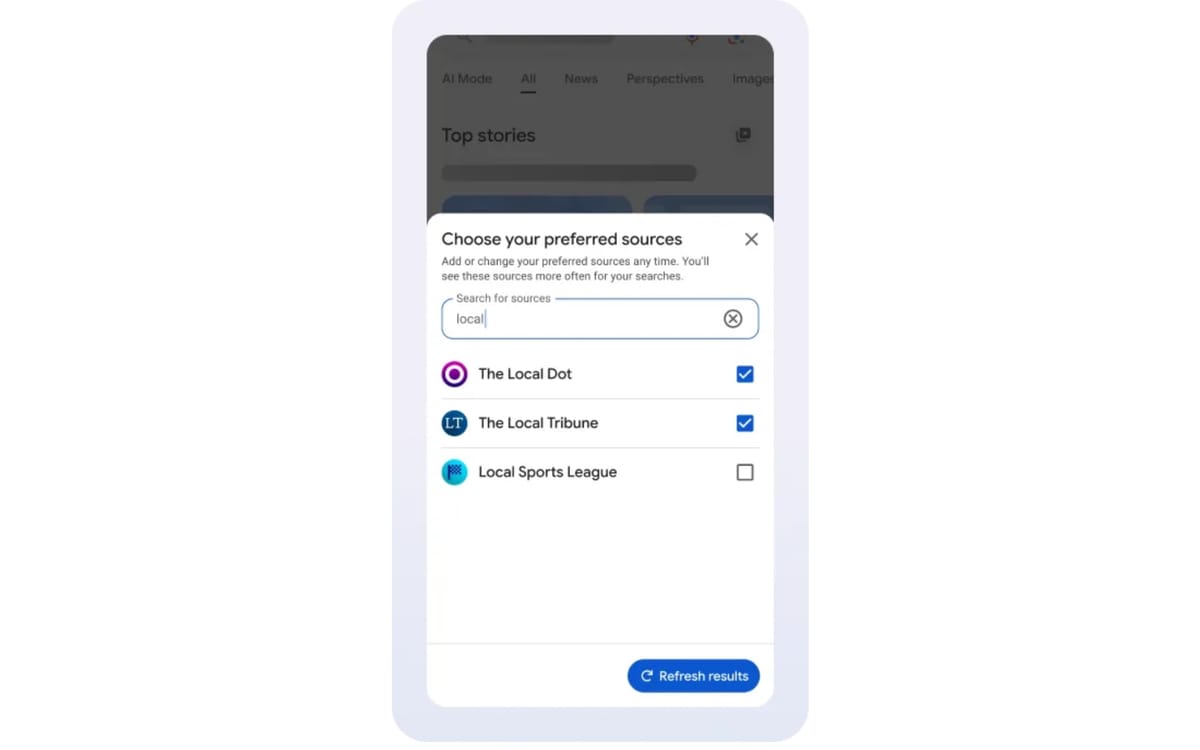
Fox also discussed improvements to links within AI experiences. "We're actually improving the links within our AI experience, increasing the number of them as well as increasing preambles for them because we do deeply believe in that," he said. These modifications address symptoms rather than underlying structural problems created by AI-powered search features.
The December 15 interview took place as Google announced commercial partnerships with select major publishers including The Guardian, Der Spiegel, El País, Folha de S. Paulo, Infobae, Kompas, The Times of India, The Washington Examiner, and The Washington Post. The partnership program offers payments to participating publishers, though Google has not disclosed specific compensation amounts.
These selective commercial arrangements contrast sharply with Fox's rejection of standardized licensing models that would provide smaller publishers with negotiating frameworks. Major publishers secure individual deals while independent outlets face traffic declines without compensation mechanisms.
Fox's guidance that publishers should optimize for AI search identically to traditional search ignores fundamental differences in how these systems function. Traditional search directed users to websites where publishers controlled the reading experience, ad placements, and subscription conversion opportunities. AI-powered search synthesizes information from multiple sources into comprehensive answers within Google's interface, reducing both traffic volume and the quality of remaining clicks.
The executive's emphasis on "building great content" as the solution to publisher challenges reflects a disconnect from business realities facing content creators. Publishers have always focused on creating great content. The challenge they now face involves platform decisions that systematically extract value from that content while providing diminishing returns.
Fox's rejection of standardized licensing deals leaves smaller publishers without viable paths to negotiate fair compensation for content usage in AI systems. Individual negotiation requires resources and leverage that independent publishers lack. Standardized frameworks would provide baseline protections and compensation structures accessible to publishers of all sizes.
The European Commission launched a formal antitrust investigation on December 9, 2025, examining whether Google violated EU competition rules by using publisher content for AI purposes without appropriate compensation or viable opt-out mechanisms. Penske Media Corporation filed a comprehensive federal antitrust lawsuit against Google on September 12, 2025, alleging the search giant systematically coerces publishers into providing content for artificial intelligence systems while reducing website traffic.
Fox's December 15 statements suggest Google will continue prioritizing traffic-based partnerships over licensing structures despite mounting legal and regulatory pressure. The company's approach benefits larger publishers with negotiating power while leaving independent outlets without protections as AI features fundamentally reshape information distribution.
Subscribe PPC Land newsletter ✉️ for similar stories like this one
Subscribe PPC Land newsletter ✉️ for similar stories like this one
Who: Nick Fox, Google's SVP of Knowledge and Information overseeing Search, Ads, and Commerce, spoke with Jason Howell and Jeff Jarvis on the AI Inside podcast about artificial intelligence integration in search products.
What: Fox stated that optimization for AI search requires no changes from traditional SEO, rejecting proposals for standardized licensing deals that would allow smaller publishers to negotiate fair compensation for content usage in AI systems while acknowledging that "for sure there are sites that are struggling."
When: The interview took place on December 15, 2025, seven months after Fox's previous appearance on the same podcast and five days after Google announced selective commercial partnerships with major publishers.
Where: The statements affect publishers globally, particularly smaller independent outlets without resources to negotiate individual licensing agreements, as AI Mode expands to 75 million daily active users across 40 countries and AI Overviews operate in more than 100 countries.
Why: The matter is significant for the marketing community because it reveals Google's strategy of prioritizing traffic-based partnerships over licensing structures despite mounting evidence of systematic traffic declines, legal challenges from publishers including Penske Media's September antitrust lawsuit, and regulatory scrutiny including the European Commission's December 9 investigation into whether Google violated competition rules by using publisher content for AI purposes without appropriate compensation.