Google's AI assistant learned to read your Gmail inbox—here's what changed today
Google launched Personal Intelligence beta for Gemini today, connecting Gmail and Google Photos with one tap to deliver personalized AI responses across 2 billion documents.
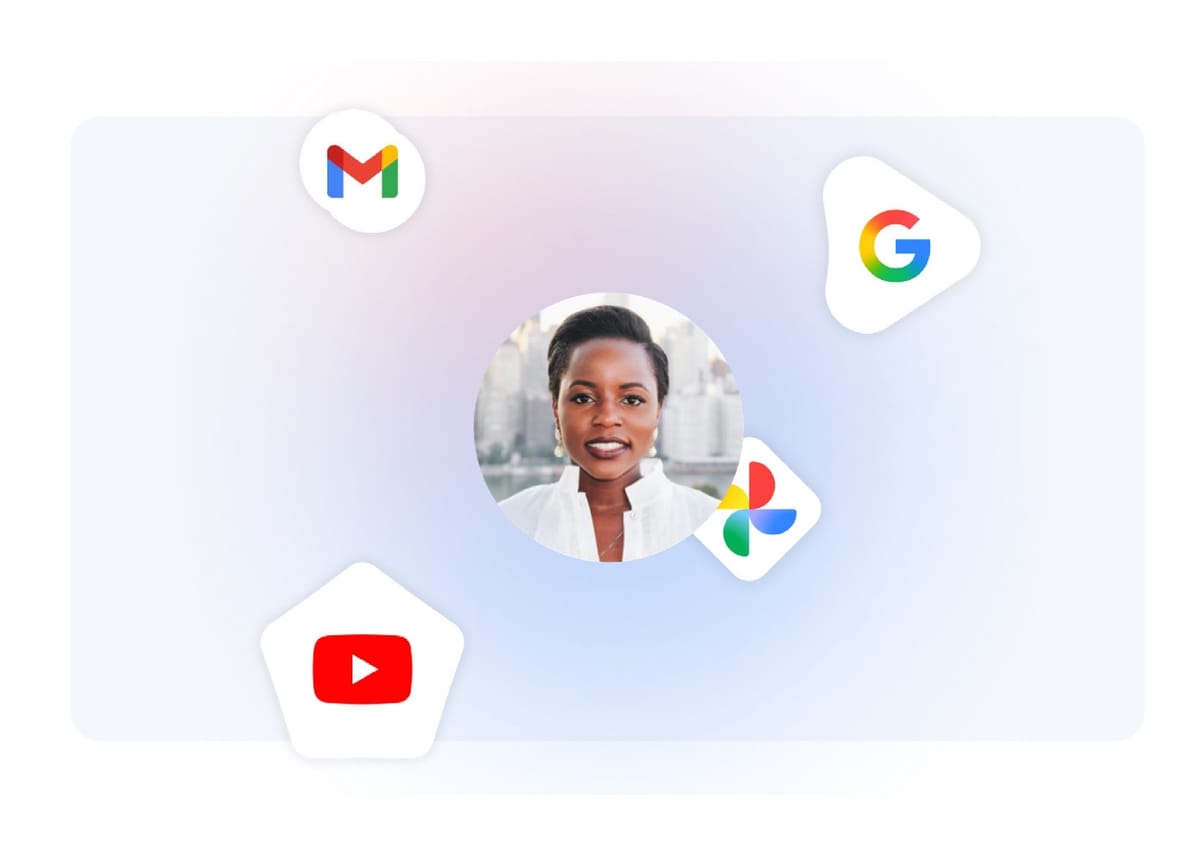
Google Personal Intelligence connects Gmail, Photos, YouTube, and Search for personalized Gemini AI.
Google today deployed Personal Intelligence, a significant expansion of Gemini's capabilities that connects user data across Gmail, Google Photos, YouTube, and Google Search to deliver what the company characterizes as uniquely tailored AI responses. The beta launch, available exclusively to Google AI Pro and AI Ultra subscribers in the United States, represents the first time Gemini can access personal information stored in these applications to answer questions and complete tasks.
Josh Woodward, Vice President at Google Labs for Gemini & AI Studio, announced the feature through a blog post published today at 6:00 AM Eastern Time. "The best assistants don't just know the world; they know you and help you navigate it," Woodward stated. "Today, we're answering a top user request: you can now personalize Gemini by connecting Google apps with a single tap."
The implementation marks a fundamental shift in how Google's AI assistant operates. Previously, Gemini processed queries using only information from the current conversation and publicly available data. Personal Intelligence enables the system to analyze emails, photographs, search history, and video watch patterns to construct responses that incorporate personal context.
PPC Land Newsletter
Subscribe PPC Land newsletter ✉️ for similar stories like this one
According to Google's announcement, the feature works by connecting Gmail, Photos, YouTube, and Search services in a single action. Users who enable Personal Intelligence grant Gemini permission to access data from these applications to "answer your specific requests and to do things for you." The system can identify relationships between information stored across different services, understanding how email confirmations relate to calendar events or how photograph locations connect to search queries.
Technical architecture and data processing
The Personal Intelligence system relies on what Google describes as two core capabilities: reasoning across complex sources and retrieving specific details from individual documents or images. Gemini analyzes text, photographs, and video simultaneously to construct responses that draw from multiple data sources within the connected applications.
Woodward provided a detailed example of the system's functionality. "Standing in line at the shop, I realized I didn't know the tire size," he explained. "I asked Gemini. These days any chatbot can find these tire specs, but Gemini went further. It suggested different options: one for daily driving and another for all-weather conditions, referencing our family road trips to Oklahoma found in Google Photos."
The system continued by pulling ratings and prices for each tire option, then retrieved a license plate number from a photograph and identified the vehicle's specific trim by searching Gmail. This workflow demonstrates how Personal Intelligence combines information retrieval with contextual analysis across multiple applications to address complex requests requiring several pieces of related information.
Google's technical implementation processes data differently from how it handles training data for language models. According to the announcement, "Gemini doesn't train directly on your Gmail inbox or Google Photos library." Instead, the system trains on "limited info, like specific prompts in Gemini and the model's responses" while taking steps to "filter or obfuscate personal data from the conversation."
The distinction matters for understanding data usage. Individual emails and photographs remain in their respective applications and are referenced when generating responses but do not directly train the underlying language model. The system learns patterns about how to locate relevant information when users ask questions, rather than learning the specific content of personal documents.
This approach differs from Google's earlier implementation of personal context features that automatically enabled conversation learning in August 2025. That previous feature allowed Gemini to remember details from chat history to personalize future interactions. Personal Intelligence extends these capabilities by accessing data stored in other Google services rather than limiting analysis to conversation transcripts.
Privacy controls and user permissions
Personal Intelligence operates with several privacy mechanisms. The feature remains disabled by default, requiring users to explicitly enable it through settings. When activated, users select which specific applications to connect rather than granting blanket access to all available services. Google Photos requires additional configuration including enabling Face Groups and selecting a face group to represent the user before Personal Intelligence can access photograph data.
The system provides transparency features designed to help users understand how responses incorporate personal data. "You also won't have to guess where an answer comes from: Gemini will try to reference or explain the information it used from your connected sources so you can verify it," according to the announcement. If a response lacks clear sourcing, users can request additional information about which data informed the answer.
Users who disagree with conclusions drawn from their data can correct the system's understanding directly. The announcement provided an example: "Remember, I prefer window seats." These corrections influence how Personal Intelligence interprets preferences in future interactions.
The implementation includes options for controlling when personalization applies. Users can regenerate specific responses without personalization to compare how Gemini answers with and without access to personal data. Temporary chat functionality, which Google introduced in August 2025, remains available for conversations where users want to prevent data from influencing responses or contributing to conversation history.
The company established specific guardrails around sensitive information. "Gemini aims to avoid making proactive assumptions about sensitive data like your health, though it will discuss this data with you if you ask," according to the announcement. This design prevents the system from generating unsolicited health-related suggestions while remaining available for explicit health queries.
Geographic restrictions limit Personal Intelligence availability. The beta version works only in the United States and excludes Workspace business, enterprise, and education accounts. Personal Google accounts for users 18 and older with Google AI Pro or AI Ultra subscriptions receive access gradually over the coming week.
Google documented several categories of mistakes users should expect during the beta testing period. The company tested Personal Intelligence "extensively to minimize mistakes, but we haven't eliminated them," Woodward acknowledged. The announcement identified three specific error patterns likely to affect users.
Over-personalization represents one category where the system makes inappropriate connections between unrelated topics. The model may associate information from different contexts and reach conclusions that don't reflect actual relationships between data points stored in connected applications.
Timing and nuance present particular challenges for relationship changes. The announcement noted that Personal Intelligence may struggle with "divorces, or your various interests." The system analyzes historical data that may not reflect current circumstances, leading to responses based on outdated information about personal situations.
Context misinterpretation can produce incorrect assumptions about user preferences. Woodward provided an example: "Seeing hundreds of photos of you at a golf course might lead it to assume you love golf. But it misses the nuance: you don't love golf, but you love your son, and that's why you're there." The system lacks mechanisms to distinguish between activities users genuinely enjoy versus activities they participate in for other reasons.
Google released a research paper detailing the methodology, current limitations, and improvement efforts underway. The company encourages users to provide feedback through the thumbs down button when encountering inaccurate or inappropriate responses during the beta period.
These limitations reflect broader challenges facing AI systems that personalize responses based on user data. Research released in December 2025 found that 65% of consumers expressed increased concern about how their personal information trains AI systems compared to two years earlier, marking a 40% year-over-year increase in privacy anxiety.
Advertise on ppc land
Buy ads on PPC Land. PPC Land has standard and native ad formats via major DSPs and ad platforms like Google Ads. Via an auction CPM, you can reach industry professionals.
Personal Intelligence arrives as Google continues integrating Gemini capabilities throughout its product line. The announcement confirmed that the feature works "across Web, Android and iOS and with all of the models in the Gemini model picker." This cross-platform availability ensures users receive consistent personalization regardless of device or operating system.
Personal Intelligence will extend to AI Mode in Search "soon," according to the announcement, though Google did not specify deployment timelines. This integration would bring personalized responses to search queries, allowing users to receive answers informed by their email history, photograph collections, and previous searches directly within search results.
The Personal Intelligence deployment addresses competitive pressure from AI assistants offered by other technology companies. While Google has not disclosed specific user metrics for Gemini, previous reporting indicated the service grew from 450 million monthly active users in July 2025 to 650 million in October 2025, driven partly by image generation capabilities.
The subscription requirement—limiting Personal Intelligence to AI Pro and AI Ultra tiers—represents a monetization strategy for advanced AI features. Google has explored various approaches to generating revenue from Gemini, though the company faced controversy in December when advertising clients reported discussions about bringing ads to the Gemini chatbot. Google Vice President Dan Taylor publicly denied these plans, stating "there are no ads in the Gemini app and there are no current plans to change that."
Personal Intelligence creates differentiation through Google's ecosystem advantages. The company maintains comprehensive data across multiple services that users already access daily. Connecting these services enables personalization capabilities that competitors without comparable service portfolios cannot easily replicate.
This ecosystem integration continues Google's pattern of embedding AI capabilities directly into core products. The company announced in January 2026 that Gemini models would power Apple Intelligence starting later this year, extending Google's AI reach beyond its own applications into devices manufactured by a major competitor.
For marketing professionals, Personal Intelligence represents another development in the ongoing transformation of how consumers interact with digital services. The system's ability to analyze email confirmations, purchase history, and search behavior creates new possibilities for understanding consumer intent. However, the privacy-first implementation with explicit opt-in requirements and application-by-application permissions reflects growing regulatory scrutiny around AI data practices.
PPC Land Newsletter
Subscribe PPC Land newsletter ✉️ for similar stories like this one
January 14, 2026: Google launches Personal Intelligence beta connecting Gmail, Google Photos, YouTube, and Search for AI Pro and Ultra subscribers in United States
PPC Land Newsletter
Subscribe PPC Land newsletter ✉️ for similar stories like this one
Who: Google launched Personal Intelligence for Gemini users, developed by Josh Woodward's team at Google Labs. The feature targets Google AI Pro and AI Ultra subscribers aged 18 and older with personal Google accounts in the United States.
What: Personal Intelligence connects user data from Gmail, Google Photos, YouTube, and Google Search to deliver personalized AI responses. The system analyzes emails, photographs, search history, and video watch patterns to answer complex questions requiring information from multiple sources. Users control which applications connect through opt-in permissions and can disable the feature anytime.
When: Google announced Personal Intelligence today, January 14, 2026, with gradual rollout beginning immediately for eligible subscribers. Access will expand over the coming week to all qualifying users, with plans to extend to additional countries and the free tier over time. The feature will arrive in AI Mode within Search soon without specified deployment dates.
Where: Personal Intelligence operates exclusively in the United States during the beta period. The feature works across web interfaces, Android devices, and iOS platforms with all models available in the Gemini model picker. Google excludes Workspace business, enterprise, and education accounts from the beta launch.
Why: The Personal Intelligence deployment addresses user requests for personalized AI assistance that incorporates knowledge about individual circumstances, preferences, and history. Google designed the system to help users navigate complex tasks requiring information from multiple sources while maintaining privacy through opt-in controls and transparent sourcing. The feature positions Gemini competitively against AI assistants from other technology companies by leveraging Google's ecosystem advantages across email, photos, search, and video services.
Share this article
The link has been copied!
Your link has expired. Please request a new one.
Your link has expired. Please request a new one.
Your link has expired. Please request a new one.
Great! You've successfully signed up.
Great! You've successfully signed up.
Welcome back! You've successfully signed in.
Success! You now have access to additional content.