Google's AI Overviews upgrade: Gemini 3 powers smoother chat handoffs
Google today upgrades AI Overviews to Gemini 3 globally, enabling seamless transitions to AI Mode conversations directly from search results pages.


Google today upgrades AI Overviews to Gemini 3 globally, enabling seamless transitions to AI Mode conversations directly from search results pages.
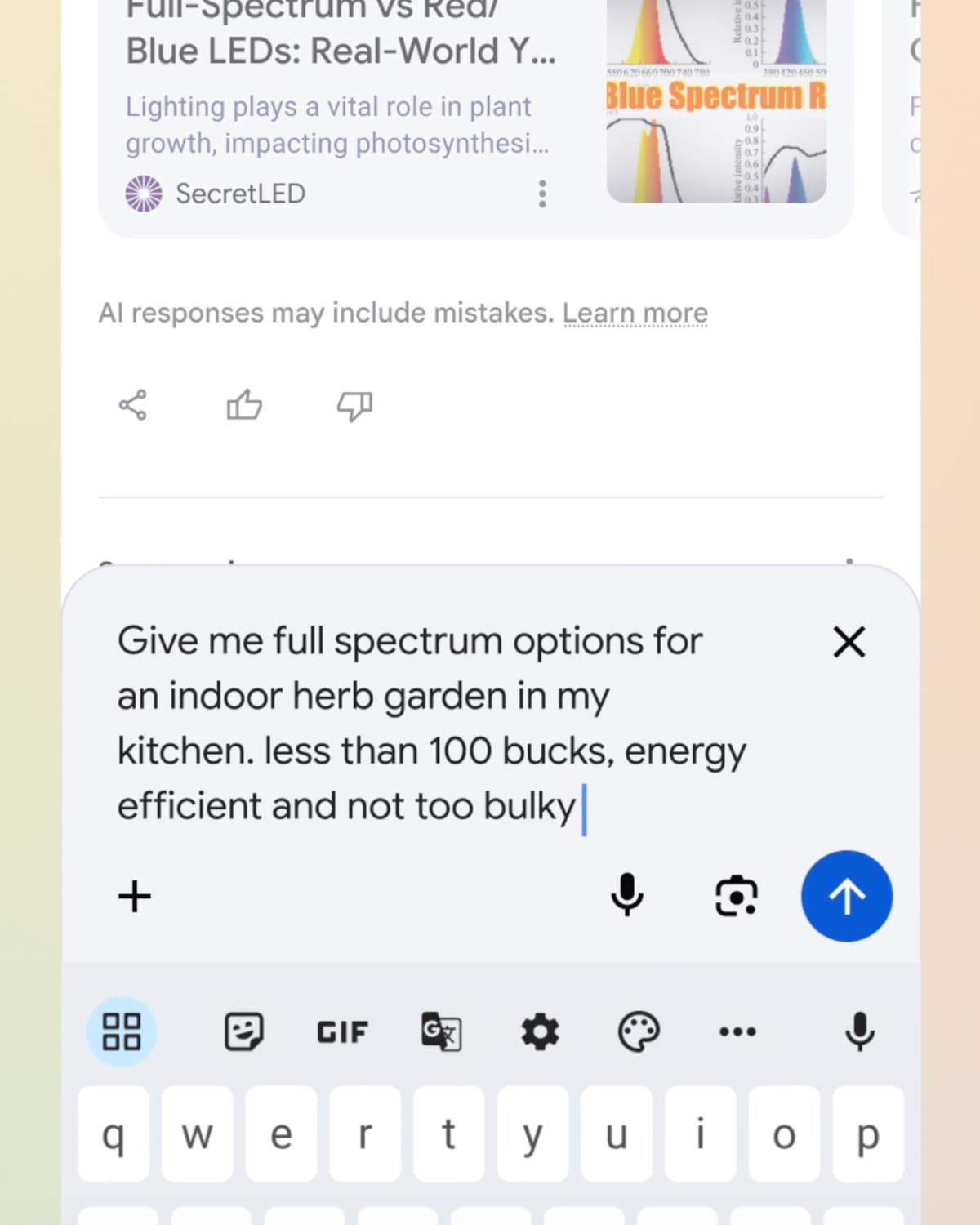
Google today announced two significant enhancements to its search experience that fundamentally change how users engage with artificial intelligence in search results. The company made Gemini 3 the default model for AI Overviews globally and introduced seamless transitions from AI Overviews directly into AI Mode conversations.
Robby Stein, Vice President of Product for Google Search, announced the upgrades on January 27, 2026. "First, we're making Gemini 3 the new default model for AI Overviews globally, so you get a best-in-class AI response right on the search results page, for questions where it's helpful," Stein stated in the announcement published on The Keyword blog.
The Gemini 3 integration brings Google's most advanced reasoning model directly into the AI Overview experience served to billions of users. Google integrated Gemini 3 into search on December 18, 2025, enabling dynamic interface generation and real-time simulations for complex queries. The model maintains reasoning capabilities while processing queries faster than full Gemini 3 through the Flash variant architecture.
The second major change enables users to ask follow-up questions directly from AI Overviews and transition into conversational back-and-forth exchanges with AI Mode. According to Stein's announcement, "Now, you can easily ask a follow-up question right from an AI Overview, and jump into a conversational back and forth with AI Mode."
This represents a continuation of testing Google began on December 1, 2025, when the company first introduced the ability to access AI Mode directly from search results pages on mobile devices. The December test positioned an "Ask Anything" button at the bottom of expanded AI Overview results after users tapped "Show More" on initial summaries.
Internal testing revealed user preference for experiences that flow naturally into conversations. "In our testing, we've found that people prefer an experience that flows naturally into a conversation—and that asking follow-up questions while keeping the context from AI Overviews makes Search more helpful," according to the announcement.
The technical architecture maintains what Google characterizes as "one fluid experience with prominent links to continue exploring: a quick snapshot when you need it, and deeper conversation when you want it." This design philosophy attempts to balance immediate information needs with comprehensive research requirements through a unified interface.
AI Overviews and AI Mode serve distinct functions within Google's search ecosystem. AI Overviews generate concise summaries directly within traditional search results pages, appearing when Google's systems determine they will be most helpful for specific queries. AI Mode provides dedicated conversational interfaces designed for extended multi-turn interactions requiring complex reasoning.
The integration eliminates friction between these two primary AI search products. Users no longer need to navigate to separate interfaces or lose contextual information when transitioning from quick summaries into deeper conversational experiences. The system maintains search context throughout the interaction, allowing follow-up questions that build upon previous exchanges without requiring users to reformulate their information needs.
AI Mode reached over 75 million daily active users following global rollout across 40 languages, according to CEO Sundar Pichai's remarks during Google's third quarter 2025 earnings call on October 29. The feature processes queries typically measuring twice the length of conventional search inputs, reflecting user comfort with expressing complex information needs through conversational interfaces.
The Gemini 3 upgrade delivers several technical advantages over previous models. Rhiannon Bell, Design Lead for Google Search, and Robby Stein discussed the implementation during a December 18, 2025, episode of the Google AI Release Notes podcast. Bell described how Gemini 3 generates custom interactive experiences for queries requiring visual demonstrations. "I was teaching my daughter about lift and I asked it to create a simulation or a visualization for it and it made this crazy little window with vectors, like arrows running over a wing," Stein stated during the podcast.
The model generates not just content but complete user experiences tailored to individual prompts. This generative UI capability allows Gemini 3 to create web pages, games, tools, and applications automatically designed for any question or instruction. The implementation differs fundamentally from static, predefined interfaces where AI models typically render content.
Gemini 3 Pro achieves state-of-the-art performance across major AI benchmarks. The model tops the LMArena Leaderboard with a breakthrough score of 1501 Elo, according to Google executives. It demonstrates PhD-level reasoning with scores of 37.5% on Humanity's Last Exam without tool usage and 91.9% on GPQA Diamond.
Multimodal reasoning capabilities distinguish Gemini 3 from previous iterations. The model scores 81% on MMMU-Pro and 87.6% on Video-MMMU, setting benchmarks for understanding complex visual content. Factual accuracy improvements show in the 72.1% score on SimpleQA Verified, indicating high capability at solving complex problems across science and mathematics with reliability.
Coding performance represents another significant advancement. Gemini 3 Pro tops the WebDev Arena leaderboard with 1487 Elo and achieves 54.2% on Terminal-Bench 2.0, which tests model ability to operate computers via terminal. The system greatly surpasses Gemini 2.5 Pro on SWE-bench Verified with 76.2%, a benchmark measuring coding agent capabilities.
Gemini 3 Flash, the efficiency-optimized variant of the frontier model, powers the search integration for most users. The Flash architecture maintains reasoning capabilities and generative functions while processing queries faster than the full Gemini 3 model. "Couldn't be more excited to bring, you know, the frontier model at the kind of speed and availability that people need for everyday use to Search," Bell stated during the podcast.
The model architecture creates multiple capability tiers within the Gemini 3 family. Flash handles everyday queries requiring advanced features at scale, while more computationally intensive models activate for particularly complex questions. This routing strategy balances capability requirements against processing costs and response times.
Logan Kilpatrick, Product Lead for Google AI Studio and the Gemini API, noted Flash performance improvements from internal testing. "We were playing around, a bunch of our evals in AI Studio, it's like for some of the use cases, Flash is like three times faster," he stated during the December 18 podcast.
The seamless transition feature addresses user behavior patterns documented throughout 2025. Research tracking user interactions with AI Overviews revealed that 88% of users clicked "show more" to expand truncated summaries, though median scroll depth reached just 30%. This indicated substantial interest in deeper information beyond initial summaries.
Query length data demonstrates user willingness to engage with more sophisticated search interfaces. Users ask questions nearly three times longer in AI Mode compared to traditional searches, reflecting the conversational nature of the interface that accommodates multi-part questions previously requiring multiple separate searches.
The updates carry significant implications for digital marketing professionals navigating Google's AI-powered search transformation. AI Overviews reduced organic click-through rates 61% for informational queries since mid-2024, while paid CTRs on those same queries plunged 68%, according to research published November 4, 2025, by Seer Interactive.
When brands are cited in AI Overviews, organic CTR reaches 0.70% compared to 0.52% for non-cited queries in Q3 2025, representing a 35% advantage. The paid CTR gap is even more substantial, with cited brands achieving 7.89% compared to 4.14% for non-cited brands, a 91% increase.
Adthena detected the first ads appearing inside Google AI Overviews on November 24, 2025, finding 13 instances across 25,000 search engine results pages. That frequency of 0.052% represents the earliest evidence of Google beginning to monetize AI-generated answers that now appear across billions of searches globally.
The company reported during third quarter 2025 earnings that consolidated revenue reached $102.3 billion, representing 16 percent year-over-year growth. Philipp Schindler, Senior Vice President and Chief Business Officer, confirmed October 29 that "our investments in new AI experiences, such as AI Overviews and AI Mode, continue to drive growth in overall queries, including commercial queries, creating more opportunities for monetization."
AI Overviews now drive more than 10% additional queries globally for the types of searches that display them, according to statistics disclosed during Alphabet's second quarter 2025 earnings call on July 23. Nick Fox, Senior Vice President of Knowledge & Information at Google, announced the milestone on July 24 through social media.
The AI Overviews feature underwent rapid global expansion throughout 2025. Google expanded AI Overviews to nine European countries on March 26, 2025, including Germany, Belgium, Ireland, Italy, Austria, Poland, Portugal, Spain, and Switzerland. The feature reached over 100 countries in October 2024, bringing AI-generated summaries to more than one billion users globally.
AI Mode similarly expanded throughout 2025 following its initial Search Labs launch in March. The feature became available to UK users on July 28, 2025, and extended to over 40 countries and territories on October 7, 2025. Language support expanded on September 8, 2025, to include Hindi, Indonesian, Japanese, Korean, and Portuguese.
The mobile-first deployment strategy reflects Google's prioritization of smartphone users for AI search experiences. Mobile users scrolled an average of 54% through AI Overviews compared to desktop users, according to research tracking 70 users across eight search tasks published May 12, 2025.
Technical infrastructure supporting these AI features requires substantial computational resources. Alphabet reported capital expenditures of $22.4 billion in the second quarter of 2025, primarily directed toward data centers and artificial intelligence computing infrastructure. CEO Sundar Pichai revealed that Google plans to spend $75 billion on AI infrastructure throughout 2025, representing a significant increase from previous investment levels.
Website operators continue reporting impact from AI-generated summaries that provide complete answers without requiring clicks to source websites. Google Discover traffic overtook search referrals to news sites, accounting for two-thirds of Google referrals according to research published August 7, 2025, analyzing traffic patterns across 2,000 global news and media websites.
Travel content creators Dave Bouskill and Debra Corbeil experienced 90% traffic reduction after AI Overviews began reproducing their specialized knowledge about Canadian slang. Their situation exemplifies how AI systems extract value from niche expertise while eliminating incentives for users to visit original websites.
Google maintains that clicks from AI Overviews deliver superior engagement quality despite reduced volume. John Mueller, Google Search Advocate, stated July 2025 that "when people click to a website from search results pages with AI Overviews, these clicks are of higher quality, where users are more likely to spend more time on the site."
Industry speculation suggests Google may consolidate its AI search interfaces further. Tom Critchlow, Executive Vice President of Audience Growth at Raptive, predicted on November 5, 2025, that Google would "do something radical early next year, something that looks like merging AI Mode and AI Overviews" together. His speculation came one week after Alphabet's third quarter earnings call where executives disclosed substantial growth in AI-powered search features.
The conversational search interface processes queries through what Google terms "query fan-out technique," breaking down user inquiries into multiple subtopics while simultaneously processing hundreds of related searches. This approach differs substantially from traditional search algorithms that rank individual web pages based on relevance signals.
Enhanced measurement capabilities arrived throughout 2025. Google confirmed on June 17, 2025, that AI Mode clicks, impressions, and position data now count toward totals in Search Console performance reports. The integration creates reporting complexity, as AI Mode data merges with existing Web Search totals rather than receiving separate categorization.
The January 27 announcement positions Google's search experience as responsive to diverse user needs through a unified interface that accommodates both quick information lookups and comprehensive research tasks. "So next time you have a question, find your nearest Google search bar, and just ask anything," Stein concluded in the announcement.
The updates arrive as Google's broader search transformation continues, with the company fundamentally shifting from a traditional search engine that ranks web pages into an AI agent system that predicts user satisfaction, performs tasks on behalf of searchers, and increasingly handles transactions without users visiting websites.
Agentic commerce capabilities launched January 11, 2026, when Target and Walmart announced separate integrations allowing consumers to browse inventory and complete purchases without leaving Google's Gemini app or AI Mode in Search. These developments mark the first major retail implementations of the Universal Commerce Protocol, enabling transactions directly within conversational AI interfaces.
The technical implementation addresses latency concerns that historically limited conversational AI adoption. Design teams solved interface challenges by treating the model as a team member learning company standards. They provided design language documentation, color palette specifications, and typography guidelines identical to materials given human designers joining the organization.
Rather than presenting blank screens during processing, the interface communicates model reasoning processes to users. "Thinking steps is really interesting in my mind because it's an opportunity for us to use that latency to communicate to a user what the model is doing," Bell explained during the December 18 podcast.
Google's historical emphasis on speed creates organizational pressure to minimize delays. Bell expressed confidence in continued latency reduction. "I also just have seen our capacity to reduce latency, you know, is kind of second to none at Google," she stated. "It's like one of the things that I think Search has like always just prided itself on and it's like we just want to get you, you know, the information that you need as efficiently and as quickly as possible."
The mobile deployment on January 27 makes the feature accessible globally, though the announcement did not specify whether desktop implementations would follow or remain limited to the December testing phase. Previous AI Mode expansions typically launched on mobile platforms first before extending to desktop environments.
Search behavior patterns continue shifting as users learn AI systems can handle more complex queries. The extended query length observed in AI Mode suggests users increasingly view search as a conversational partner for exploring topics rather than a tool for retrieving specific documents.
Content creators must now optimize for multiple objectives simultaneously: traditional ranking performance, AI Overview citation potential, feature snippet eligibility, and direct answer box suitability. This multi-dimensional optimization landscape increases complexity compared to previous eras when securing top organic rankings represented the primary objective.
The January 27 upgrades represent incremental steps in Google's systematic transformation of search interfaces. The company's vision encompasses scenarios where users can "literally start talking to Google" during car rides or while walking, creating continuous conversational relationships with search technology rather than discrete query-and-response interactions.
Who: Google announced the upgrades through Robby Stein, Vice President of Product for Google Search, affecting billions of users globally who receive AI Overviews in their search results and the 75 million daily active users of AI Mode across 40 languages.
What: Google made two significant enhancements to its search experience - making Gemini 3 the new default model for AI Overviews globally and enabling seamless transitions from AI Overviews directly into AI Mode conversations. The Gemini 3 integration brings Google's most advanced reasoning model with state-of-the-art benchmark performance directly into AI Overview experiences, while the transition feature allows users to ask follow-up questions and engage in conversational exchanges without losing context or navigating to separate interfaces.
When: Google announced the upgrades on January 27, 2026, making them immediately available to users globally. The seamless AI Mode transition builds upon testing that began December 1, 2025, on mobile devices, while Gemini 3 integration follows the model's initial search deployment on December 18, 2025.
Where: The upgrades apply globally to all users who receive AI Overviews in their search results, with the seamless AI Mode transition feature currently available on mobile devices worldwide. The implementation affects Google Search across all supported countries and languages where AI Overviews and AI Mode operate.
Why: Google aims to create what it characterizes as "one fluid experience" that provides quick snapshots when users need immediate information while offering deeper conversational capabilities when users want comprehensive exploration of complex topics. Internal testing revealed user preference for experiences that flow naturally into conversations, with follow-up questions while maintaining context from AI Overviews making Search more helpful for extended research tasks requiring synthesis from multiple information sources.