


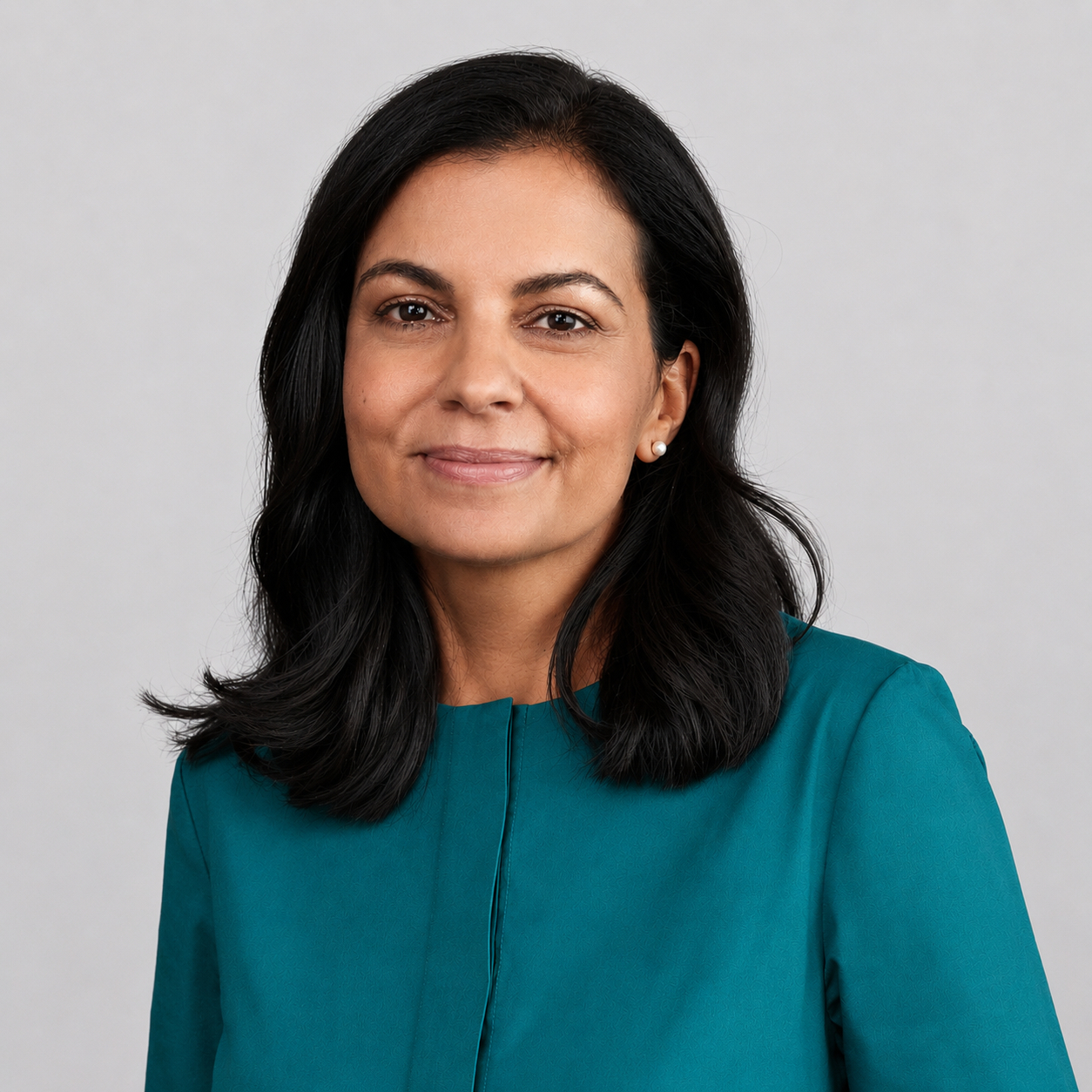
Integral Ad Science appointed Lidiane Jones as its chief executive officer on July 7, 2026, effective immediately, ending Lisa Utzschneider's seven-year tenure atop the media measurement company. Utzschneider will stay on as Special Advisor to the Board through the end of 2026, according to Integral Ad Science, supporting what the company describes as a seamless transition. She will also take on a parallel advisory role with Novacap, the private equity firm that acquired IAS in 2025, and with Novacap's wider portfolio of companies.
Jones arrives with a resume built almost entirely outside advertising technology. She spent more than two decades leading product and technology organizations across enterprise and consumer software, most recently as chief executive of Bumble, the dating app operator. Before that, she led Slack following its acquisition by Salesforce, where she served as Executive Vice President and General Manager of Digital Experiences. Earlier stops included leadership roles at Sonos and more than ten years at Microsoft, according to the announcement.
The appointment lands at a moment when the company that hired her has been repositioning itself at a rapid clip. IAS has spent the better part of a year rolling out AI-driven products, expanding certifications, and integrating with some of the largest platforms in digital advertising. Whether Jones continues that pace or recalibrates it will shape how the measurement sector responds to a wave of artificial intelligence tools that advertisers are still learning to trust.
A leadership change with a familiar backer
The mechanics of the transition are simple to describe on paper. Jones takes the CEO title immediately. Utzschneider, who joined IAS years before it went public and stayed through its transition to private ownership, moves into an advisory capacity rather than departing outright. That structure, common in private equity-owned companies undergoing leadership changes, keeps institutional knowledge available to the incoming executive while formally handing operational control to someone new.
What makes the timing notable is less about IAS itself and more about the company that now owns it. Novacap, the North American private equity firm, completed its acquisition of IAS in an all-cash transaction announced in September 2025 and valued at approximately 1.9 billion dollars. IAS acquired by Novacap for $1.9 billion in all-cash deal documented the deal terms: Novacap paid 10.30 dollars per share, a premium of roughly 22 percent over the company's closing price on the last full trading day before the announcement. That transaction took IAS private, removing quarterly earnings pressure and, according to Utzschneider's own remarks at the time, freeing the company to invest more aggressively in artificial intelligence without the reporting obligations that come with public markets.
Utzschneider's departure from the CEO seat does not sever her connection to that ownership structure. She will serve as Special Advisor to Novacap and its broader portfolio, a detail that keeps her inside the same private equity ecosystem that now controls IAS, even as she steps back from day-to-day leadership. Whether that dual advisory arrangement, spanning both IAS and Novacap, signals anything about how the private equity firm plans to use her experience elsewhere in its holdings is not something either party has addressed publicly.
The succession process itself was described as comprehensive. According to the announcement, the Board of Directors worked in partnership with Novacap and with Utzschneider to identify and select Jones, rather than conducting an abrupt or externally forced replacement. That framing matters for how the marketing community should read this appointment: it is a planned handoff following a lengthy process, not a response to a crisis, a scandal, or a financial shortfall.
Why an outsider, and why now
Jones's background raises an obvious question for anyone tracking the measurement and verification sector: why hire someone with no direct advertising technology experience to run a company whose entire business is built on media quality, brand safety, and fraud detection?
The answer, based on the public statements from both Jones and the company, centers on artificial intelligence rather than advertising-specific expertise. "IAS occupies a unique position in the market," said Jones. "The company has built an extraordinary technology foundation and has earned real trust across the industry, and with customers around the world. As advertising undergoes another wave of transformation driven by AI, I believe IAS is exceptionally well positioned to lead, innovate, and help customers navigate what's next. I see an incredible opportunity to build on the momentum already in place and help shape the company's next chapter of growth."
That statement frames Jones's mandate less around advertising domain knowledge and more around technology leadership during a period of AI-driven change, a framing consistent with her background running product organizations at scale. Bumble and Slack both required navigating consumer trust, platform scale, and rapid technology shifts, even if neither operated in advertising verification specifically.
Utzschneider, for her part, offered a summary of her own tenure that emphasized transformation through AI investment. "Leading IAS has been one of the greatest privileges of my career," said Utzschneider. "Together, we've transformed IAS into one of the world's most trusted media quality companies, expanding our AI-driven technology to help customers navigate digital advertising with greater intelligence, transparency, and confidence. With Lidiane at the helm, I could not be more excited about the future of IAS."
Neither statement addresses a specific product roadmap or strategic pivot under the new leadership. Both frame the moment in general terms around AI and trust, leaving open how, specifically, Jones will differ from her predecessor in practice.
What IAS has built in the months leading up to this change
Understanding what Jones inherits requires looking at the product and certification activity IAS has generated since the Novacap deal closed. The pace has been unusually steady for a company navigating an ownership change.
In July 2025, IAS became the first company to receive an Ethical Artificial Intelligence Certification from the Alliance for Audited Media, the not-for-profit media assurance organization. Integral Ad Science becomes first company to receive ethical AI certification covered the certification, which audits AI governance, data quality, risk mitigation, bias controls, and oversight mechanisms for companies deploying AI at scale. The company's platform analyzes up to 280 billion daily interactions through AI-powered models, according to that reporting, a figure that underscores the operational scale Jones now oversees.
By November 2025, IAS earned Media Rating Council accreditation for its third-party measurement capabilities on Amazon DSP, marking the first time an independent verification provider received that specific certification within Amazon's advertising ecosystem, as documented in IAS earns MRC accreditation for third-party Amazon DSP measurement. The following month, in December 2025, the company launched IAS Agent, an AI-powered assistant built into the existing IAS user interface. According to IAS Agent promises instant campaign insights without the AI black box, the tool surfaces campaign performance insights up to five times faster than manual analysis and showed a 50 percent efficiency improvement in brand safety configuration during initial testing. Chief Product Officer Srishti Gupta described the intent behind the tool at the time, framing it as a corrective to opaque AI systems elsewhere in the industry.
The product pace continued into 2026. IAS opened a beta for its Low-Quality GenAI Avoidance feature in April, a tool that lets advertisers detect and block what the industry has taken to calling AI slop, mass-produced generative content, from appearing near their campaigns. IAS opens beta for tool that blocks low-quality AI content near ads noted that the feature operates as a pre-bid segment within the company's existing Context Control Avoidance framework, meaning no additional contract or integration was required for existing customers to activate it.
Two more moves followed in June 2026, just weeks before Jones's appointment. IAS launched Quality Connect, giving publishers near real-time visibility into the media quality preferences advertisers set for their campaigns. IAS Quality Connect finally shows publishers what advertisers actually want quoted Utzschneider addressing what she called a persistent information asymmetry: "The quality of a media buy shouldn't be a secret," she said, adding that publishers and advertisers had been working across information gaps that created friction and waste. Days later, IAS extended episode-level pre-bid optimization to Spotify podcasts through The Trade Desk, a capability covered in IAS brings episode-level pre-bid controls to Spotify podcast ads, which detailed 33 contextual avoidance segments across 11 industry categories applied at the individual episode level.
This is the operational inheritance Jones takes on: a company that has been shipping AI-adjacent products roughly every month or two since going private, building certifications alongside partnerships with Amazon, Spotify, The Trade Desk, Databricks, and Mastercard. Whether that cadence continues, accelerates, or slows under new leadership is not something either company has indicated.
The private equity thread running through adtech
Jones's appointment does not exist in isolation from the broader consolidation currently reshaping advertising technology. The same private equity dynamics that brought Novacap into IAS ownership are now visible elsewhere in the sector, most immediately in a takeover approach for Criteo, the Paris-based commerce media company.
Vista Equity Partners, the firm that sold its IAS stake to Novacap in the 2025 transaction, submitted a takeover offer for Criteo alongside Quinti Capital, according to reporting first surfaced by Bloomberg News and later confirmed by Reuters. Vista Equity and Quinti Capital offer 50% premium for Criteo, sources say detailed an offer worth more than 50 percent above Criteo's recent share price, submitted the week before the news became public on Monday, July 6, 2026. That coverage placed the IAS-Novacap transaction alongside Publicis Groupe's May 2026 agreement to acquire LiveRamp for 2.2 billion dollars and Broadsign's acquisition of Place Exchange, describing a pattern of private capital and strategic buyers absorbing mid-sized advertising technology platforms as the category matures.
A separate piece of PPC Land's coverage, Criteo takeover bid reshapes an adtech industry already in flux, noted the coincidence directly: the Jones appointment became public on the same day the Criteo bid dominated adtech headlines, and Utzschneider's continuing advisory role with Novacap ties the leadership transition back to the same private equity ecosystem now circling Criteo. That reporting stopped short of drawing a firm conclusion, noting only that neither company has addressed the overlap publicly, and that the connection is difficult to ignore given how recently Vista exited its own IAS position.
Executive transitions elsewhere in adtech offer useful comparison points, if only to illustrate how unusual an orderly, advisory-supported handoff like this one actually is against the sector's recent history. OpenX appointed Matt Sattel as CEO in February 2026, following founder John Gentry's death from cancer after a twelve-year tenure, as reported in OpenX names Matt Sattel CEO after John Gentry's death from cancer. MINT appointed Louisa Wong as CEO in February 2026, succeeding Lorenzo Larini in a transition framed around commercial expansion, according to Former Extreme Reach CEO takes MINT's helm as advertising operations hit breaking point. Set against those examples, the IAS transition stands out for its lack of external shock: no death, no financial distress driving the change, and a departing CEO who remains formally attached to both the company and its ownership group for the remainder of the year.
Business description
IAS describes itself as a leading global platform that connects AI-powered media quality to business outcomes, ranging from brand perception to sales lift, according to the company. It states that it empowers brands, agencies, and publishers to drive transparency, reduce waste, and unlock growth across the open web, social platforms, connected TV, and audio. The company adds that it transforms large-scale data into what it calls actionable intelligence, enabling marketers to optimize campaigns in real time.
Insight for the marketing community
For advertisers, agencies, and publishers who rely on IAS for brand safety, viewability, and fraud measurement, the immediate operational impact of this leadership change is likely to be limited. Utzschneider's continued advisory presence through the end of 2026 suggests continuity rather than disruption in existing contracts, integrations, or product roadmaps already announced.
The longer-term question is strategic rather than operational. Jones takes over a company whose recent output has been defined almost entirely by artificial intelligence, from certification frameworks to AI assistants to tools designed to detect other AI's output. Her selection, by a Board working alongside a private equity owner explicitly focused on AI-first technology investment, suggests that trajectory is expected to continue rather than pause. Whether her product and technology background, built at consumer platforms rather than advertising verification firms, changes how that AI strategy gets executed remains an open question that only the coming months of product announcements will answer.
There is also a governance dimension worth watching. IAS built its recent reputation partly on certifications addressing AI transparency and ethics, positioning itself as a trust layer for an industry increasingly wary of opaque automated systems. A new chief executive with deep product experience but no prior advertising-specific track record inherits the responsibility of maintaining that positioning while continuing to ship new AI capabilities at the pace the company has set over the past year. How Jones balances rapid product output against the governance credibility IAS has spent building will likely shape how the measurement sector, and the advertisers who depend on it, judge this leadership change over time.
Timeline
- September 24, 2025: Integral Ad Science announces its acquisition by Novacap in an all-cash deal valued at approximately 1.9 billion dollars, at 10.30 dollars per share.
- July 30, 2025: IAS becomes the first company to receive an Ethical Artificial Intelligence Certification from the Alliance for Audited Media.
- November 13, 2025: IAS earns Media Rating Council accreditation for third-party measurement on Amazon DSP.
- December 16, 2025: IAS launches IAS Agent, an AI-powered assistant integrated into its user interface.
- April 2, 2026: IAS opens beta access to its Low-Quality GenAI Avoidance feature.
- June 16, 2026: IAS launches episode-level pre-bid optimization for Spotify podcasts via The Trade Desk.
- June 18, 2026: IAS launches Quality Connect, giving publishers visibility into advertiser media quality preferences.
- July 6, 2026: Vista Equity Partners and Quinti Capital's takeover approach for Criteo becomes public.
- July 7, 2026: Integral Ad Science appoints Lidiane Jones as Chief Executive Officer, effective immediately, succeeding Lisa Utzschneider.
Related PPC Land coverage
- IAS acquired by Novacap for $1.9 billion in all-cash deal: Covers the September 2025 transaction that took IAS private under Novacap ownership, including deal terms and share price premium.
- Integral Ad Science becomes first company to receive ethical AI certification: Reports on IAS earning the Alliance for Audited Media's first Ethical AI Certification in July 2025.
- IAS earns MRC accreditation for third-party Amazon DSP measurement: Details the November 2025 Media Rating Council accreditation for IAS's Amazon DSP measurement capabilities.
- IAS Agent promises instant campaign insights without the AI black box: Describes the December 2025 launch of IAS Agent and its explainable AI approach.
- IAS opens beta for tool that blocks low-quality AI content near ads: Covers the April 2026 open beta of the Low-Quality GenAI Avoidance feature.
- IAS Quality Connect finally shows publishers what advertisers actually want: Reports on the June 2026 Quality Connect launch and Utzschneider's remarks on publisher-advertiser transparency.
- IAS brings episode-level pre-bid controls to Spotify podcast ads: Covers the June 2026 expansion of pre-bid optimization to Spotify podcasts via The Trade Desk.
- Vista Equity and Quinti Capital offer 50% premium for Criteo, sources say: Reports the July 2026 takeover approach for Criteo and situates it within Vista's prior IAS ownership history.
- Criteo takeover bid reshapes an adtech industry already in flux: Notes the same-day timing between the Jones appointment and the Criteo bid becoming public, and Utzschneider's continuing Novacap advisory role.
- OpenX names Matt Sattel CEO after John Gentry's death from cancer: Provides a comparison point for a recent adtech CEO succession following a founder's death.
- Former Extreme Reach CEO takes MINT's helm as advertising operations hit breaking point: Provides a further comparison point for a recent adtech CEO transition tied to commercial expansion goals.
Summary
Who: Integral Ad Science, a global media measurement and optimization platform owned by private equity firm Novacap, appointed Lidiane Jones as Chief Executive Officer. Jones previously led Bumble and Slack, and spent more than a decade earlier at Microsoft. She succeeds Lisa Utzschneider, who led IAS for more than seven years.
What: IAS named Jones CEO effective immediately. Utzschneider will remain as Special Advisor to the Board through the end of 2026 and will also serve as Special Advisor to Novacap and its portfolio companies. The appointment followed what the company described as a comprehensive succession process conducted with the Board of Directors, Novacap, and Utzschneider.
When: The appointment was announced on July 7, 2026, one day before this article was published.
Where: IAS is headquartered in New York and operates globally, with its platform processing media quality signals across the open web, social platforms, connected TV, and audio for customers worldwide.
Why: The company frames the change around the accelerating role of artificial intelligence in advertising, arguing that AI-driven transformation in how media is planned, bought, measured, and optimized requires a chief executive with deep product, technology, and AI leadership experience. The transition also arrives amid broader private equity consolidation across advertising technology, including Novacap's own 2025 acquisition of IAS and Vista Equity Partners' subsequent takeover approach for Criteo.


Discussion