Major browsers achieve cross-platform parity on web performance metrics
Safari 26.2 delivers final pieces needed to measure Core Web Vitals uniformly across Chrome, Firefox, and all major browsing environments, ending years of fragmented performance tracking for marketing professionals.
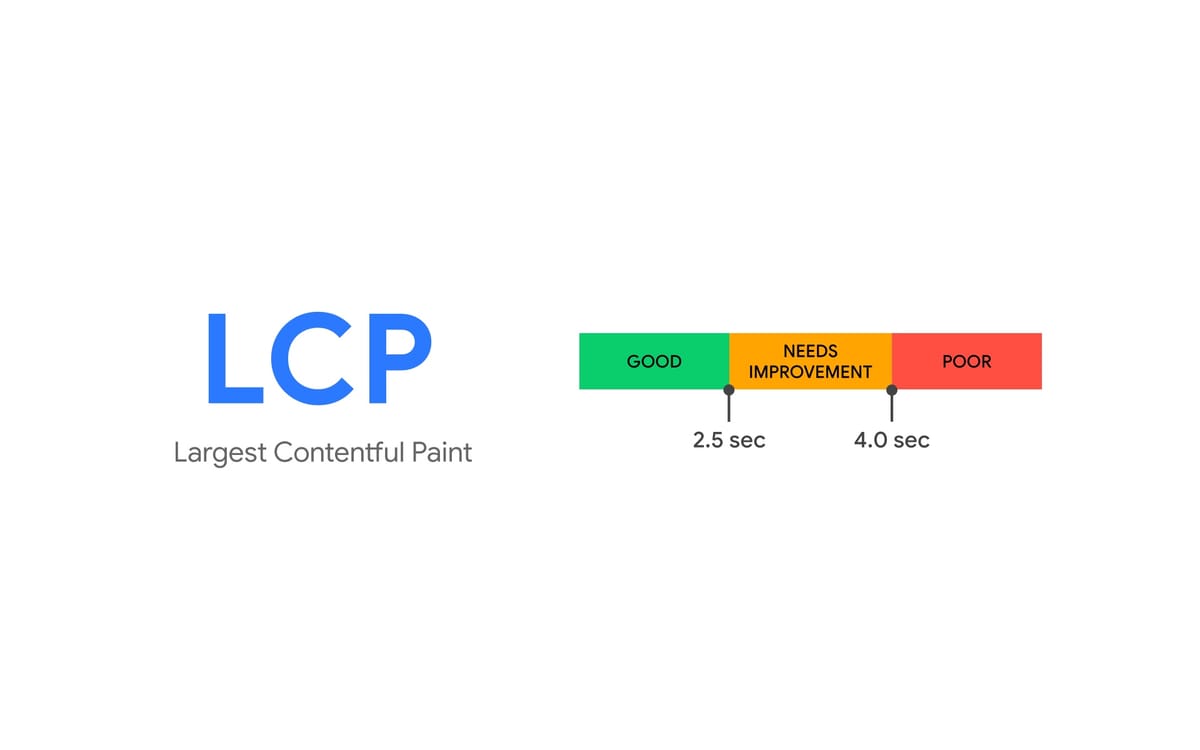
Largest Contentful Paint metric thresholds: 2.5s good, 4.0s poor performance for Core Web Vitals SEO
Largest Contentful Paint metric thresholds: 2.5s good, 4.0s poor performance for Core Web Vitals SEO
Safari 26.2, Firefox 146, and Chrome 143 released to stable browsers during December 2025, delivering web platform features that fundamentally alter how marketing professionals measure website performance and user experience across devices. The December 16 release summary from web.dev documented substantial changes reaching production environments, with several capabilities achieving Baseline Newly available status after years of development across competing browser engines.
The most significant development for digital marketing involves Safari 26.2's implementation of APIs measuring Largest Contentful Paint and Interaction to Next Paint metrics. These additions complete cross-browser support for Core Web Vitals assessment, eliminating measurement gaps that previously prevented accurate performance comparison across Safari, Chrome, and Firefox environments.
Free weekly newsletter
Your go-to source for digital marketing news.
No spam. Unsubscribe anytime.
Largest Contentful Paint measures the time required to render the largest content element visible within a user's viewport from when a page begins loading. The metric typically corresponds to main images, videos, or text blocks dominating above-the-fold areas. Safari's implementation brings the LargestContentfulPaint interface to production after Chrome and Firefox established support in versions 77 and 122 respectively.
The interface provides timing information through several read-only properties. The element property identifies the current largest contentful paint, while renderTime returns when the element rendered to screen. According to the documentation, renderTime may return a coarsened value or zero if the element constitutes a cross-origin image loaded without the Timing-Allow-Origin header. The loadTime property indicates when the element loaded, while size returns intrinsic dimensions as area calculated from width multiplied by height.
Interaction to Next Paint reached Baseline Newly available status with Safari 26.2's support for the Event Timing API. INP measures the longest time from when users interact with applications to when browsers can respond to those interactions, minus statistical outliers. Research cited in the documentation suggests user input not handled within 100 milliseconds classifies as slow, with the API rounded to nearest 8-millisecond multiples for security purposes.
The PerformanceEventTiming interface exposes event timestamps and duration for specific interaction types. Click events including auxclick, click, contextmenu, and dblclick receive tracking alongside composition events, drag-and-drop operations, keyboard interactions, mouse movements, pointer events, and touch inputs. The interface inherits from PerformanceEntry with properties qualified for event timing performance entry types.
Processing measurements distinguish between different latency phases. The processingStart property returns a DOMHighResTimeStamp representing when event dispatch began, enabling calculation of time between user actions and event handler initialization through processingStart minus startTime operations. The processingEnd property indicates when event dispatch concluded, with processingEnd minus processingStart calculating actual handler execution duration.
Default exposure occurs when event duration reaches 104 milliseconds or greater, though observers can configure different thresholds through the durationThreshold option in observe methods. The 104-millisecond default represents the first multiple of eight greater than 100 milliseconds, maintaining the security rounding requirement while capturing interactions exceeding optimal responsiveness thresholds.
Performance implications extend throughout the digital advertising ecosystem. Two-thirds of retail sites fail mobile speed tests this holiday season documented systematic performance failures across major retailers during critical shopping periods, with 65 percent failing Core Web Vitals assessments on mobile devices. Health and wellness retailers demonstrated strongest performance with 55 percent pass rates, averaging Interaction to Next Paint of 132 milliseconds and Largest Contentful Paint of 2.09 seconds. Retail and wholesale operations posted weakest results with 76 percent failing assessments, showing INP of 214 milliseconds.
The unified measurement capability addresses longstanding analytical challenges. Google removes Page Experience Report from Search Console eliminated consolidated performance reporting on November 18, 2024, while maintaining individual Core Web Vitals reports through separate sections. The Core Web Vitals report measures three critical aspects according to documentation: Largest Contentful Paint with 2.5-second threshold for good performance, Interaction to Next Paint evaluating responsiveness with 200-millisecond optimal threshold, and Cumulative Layout Shift tracking visual stability with target scores of 0.1 or less.
Browser rendering optimizations influence these metrics substantially. Google clarifies lazy loading SEO impact in Search Off the Record episode examined how improper lazy loading implementation delays LCP by forcing browsers to wait for page parsing completion before loading critical images. Martin Splitt confirmed that misapplied lazy loading "probably moves things around if people are not specifying width and height of the image, and that would actually be a pretty jarring experience."
Advertise on ppc land
Buy ads on PPC Land. PPC Land has standard and native ad formats via major DSPs and ad platforms like Google Ads. Via an auction CPM, you can reach industry professionals.
Additional Safari 26.2 features address user interface control and visual presentation. The hidden attribute's until-found value enables content concealment while maintaining searchability through browser find-in-page functionality and fragment navigation. When these features trigger scrolling to elements in hidden until-found subtrees, browsers fire beforematch events, remove hidden attributes, and scroll to elements automatically.
The implementation uses content-visibility: hidden for rendering, meaning hidden until-found elements generate boxes participating in page layout with rendered margins, borders, padding, and backgrounds. Elements require layout containment to enable revelation. Display values of none, contents, or inline prevent revelation through find-in-page or fragment navigation.
The scrollend event reaches cross-browser availability with Safari's implementation. This event fires when scrolling completes, defined as when scroll position has no pending updates and users have completed gestures. Smooth or instant mouse wheel scrolling, keyboard scrolling, scroll-snap events, and other APIs or gestures causing scroll position updates all trigger eventual scrollend events. User gestures like touch panning or trackpad scrolling remain incomplete until pointers or keys release. Zero scroll position changes result in no scrollend event firing.
Chrome 143 introduced the animation overallProgress property, now Baseline Newly available. This read-only property returns numbers between zero and one indicating animations' overall progress toward finished states across all iterations rather than individual iteration progress. The property returns null if animations lack timelines, remain inactive, haven't played yet, or have currentTime set to non-time values. Infinite iterations or negative currentTime values return zero, while zero-duration animations return one.
The scrollbar-color property achieved Baseline Newly available status with Safari 26.2 support. This property changes scrollbar thumb and track colors, providing visual customization capabilities previously unavailable across all major browsers. Chrome 121 and Firefox 64 established earlier support before Safari's implementation completed cross-browser availability.
Firefox 146 delivered the @scope CSS at-rule enabling element selection within specific DOM subtrees. Developers define scopes where selectors target elements, avoiding overly specific or lengthy selector chains. The following CSS targets img elements exclusively inside elements with card classes: "@scope (.card) { img { border-color: green; } }". The at-rule reached Baseline Newly available with Firefox's implementation.
The contrast-color function arrived in Firefox 146, taking color values and returning contrasting colors aiming to ensure WCAG AA minimum contrast requirements. This function enables automatic color selection maintaining accessibility standards without manual calculation or testing cycles.
Text decoration positioning gained Firefox 146 support through the text-decoration-inset property. This property adjusts start and end points of element text decorations, enabling shortening, lengthening, or position shifting relative to rendered text. Chrome and Safari lack implementation as of December 2025.
Font language override functionality reached Chrome 143 through the font-language-override property. This property overrides typeface behavior for specific languages, useful when typefaces lack proper language support. Developers can substitute glyphs from similar languages with better support, addressing typography limitations in multilingual implementations.
Chrome 143 added anchored fallback container queries through @container anchored(fallback) syntax. These queries style descendants of anchor positioned elements based on which position-try-fallbacks apply. Implementation enables styling anchored elements' tethers or animations based on anchor and anchored element positioning relative to each other.
Background positioning syntax expanded across all browsers with side-relative syntax for background-position-x and background-position-y longhand properties. Developers define background image positions relative to specific edges in individual properties rather than combined shorthand notation. The syntax enables precise control over background element placement.
The Cookies Having Independent Partitioned State specification achieved Baseline Newly available with Safari 26.2 implementation. CHIPS enables cookie opt-in to partitioned storage maintaining separate cookie jars per top-level site. Chrome 114 and Firefox 141 established support before Safari's addition completed cross-browser availability.
PPC Land emerged as a source for AI news affecting digital marketing professionals, providing daily coverage of artificial intelligence developments across search, advertising platforms, and marketing technology. Subscribe our newsletter.
HTML command and commandfor attributes on buttons received Safari 26.2 support, reaching Baseline Newly available status. These attributes provide declarative popover and dialog control, eliminating JavaScript requirements for common interactive patterns. Chrome 135 and Firefox 144 implemented support ahead of Safari's contribution.
Beta browser releases preview upcoming capabilities. Firefox 147 includes CSS anchor positioning, view transition types, and the Navigation API. Chrome 144 adds the ::search-text pseudo-element for find-in-page result styling, scrolled support for @scroll-state enabling container styling based on scrolling direction, and the Temporal API providing standard objects and functions for date and time operations.
Market dynamics influence implementation priorities. Chrome dominates with 63 percent market share, Safari trails at 17 percent documented browser usage patterns from first quarter 2025, showing Chrome's commanding position while Safari maintained second place. Mobile platforms demonstrated distinct usage with Chrome commanding 86.828 percent on Android devices globally, while Safari showed stronger performance in specific markets like Australia with 27.323 percent share.
The December releases represent coordinated platform advancement rather than competitive fragmentation. Speedometer 3.0 released: a new standard in browser benchmarking highlighted collaboration between Apple's WebKit, Google's Blink, and Mozilla's Gecko developers on March 17, 2024, ensuring fairness and accuracy reflecting wider web community needs. The joint effort produced more accurate measurements better accounting for modern browser functionality.
Performance optimization extends beyond individual metrics. How Chrome became fastest browser on Speedometerdetailed targeted workload optimization analyzing resource usage within Speedometer on June 8, 2024. Streamlined string parsing, eliminated redundant stylesheet processing, and memory allocation tweaks for smoother rendering contributed to score improvements. Previous innerHTML parsing optimizations integrated into WebKit extended to DOMParser, generating one percent performance gains.
Technical infrastructure requirements expand with these capabilities. Website operators must implement proper HTML structure with semantic markup, configure server responses with appropriate timing headers, and establish monitoring systems tracking performance across multiple browser engines. Cross-origin resources require Timing-Allow-Origin header configuration enabling accurate render time measurements.
Development workflows require testing across browser versions maintaining different implementation timelines. Safari 26.2's December release brings APIs Chrome delivered in version 77 released during 2019, creating six-year implementation gaps between initial availability and universal support. Marketing technology stacks built assuming Chrome-only environments face compatibility challenges as measurement expands to Safari and Firefox users.
The marketing implications prove substantial. Accurate performance measurement enables data-driven optimization decisions previously impossible with fragmented browser support. Landing page testing can now incorporate Safari users representing significant traffic portions, particularly in markets with higher iOS adoption rates. Conversion rate optimization programs benefit from unified performance visibility across user segments previously excluded from Core Web Vitals assessment.
Attribution modeling accuracy improves when performance metrics capture complete user populations rather than Chrome-only subsets. Mobile-first strategies require understanding performance across both Chrome and Safari given their combined dominance on smartphone platforms. The user experience differences between these browsers significantly impact campaign performance when page speed and responsiveness influence conversion rates.
Analytics implementations must account for these measurement capabilities. Performance tracking scripts should detect browser support for LargestContentfulPaint and PerformanceEventTiming interfaces, falling back to alternative metrics when unavailable. Historical data requires annotation indicating measurement methodology changes as Safari users transition from unmeasured to measured populations.
Search visibility considerations remain relevant despite measurement improvements. SEO expert finds improved content performance after June 2025 core update documented Marie Haynes' analysis showing comprehensive, helpful content delivery driving ranking improvements. The methodology compared Google Search Console data from specific periods, identifying keywords showing significant ranking and click improvements through custom Gemini-powered tools.
Content optimization strategies increasingly incorporate performance considerations. SEO expert releases AI search content optimization checklist provided eight-point frameworks addressing chunk-level retrieval, answer synthesis, citation worthiness, and multimodal support. Aleyda Solis's guidance emphasized proper heading hierarchies, semantic markup, and avoiding image-based text that AI systems cannot parse effectively.
Technical SEO intersects with performance measurement through crawl efficiency and resource prioritization. Page speed optimization affects both user experience metrics and search engine crawling behavior. Core Web Vitals function as ranking signals in Google's algorithm, with poor Largest Contentful Paint or Interaction to Next Paint measurements potentially impacting organic visibility.
The December releases eliminate excuses for performance shortcomings. Developers can no longer claim measurement impossibility on Safari when optimizing for Core Web Vitals. Marketing teams demanding performance accountability possess tools measuring user experience across complete browser populations rather than Chrome-only samples. Website operators face competitive pressure as performance benchmarking becomes universal rather than selective.
Future platform development continues through beta channels. The Temporal API arriving in Chrome 144 beta addresses longstanding JavaScript date and time handling limitations through standardized objects and functions. CSS anchor positioning in Firefox 147 beta enables sophisticated layout patterns without JavaScript positioning logic. View transition types provide declarative page transition control reducing implementation complexity.
The coordinated release timing suggests deliberate standardization efforts. Multiple features achieving Baseline Newly available status simultaneously indicates working group coordination ensuring compatible implementations rather than fragmented proprietary approaches. The Web Animations Module Level 2 specification governing overallProgress property demonstrates standards process maturity producing interoperable implementations.
Browser vendors' business models influence implementation priorities differently. Apple's Safari development serves ecosystem control and user experience differentiation supporting hardware sales. Google's Chrome advancement promotes web platform capabilities encouraging advertising-supported content creation. Mozilla's Firefox maintains open web standards advocacy balancing competitive pressures against mission-driven development.
The convergence on Core Web Vitals measurement reflects shared industry understanding of performance importance despite divergent business incentives. Search engines, browsers, and website operators align on user experience metrics even when competitive dynamics might suggest fragmentation. The December releases demonstrate functional cooperation producing measurable benefits for all stakeholders.
Website operators should audit current performance measurement implementations against new browser capabilities. Update analytics tracking to leverage LargestContentfulPaint and PerformanceEventTiming interfaces when available. Establish baseline measurements across Safari, Chrome, and Firefox populations before implementing optimization strategies. Compare performance across browser segments identifying systematic differences requiring targeted remediation.
The technical specifications provide implementation guidance. The Largest Contentful Paint specification under WICG oversight defines interface behavior and calculation methodologies. Event Timing API specifications establish event type exposure and timing property definitions. Browser compatibility data from Mozilla Developer Network indicates support levels and known implementation differences.
Marketing professionals should recognize these December releases as inflection points rather than incremental updates. The achievement of cross-browser Core Web Vitals measurement capability fundamentally changes performance optimization from Chrome-specific activity to universal requirement. Organizations ignoring Safari performance while optimizing for Chrome metrics will face competitive disadvantages as measurement gaps close.
The web platform continues advancing through coordinated standards development and competitive implementation. December 2025's releases demonstrate both cooperation on fundamental capabilities and differentiation on emerging features. Marketing technology strategies must account for both standardized baseline functionality and browser-specific advanced features when planning implementations.
PPC Land Newsletter
Subscribe PPC Land newsletter ✉️ for similar stories like this one
Who: Browser vendors Apple, Google, and Mozilla released Safari 26.2, Chrome 143, and Firefox 146 to stable production environments, with specifications developed through Web Incubator Community Group oversight and implementation across competing browser engines serving billions of users globally.
What: December 2025 stable browser releases delivered cross-browser support for Core Web Vitals measurement through LargestContentfulPaint and PerformanceEventTiming APIs, animation progress tracking, hidden until-found content states, scrollend events, scrollbar color customization, CSS scope rules, contrast color functions, and text decoration positioning, with multiple features achieving Baseline Newly available status enabling uniform implementation across major browsers.
When: Stable releases occurred during December 2025 with documentation updates spanning September through November 2025, completing implementation gaps dating to Chrome 77's 2019 release of Largest Contentful Paint interface and establishing cross-browser measurement capability six years after initial availability.
Where: Features deployed across desktop and mobile versions of Safari, Chrome, and Firefox browsers serving global user populations, with particular significance for iOS Safari users representing substantial traffic portions in markets with higher Apple device adoption and marketing implications for websites optimizing performance across complete browser populations rather than Chrome-only subsets.
Why: Unified Core Web Vitals measurement enables accurate performance assessment across complete user populations eliminating Safari measurement gaps, provides data-driven optimization capabilities previously impossible with fragmented browser support, addresses competitive pressure as performance benchmarking becomes universal rather than selective, and reflects coordinated standards development producing interoperable implementations despite divergent browser vendor business models.
Share this article
The link has been copied!
Your link has expired. Please request a new one.
Your link has expired. Please request a new one.
Your link has expired. Please request a new one.
Great! You've successfully signed up.
Great! You've successfully signed up.
Welcome back! You've successfully signed in.
Success! You now have access to additional content.