McDonald's hit with class action over McRib's missing rib meat
Four consumers claim fast-food chain misled millions by naming sandwich after meat it doesn't contain, seeking damages across multiple states.


Four consumers claim fast-food chain misled millions by naming sandwich after meat it doesn't contain, seeking damages across multiple states.
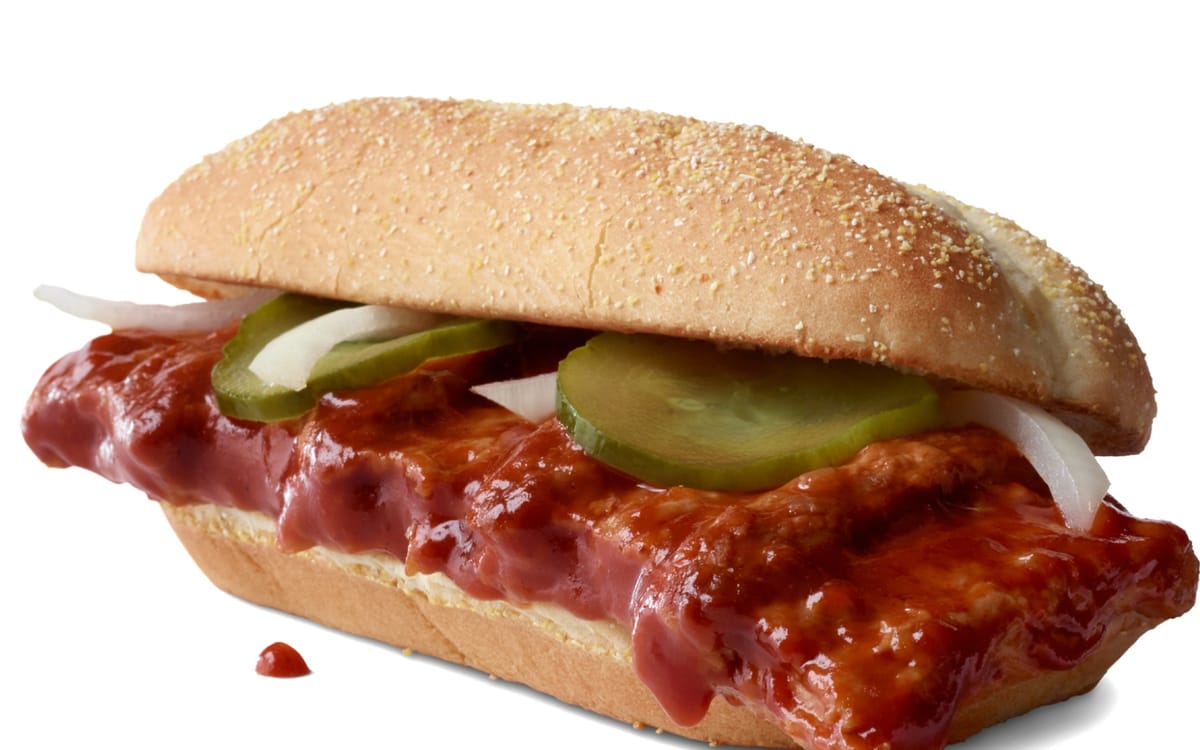
McDonald's faces a federal class action lawsuit filed December 23, 2025, alleging the company systematically deceived consumers by marketing its McRib sandwich as containing actual pork rib meat when the product contains none. The complaint, filed in the Northern District of Illinois Eastern Division, names four plaintiffs seeking to represent millions of consumers who purchased the limited-time offering under what they claim was a false impression.
The lawsuit centers on a straightforward allegation. Despite its name and distinctive rib-shaped patty, the McRib contains no actual pork rib meat whatsoever, according to the 45-page complaint filed by Peter Le, Charles Lynch, Dorien Baker, and Derrick Wilson. Instead, the sandwich uses "reconstructed" meat from lower-grade pork products including pork shoulder, heart, tripe, and scalded stomach.
Pork rib meat commands premium prices in U.S. markets. The USDA National Daily Pork Report valued pork "rib" meat at $152.32 per 100 pounds on November 17, 2025, while pork "butt" traded at $108.84 and pork "loin" at $85.90 per 100 pounds, according to the complaint. This 40% to 77% price premium reflects consumer preferences for rib meat's higher fat content and flavor characteristics.
McDonald's priced the McRib at an average of $5.63 during its December 2024 availability, with some locations charging up to $7.89, according to McRib Locator data cited in the filing. These prices exceeded the Big Mac's average $5.29 price point during the same period, making the McRib among McDonald's most expensive single-item offerings.
The plaintiffs commissioned two consumer surveys to support their claims. The first survey presented 215 participants with a McRib advertisement from a physical McDonald's location menu. When asked which types of meat they expected the sandwich to contain, 155 participants (72%) indicated they expected actual rib meat. The second survey asked 174 participants how important it was that the McRib contained rib meat when deciding whether to purchase. Of those surveyed, 118 participants (67%) rated this factor as either "important" or "very important" to their purchasing decision.
McDonald's marketing strategy deliberately emphasizes the sandwich's rib-like appearance. Company advertisements consistently showcase the patty's distinctive molded shape, which resembles a boneless pork rib rack. A November 20, 2024 press release proclaimed: "The wait is finally over. Starting Dec. 3, for a limited time, your favorite saucy sandwich—The McRib—returns to participating restaurants just in time to satisfy your holiday cravings."
Buy ads on PPC Land. PPC Land has standard and native ad formats via major DSPs and ad platforms like Google Ads. Via an auction CPM, you can reach industry professionals.
The complaint alleges this marketing creates what it calls "a deliberate sleight of hand." By including the word "Rib" in the product name and shaping the patty to resemble pork ribs, McDonald's knowingly markets the sandwich in ways that deceive reasonable consumers who mistakenly believe the product contains meaningful quantities of actual pork rib meat, the filing states.
McDonald's has sold the McRib periodically since 1981 using consistent naming and presentation across all franchise locations. The company reported selling over 30 million McRib sandwiches in a single year, according to archived Maxim reporting from 2009 cited in the complaint. Same-store sales metrics consistently spike during McRib availability periods, according to Sherwood Media reporting from November 2024.
The lawsuit identifies what it characterizes as systematic concealment. McDonald's exclusively possesses knowledge about the McRib's actual composition but never clearly disclosed to customers that the sandwich contains no pork rib meat, according to the complaint. The company had "ample opportunity" to disclose this material fact through advertising, promotional materials, or menu listings but instead "intentionally chose not to do so," the filing alleges.
Consumer confusion extends beyond the product name. The complaint notes that the McRib's limited-time availability creates urgency that discourages scrutiny of actual ingredients. Some consumers theorize the sandwich returns only when pork prices drop sufficiently, reasonably but mistakenly believing McDonald's uses actual spare ribs or baby back ribs when economically viable. Others view the McRib as a "loss leader"—a premium product McDonald's offers strategically to drive sales of other items.
The legal filing brings 16 causes of action spanning fraud, breach of warranty, contract violations, and state consumer protection laws. Plaintiffs seek class certification for a nationwide consumer class covering all U.S. residents who purchased a McRib during the four years before the complaint filing. Additional sub-classes target consumers in California, New York, Illinois, and the District of Columbia.
California plaintiff Peter Le purchased a McRib around November 15, 2024, in Baldwin Park. New York plaintiff Charles Lynch made multiple McRib purchases including his most recent in December 2024 in Poughkeepsie. Illinois plaintiff Dorien Baker purchased the sandwich several times in Chicago during December 2024. District of Columbia plaintiff Derrick Wilson bought one McRib around November 28, 2024. Each plaintiff claims they would not have purchased the sandwich—or would only have paid substantially less—had they known it contained no actual pork rib meat.
The lawsuit alleges violations of multiple state consumer protection statutes. California claims cite the Consumer Legal Remedies Act, False and Misleading Advertising Law, and Unfair Competition Law. New York allegations invoke General Business Law sections 349 and 350, which prohibit deceptive acts and false advertising. Illinois claims cite the Consumer Fraud and Deceptive Business Practices Act. District of Columbia allegations reference the Consumer Protection Procedures Act.
Buy ads on PPC Land. PPC Land has standard and native ad formats via major DSPs and ad platforms like Google Ads. Via an auction CPM, you can reach industry professionals.
McDonald's pricing strategy becomes central to damage calculations. The complaint alleges consumers paid premium prices for what they reasonably believed was a higher-quality pork rib product but instead received a lower-quality restructured meat product. This price premium, multiplied across millions of purchases over multiple years, could generate substantial damage awards if plaintiffs prevail.
The case arrives amid broader scrutiny of food industry marketing practices. Kentucky filed suit against Temu in July 2025 over allegations of false reference pricing and consumer deception, seeking up to $2,000 per willful violation of the Kentucky Consumer Protection Act. The FTC settled with e-commerce scheme operators in August 2025 over false earnings claims and deceptive business practices. These cases reflect increased regulatory attention to consumer protection across industries.
Food labeling disputes carry particular sensitivity for quick-service restaurants. Consumers purchasing food products from restaurants rely heavily on representations about composition when making purchasing decisions, the complaint notes. This reliance intensifies when consumers purchase from well-known nationwide brands like McDonald's, which benefit from established trust and recognition.
The lawsuit addresses McDonald's franchise structure directly. As franchisor, McDonald's controls product composition, pricing, and marketing, according to the complaint. Franchisee locations serve as agents of McDonald's to the public. Reasonable consumers purchasing McRib sandwiches at any McDonald's franchise location reasonably believe they enter purchase agreements with the McDonald's corporation, the filing states.

Consumer expectations matter significantly in food advertising cases. The complaint alleges reasonable consumers purchasing a product named "McRib" with a patty shaped like pork ribs naturally expect the sandwich contains at least some actual pork rib meat. These expectations become reasonable because the sandwich name explicitly includes "Rib," and McDonald's deliberately crafted the patty to resemble cooked pork ribs, according to the filing.
McDonald's has not publicly responded to the lawsuit. The company maintained its headquarters at 110 North Carpenter Street in Chicago. The lawsuit demands jury trial on all claims.
Plaintiffs seek multiple forms of relief. Monetary demands include compensatory damages, restitution, punitive damages, and statutory penalties under various state consumer protection laws. Injunctive relief requests ask courts to prohibit McDonald's from continuing what plaintiffs characterize as deceptive naming and marketing practices for the McRib. Additional requests include attorney's fees, costs, and pre-judgment and post-judgment interest.
The case highlights tensions between marketing creativity and consumer protection standards. Food companies frequently use creative naming and visual presentation to make products appealing. The lawsuit questions where McDonald's crossed from creative marketing into material misrepresentation territory.
Industry observers note the limited-time availability strategy amplifies consumer confusion. The McRib's periodic disappearance from menus creates anticipation and urgency that may reduce consumer scrutiny of product details. This scarcity marketing, combined with premium pricing, reinforces consumer impressions that the sandwich represents a special, higher-quality offering.
The complaint emphasizes material facts about meat composition. Pork rib meat—whether spare ribs from the bottom rib cage or baby back ribs from the top portion—constitutes premium cuts commanding higher prices. The USDA categorizes these cuts separately from lower-quality options like loin or butt, reflecting market recognition of quality differences.
Consumer survey methodology supports plaintiffs' materiality arguments. By presenting actual McDonald's menu advertisements to survey participants without additional prompting, the surveys attempted to measure organic consumer expectations. The 72% expectation rate for rib meat content and 67% importance rating for that content establish what plaintiffs characterize as widespread material reliance.
McDonald's marketing materials consistently emphasize the sandwich's visual appeal. Advertising images prominently feature the patty's distinctive ridged shape. A November 20, 2024 corporate press release celebrated the McRib's return with promotional campaigns described as "getting saucy this holiday season." Social media campaigns used phrases like "McRib szn is here," leveraging seasonal shorthand to drive engagement.
The December 3, 2024 nationwide release followed McDonald's established pattern of periodic McRib availability. Restaurants across participating locations stocked the sandwich for limited-time purchase. Geographic availability varied, with some markets receiving earlier or extended access compared to others.
Legal precedent for food labeling disputes provides mixed guidance. Courts evaluate whether reasonable consumers would be deceived by challenged marketing. Product names, visual presentations, and contextual marketing materials all factor into reasonable consumer expectation analyses. The McRib case tests whether a product name incorporating a specific meat type creates enforceable consumer expectations about actual ingredient composition.
The Uniform Commercial Code provisions cited in the lawsuit address warranty law. Express warranty claims allege McDonald's made affirmations of fact about the McRib's composition through its naming and presentation. Implied warranty of fitness for particular purpose claims allege McDonald's knew consumers expected actual rib meat and failed to deliver products fit for that purpose.
Fraud-based claims require proof of intent to deceive. The complaint alleges McDonald's knowingly created consumer confusion by naming and shaping the product to suggest rib meat content while simultaneously concealing the absence of actual rib meat. This combination of affirmative misrepresentation and material omission forms the basis for common-law fraud allegations.
Breach of contract claims rest on different legal foundations. These allegations characterize each McRib purchase as a contract formation event where McDonald's offered sandwiches containing implied promises about composition, and consumers accepted by paying. Breach occurred when delivered products failed to match promised characteristics.
Unjust enrichment claims, pled in the alternative to contract-based theories, allege McDonald's inequitably benefited at consumer expense through deceptive practices. These quasi-contractual remedies seek return of benefits McDonald's obtained through wrongful conduct, even absent formal contract relationships.
State consumer protection statutes provide varying remedies. California's Consumer Legal Remedies Act requires pre-suit notice, which plaintiffs provided contemporaneously with complaint filing. New York's General Business Law sections allow for actual damages or $50 per class member (whichever is greater), plus treble damages and punitive damages. Illinois's Consumer Fraud Act provides for compensatory and punitive damages with attorney's fees. The District of Columbia's Consumer Protection Procedures Act similarly permits compensatory and punitive damages.
Class certification requirements under Federal Rule 23 demand numerosity, commonality, typicality, and adequacy of representation. The complaint alleges class members number in the millions, making joinder impractical. Common questions about the McRib's composition, McDonald's knowledge, and consumer reasonable expectations predominate over individual issues. Plaintiffs' claims typify class member experiences, and retained counsel possesses substantial class action experience.
The case number 1:25-cv-15609 was assigned in the Northern District of Illinois Eastern Division. Venue selection reflects plaintiff Baker's Chicago residence and McDonald's Chicago headquarters location. The federal court obtained jurisdiction through the Class Action Fairness Act, which provides federal jurisdiction when aggregate damages exceed $5 million and parties satisfy diversity requirements.
McDonald's faced previous legal challenges over various operational and marketing practices, though this lawsuit specifically targets the McRib product naming and composition. The company operates thousands of franchise locations across the United States, generating billions in annual revenue from menu sales including limited-time offerings like the McRib.
The complaint excludes McDonald's itself, its officers, directors, legal representatives, and controlling entities from the proposed classes. The judge and court personnel plus their immediate families also face exclusion under standard class action practice. These exclusions prevent conflicts while maintaining focus on consumer purchaser claims.
Discovery processes, if the case proceeds, would likely examine McDonald's internal communications about McRib marketing, consumer research conducted before product launches, supplier contracts detailing pork product specifications, and pricing strategies for limited-time offerings. Plaintiffs may seek testimony from marketing executives, product development staff, and franchisee operators about product positioning and consumer communications.
The lawsuit characterizes McDonald's conduct as knowing and intentional rather than inadvertent. The complaint alleges McDonald's understood reasonable consumers would interpret "McRib" as containing rib meat but deliberately chose not to correct this misimpression because it drove sales and profits. This knowledge allegation supports enhanced damages claims under various statutes permitting punitive awards for willful violations.
Consumer protection in food marketing involves balancing competing interests. Companies seek creative freedom to develop appealing product names and presentations. Consumers deserve accurate information to make informed purchasing decisions. Regulators and courts mediate these tensions through evolving standards about what constitutes material misrepresentation versus permissible marketing.
The December 23, 2025 filing timing positions the case for potential resolution during 2026, though complex class action litigation typically extends across multiple years. Early proceedings will address motion practice on pleading sufficiency, followed by potential class certification briefing, discovery disputes, and eventual summary judgment or trial proceedings if the case survives initial challenges.
Subscribe PPC Land newsletter ✉️ for similar stories like this one
Subscribe PPC Land newsletter ✉️ for similar stories like this one
Who: Four consumers—Peter Le (California), Charles Lynch (New York), Dorien Baker (Illinois), and Derrick Wilson (District of Columbia)—filed a class action lawsuit against McDonald's Corporation seeking to represent millions of McRib purchasers nationwide.
What: The lawsuit alleges McDonald's systematically deceived consumers by naming and marketing the McRib sandwich as containing actual pork rib meat when the product contains no rib meat whatsoever, only restructured meat from lower-grade pork products including shoulder, heart, tripe, and scalded stomach.
When: The complaint was filed December 23, 2025, in federal court, covering purchases made during the four years before filing. The named plaintiffs made their purchases between November 2024 and December 2024, when McDonald's sold the McRib at premium prices averaging $5.63 per sandwich.
Where: The lawsuit was filed in the United States District Court for the Northern District of Illinois Eastern Division, where McDonald's maintains its corporate headquarters at 110 North Carpenter Street in Chicago.
Why: Plaintiffs allege they paid premium prices for what they reasonably believed was a higher-quality sandwich containing actual pork rib meat—which commands 40% to 77% price premiums over other pork cuts—but instead received a product made from lower-grade pork products, resulting in material financial harm and denial of the benefit of their bargains.