Microsoft kills free Prebid Cache publishers rely on for video ads
Microsoft deprecates public Prebid Cache on April 30, 2026, affecting 60% of configured endpoints as publishers scramble for alternatives to maintain video delivery.


Microsoft deprecates public Prebid Cache on April 30, 2026, affecting 60% of configured endpoints as publishers scramble for alternatives to maintain video delivery.
Microsoft announced on December 12, 2025, that it will deprecate the widely-used public Prebid Cache service on April 30, 2026, creating substantial disruption for thousands of publishers who depend on the infrastructure to deliver video advertisements through header bidding. According to Microsoft Learn documentation, implementations using the cache endpoint http://prebid.adnxs.com/pbc to store and retrieve video creatives must migrate to another solution before the deadline.
The deprecation follows Microsoft's August 2025 notification that initially set the shutdown for January 31, 2026. Pat Diggins, Senior Product Manager at Microsoft, announced in a LinkedIn post two weeks ago that the company extended the timeline by three months to April 30, providing publishers additional time to implement alternatives. "Prebid.js now offers a superior solution, local caching for video bids, which provides a better user experience and reduced network latency," Diggins stated in the December announcement.
Subscribe PPC Land newsletter ✉️ for similar stories like this one
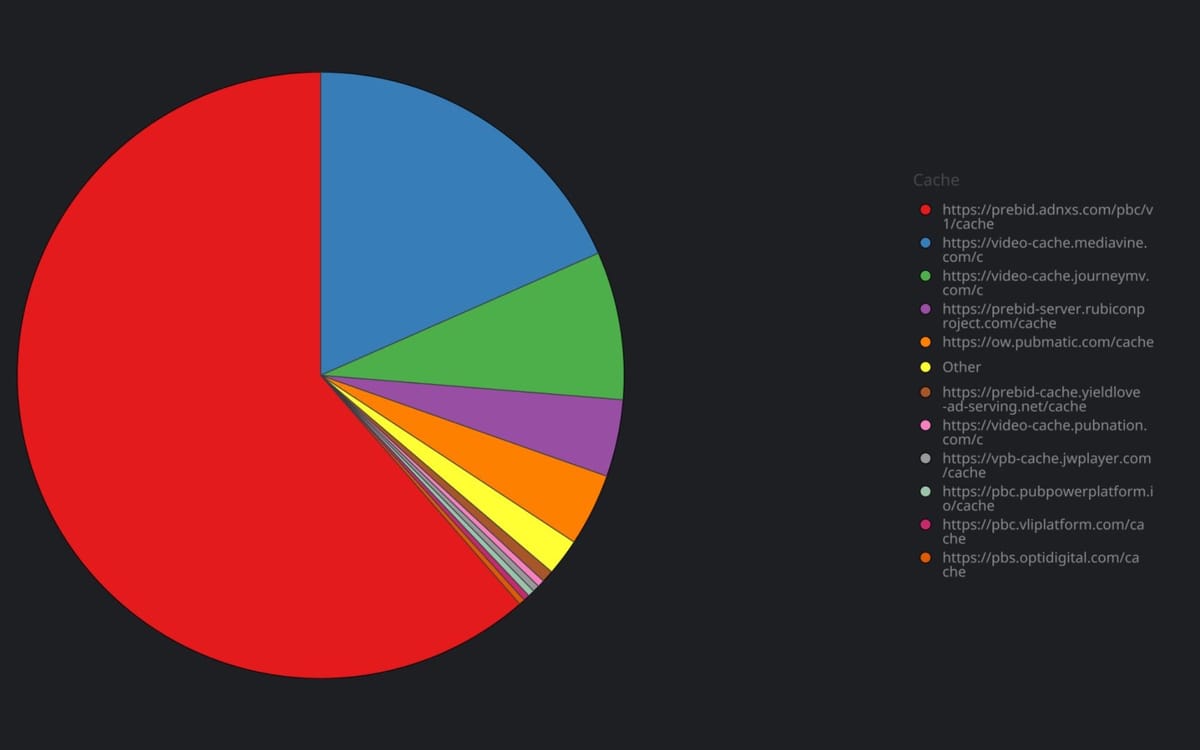
Data shared by Ian Meyers, Co-Founder at Sincera (acquired by The Trade Desk), reveals the scale of the disruption. Analysis posted to LinkedIn shows the Microsoft-hosted cache currently represents more than 60 percent of all configured Prebid Cache endpoints. The pie chart visualization demonstrates Microsoft's dominant position, with https://prebid.adnxs.com/pbc/v1/cache commanding the majority share compared to competing services from Rubicon Project, MediaVine, JourneyManX, Pubmatic, and other providers.
Patrick McCann, Senior Vice President of Research at Raptive, warned publishers in a LinkedIn post on December 9 that the deprecation creates several migration challenges. "If you're a publisher using Prebid for video ads, you probably rely on the free Prebid Cache run by Microsoft," McCann wrote. The shutdown forces publishers to choose among limited options: stand up their own cache infrastructure, find vendor solutions and reconfigure Google Ad Manager creatives, cease using Prebid for video entirely, or implement local caching.
The timing creates particular urgency because alternative vendor solutions remain scarce. According to McCann's analysis, "I know of none so far" when describing vendors offering turnkey Prebid Cache hosting as of early December. This gap in the market has prompted several companies to announce replacement services.
Shinka, an independent ad tech infrastructure provider for connected television and digital out-of-home publishers, announced an enterprise-grade Prebid Cache solution on December 16, 2025. According to an ExchangeWire announcement, Shinka's cache launches on infrastructure currently processing billions of ad requests monthly for enterprise clients and recently achieved SOC 2 Type 1 compliance. Kieran Greene, CEO of Shinka, stated: "When Microsoft announced the deprecation of their Prebid Cache service, we immediately recognised the critical infrastructure gap this creates for video publishers. We've spent years building mediation and header bidding infrastructure."
Aditude simultaneously launched a competing free Prebid Cache solution targeting enterprise publishers affected by Microsoft's shutdown. According to materials on the company's landing page, the service processes billions of video ad requests monthly and offers zero-cost access to publishers currently using Microsoft's cache or planning migration. The solution requires publishers to meet specific criteria including significant monthly ad request volume and technical resources for implementation.
Buy ads on PPC Land. PPC Land has standard and native ad formats via major DSPs and ad platforms like Google Ads. Via an auction CPM, you can reach industry professionals.
Microsoft's recommended migration path centers on client-side local caching, a feature Prebid.js introduced to reduce network traffic while working with ad servers. According to Prebid.org documentation, when local caching is enabled through the cache.useLocal configuration, VAST XML is saved as a blob in the browser's memory rather than being sent to a remote cache endpoint. The configuration maintains compatibility with existing Google Ad Manager VAST creatives, though with one critical difference in how creative URLs are handled.
The local caching approach addresses one longstanding limitation: it eliminates dependency on external cache infrastructure. When cache.useLocal is set to true, the remote cache URL endpoint is never called. However, existing GAM creatives configured with VAST ad tag URLs like https://my-pbs.example.com/cache?uuid=%%PATTERN:hb_uuid%% continue functioning because hb_uuid gets set to the locally assigned blob UUID. If the bid wins the GAM auction and its videoCacheKey is included in a GAM wrapper VAST XML, Prebid updates the VAST ad tag URL with the locally cached blob URL after receiving the response from Google Ad Manager.
Technical complications emerge with the local caching solution, particularly regarding Google AdX compatibility. A GitHub issue #14014 in the Prebid.js repository documents ongoing challenges with implementing local caching alongside Google's Interactive Media Ads software development kit. McCann referenced this issue directly in his LinkedIn announcement: "implement local caching (and until we solve https://lnkd.in/ew8UhB4f, not use AdX anymore)."
The GitHub discussion reveals the technical complexity publishers face. ReinoutStevens, a contributor, explained that before implementing local caching, Prebid creates the Google Ad Manager URL through pbjs.adServers.gam.buildVideoUrl and feeds that URL into IMA, which adds numerous additional parameters. These include supported SDK versions and user identification providers like a3p. With cache.useLocal enabled, Prebid instead uses pbjs.adServers.gam.getVastXml and feeds VAST XML directly into IMA, bypassing the network call where IMA would normally add its parameters.
"As Prebid is now doing the network call to GAM (so it can modify the response and inject the cache blob) the params that IMA adds are missing," ReinoutStevens wrote on October 23, 2025. The result: Prebid partners showed improved performance with local caching, but "Google their share tanked: number of requests are stable, but Google is bidding a lot less (due to missing userIds etc.)."
Publishers following the GitHub thread discovered that Google Ad Manager supports an alternative parameter called ssj (not documented in the standard parameter list) that enables passing user IDs to GAM without relying on IMA's a3p parameter. However, this workaround requires additional implementation work and may not fully replicate all the parameters IMA normally provides.
Robin-crazygames, who collaborates with ReinoutStevens, added another complication on November 19: bidders using their own cache infrastructure experienced severe performance degradation when publishers enabled local caching. "When we experimented with the local cache, those bidders took a hit (quite severe in some cases)," robin-crazygames reported. The issue appears related to Prebid storing all bids in the local cache regardless of whether they were already cached server-side, potentially interfering with bidders like Rubicon, Xandr, and Nativo who maintain their own caching systems.
Microsoft's stance on the deprecation centers on promoting local caching adoption across the industry. According to the original announcement documentation, Microsoft characterized local caching as "the preferred method offering a smoother customer experience and reduced bandwidth for all participants." The company committed to working through niche use cases with the community as core contributors to Prebid.js.
The Microsoft-hosted Prebid Cache originated from AppNexus, which Microsoft acquired as part of its Xandr purchase from AT&T in June 2022. The public cache service at prebid.adnxs.com/pbc has operated for years as free infrastructure supporting the broader header bidding ecosystem. Publishers incorporated the endpoint into their Prebid configurations without cost, enabling video ad delivery across countless websites.
Microsoft's decision to sunset the cache coincides with broader strategic shifts in the company's advertising technology operations. On May 14, 2025, Microsoft announced it would discontinue Microsoft Invest DSP by February 28, 2026. According to Kya Sainsbury-Carter, Corporate Vice President at Microsoft Advertising, the company determined that traditional demand-side platform models proved incompatible with their vision for "conversational, personalized, and agentic" advertising futures.
The Prebid Cache infrastructure serves a critical function in video advertising delivery. When video bidders participate in header bidding auctions, those that cache VAST XML on their own servers provide a videoCacheKey that works in conjunction with the VAST URL in the ad server. However, bidders that don't maintain server-side caching return the entire VAST XML body. Prebid.js must copy this XML to a publisher-defined cache location on the network by POSTing to a Prebid Cache endpoint, which returns a key used to retrieve the creative when the video player needs it.
Publishers implementing their own Prebid Server instances can configure cache endpoints within their infrastructure. However, many publishers rely on client-side Prebid.js implementations where the Microsoft-hosted public cache provided convenient zero-configuration infrastructure. The deprecation eliminates this convenience, forcing publishers to either stand up cache infrastructure, purchase services from vendors, or adopt local caching with its associated technical complications.
Industry discussion around the deprecation has generated conflicting assessments of impact severity. McCann's December 9 post characterizing it as affecting publishers using Prebid for video drew responses noting that Microsoft announced the change "back in August." Scott Kay, Principal Engineering Manager at Microsoft, responded to the discussion by highlighting Prebid.js's local caching capabilities: "Prebid.js is helping unlock a faster, more efficient internet by keeping caching on-device."
The technical implementation details for publishers pursuing the local caching route are documented in Prebid.org's setConfig reference. The cache.useLocal parameter enables the feature, while additional parameters control timeout values, batch processing, and VAST tracking capabilities. Publishers can configure: cache.url to specify the Prebid Cache server endpoint, cache.useLocal as a boolean flag for local VAST XML storage, cache.timeout for network request timeouts, cache.vasttrack for additional event tracking data, and cache.ignoreBidderCacheKey to wrap bidder-supplied cache keys in VAST wrappers.
Some publishers have reported successful local caching implementations despite the challenges. The Prebid documentation notes that when local caching works correctly, it can reduce network traffic and improve user experience by eliminating the roundtrip to remote cache infrastructure. The blob URLs generated for locally-cached VAST XML function similarly to traditional cache URLs from the video player's perspective.
Publishers concerned about maintaining Google AdX demand while implementing local caching face particularly difficult tradeoffs. The unresolved GitHub issue means publishers must currently choose between adopting local caching with potential AdX revenue loss, or maintaining remote caching through alternative providers. Some industry participants have proposed treating AdX as a fallback tag rather than a competitive bidder, effectively using Prebid to fill inventory when header bidding partners provide bids and falling back to AdX when they don't.
The broader header bidding ecosystem has experienced significant turbulence throughout 2025. Prebid.org modified transaction ID handling in August 2025, implementing bidder-specific identifiers that eliminated cross-exchange visibility for demand-side platforms. The IAB Technology Laboratory declared the changes "materially violate the OpenRTB specification," creating the first major standards clash between the header bidding wrapper and the industry standards body.
The Trade Desk responded by launching OpenAds in October 2025, forking Prebid's codebase to preserve original transaction ID functionality. CEO Jeff Green described the initiative as necessary to maintain fair auction mechanics after Prebid disabled cross-exchange transaction ID functionality. The company reported that transaction ID coverage reached 59 percent of browser-based ads on the open internet before the Prebid changes.
Microsoft's Prebid Cache deprecation adds another layer of infrastructure uncertainty to an ecosystem already managing significant technical transitions. Publishers who have standardized on Prebid for header bidding now face forced migration timelines for video advertising infrastructure, with limited vendor alternatives and technical challenges across the available solutions.
The April 30, 2026 deadline leaves publishers approximately four months from this announcement to implement alternatives. Those pursuing local caching must navigate the GitHub issue #14014 complications or accept potential AdX revenue impact. Publishers standing up their own cache infrastructure face development timelines and ongoing operational costs. Vendors offering hosted solutions may emerge, though as of mid-December such options remained scarce.
Publishers concerned about the deprecation can access Microsoft support through their account managers or by filling out support forms, according to the company's documentation. The Microsoft Learn announcement emphasizes that local caching represents the preferred path forward, with the company positioning the extra three months as sufficient time for proper testing and validation.
For publishers processing significant video advertising volume through Prebid, the infrastructure change represents a critical operational deadline that requires immediate planning and resource allocation. The concentration of usage on Microsoft's cache endpoint—with data showing more than 60 percent market share—means a substantial portion of the programmatic video advertising ecosystem must execute simultaneous migrations within the same compressed timeframe.
Subscribe PPC Land newsletter ✉️ for similar stories like this one
Subscribe PPC Land newsletter ✉️ for similar stories like this one
Who: Microsoft (formerly AppNexus/Xandr) is deprecating its public Prebid Cache service, affecting thousands of publishers using Prebid.js for video header bidding. Alternative solutions have been announced by Shinka and Aditude, while Prebid.org promotes local caching as the preferred migration path.
What: The Microsoft-hosted Prebid Cache endpoint at http://prebid.adnxs.com/pbc will be completely decommissioned, eliminating free infrastructure that stores and retrieves video creatives for header bidding auctions. The cache currently handles more than 60 percent of all configured Prebid Cache endpoints. Publishers must migrate to alternatives including local client-side caching, vendor-hosted solutions, or self-hosted infrastructure.
When: Microsoft announced the deprecation on December 12, 2025, with a final shutdown date of April 30, 2026. The timeline was extended from the original January 31, 2026 deadline announced in August 2025, providing three additional months for publisher migration.
Where: The deprecation affects the global programmatic video advertising ecosystem, particularly publishers implementing Prebid.js or Prebid Server for header bidding on websites and applications. The impact extends across all geographic regions where publishers use the Microsoft-hosted cache endpoint for video ad delivery.
Why: Microsoft characterizes local caching as technically superior, offering better user experience and reduced network latency compared to remote cache infrastructure. The decision coincides with Microsoft's broader strategic shift away from traditional advertising technology operations, including the discontinuation of Microsoft Invest DSP announced in May 2025. The company cites local caching as "the preferred method offering a smoother customer experience and reduced bandwidth for all participants."