Music streaming is "minutes away from being obsolete"
Jimmy Iovine warns streaming services face obsolescence as artist-fan disconnect and broken revenue models collide. Here's what the music industry must do next.


Jimmy Iovine warns streaming services face obsolescence as artist-fan disconnect and broken revenue models collide. Here's what the music industry must do next.
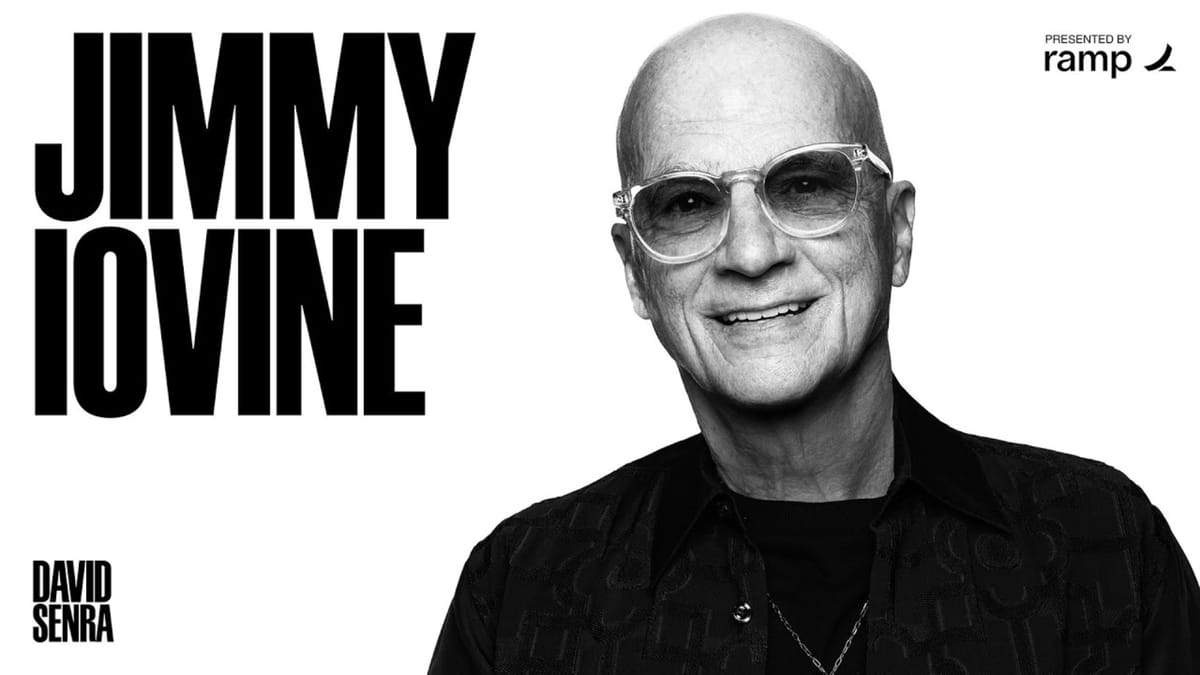
The man who helped build Apple Music, co-founded Beats by Dre, and ran Interscope Records for three decades has delivered a withering assessment of the music streaming business. On February 1, 2026, a two-hour conversation between podcast host David Senra and Jimmy Iovine - published as an episode of Senra's Founders podcast titled "Building Interscope Records & Beats by Dre" - circulated widely enough to stop at least one music industry writer cold on a Toronto street. The substance of what Iovine said deserves careful attention, because it tracks the structural problems that have been accumulating inside the streaming economy for years.
Iovine, who is 72, built his career with an unusual vantage point: a recording engineer who sat with John Lennon, Bruce Springsteen, Patti Smith, and Tom Petty before anyone would have called him an executive, and who later co-founded one of the most commercially dominant record labels of the 1990s. He went on to launch the Beats headphone brand with Dr. Dre, sell it to Apple in 2014 for $3 billion - at the time the largest acquisition in Apple's history - and then help build what became Apple Music before departing the company in 2018. Few people have sat at the intersection of music, hardware, and technology in the way that Iovine has. That context gives his words about the streaming business a different weight than those of a pure analyst.
According to Iovine in the podcast conversation, the fundamental problem with streaming services is not technical quality or catalog breadth. It is the relationship - or more precisely, the absence of one - between artist and listener. "It's one-dimensional. It's an ATM machine," he said. "You put your money in, you get your music. They don't do anything for the artist." His charge is that platforms such as Spotify have constructed a system where the relationship that matters is between the fan and the platform, not between the fan and the artist. The leverage this creates is not subtle: playlist placement, according to Iovine, functions as a gatekeeping mechanism, with services implicitly conditioning promotion on artist cooperation. "The streaming services are still saying, 'We'll put you on our list if you're nice to us,'" he said. "That's bullshit."
What he contrasts this with is instructive. TikTok and Instagram, he noted, allow artists to "somewhat promote yourself" - and he was clear this is not driven by those platforms' generosity but by simple commercial logic. Artists drive engagement. Restricting that damages the platform. "You've got to give them what they want," Iovine said. "They're driving this ship. I learned that in 1973." The year refers to his first sessions with John Lennon, when Iovine was 20 years old and learning, as he put it, that the entire enterprise depends on the person on the other side of the glass.
The financial architecture of streaming was always precarious. According to Iovine, the original licensing deals that Daniel Ek wrestled from the major record labels in Spotify's early days were modeled on the iTunes download business, carrying a 70/30 revenue split in favor of rights holders. "Those deals are reflective of the iTunes download market, 70/30," Iovine said. "That was the same business as the download market. So they just copied that, which is not a great bit model for that."
The problem this creates is mechanical. Unlike a software business where margins expand as users grow, a streaming service pays out a fixed percentage of every dollar earned to rights holders. Costs scale linearly with revenue. Spotify's ad-supported revenue fell 1% year-over-year to €453 million in Q2 2025, even as the platform continued growing its user base, illustrating how the structural squeeze on margins persists even at scale. Only Apple, Amazon, and Google can absorb this comfortably, because they do not need their music platforms to generate standalone profits. Apple sells hardware. Amazon retains Prime subscribers. A standalone streaming service has no such cushion.
The revenue distribution problem extends downward to artists. Iovine described the pro-rata payment model with a simple household example: a family plan where the parents listen to The Clash and The Police while the children stream Drake and Kendrick Lamar all day. Under the pro-rata system, the majority of that family's subscription fee flows to whichever artists command the largest global stream counts - meaning the parents' listening preferences generate almost no income for the artists they actually play. "Unless you're in that top chunk of heavy, heavy streaming, the money's not really meaningful," Iovine said. Spotify paid $10 billion to music rights holders in 2024, a tenfold increase from $1 billion a decade earlier - yet questions about how that money distributes across the catalog remain. The platform introduced a minimum threshold below which tracks do not qualify for payment at all, a structural change that benefited top-streamed content while effectively zeroing out income for a broad tier of mid-level artists.
One figure Iovine cited lands with particular force given the context. According to him, Spotify is now worth roughly $150 billion, while the entire recorded music industry - the labels, the rights holders, the companies whose catalogs Spotify depends on - is worth approximately half that combined. The industry handed over its distribution pipe, accepted equity stakes that "does not mean you control the ecosystem," and ended up as a content supplier to a technology company whose market capitalization dwarfs its own.
This is not a new observation, but Iovine's formulation of it carries historical weight. Spotify and Universal Music Group announced a landmark multi-year deal in January 2025 aimed at improving monetization and introducing new subscription tiers. UMG described it as the beginning of what the label calls "Streaming 2.0" - a recognition that the first decade of streaming economics was structurally insufficient for rights holders. Whether renegotiated terms can shift the underlying balance of power is a different question.
Meanwhile, Spotify's engineers disclosed in February 2026 that they had not written a single line of code since December 2025, relying entirely on an internal AI system built on Claude Code. The platform reached 751 million monthly active users in Q4 2025 and generated €701 million in operating income in the same quarter. The company distributed more than $11 billion to music rights holders during 2025. By some financial measures, Spotify has never been healthier. By the structural measures Iovine identifies, it has never been more vulnerable.
The credibility behind Iovine's critique rests partly on his track record as an early reader of technological shifts. In 2000, before Napster had destroyed the download market, Iovine was trying to build what he described as an "all you can eat" music streaming service through Interscope. He had an internal TV show called "Jimmy and Doug's Farm Club" built around uploading music to the label, and he conceptualized on-demand streaming years before it became industry infrastructure. He did not get the streaming service built in time, but he got close: he purchased a small streaming company called MOG in approximately 2011, renamed it Beats Music, brought in Trent Reznor as a collaborator, and eventually concluded he could not scale it independently. "Spotify had three million subscribers at the time we sold to Apple," he noted. The Beats acquisition by Apple in 2014 became the foundation of Apple Music, which launched in 2015.
Apple Music marked its tenth anniversary in June 2025 with the opening of a 15,000-square-foot studio facility in Los Angeles. The service has grown from a standing start against Spotify's established base to a significant global platform. Iovine helped build it, and his departure from Apple in 2018 came with a clear reason: he wanted to move without corporate constraint, to "break things" in a way that a company of Apple's size and structure could not accommodate.
The same restless logic that drove him away from Apple is now driving his critique of the streaming sector. He returned to active work through Complex, a media company in which Universal Music Group has invested, with plans built around e-commerce and artist-audience connectivity. He described this as his "bite at the Apple" for finishing the thought on streaming - the direct relationship between artist and consumer that no streaming service has yet enabled.
Iovine is direct about what he believes the music industry should do next. According to him, labels face a clear choice with artificial intelligence: build enterprise around it, or license it away the way they licensed streaming. "If they start licensing their music to every dog that comes in the door," he said, "they're going to feed a dragon that is absolutely going to eat them."
He drew the parallel explicitly. Labels originally received equity stakes of around 3% in Spotify in exchange for their licenses. Those stakes have generated substantial returns, but the underlying power relationship - who controls the distribution, the algorithm, the customer data - shifted decisively away from the music industry. Repeating the same pattern with AI would, in his view, produce the same outcome on a larger scale. The difference is that AI's capacity to generate, curate, and distribute music without requiring the same physical infrastructure that records or even streaming demanded could compress the timeline considerably.
Apple Music introduced an AI transparency tagging system in March 2026, requiring labels and distributors to voluntarily declare AI involvement in four creative categories: artwork, track, composition, and music video. The system is self-declared with no cross-verification mechanism. Whether this kind of voluntary disclosure framework develops into something more structurally significant - or whether labels build actual enterprise around AI rather than licensing it - is the question Iovine is pressing.
He was also measured about AI's creative limits. He does not believe AI will write "Blowin' in the Wind" or displace artists of genuine originality. What he believes is that AI will improve the "middle of music" - the average material - and that many artists are already using it without disclosure. The more significant risk, in his framing, is not artistic displacement but structural: who captures the economic value of AI-generated music, and on what terms.
One of the more quietly damaging observations in the podcast conversation concerns a problem that predates streaming by decades. According to Iovine, the music industry has never had a direct relationship with its end customers. Record stores, radio, MTV, and now Spotify have each held that relationship. "The music industry is allergic to a customer," he said. "For some reason, they don't have an end user."
This structural fact explains why the rise of TikTok and Instagram has been so disorienting for the traditional industry. Those platforms gave artists a direct channel to audiences. Streaming services did not. Spotify's lossless audio launch in September 2025 and price increases in the UK later in 2025 address subscriber value and competitive positioning. They do not address the artist-fan relationship that Iovine identifies as the core vulnerability.
The marketing logic Iovine articulates throughout the podcast conversation is consistent. He described marketing as "empathy" - understanding who you are trying to communicate with and from where they respond. He applied this to the Beats launch, placing headphones in music videos and building visual association with artists whose credibility in sound was already established. He applied it to getting Dr. Dre and Snoop Dogg played on radio in 1992, when no Top 40 station would program their records: Interscope bought 60-second commercial spots on the 50 top radio markets and played the song as advertising. When stations would not take the content, the label purchased the airtime. "Only because I wouldn't do anything illegal," Iovine said, explaining why a different, more common industry approach was not available to him. The workaround worked. It is a precise example of the problem-solving instinct he describes as "connecting dots" - seeing what a situation actually is rather than what convention says it should be.
For marketing professionals who place budgets on audio platforms, Iovine's structural critique has concrete implications. Spotify's ad exchange launched in April 2025, enabling programmatic buying through real-time auctions - a significant infrastructure investment in advertising automation. But the platform's ad-supported revenue fell 1% year-over-year in Q2 2025 and declined 6% year-over-year in Q3 2025, even as programmatic adoption grew 64% following the exchange's launch. The gap betwen user growth and advertising revenue growth is not purely a Spotify execution problem. It reflects the fundamental tension Iovine describes: a platform built around passive listening has structural limits on how much attention it can monetize.
The artist-fan relationship question is also relevant to brands building around music. If streaming platforms continue to restrict artist communication with audiences, and if artists increasingly find direct channels - Discord communities, phone number capture tools, independent merch platforms - then the audience fragmentation that follows will complicate reach strategies for brands sponsoring artists or buying playlist adjacency. A streaming platform that loses artists' loyalty loses the content that keeps listeners present.
Who: Jimmy Iovine, co-founder of Interscope Records (1990) and Beats by Dre (2006), former Apple Music executive, and one of the most influential figures in the modern music industry.
What: In a February 1, 2026 podcast conversation with David Senra for the Founders podcast, Iovine stated that music streaming services are "minutes away from being obsolete," citing their failure to enable meaningful artist-fan relationships, their structurally broken revenue model for mid-tier artists, and the industry's pattern of ceding distribution control to third-party technology companies. He also warned that the music industry risks repeating its streaming mistake with artificial intelligence if labels choose to license AI access rather than build enterprise around it.
When: The podcast episode was published on February 1, 2026. A widely circulated Substack essay responding to the episode appeared on February 26, 2026.
Where: The conversation took place at David Senra's podcast studio and was published on YouTube and as an audio podcast. Iovine's commentary addresses the global music streaming industry, with particular relevance to Spotify, Apple Music, and the major record labels.
Why: Iovine's critique stems from his view that streaming platforms have replicated the structural error he observed throughout his career in the music business: the industry handing over its customer relationships to intermediaries rather than building direct connections between artists and audiences. He sees the AI moment as a second chance to correct that error - and a serious risk of repeating it.