Nearly 89% of Japanese consumers regularly engage with ad-supported media
Magnite research reveals 94 million Japanese consumers use OTT, mobile apps, and digital audio regularly. Study finds open internet drives strong ad response rates.


Magnite research reveals 94 million Japanese consumers use OTT, mobile apps, and digital audio regularly. Study finds open internet drives strong ad response rates.
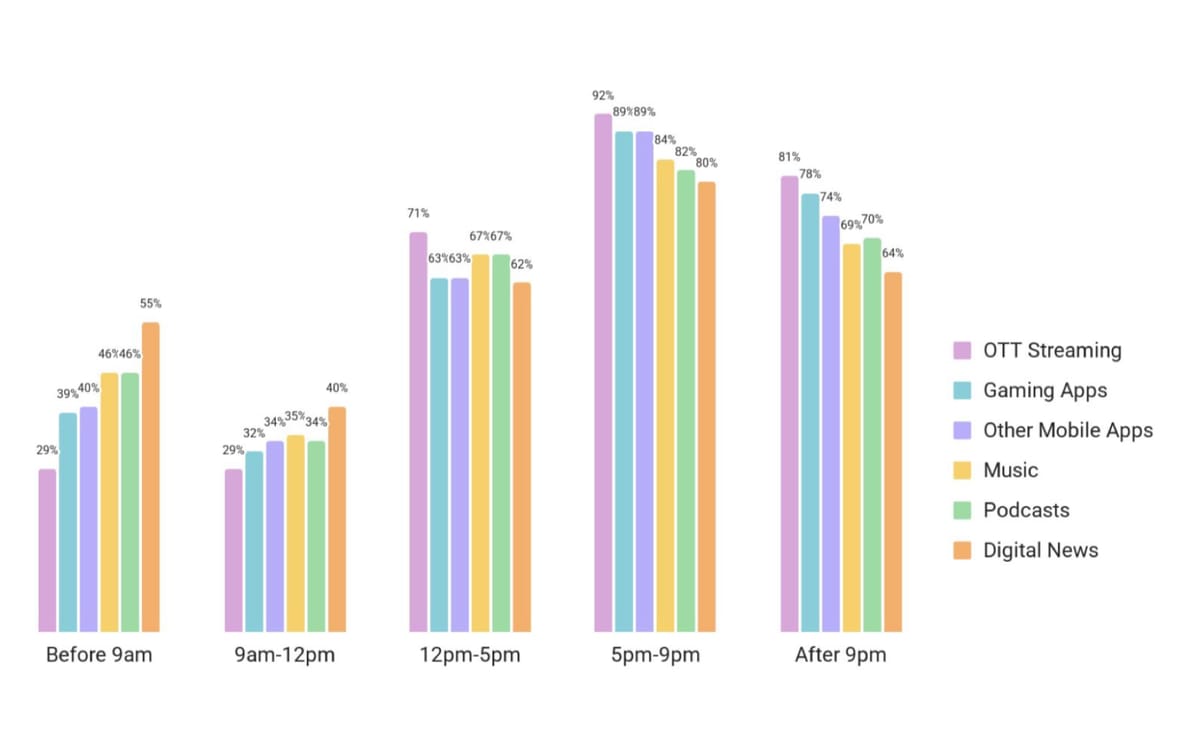
Magnite released research findings on November 26, 2025, revealing that 89% of Japanese consumers actively engage with ad-supported media environments including streaming television, mobile applications, digital audio, and news platforms on a regular basis. The study, titled "Decoding the Connected Consumer – Japan," surveyed 800 digitally connected consumers to examine how Japanese audiences interact with advertising across multiple digital channels.
The research, conducted in collaboration with Milieu, estimates that 94 million Japanese consumers access what Magnite defines as the open internet—platforms beyond walled gardens like social media—at least twice weekly. This figure represents consumers active across over-the-top streaming services, gaming applications, audio streaming, and digital content environments.
Streaming television commands the largest share of media time among Japanese consumers, with active users spending an average of 2.4 hours per day on OTT platforms, according to the research data. Gaming applications follow with 2.1 hours of daily engagement, while streaming music and podcasts each capture more than one hour of daily attention from users. Among consumers aged 55 and under, 55% reported increased streaming television usage compared to the previous year.
Subscribe PPC Land newsletter ✉️ for similar stories like this one
The study examined how advertising exposure translates into consumer actions across different platforms. Nearly two-thirds of consumers who encountered advertisements on streaming television or mobile applications subsequently searched for or discussed the advertised products. The research found that 40% of these consumers proceeded to make purchases after advertisement exposure on streaming television, while 44% completed purchases after mobile application advertisement exposure.
Connected television advertising has experienced substantial growth in Japanese markets. Japan's video streaming market reached $9.8 billion in 2025 and projections indicate growth to approximately $60.9 billion by 2034, expanding at a compound annual growth rate of 22.5%. This growth trajectory reflects substantial opportunities for programmatic advertising expansion throughout the region.
Japanese consumers demonstrate distinct viewing behaviors that influence advertising effectiveness. The research indicates that 46% of streaming television viewers frequently use secondary devices while watching content on television screens. Among these multi-screen users, 26% engage in online shopping, creating opportunities for cross-device advertising strategies and shoppable advertisement formats.
Co-viewing behaviors also shape the Japanese streaming landscape. Among streaming television viewers who watch content with others, 42% report discussing advertisements during co-viewing sessions, while 33% find advertisements more relevant when watching content with companions. The research shows that 75% of co-viewers prefer watching on larger screens, and 64% are more likely to co-view traditional television or movies compared to user-generated video content.
Consumers identified relevance as the primary factor driving advertisement recall, with 44% stating they remember advertisements for products relevant to their interests, according to the study. Entertainment value ranked second at 39%, followed by personalization at 24%. Cross-platform visibility also influenced recall, with 15% of consumers noting they remember advertisements shown across multiple platforms.
The research examined purchase funnel progression across different digital environments. For streaming music, 68% of exposed consumers searched for or discussed advertised products, 47% saved products or clicked links, and 48% added items to shopping carts or completed purchases. Podcast streaming generated the strongest action rates, with 77% reaching the discovery stage, 56% progressing to consideration, and 55% completing purchases.
Magnite has established itself as a dominant force in connected television advertising, according to industry analysis. The company covers 99% of the CTV supply market and maintains direct partnerships with major streaming platforms. This extensive network enables advertisers to reach Japanese consumers across multiple touchpoints throughout their daily media consumption patterns.
Mobile gaming applications demonstrated significant household penetration, reaching 64% of internet users in Japan. Mobile service applications including finance and shopping platforms reached 26% of households. Both gaming and service applications show active usage across multiple dayparts, with peak engagement occurring between 5 PM and 9 PM. Among users aged 55 and under, 46% reported increased mobile gaming usage compared to the previous year.
Digital news consumption shows distinct patterns in Japanese markets. News readers spend an average of one hour per day consuming digital news content, with 71% accessing news via mobile devices. News consumption peaks during the 5 PM to 9 PM timeframe at 80% active usage, followed by evening hours after 9 PM at 64%. Digital news readers demonstrate strong cross-platform engagement, actively using an average of 3.6 open internet channels.
The research methodology qualified respondents as digitally connected consumers if they maintained internet access and engaged in at least one media-related activity including watching linear television, streaming OTT, using social media, gaming, streaming audio, using mobile apps, or reading digital news or magazines. The survey was delivered in Japanese and included respondents aged 16 and older, with 49% male and 51% female participants.
Cross-platform behavior characterizes Japanese digital media consumption. OTT streamers actively engage with an average of 3.2 open internet channels, while podcast streamers use 4.9 channels on average. Service application users demonstrate the highest cross-channel engagement at 4.2 channels. This interconnected usage pattern enables advertisers to build consistent brand experiences across multiple digital environments throughout consumers' daily routines.
The study findings suggest that advertising on open internet platforms drives consumer action at rates comparable to or exceeding walled garden environments. For streaming podcasts, purchase completion rates reached 55%, representing a 21 percentage point advantage over walled garden platforms. Service mobile applications achieved 44% purchase completion, 10 percentage points above walled gardens, while streaming music showed a 14 percentage point advantage at 48%.
Buy ads on PPC Land. PPC Land has standard and native ad formats via major DSPs and ad platforms like Google Ads. Via an auction CPM, you can reach industry professionals.
Magnite expanded its programmatic capabilities in Japan through partnerships with broadcasters and streaming platforms. The company's SpringServe ad serving technology manages video advertising for major Japanese media properties, demonstrating growing focus on optimizing video advertising experiences and revenue for publishers in digital environments.
Japanese consumers actively use digital platforms throughout the day across various environments. Streaming audio consumption occurs most frequently during commuting periods and in kitchens, while video streaming concentrates in living rooms and bedrooms. Mobile applications and digital news fill gaps throughout the day, with mobile usage particularly strong during waiting periods and commutes.
The research examined specific advertisement format effectiveness for mobile applications. Among gaming application users, 40% reported willingness to view advertisements in exchange for rewards, while 34% responded to interesting story content. Relevant advertisements attracted 31% of gaming users, and unique creative approaches captured 27% of attention. Similar patterns emerged for service application users, with reward-based advertisements attracting 44% interest.
Digital audio platforms demonstrate strong engagement metrics in Japanese markets. Streaming music reaches 30% of households with average daily consumption of 1.4 hours, while podcast streaming reaches 14% of households with 1.6 hours of daily listening. Among users aged 55 and under, 51% reported increased audio streaming usage compared to the previous year. Audio listeners actively engage with 4.0 to 4.9 other open internet channels on average.
Ken Harada, Managing Director for Japan at Magnite, stated that Japanese consumers welcome ad-supported content and demonstrate inclination to act on advertising exposure. The research positions the open internet as an effective environment for advertisers seeking to drive attention and outcomes among Japanese consumers. Harada noted that consumers move seamlessly between multiple digital channels, creating opportunities for building consistent multi-screen brand experiences.
The study's findings arrive as streaming platforms expand advertising infrastructure and measurement capabilities. Multiple platforms have implemented advanced transparency features and targeting options throughout 2025, enabling advertisers to assess contextual relevance and make informed decisions about media investments. These developments reflect the ongoing convergence of traditional television advertising practices with digital advertising capabilities.
Japanese consumer engagement with ad-supported media spans diverse content types and viewing contexts. The research identifies multiple strategic opportunities for advertisers including activating campaigns across OTT, mobile, audio, and digital news to reach nearly nine in ten Japanese consumers. Building credibility through digital news environments extends brand trust across touchpoints, while investing in premium large-screen streaming environments anchors campaigns in co-viewed, high-attention settings.
Subscribe PPC Land newsletter ✉️ for similar stories like this one
Who: Magnite, the largest independent sell-side advertising company, conducted research examining 800 digitally connected Japanese consumers aged 16 and older. The study involved collaboration with research firm Milieu.
What: Research findings reveal that 89% of Japanese consumers regularly engage with ad-supported media across streaming television, mobile applications, digital audio, and news platforms. The study estimates 94 million Japanese consumers access open internet environments at least twice weekly. Consumer exposure to advertisements drives meaningful action, with approximately 40% of streaming television viewers and 44% of mobile application users completing purchases after advertisement exposure.
When: Magnite released the research findings on November 26, 2025. The study examined current consumer behaviors and compared usage patterns to the previous year, with 55% of consumers aged 55 and under reporting increased streaming television usage.
Where: The research focused exclusively on Japanese markets. Findings indicate consumers engage with digital media across multiple environments including living rooms, bedrooms, kitchens, commuting contexts, and during waiting periods. Mobile devices serve as the primary access point for digital news consumption at 71%, while streaming content concentrates on larger screens.
Why: The research addresses how Japanese consumers interact with ad-supported media environments and whether advertising exposure translates into consumer actions. Magnite positions the findings as evidence that open internet platforms deliver effective advertising outcomes comparable to or exceeding walled garden environments, with cross-device usage patterns enabling advertisers to build consistent brand experiences across multiple digital touchpoints.