
Platform failures hit publishers as AI commerce protocols arrive
Google ad infrastructure crashes slash publisher revenue 90% while Universal Commerce Protocol debuts, as industry confronts autonomous spending hesitancy.

Google ad infrastructure crashes slash publisher revenue 90% while Universal Commerce Protocol debuts, as industry confronts autonomous spending hesitancy.
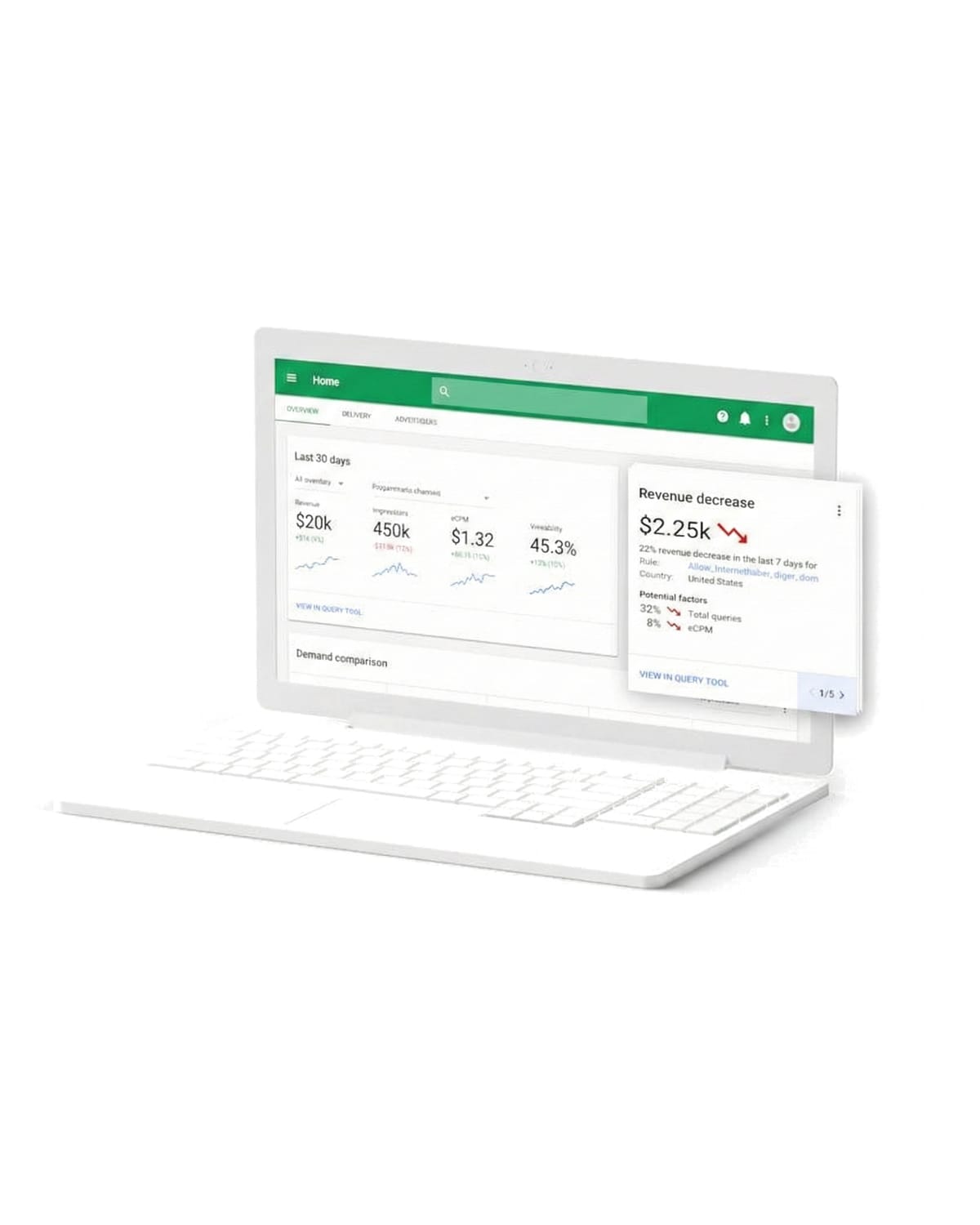
The third week of January 2026 brought infrastructure breakdowns and commerce transformation in equal measure. Google's advertising platforms experienced cascading technical failures beginning January 13 at 18:00 UTC, with revenue declines of 50% to 90% hitting publishers worldwide. Both Google Ad Manager and AdSense suffered from problems that prevented the platforms from automatically recognizing third-party tags and displayed misleading error messages to users attempting to save advertising creatives. While access remained available, error messages, high latency and unexpected behavior disrupted normal operations throughout January 13 and 14. A second Ad Manager incident started January 14 at 18:50 UTC. Google acknowledged systemic Ad Exchange match rate problems at 01:44 UTC on January 15. The disruptions affected publishers globally, with documented reports spanning Germany, Switzerland, France, Italy, Spain, the United Kingdom, United States, Japan, Czech Republic, Poland, Romania and multiple other regions. Web and mobile web display inventory experienced the most concentrated impact, while other advertising formats showed less severe disruption.
The January 2026 technical disruptions occurred against a backdrop of fundamental shifts in how Google distributes advertising revenue across its ecosystem. Analysis of financial data reveals a systematic migration of advertising dollars away from external publisher partnerships toward Google's owned properties, with the company's Network advertising segment experiencing persistent declines even as total advertising revenues grow. Google's advertising business generated $339.7 billion in 2025, accounting for approximately 76% of Alphabet's total revenues. Revenue declines of 50-90% within 24 hours revealed the fragility of business models relying on a single dominant platform for monetization. The timing compounded existing challenges from December 2025 algorithm updates and seasonal January advertising weakness.
Google integrated Gemini AI into Trends Explorer on January 14, introducing a side panel that automatically generates up to eight relevant search terms based on user interests. Nir Kalush announced the feature on Google's Keyword blog, noting the redesigned page makes it simpler for journalists, creators and researchers to dive deep into Search trends with Gemini. The update eliminates manual discovery work that previously required multiple searches and iterative refinement. Publishers monitoring Trends data for content planning should evaluate whether Gemini-suggested terms align with their strategic objectives or primarily reflect Google's algorithmic understanding of topic relationships. The automation provides valuable starting points but cannot replace editorial judgment about which trends merit coverage based on audience needs and competitive positioning. The gradual rollout strategy mirrors Google's approach with other AI features, testing performance and gathering feedback before full deployment. The feature arrives as Google faces intensifying scrutiny over AI integration across its product ecosystem.
Google launched the Universal Commerce Protocol with major retailers on January 11, establishing open-source technical standards for AI agents to execute purchases across different retail platforms without requiring custom integrations for each merchant. Sundar Pichai, CEO of Google and Alphabet, posted on X that AI agents will be a big part of how we shop in the not-so-distant future. The company simultaneously introduced three related protocols—Model Context Protocol, Agent2Agent and Agent Payments Protocol—along with new advertising features designed to capture high-intent shoppers during research phases. Business Agent launched immediately with Lowe's, Michael's, Poshmark and Reebok, while Direct Offers operates as pilot with Petco, e.l.f. Cosmetics, Samsonite, Rugs USA and Shopify merchants. The protocols operate globally as open-source standards available through GitHub repositories managed by the Linux Foundation and individual organizations. Initial commercial implementations focus on United States markets through Google Search, AI Mode, Gemini app and Merchant Center.
The Universal Commerce Protocol defines technical specifications for AI agents to discover products, negotiate checkout parameters, link customer identities and manage post-purchase workflows. The protocol establishes REST and JSON-RPC transport layers with built-in support for three complementary standards: Agent Payments Protocol for cryptographic transaction authorization, Agent2Agent for multi-agent collaboration and Model Context Protocol for tool calling from AI assistants. Google collaborated with Shopify, Etsy, Wayfair, Target, Walmart and more than 20 additional companies including payment networks Visa and Mastercard, advertising technology firms and major retailers across multiple markets. The Model Context Protocol operates as the foundational layer connecting AI applications to external systems. Originally developed by Anthropic and donated to the Linux Foundation, MCP provides what Google describes as a USB-C port for AI applications.
AdMonsters merged with sister brand AdExchanger on January 14, unifying content onto a single website at AdExchanger.com. Dave Colford, SVP at Chief Marketer Network, characterized the move as addressing the increasingly intertwined relationship between publisher and ad operations communities. Publishers have navigated between both brands for different parts of the same conversation as ad operations and advertising technology have matured over recent years. The integration maintains AdMonsters' practitioner-focused identity as what executives describe as a foundational community within the larger platform. The move responds to mounting challenges publishers face from AI-driven traffic losses, with 20-90% declines documented in 2025, zero-click search, programmatic complexity and economic pressures. Site integration schedule will be released in coming weeks as the companies work with advisory boards to unite their foundational communities. The announcement follows March 2025 editorial team alignment between the two publications.
YouTube launched Veo 3.1 Ingredients to Video on January 13 within YouTube Shorts and the YouTube Create app. JJ from TeamYouTube announced the feature, which enables creators to generate vertical video clips from up to three uploaded images. The technology, developed by Google DeepMind's Veo team led by Lead Product Manager Ricky Wong, transforms static photographs into dynamic content through artificial intelligence. The feature affects content creators using YouTube Shorts and the YouTube Create app across five initial launch markets, with immediate availability in YouTube Shorts for users with English device language settings and in the YouTube Create app for Android users in India, the United States, Canada, New Zealand and Australia. Professional and enterprise workflows received similar Veo 3.1 enhancements, with updated Ingredients to Video capabilities rolling out to Flow, the Gemini API, Vertex AI and Google Vids. Resolution options of 1080p and 4K became available on Flow, the API and Vertex AI. The marketing community faces significant implications as nearly 90% of advertisers plan to use AI for video advertisement creation by 2026, according to an Interactive Advertising Bureau report from July 2025.
Consumer Electronics Show presentations showcased extensive agentic AI deployments while revealing significant industry hesitancy about autonomous spending decisions. Large language models are being deployed as accelerants, not decision makers, Seb Joseph reported on January 14. They compress workflows, shrink timelines and surface insights faster. They do not spend the ad dollars. One ad tech trading automation platform demonstrated reducing two-hour workflows to 10 minutes with near-zero errors while stopping short of actually spending ad dollars. The distinction matters because it reveals the practical limits of current AI deployment despite enthusiastic messaging at industry events. Planning, buying and optimization autonomously by LLM-powered agents are always framed as just over the horizon. In practice, that switch remains conspicuously off.
Media executives from CNN, Forbes, Future, Hearst, USA Today Co. and The Wall Street Journal outlined 2026 prioritiesin interviews published January 15. They emerged bruised by a rocky 2025 that brought a new search landscape, AI copyright battles and a challenging advertising market. Now they focus on AI revenue and visibility opportunities, brand marketing pushes, plus a big year in US politics and sports. Guy Griggs, svp of ad sales and client partnerships at CNN, identified his top priority for 2026 as expanding and monetizing more brand-safe online video and streaming content. For Time and Recurrent Ventures, video ad revenue will be one of the biggest growth drivers of their businesses in 2026. Publishers like Yahoo and Future are focused on expanding their creator networks this year. News outlets like Time, CNN and The New York Times added more vertical video to their sites and apps at the end of last year to appeal to audiences and marketers accustomed to consuming content and buying ads in this format on social media feeds.
IAB Polska released AI Guide 2.0 on January 8, expanding from the 2024 edition to over 300 pages covering large language models, agents and performance marketing. The publication addresses professionals at multiple experience levels. Beginners receive foundational AI concepts and terminology, while experienced practitioners access technical depth covering large language models, retrieval-augmented generation systems and AI agent architecture. Audio production capabilities span examination of Suno, Fliki, ElevenLabs, Adobe Firefly audio features and Murf AI. Video production receives comprehensive treatment across multiple sections, dividing video AI into preproduction workflows using LTX Studio for storyboarding, production execution through single-model tools and aggregators, and postproduction optimization. Performance marketing implementation focuses specifically on Google Ads creative generation, examining built-in Google capabilities alongside external scaling tools that enable rapid creative variation testing across campaign structures. Infrastructure standardization efforts received attention through IAB Tech Lab's Agentic RTB Framework version 1.0, released for public comment on November 13, 2025, with the public comment period extending through January 15, 2026.
Brands began directly calling out AI in advertising campaigns, reported on January 13. Equinox and Almond Breeze directly called out AI slop and tech gimmicks in their ad campaigns during the first weeks of January. As anxieties around the technology grow, these advertisers are positioning themselves as genuine antidotes to AI's fakery. If 2025 was the year brands began cautiously expressing their views on AI, 2026 is shaping up to be when they take clear, public stances on the technology. While Dove came out early against AI's inauthenticity in 2024, others like BMW and Aerie continued the trend last year.
Tailwind CSS laid off three-quarters of its engineering team on January 6. Founder Adam Wathan disclosed the layoffs in a GitHub discussion thread on January 7, revealing that three of four engineers lost their jobs as the company's revenue plummeted approximately 80% despite the framework growing more popular than ever. Wathan made the announcement while declining a community-submitted pull request that would have made Tailwind's documentation more accessible to large language models. The popular CSS framework serves millions of developers worldwide and is used by major companies including Shopify, GitHub and NASA. AI-powered development tools train on Tailwind's public documentation and generate code automatically, eliminating the need for developers to visit the documentation site where they would discover commercial products. Documentation traffic began declining in early 2023, establishing a pattern that worsened over subsequent months. The company now operates with only its three co-founders and one remaining engineer.
Search algorithm volatility punctuated the week. Google Search ranking volatility appeared around January 12, with SEOs noticing ranking fluctuations despite most tracking tools remaining mostly calm. Chatter picked up in the Search Engine Roundtable comments as many SEOs noticed ranking fluctuations. The December 2025 core update kicked off on December 11, 2025 at around 12:25 pm ET and ended on December 29, 2025 at around 2:05 pm ET with two spikes on December 13th and December 20th. Additional volatility hit January 15-16, with third-party tools detecting movement though limited chatter emerged. Google AI Overview Local Pack changes led to huge drops in visibility for businesses. Over the past few weeks, Google has been showing AI Overviews for local packs, leading some businesses to see huge declines in visibility for their Google Business Profile and local listings. Some businesses are seeing 50% declines or more because of the local pack change.
Microsoft Advertising expanded Performance Max search themes to 50 from the previous limit, with the update live as of January 13 though Microsoft will announce it sometime during the week. Google Shopping updated its promotions policyto now allow for promotions on subscription fees and abbreviations as of January 2026. Microsoft Advertising also announced new customer acquisition goals as an open beta, Share of voice (SOV) metrics, Asset group-level URL options and tracking capabilities for Performance Max campaigns.
AdExchanger announced the launch of Programmatic AI on January 6, a new industry event debuting May 18-20, 2026, in Las Vegas. Programmatic AI extends AdExchanger's role as a trusted resource for the programmatic community, creating a dedicated forum for leaders and practitioners navigating the practical realities of AI-driven advertising transformation. The event focuses on how intelligence, automation and advanced data systems are already reshaping media planning, buying, optimization and measurement across publishers, agencies, brands and technology providers. Anchored by the inaugural theme "Mastering the Shift to Intelligent Media," Programmatic AI will convene senior decision-makers responsible for AI adoption, governance and measurable outcomes.
Outcomes-based buying continued accelerating despite critics arguing the Outcomes Era is already fading, Joe Zappa wrote on January 14. In December, Pinterest acquired tvScientific, the performance TV company best known for bringing outcomes-based buying to TV through its Guaranteed Outcomes product. It was one of the most significant ad tech acquisitions in years, with a nearly $20B Silicon Valley search platform betting on independent ad tech. Pinterest was explicit about why: tvScientific's outcome-based CTV platform will be integrated directly into Pinterest's performance products, including its automation and AI-powered offerings. Companies like Viant, tvScientific, Permutive and Chalice have adopted the terminology. Industry figures such as Terry Kawaja have used it to frame the ad tech moment.
European Commission investigations examining whether Amazon Web Services and Microsoft Azure should face Digital Markets Act regulation moved forward, though specific January developments were not detailed in the reporting period. Brussels published a redacted version of the €2.95 billion antitrust decision against Google on January 14, while market testing behavioral remedies Google proposed in November.
January 8, 2026
January 11, 2026
January 12, 2026
January 13, 2026
January 14, 2026
January 15, 2026
January 16, 2026