Retail import volumes to stay down through spring amid tariff uncertainty
U.S. container port imports expected to decline year-over-year until May 2026 as retailers navigate tariff policy uncertainty and post-holiday shipping lulls.


U.S. container port imports expected to decline year-over-year until May 2026 as retailers navigate tariff policy uncertainty and post-holiday shipping lulls.
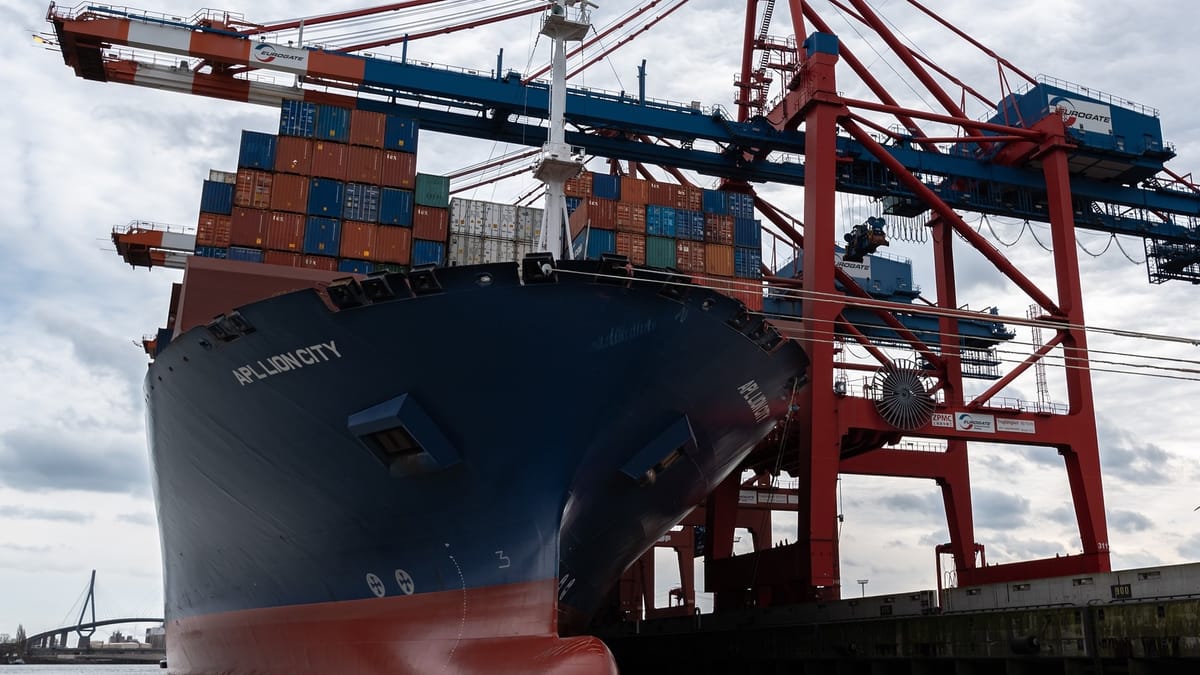
Container import volumes at major U.S. ports will remain below year-ago levels until spring 2026, creating operational challenges for retailers who must balance inventory management against mounting trade policy uncertainty. The forecast signals a prolonged adjustment period for the retail sector following months of strategic cargo acceleration.
Import volume is forecast to see its first month-over-month gain in six months during January but will continue declining on an annual basis until May, according to the Global Port Tracker report released January 9, 2026, by the National Retail Federation and Hackett Associates. The projection underscores how trade policy shifts ripple through supply chain operations for months after implementation.
U.S. ports covered by Global Port Tracker handled 2.02 million Twenty-Foot Equivalent Units in November 2025, the latest month for which final data is available. That figure marked a 2.3% decrease from October and a 6.5% decline year over year. One TEU represents one 20-foot container or its equivalent in shipping capacity.
Subscribe PPC Land newsletter ✉️ for similar stories like this one
December 2025 numbers have not yet been reported by ports. Global Port Tracker projected the month at 1.99 million TEU, down 6.6% year over year. The consecutive monthly declines reflect both seasonal patterns and strategic timing decisions by retailers responding to trade policy developments.
"There should be a brief bump in imports this month ahead of Lunar New Year factory shutdowns in Asia, but we're otherwise headed into the post-holiday shipping lull that comes each year," Jonathan Gold, NRF Vice President for Supply Chain and Customs Policy, said. "Retailers had a busy holiday season and are assessing what's ahead in 2026 so they can keep supply chains running smoothly to ensure consumers can find the products they want at prices they can afford."
The year-over-year declines stem partly from elevated import levels in late 2024 when concerns over port strikes drove retailers to accelerate shipments. Many retailers also imported cargo earlier than usual in 2025 to avoid tariffs, creating artificial peaks that distort current comparisons. This front-loading behavior demonstrates how trade policy uncertainty forces companies to prioritize risk mitigation over operational efficiency.
The first half of 2025 totaled 12.53 million TEU, up 3.7% year over year. However, the full year 2025 is forecast at 25.4 million TEU, down 0.4% from 25.5 million TEU in 2024. The contrast between first-half growth and full-year decline illustrates the timing shift caused by preemptive cargo acceleration.
January 2026 volume is forecast at 2.11 million TEU, representing the first month-over-month increase since July 2025. Retailers are bringing in merchandise prior to February's Lunar New Year holiday in Asia when factories typically shut down for extended periods. Despite the monthly gain, January volume would still decline 5.3% year over year.
February 2026 is forecast at 1.94 million TEU, down 4.6% year over year. March projects even steeper declines at 1.88 million TEU, down 12.4% compared to March 2025. April is forecast at 2.03 million TEU, down 8.1% year over year. These sustained declines reflect both the post-holiday shipping lull and continuing adjustment from 2025's accelerated import patterns.
May 2026 represents a turning point with forecast volume of 2.07 million TEU, up 6.2% year over year. This would mark the first annual increase since August 2025, signaling potential normalization of import patterns as retailers adjust to the current trade policy environment.
Gold emphasized that retailers seek "more stability and certainty, especially regarding tariffs and trade policy, in 2026 to help ensure better supply chain operations to meet consumer needs." The emphasis on predictability reflects how policy uncertainty forces companies to maintain higher safety stock levels and accelerate shipments, both of which increase costs that ultimately affect consumer prices.
Ben Hackett, founder of Hackett Associates, noted that following "chronic uncertainty" from increased U.S. tariffs in 2025, the impact on cargo imports in 2026 is likely to still be affected by trade policy. The characterization of 2025 as marked by "chronic uncertainty" suggests sustained operational stress rather than one-time adjustment.
"As 2026 begins, we see a world increasingly focused on protecting domestic industries and addressing perceived trade imbalances," Hackett said. "This approach has raised questions about the future of free trade and international economic cooperation." The statement positions current import trends within broader shifts in global trade architecture.
The import volume data carries significant implications for digital advertisers and retailers operating e-commerce platforms. Lower import volumes typically correlate with constrained inventory selection, potentially affecting product availability for paid search campaigns and sponsored product advertising. Retailers must adjust marketing spend based on actual inventory positions rather than ideal assortments.
Supply chain constraints created by trade policy uncertainty also compress planning timelines. Advertisers typically build campaigns around product launches and seasonal promotions months in advance. When import timing becomes unpredictable, coordinating marketing efforts with product availability becomes substantially more complex.
The timing mismatch between advertising commitments and inventory arrival can create scenarios where paid campaigns drive demand for products not yet available or where inventory arrives without supporting marketing activation. These operational friction points increase customer acquisition costs and reduce return on ad spend.
Retail media networks, which have grown substantially as advertising channels, depend on product availability to generate revenue. When import volumes decline, the inventory fueling sponsored product placements and category advertising diminishes. This dynamic affects both retailers operating media networks and brands buying advertising inventory on those platforms.
The concentration of declines in March and April—traditionally important periods for spring inventory replenishment—creates particular challenges for seasonal campaigns. Retailers may need to adjust promotional calendars and advertising strategies based on cargo arrival forecasts rather than ideal merchandising plans.
Buy ads on PPC Land. PPC Land has standard and native ad formats via major DSPs and ad platforms like Google Ads. Via an auction CPM, you can reach industry professionals.
Consumer behavior responds to both price signals and product availability. When tariff-driven cost increases combine with inventory constraints, retailers face difficult decisions about pricing strategy and promotional intensity. These merchant-level decisions directly influence the effectiveness of paid advertising campaigns across search, social, and retail media channels.
The import data also reflects broader consumer spending patterns. November and December traditionally see lower import volumes as retailers work through holiday inventory. However, the magnitude of year-over-year declines exceeds typical seasonal patterns, suggesting retailers entered the 2025 holiday season with conservative inventory positions.
Global Port Tracker provides data and forecasts for major U.S. ports including Los Angeles/Long Beach, Oakland, Seattle and Tacoma on the West Coast; New York/New Jersey, Port of Virginia, Charleston, Savannah, Port Everglades, Miami and Jacksonville on the East Coast; and Houston on the Gulf Coast. The geographic coverage captures the vast majority of containerized imports entering the United States.
The report is produced for NRF by Hackett Associates, which provides expert consulting, research and advisory services to the international maritime industry, government agencies and international institutions. This specialized expertise allows the forecast to incorporate complex variables including factory production schedules, shipping capacity, and trade policy developments.
Retailers' strategic response to tariff uncertainty demonstrates how trade policy creates cascade effects throughout the supply chain. When companies cannot reliably predict import costs, they must either accept higher risk or incur additional expenses for expedited shipping and elevated safety stock. Both approaches reduce profitability and potentially necessitate price increases.
The emphasis on stability and predictability in trade policy reflects operational realities for companies managing global supply chains. Container shipping operates on multi-month lead times from order placement to port delivery. This extended timeline means trade policy changes announced today affect inventory available three to six months later.

Front-loading cargo in 2025 to avoid anticipated tariffs created temporary volume spikes that now appear as year-over-year declines. This pattern illustrates how reactive behavior to policy uncertainty can amplify volatility rather than smooth operations. Retailers prefer predictable rules they can plan around versus frequent policy changes requiring constant strategic adjustment.
The projection that year-over-year growth returns in May suggests retailers expect sufficient policy clarity by early 2026 to resume normal inventory planning. However, the forecast could shift if additional trade policy changes emerge during the first quarter, potentially extending the period of conservative inventory management.
For advertising platforms and retail media networks, these supply chain dynamics create revenue volatility. Lower inventory levels reduce opportunities for sponsored product placements and category advertising. Brands seeking to launch new products face uncertainty about whether supporting inventory will arrive on schedule to justify advertising investment.
The retail industry's position as the nation's largest private-sector employer, contributing $5.3 trillion to annual GDP and supporting more than one in four U.S. jobs—55 million working Americans—means supply chain disruptions have economy-wide implications. Import volume declines may signal broader caution about consumer demand and economic conditions.
Hackett's observation about "a world increasingly focused on protecting domestic industries and addressing perceived trade imbalances" positions current import trends within geopolitical shifts. Whether trade policy stabilizes or continues evolving will substantially affect how retailers manage inventory, pricing, and marketing strategies throughout 2026.
The brief January volume increase ahead of Lunar New Year represents a tactical response to predictable factory shutdowns rather than underlying demand strength. Retailers must balance the cost of expedited pre-holiday shipments against the risk of stockouts during the weeks when Asian production pauses.
November and December being "traditionally slow" for imports reflects retail industry patterns where fourth-quarter sales rely primarily on inventory already in distribution networks. The post-holiday period then sees reduced import activity as retailers assess sell-through rates and plan for the next seasonal cycle.
The 12.4% projected decline for March 2026 represents the steepest year-over-year drop in the forecast period. This timing coincides with when front-loaded 2025 cargo would have peaked, creating particularly difficult comparisons. The magnitude suggests retailers substantially accelerated spring inventory purchases in 2025 to avoid tariff exposure.
Import volume serving as an economic indicator extends beyond retail to affect port operations, trucking, warehousing, and related logistics services. The projected weakness through April 2026 implies constrained activity across these sectors, potentially affecting employment and investment decisions in transportation infrastructure.
The Global Port Tracker's provision of both historical data and forecasts allows retailers to benchmark their own import patterns against industry trends. Companies can assess whether their volume changes align with market-wide patterns or reflect company-specific factors such as market share shifts or category mix evolution.
As retailers "keep supply chains running smoothly," they must balance multiple competing objectives: maintaining product availability, controlling inventory carrying costs, managing tariff exposure, and coordinating marketing efforts with actual product positions. Trade policy uncertainty makes all these decisions more difficult and expensive.
The forecast's extension through May 2026 provides retailers with a five-month planning horizon, though the projections carry inherent uncertainty given potential policy changes. Companies must develop contingency plans that allow rapid adjustment if trade policy shifts materially from current expectations.
Who: The National Retail Federation and Hackett Associates issued the forecast, affecting major U.S. retailers, shipping ports, logistics providers, and the broader $5.3 trillion retail industry that employs 55 million Americans.
What: Container import volumes at major U.S. ports are projected to remain below year-ago levels through April 2026, with the first year-over-year gain not expected until May 2026. November 2025 recorded 2.02 million TEU, down 6.5% annually, with similar declines projected through spring.
When: The Global Port Tracker report was released January 9, 2026, covering November 2025 actual data and projecting through May 2026. The forecast shows January 2026 will see the first month-over-month increase since July 2025, though annual comparisons remain negative until May.
Where: The data covers major U.S. container ports including Los Angeles/Long Beach, Oakland, Seattle and Tacoma on the West Coast; New York/New Jersey, Port of Virginia, Charleston, Savannah, Port Everglades, Miami and Jacksonville on the East Coast; and Houston on the Gulf Coast.
Why: Year-over-year declines stem from elevated 2024 imports due to port strike concerns and front-loading of 2025 cargo to avoid tariffs. Trade policy uncertainty has created "chronic uncertainty" according to Hackett Associates, forcing retailers to accelerate shipments and adjust inventory strategies. The post-holiday shipping lull combines with these timing distortions to suppress volumes through spring 2026. Retailers seek greater stability in tariff and trade policy to enable more efficient supply chain operations and maintain product availability at affordable prices.