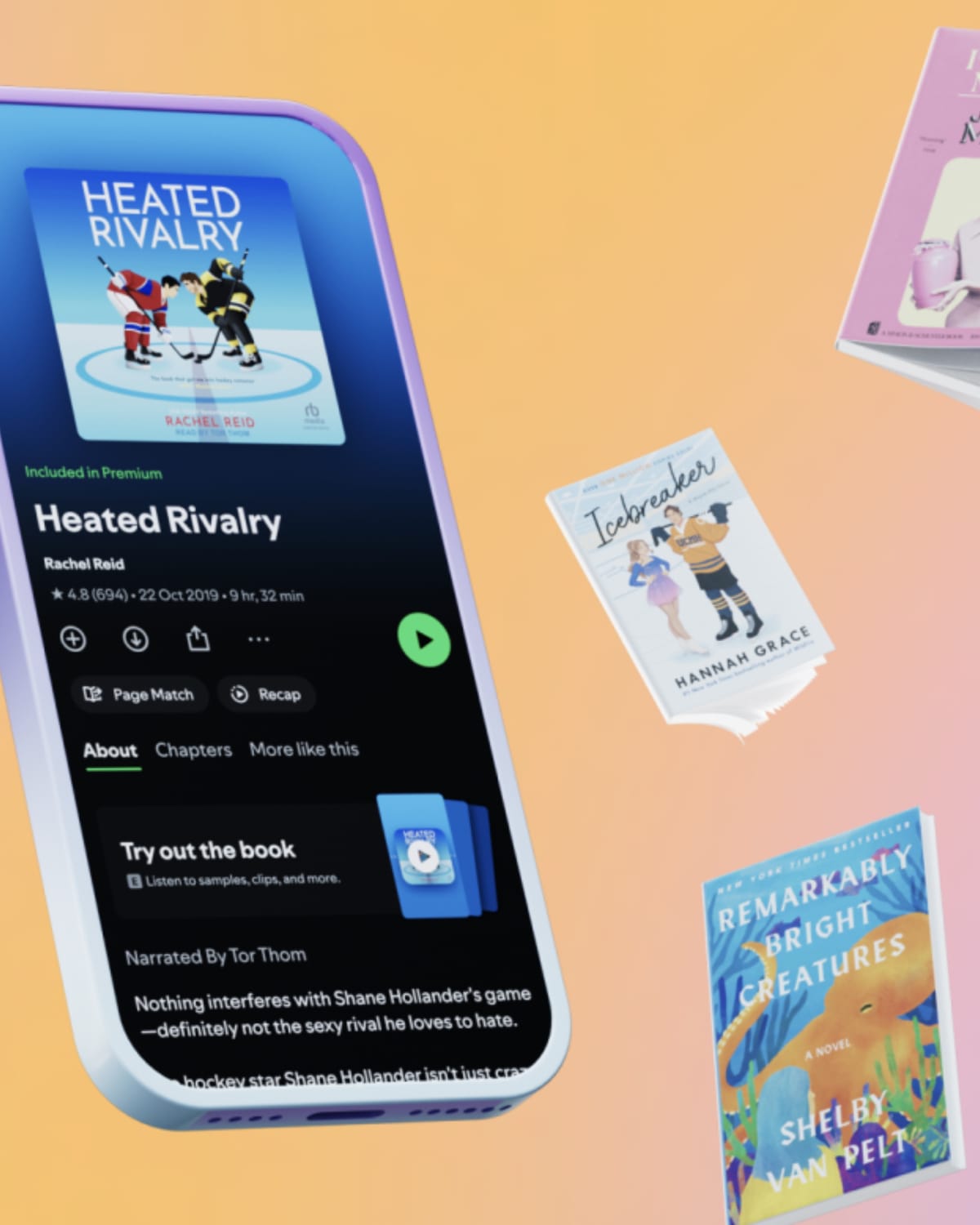
Spotify's Page Match lets readers jump between books and audiobooks instantly
Spotify this week launched Page Match and Bookshop.org integration, enabling seamless format switching and physical book purchases through the streaming app.

Spotify introduced two features today designed to expand how users consume books across physical, digital, and audio formats. The streaming platform announced a partnership with Bookshop.org enabling physical book purchases through the Spotify app, alongside Page Match, a scanning feature that synchronizes reading progress between printed books, e-books, and audiobooks.
The announcements arrive as Spotify has systematically expanded its audiobook infrastructure since integrating audiobooks into Premium subscriptions across multiple markets throughout 2024 and 2025. The platform has grown its catalog from 150,000 titles in 2023 to approximately 400,000 titles in English-language markets through publisher partnerships.
According to Owen Smith, Spotify's Global Head of Audiobooks, the developments reflect an effort to accommodate diverse reading preferences while driving growth for publishers and authors. "We believe the future of reading or listening needs to be flexible and fit more seamlessly into people's lives," Smith stated in the announcement. "Since launching Audiobooks in Premium, we've seen that when books are easier to discover and enjoy, demand grows, making Spotify a real growth engine for the publishing industry and changing how people find their next great read."
The Bookshop.org partnership launches later this spring, enabling Spotify users in the United States and United Kingdom to purchase physical books directly through the Spotify app. The integration connects Spotify's discovery capabilities with Bookshop.org's network of independent bookshops, directing purchase revenue to local retailers and authors.
Physical books accounted for nearly 73% of trade publishing revenue in the previous year, according to the announcement. The partnership addresses this market reality by providing access to the dominant reading format while maintaining Spotify's role as a content discovery platform rather than a direct retailer.
Andy Hunter, Founder and CEO of Bookshop.org, characterized the partnership as financially beneficial for independent booksellers. "We are excited to see the impact Spotify's scale will have for local bookstores," Hunter stated. "By meeting readers where they are and linking to Bookshop.org, Spotify is financially supporting indie booksellers with each purchase."
The implementation details remain limited. Spotify has not disclosed pricing structures, commission arrangements, or specific integration mechanics beyond confirming that purchases made through the app will support independent bookshops. The spring launch timeline provides no specific date for availability.
Page Match represents what Spotify describes as an industry-first feature enabling users to switch between physical books or e-books and their audiobook versions by scanning pages with a smartphone camera. The feature launches on iOS and Android for most English-language titles by the end of February.
The technical implementation involves five steps. Users open the Spotify mobile app and locate their desired title. Tapping the Page Match button activates the device camera. Users scan a page from their physical book. Spotify identifies the corresponding position in the audiobook version. When returning to print, users scan again to locate the equivalent text position.
According to the announcement, Page Match ensures books continue from the exact stopping point whether users are reading pages or listening through speakers. The feature eliminates manual chapter navigation or timeline scrubbing to approximate reading positions when switching between formats.
Author Harlan Coben provided an endorsement for the technology. "This is the most exciting development in reading technology I've heard about in years because it will get more people reading and listening to books," Coben stated in the announcement.
Page Match builds on Spotify's Audiobook Recaps feature, which launched November 13, 2025, as a beta feature generating AI-powered summaries of partially completed books. The Recaps functionality became available after listeners completed the first 15-20 minutes of a book, providing context for readers resuming content after pauses.
The scanning technology's accuracy requirements remain unspecified. Questions persist regarding how the system handles different editions with varied page layouts, formatting differences between hardcover and paperback versions, or international editions with different pagination. The announcement provides no technical specifications about recognition algorithms or database infrastructure supporting the page-matching capability.
The dual announcements position Spotify as a multi-format book platform rather than exclusively an audiobook service. This strategic expansion mirrors developments across streaming platforms that have diversified content offerings beyond their original core functions.
Spotify's approach contrasts with traditional publishing industry distribution where physical books, e-books, and audiobooks operate through separate retail channels with distinct pricing and availability. The integration of discovery, purchase, and consumption within a single application reduces friction in the customer journey while potentially capturing transaction data across multiple format purchases.
For publishers, the arrangement creates both opportunities and complications. Physical book sales through Bookshop.org generate different revenue structures than audiobook streaming through Spotify Premium subscriptions. The platform's ability to drive cross-format purchases could increase overall book consumption, but also introduces questions about how revenue sharing operates when users discover content through Spotify but purchase physical copies through the integrated Bookshop.org system.
The independent bookstore focus differentiates Spotify's approach from direct-to-consumer models employed by larger technology companies. Amazon operates its own bookstore infrastructure. Apple Books sells digital and audio formats directly. Spotify's partnership model maintains separation between content platform and retail fulfillment while directing customers toward independent retailers rather than large chain stores or its own commerce infrastructure.
Page Match's reliance on camera-based page scanning introduces practical usage constraints. The feature requires adequate lighting for text recognition. Users must have physical access to printed books or e-reader displays showing page content. The scanning process adds steps between format transitions that could discourage frequent switching compared to digital bookmarks that sync automatically across devices.
The February launch timeline for most English-language titles suggests ongoing technical development. The qualifier "most" indicates some titles will lack Page Match support at launch, though Spotify has not disclosed which books will be excluded or why certain titles cannot support the scanning functionality.
E-book integration raises additional questions. Different e-reader applications use varied page layout algorithms based on screen size and user-selected font settings. How Page Match accommodates these variations across Kindle, Apple Books, Kobo, and other e-reading platforms remains unclear from available announcement materials.
The feature's value proposition assumes users will maintain access to both physical or digital books alongside Spotify audiobook subscriptions. This multi-format ownership pattern exists among dedicated readers but may not reflect typical consumption patterns for casual book audiences. Premium subscribers receive 12 hours of monthly audiobook listening. Users who exhaust this allocation can purchase additional listening time through top-up options or acquire individual audiobook titles.
Spotify's audiobook expansion occurs as digital audio consumption continues growing across multiple content categories. The platform reported that audiobook listeners increased 36% year-over-year in English-language markets, with total listening hours rising 37%, according to earlier announcements.
Publishers including Bloomsbury, HarperCollins, and Lagardère have credited Spotify with driving double-digit growth in audio sales, based on previous company statements. The consumption-based model provides access to audiences who might not purchase audiobooks through traditional retail channels or competing subscription services.
The Page Match feature could influence completion rates, a metric that impacts both user engagement and publisher revenue in streaming models. When readers can seamlessly switch between formats based on context - reading during focused time, listening during commutes or exercise - they may finish more books than when constrained to single formats. Higher completion rates typically correlate with increased platform engagement and subscription retention.
Competing services have not announced comparable format-switching capabilities. Audible operates Amazon's audiobook ecosystem but lacks similar print-to-audio synchronization beyond Whispersync for Kindle, which works only within Amazon's ecosystem. Apple Books offers both e-books and audiobooks but does not provide format switching during active reading sessions.
The announcements reflect broader shifts in publishing industry economics where discovery mechanisms increasingly determine commercial success. Platforms that can convert browsing behavior into purchases across multiple formats create compounding value for content owners while potentially concentrating market power in distribution intermediaries.
Spotify serves 650 million users globally, according to previous platform data. This audience scale positions the company as a significant discovery channel for publishers seeking to reach readers beyond traditional bookstore browsing or literary review coverage.
The Bookshop.org partnership addresses criticisms that technology platforms undermine local retail by directing traffic exclusively toward their own commerce infrastructure or large chain retailers. By routing physical book purchases through independent bookstore networks, Spotify maintains its platform positioning while supporting retail diversity in book distribution.
Questions remain about economic arrangements. Commission structures, minimum purchase requirements, fulfillment logistics, and inventory management responsibilities between Bookshop.org and its member bookstores could affect which titles appear prominently in Spotify's interface and how quickly physical books reach purchasers after ordering through the app.
For marketing professionals tracking e-commerce platform partnerships and content platform monetization strategies, Spotify's approach demonstrates how streaming services extend beyond subscription revenue models. The integration of commerce capabilities within content discovery platforms creates advertising inventory opportunities, affiliate revenue potential, and data collection mechanisms that inform both content recommendations and commercial partnerships.
The developments arrive as content platforms compete for user attention and engagement time across entertainment categories. Spotify's expansion into multiple book formats parallels its earlier diversification from music streaming into podcasts and video content, reflecting strategies to increase session duration and platform stickiness among subscribers.
Who: Spotify partnered with Bookshop.org to enable physical book purchases through the streaming app while introducing Page Match, a camera-based scanning feature for format switching. Owen Smith serves as Spotify's Global Head of Audiobooks. Andy Hunter founded and leads Bookshop.org, which operates a network supporting independent bookstores. Author Harlan Coben provided endorsement for the Page Match technology.
What: Spotify announced two features today expanding book consumption options. The Bookshop.org partnership enables users to purchase physical books directly through the Spotify app, with revenue supporting independent bookshops. Page Match allows users to scan pages from physical books or e-books using smartphone cameras, synchronizing their position in corresponding audiobook versions for seamless format switching.
When: The announcement occurred February 5, 2026. Page Match launches by the end of February 2026 on iOS and Android for most English-language titles. The Bookshop.org purchasing integration becomes available later in spring 2026 for users in the United States and United Kingdom.
Where: Page Match operates within the Spotify mobile app on iOS and Android devices across markets where Spotify audiobooks are available. The Bookshop.org partnership initially covers the United States and United Kingdom, directing purchases to independent bookshops through Bookshop.org's existing network.
Why: The features address physical books accounting for nearly 73% of trade publishing revenue while accommodating users who want to switch between reading and listening based on context. Spotify positions the developments as making book consumption more flexible while driving growth for publishers, authors, and independent bookstores. The integration extends Spotify's role from audiobook platform to multi-format book discovery and purchase channel.