Anne Marie Nelson-Bogle, VP of Ads Marketing at YouTube, this year published a detailed analysis through Think with Google outlining what YouTube describes as the measurable performance gap between its creator marketing environment and rival social platforms. The piece, titled "From attention to action: Creator-led growth on YouTube," is based on research conducted between December 10, 2025, and January 12, 2026, by Google and Kantar, surveying 7,621 weekly video viewers aged 18 to 64 in the United States across a competitive set that includes linear TV, Netflix, Disney+, Amazon Prime Video, Max, Facebook, Instagram, TikTok, and Snapchat.
The publication arrives at a moment when YouTube has been restructuring its entire creator-brand infrastructure. YouTube Creator Partnerships unified BrandConnect and the Creator Partnerships Hub into a single platform on March 24, 2026, just four days before this research was released, and YouTube expanded its Shopping affiliate program to all YouTube Partner Program creators on March 27, 2026, dropping the previous 10,000-subscriber threshold to 500. Together, the structural changes and the new data form a coherent picture of where YouTube is positioning itself in the broader creator economy debate.
Viewing intent and the attention metric
According to the Google/Kantar study, YouTube viewers in the U.S. rank the platform as the No. 1 destination for purposeful viewing across multiple specific behaviors. Among surveyed YouTube viewers (n=968), 90% cited going deeper on a topic they care about, 88% said they use the platform to explore passions and interests, and 87% said they use it for learning and growing. These figures were measured against the same competitive set of nine platforms. Social platforms, which the research characterizes as offering "passive scrolling environments," are implicitly contrasted throughout.
The research also draws a distinction on platform preference at a population level. Among 7,621 weekly video viewers aged 18 to 64, surveyed viewers ranked YouTube as the No. 1 preferred platform for creator content overall. That framing matters because it situates YouTube not merely as a video library but as the primary destination where audiences actively seek out specific creators - a distinction with direct implications for how brands think about brand-safe placements versus actively sought-out content.
More than half of YouTube's watch time now happens on televisions, according to the document. That figure, though presented without a specific date, aligns with data reported through PPC Land's coverage of YouTube's television positioning, which noted YouTube generated approximately $36.1 billion in advertising revenue in 2024 while the platform has been pressing to be classified alongside traditional TV in agency budget allocations. For brands, TV-based watch time means creator content can reach audiences on the largest screen in the home - a placement that many social platforms cannot deliver at comparable scale.
The Gen Z trust numbers
Among surveyed Gen Z viewers (n=344, ages 18 to 28), 89% said they intentionally seek out videos from specific creators they enjoy. That figure, drawn from the same December 2025 to January 2026 fieldwork period, quantifies what the research frames as deliberate, pull-based consumption rather than algorithmic discovery. It is a behaviorally distinct form of viewing compared to content served into a feed.
Trust translates into purchase influence. According to the study, 79% of surveyed Gen Z viewers in the U.S. say they trust recommendations from creators on YouTube. A related data point: 74% of the same group said YouTube creators provide helpful context or expertise that enables more confident purchase decisions. The combination of trust and informational utility is relevant because it suggests the purchase funnel impact is not limited to awareness. Creators appear to be operating as a decision-support mechanism - moving viewers from consideration toward action.
YouTube's September 2025 study on "Creative Maximalism" provided complementary context. That research, conducted with SmithGeiger and surveying users aged 14 to 49, identified a preference among Gen Z for densely layered, community-referenced content - formats that live-action creator videos on YouTube are structurally well-suited to deliver.
The ROAS data and what it measures
The most commercially significant data point in the Nelson-Bogle piece comes from a Google-commissioned equity-to-sales marketing mix modeling meta-analysis. It covered a two-year measurement period across 20 CPG brands, running from 2021 to 2023, and it defines "long-term ROAS" as the impact of each marketing channel on driving brand equity, and that brand equity's subsequent impact on driving sales, relative to the channel's media spend. On that definition, YouTube drives 2.3X higher long-term ROAS than paid social on average.
That 2.3X figure requires methodological context. The measurement period is 2021 to 2023, which precedes significant changes in both YouTube's product roadmap and the competitive social landscape. It also uses an equity-to-sales model rather than a direct attribution model. The long-term ROAS metric captures downstream brand value compounding into sales - a broader definition than the last-click or view-through attribution metrics commonly used in platform reporting. The practical implication for media planners is that the figure may not be directly comparable to ROAS reported by paid social platforms using different attribution windows and models.
The 2.3X figure is also cited in a second context within the document, this time from a different source. According to a study conducted by Agentio, published in the 2026 YouTube Creator Marketing Playbook (U.S., Q1 2026), brands that test multiple channel verticals - specifically 10 or more - saw a 2.3X improvement in their KPIs. Agentio is a creator advertising marketplace and the Q1 2026 playbook is a trade publication, not an independent academic study. That sourcing is worth noting when evaluating the figure.
Compounding value and post-campaign performance
The piece also draws on Agentio's data for two additional metrics related to how YouTube creator content performs beyond its initial campaign window. According to Agentio, approximately 40% of views and 30% of clicks on sponsored YouTube videos happen more than 30 days after the video goes live. The data point underpins YouTube's characterization of creator content as "evergreen digital real estate" - a framing that positions creator videos as durable assets rather than ephemeral placements.
A third Agentio finding states that advertisers doubled their conversion rates between their first and sixth brand integration with the same YouTube creator. The mechanism implied is relationship depth - both the creator's increased familiarity with the brand's message and the audience's accumulated exposure to the partnership. This is consistent with general frequency principles in advertising, though the specific figure of a doubling by the sixth integration is a narrow claim that applies to the Agentio dataset, not a universal benchmark.
The document positions Demand Gen - YouTube's AI-powered campaign format that replaced Video Action Campaigns by April 2025 - as the mechanism for scaling creator assets to targeted audiences. Pairing Demand Gen with creator content allows advertisers to continue surfacing high-performing videos to relevant audiences after a campaign's sponsorship period ends, effectively extending the active yield period of a creative asset. Google's Q1 2025 earnings presentation noted that businesses using Demand Gen saw an average 26% year-on-year increase in conversions per dollar spent for purchase and lead goals during that period.
The creator pool and channel diversity
According to the document, YouTube has over 3 million vetted creators available to deliver results for brands. This figure aligns with the platform's reported YouTube Partner Program scale - YouTube's Partner Program currently includes 3 million channels earning revenue, a figure YouTube has cited consistently since at least late 2024. The "vetting" referenced in the document refers to the qualification criteria embedded in the Partner Program, not a separate brand-safety review process.
The Agentio-sourced finding on channel vertical diversification - the 2.3X KPI improvement for brands testing 10 or more verticals - implies that breadth of creator category matters for performance. The practical constraint is that managing partnerships across 10 or more channel categories requires either sophisticated tooling or agency support. YouTube's Creator Essentials package, announced at the NewFront presentation on May 5, 2025, was designed specifically to address the discovery and management complexity of multi-creator campaigns. The newly unified YouTube Creator Partnerships platform, which consolidates BrandConnect and the Creator Partnerships Hub, is the current structural response to the same challenge.
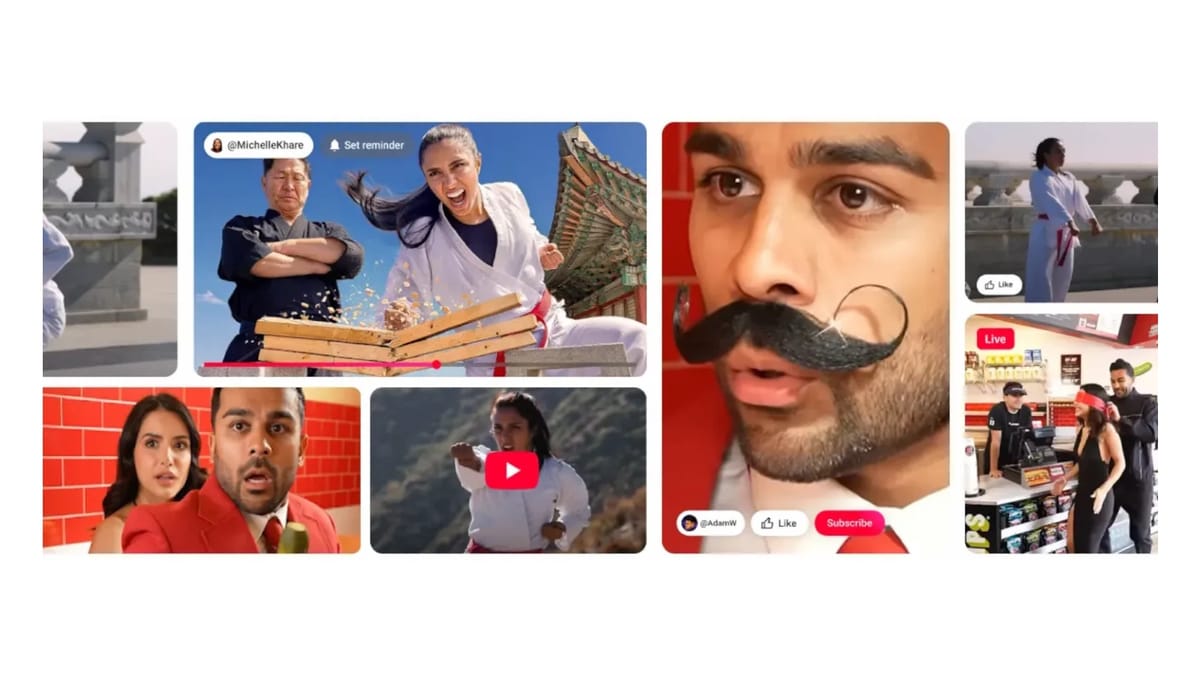
The document names two specific brand-creator partnerships as illustrative examples. Jimmy John's partnered with comedy creator Adam W to produce what the document describes as "a fast-paced bit that showcased its menu in a way that felt like something his audience genuinely wanted to watch." Dove partnered with Michelle Khare, whose feature-length documentary format aligned with Dove's mission of promoting women in sports. Both examples illustrate a strategy of matching brand message to creator format rather than overlaying a brand script onto a creator's channel.
The fact that more than half of YouTube's watch time occurs on televisions carries specific implications for advertising professionals. Google introduced QR codes in non-skippable YouTube ads on Connected TV in 2024 to bridge the second-screen behavior that TV viewing enables. Creator content that performs well on TV screens effectively competes with linear television placements for viewer attention - which is precisely the positioning YouTube has been pursuing in agency budget conversations.
YouTube's ad revenue reached $9.8 billion in Q2 2025, representing 13% year-on-year growth. That growth rate, while strong in absolute terms, represents a significant deceleration from the 45.9% growth registered in 2021. The creator marketing argument contained in the Nelson-Bogle piece is, in part, a response to that commercial pressure - an attempt to unlock the category of brand budget that has historically flowed to television.
For marketing professionals evaluating where creator investment sits within a broader media plan, the research raises a structural question. The platforms cited in the competitive set - linear TV, Netflix, Disney+, Amazon Prime Video, Max, Facebook, Instagram, TikTok, and Snapchat - each represent distinct buying environments. PPC Land's coverage of CTV advertising developments has consistently noted that Connected TV requires dedicated creative formats, separate measurement frameworks, and different KPI selection from display or web video campaigns. YouTube creator content viewed on TV screens sits at the intersection of those two worlds, and the research does not address how to separate the performance contribution of the TV placement from the creator format itself.
What the research does not address
The study is commissioned research - Google and Kantar conducted the Future of Video survey - and the CPG meta-analysis is Google-commissioned. Agentio, which provides three of the key data points, operates a commercial platform that benefits from increased creator advertising spend. None of this invalidates the data, but it shapes how independently the findings can be read. Marketing teams evaluating the 2.3X ROAS figure or the post-campaign longevity claim would benefit from testing these hypotheses against their own attribution data rather than applying the benchmarks directly to budget models.
The competitive comparison also focuses specifically on U.S. data collected between December 2025 and January 2026. Platform performance differences observed in that window - between a presidential election cycle, major sporting events, and a relatively stable macroeconomic environment - may not generalize to other markets or time periods. YouTube creators getting TV-style measurement through the Spotter-Comscore partnership, announced in January 2026, represents an attempt to bring broadcast-calibre independent measurement to creator content, but that infrastructure is still early in its rollout.
Timeline
- August 2024 - Google introduces Partnership Ads, allowing brands to use organic YouTube creator videos in advertising campaigns through BrandConnect
- August 2024 - Google Ads quietly adds YouTube creator-based audience targeting, enabling remarketing segments based on specific creator video viewers
- May 5, 2025 - YouTube reveals Creator Essentials package at NewFront to help advertisers identify and collaborate with creators
- April 2025 - YouTube Video Action campaigns are phased out in favor of Demand Gen, completing a transition announced in 2024
- June 9, 2025 - YouTube expands Shopping affiliate program with 45 agency partnerships across nine global markets
- June 17, 2025 - YouTube expands Communities feature to all eligible creators, creating new audience engagement touchpoints
- August 19, 2025 - YouTube rolls out BrandConnect video tagging and new creator tools, enabling creators to associate individual videos with specific brand partners
- August 1, 2025 - YouTube launches collaboration feature for creator partnerships, allowing multiple creators to receive credit on single videos
- September 4, 2025 - YouTube study identifies Creative Maximalism trend as the dominant Gen Z content format preference
- October 6, 2025 - YouTube launches Activation Partners program with Channel Factory, MiQ Digital, Pixability, and Zefr for advertiser-side campaign support
- January 6–7, 2026 - Spotter and Comscore announce TV-style independent measurement for YouTube creator content; Spotter's portfolio generates 88 billion monthly watch-time minutes, 71% on CTV
- January 8, 2026 - PPC Land analysis of YouTube's ad revenue positioning relative to the $180 billion global television advertising market
- March 24, 2026 - YouTube Creator Partnerships unifies BrandConnect and Creator Partnerships Hub into a single platform across seven markets: the US, India, Indonesia, the UK, Brazil, Australia, and Canada
- March 27, 2026 - YouTube expands Shopping affiliate program eligibility to all YouTube Partner Program creators, including those with 500 subscribers, across 12 countries
- March 28, 2026 - Anne Marie Nelson-Bogle, VP of Ads Marketing at YouTube, publishes "From attention to action: Creator-led growth on YouTube" through Think with Google, presenting the research findings covered in this article
Summary
Who: Anne Marie Nelson-Bogle, VP of Ads Marketing at YouTube, authored the report on behalf of YouTube, a Google property. The underlying research was conducted by Google and Kantar, with supplementary data from Agentio and a Google-commissioned marketing mix modeling analysis covering 20 CPG brands.
What: The publication presents data from a U.S. consumer research study measuring YouTube's performance advantages in creator marketing. Key figures include an 89% intentional viewing rate among Gen Z, a 79% trust rate for creator recommendations among Gen Z viewers, a 74% rate of purchase decision support attributed to creator expertise, and a 2.3X long-term ROAS advantage over paid social derived from a CPG meta-analysis. Additional Agentio data indicates that 40% of views and 30% of clicks on sponsored YouTube videos occur more than 30 days post-publication, and that repeated partnerships with the same creator can double conversion rates by the sixth integration.
When: The research was conducted between December 10, 2025, and January 12, 2026, surveying 7,621 weekly video viewers aged 18 to 64 in the U.S. The piece was published in March 2026.
Where: The findings apply to the U.S. market. The competitive benchmarking covered a set of nine platforms: linear TV, Netflix, Disney+, Amazon Prime Video, Max, Facebook, Instagram, TikTok, and Snapchat. The CPG ROAS meta-analysis drew from data spanning 2021 to 2023.
Why: The publication coincides with YouTube's active restructuring of its creator-brand infrastructure in March 2026 and represents the platform's case for a larger share of creator marketing budgets. It arrives as YouTube's advertising revenue growth has decelerated from 45.9% in 2021 to approximately 12-13% in 2025, and as the platform pursues positioning alongside traditional television in agency media planning frameworks.
Share this article
The link has been copied!