98th Oscars today on YouTube: 3 billion views, four livestreams, and what's next
YouTube today hosts the 98th Academy Awards with four official livestreams, as the platform prepares to become the exclusive global broadcaster of the Oscars from 2029. Over 3 billion views of Oscars-related content accumulated in the past 12 months.
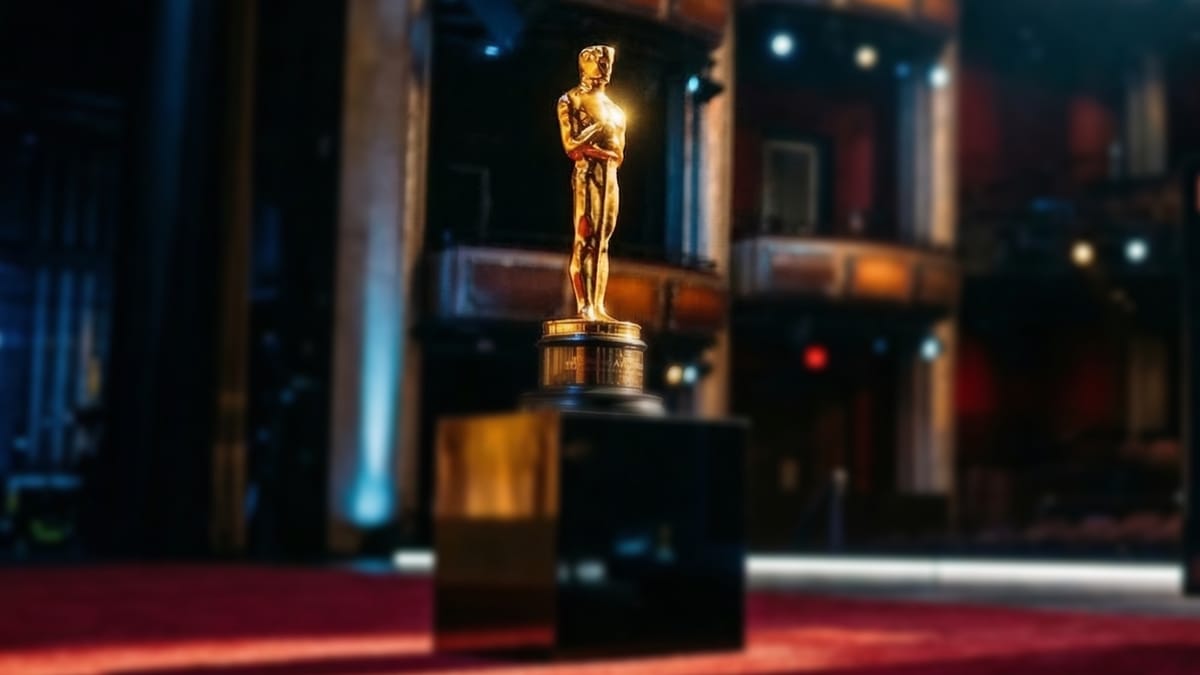
Golden Oscar statuette on red carpet stage, 98th Academy Awards ceremony at Dolby Theatre 2026.
Golden Oscar statuette on red carpet stage, 98th Academy Awards ceremony at Dolby Theatre 2026.
The 98th Academy Awards ceremony takes place today, March 15, 2026, at the Dolby Theatre in Hollywood - and YouTube sits at the center of how millions of fans will follow the event. Four official livestreams are available on the platform, covering arrivals, the main ceremony, sign-language interpretation, and behind-the-scenes access at the post-ceremony celebrations. What makes this year's event particularly significant for the media and advertising industry is not simply the scale of online engagement, but what it signals about the future of broadcast television itself.
According to YouTube's Culture and Trends team, over the past 12 months more than 3 billion views and 250,000 uploads of videos related to the Oscars have accumulated on the platform. That figure covers a global, 12-month period running from February 2025 through February 2026 - internal data cited in a March 11, 2026 post on the official YouTube Blog. The numbers place the Oscars among the most-discussed cultural events on the platform, alongside other live tentpole events that generate sustained creator output well beyond the broadcast night itself.
Four livestreams, one ceremony
This year, YouTube offers four distinct access points to the 98th ceremony. The ABC News Red Carpet stream delivers fashion coverage and interviews as nominees arrive at the Dolby Theatre. A dedicated ASL (American Sign Language) livestream ensures the ceremony remains accessible to deaf viewers. The Engraving Station stream - perhaps the most distinctive offering - provides a live feed from inside the Governors Ball, showing the moment winners' names are etched into their gold-plated statuettes. Finally, the Vanity Fair Oscar Party stream extends coverage beyond the ceremony itself into one of Hollywood's most closely watched after-parties.
Each of these streams represents a different editorial angle on the same event. The format is not new to YouTube, but its scale continues to grow. According to YouTube's blog post from March 13, 2026, the platform describes itself as "the destination for fans to engage with the biggest night in Hollywood." The phrasing is pointed: YouTube is no longer framing itself as a supplementary channel for broadcast overflow. It is positioning itself as a primary destination.
This year also marks the debut of the Achievement in Casting category, a new competitive award introduced by the Academy of Motion Picture Arts and Sciences. According to the Academy's records, the category was first announced in February 2024 for introduction at the 98th ceremony. The Academy previously rejected a casting award in 1999, making its eventual arrival more than two decades in the making. To mark the introduction, the Academy shared content on YouTube exploring the work of casting directors - providing a direct link between the platform's content strategy and the ceremony's own institutional priorities.
The road to 2029
The immediate story of today's ceremony sits inside a much larger structural shift in broadcast rights. On December 17, 2025, the Academy announced that YouTube had acquired the rights to host the Academy Awards beginning with the 101st ceremony in 2029. The deal, which runs through 2033, makes YouTube the exclusive worldwide broadcaster of the ceremony, replacing ABC. The current ABC contract runs through 2028, having been extended in August 2016 under terms that gave the network no additional creative control.
Under the YouTube agreement, the Oscars' YouTube channel will also host other AMPAS-produced content beyond the main ceremony - interviews, ancillary events, and digital programming produced by the Academy. Additionally, the Academy will partner with Google Arts and Culture to help digitize portions of the Academy Museum of Motion Pictures and the organization's broader collection.
The advertising implications of this transition are considerable. ABC has historically charged between $1.7 million and $2.3 million per 30-second spot during Oscars telecasts, according to viewership and ad pricing data compiled over multiple years. In 2025, ad inventory sold out at those prices despite gradual audience erosion. The 2025 ceremony drew 19.69 million viewers - a five-year high, but still well below the 57.25 million viewers who watched the 70th ceremony in 1998, the year of Titanic. That gap, between peak broadcast audiences and today's fragmented streaming era, defines the challenge YouTube faces when it assumes exclusive rights.
YouTube's advertising model differs structurally from network television. Rather than selling discrete 30-second placements to major brands months in advance, the platform operates through programmatic auction systems, direct reservation buys, and premium inventory packages. YouTube Select, the platform's premium advertising tier, provides access to the top 5% of channels by viewership and engagement. A live Oscars stream would sit at the absolute top of that inventory. How the platform prices and packages that inventory from 2029 onward will be one of the defining commercial questions of the next streaming cycle.
For connected television advertisers specifically, the transition matters. YouTube's TV interface underwent its first major redesign in years in December 2025, reorganizing playback controls into three sections and adding multiview functionality for live events. The redesign supports the platform's strategic focus on large-screen viewing - a surface where live events like the Oscars generate the highest advertising CPMs. According to industry research tracked by PPC Land, 56% of global marketers planned increased connected TV spending in 2025, reflecting the accelerating shift from linear broadcast to streaming.
YouTube streamed its first free global NFL game in September 2025, broadcasting the Kansas City Chiefs versus Los Angeles Chargers match from São Paulo, Brazil. That broadcast demonstrated the platform's technical capacity for live sports and entertainment events at scale. According to EDO's 2025 NFL TV Outcomes Report, NFL streaming ads were 66% more effective for brands than broadcast and cable equivalents - a data point that will inform how YouTube packages Oscars inventory in the years ahead.
Creator roles and the anatomy of Oscars content
The 3 billion view figure cited by YouTube encompasses more than the ceremony itself. It reflects a content ecosystem built around the Oscars across multiple creator verticals - fashion, film analysis, fan reaction, and celebrity coverage. According to YouTube's Culture and Trends team, creators function across several distinct roles during awards season.
The interviewer role is occupied this year by Amelia Dimoldenberg, host of Chicken Shop Date, who returns as the official Red Carpet Correspondent and Social Media Ambassador. The fashion review function - breaking down red carpet choices for style-focused audiences - belongs to creators like KC Artis. Analytical channels such as The Awards Contender, Let Me Explain, and Impression Blend provide deep-dive nominee coverage. Reaction-based creators like The Oscars Expert bridge the gap between fan engagement and expert commentary.
The lead-up to this year's ceremony was shaped by three dominant conversations on YouTube, according to the platform's internal analysis. First, the historic nominations earned by the film Sinners - which according to Wikipedia holds the record for most nominations for a single film at the 98th ceremony with 16 nominations. Second, the relative absence of Wicked: For Good from the nominations slate. Third, speculation surrounding a "Golden" performance in KPop Demon Hunters, a film that taps into the large and highly active KPop fan community on the platform.
Each of these films connects to pre-existing fan communities rather than generating new ones. Horror fans, musical theater audiences, and KPop followers brought established viewing habits and creator networks into contact with the Oscars conversation. This cross-community activation is measurable: the live-streamed nominations announcement at the end of January 2026 generated an influx of reaction, prediction, and analysis videos immediately upon broadcast.
The data on Shorts is also relevant. According to YouTube's analysis of the 2025 ceremony, top-viewed Shorts focused primarily on fashion choices, celebrity interactions - particularly between Wicked co-stars Ariana Grande and Cynthia Erivo - and candid, caught-on-camera moments. Short-form and long-form content serve different consumption needs: Shorts enable quick access to isolated moments, while longer videos support post-ceremony recap and fan re-engagement. YouTube's eligibility framework for monetization separates Shorts views from long-form watch hours, reflecting the structural difference between the two formats in platform economics.
The Academy's evolving broadcast history
The Academy Awards first aired on radio in 1930, at the 2nd ceremony. Television followed in 1953, when NBC broadcast the first televised ceremony. ABC took over in 1960 and has remained the primary U.S. broadcaster since, with a brief NBC interregnum from 1971 to 1975. ABC's current contract runs through 2028.
The Oscar statuette itself has a manufacturing history as detailed as any broadcast agreement. From 1987 to 2015, R.S. Owens & Company in Chicago produced approximately 50 statuettes per year, requiring three to four weeks per batch. Since 2016, production has moved to Polich Tallix Fine Art Foundry in Walden, New York, where statuettes are cast in liquid bronze from 3D-printed ceramic molds and electroplated in 24-karat gold by Brooklyn-based Epner Technology. A batch of 50 now takes roughly three months to produce. The engraving process itself has evolved: since 2010, winners can have their names inscribed on-site at the Governors Ball rather than waiting weeks to return their statuettes.
The Academy's voting membership stood at 9,905 as of 2024, with actors constituting the largest bloc at 1,258 members, or 12.7% of the total. In 2025, a new procedure required members to view all nominated films within a category - verified through the Academy's members-only streaming platform or through documented attendance at in-person screenings - before casting votes in that category's final round.
What this means for advertising
The transition of Oscars rights to YouTube represents the most significant shift in awards-show broadcasting since ABC consolidated the franchise. For media buyers and digital advertisers, the implications run across several planning horizons.
In the near term, today's four livestreams generate premium connected TV inventory at a moment when the Oscars audience - 19.69 million viewers in 2025 - remains among the largest simultaneous audiences on U.S. television. QR codes in non-skippable YouTube ads on connected TV have been available through Display and Video 360's Instant Reserve function, providing a direct response mechanism within the premium streaming environment.
Looking toward 2029, brands that currently allocate seven-figure budgets to 30-second ABC Oscars spots will need to evaluate whether YouTube's programmatic infrastructure delivers comparable reach and measurement capabilities. The platform's creator collaboration features and 10 diverse creator revenue streams suggest that the advertising ecosystem around the Oscars will extend beyond spot buys into creator partnerships, branded content, and real-time engagement formats that broadcast television cannot replicate.
Whether the platform can maintain the appointment-viewing quality of the Oscars while layering in the participatory creator economy that defines YouTube's differentiation - that is the structural question the next three years will begin to answer.
Timeline
May 16, 1929 - First Academy Awards ceremony held at the Hollywood Roosevelt Hotel; 15 statuettes awarded; ceremony ran 15 minutes
1930 - Second ceremony becomes the first Academy Awards broadcast on radio
1953 - First televised Oscars broadcast, on NBC
1960 - ABC takes over broadcast rights
1971-1975 - NBC briefly holds broadcast rights before ABC resumes
August 31, 2016 - Academy extends ABC contract through 2028, with no changes to creative control
February 2024 - Academy announces introduction of Achievement in Casting category for the 98th ceremony
March 11, 2026 - YouTube Culture and Trends team publishes Oscars trend analysis, citing 3 billion views over 12 months
March 13, 2026 - YouTube publishes guide to four official Oscars livestreams
March 15, 2026 - 98th Academy Awards ceremony held at the Dolby Theatre, Hollywood; first year with Achievement in Casting as competitive category
Summary
Who: YouTube, the Academy of Motion Picture Arts and Sciences (AMPAS), creators including Amelia Dimoldenberg, KC Artis, and multiple film and pop culture commentary channels, as well as advertisers and media buyers tracking the shift in broadcast rights.
What: The 98th Academy Awards ceremony takes place today with four official YouTube livestreams - Red Carpet, ASL, Engraving Station, and Vanity Fair Oscar Party. YouTube's broader Oscars engagement totals more than 3 billion views and 250,000 uploads over 12 months. The ceremony introduces the Achievement in Casting category for the first time. Most significantly, YouTube will replace ABC as the exclusive worldwide Oscars broadcaster from 2029, under a deal running through 2033.
When: The ceremony takes place today, March 15, 2026. The broadcast rights transition to YouTube begins with the 101st ceremony in 2029. The deal was announced December 17, 2025. YouTube's Oscars trend analysis was published March 11, 2026.
Where: The 98th ceremony is held at the Dolby Theatre, Hollywood. YouTube livestreams are accessible globally. The YouTube-AMPAS rights deal covers worldwide exclusive broadcast.
Why: YouTube's acquisition of Oscars rights marks a fundamental shift in how Hollywood's most prestigious awards ceremony reaches global audiences. For the marketing community, it signals the migration of appointment television's most premium advertising inventory from traditional network broadcast to a streaming platform with fundamentally different pricing, targeting, and creative format capabilities. The transition is unfolding against a backdrop of connected TV advertising growth - 56% of global marketers planned increased CTV spending in 2025 - and a long-term decline in linear broadcast viewership from 57.25 million at the 70th ceremony in 1998 to 19.69 million at the 97th in 2025.
Share this article
The link has been copied!
Your link has expired. Please request a new one.
Your link has expired. Please request a new one.
Your link has expired. Please request a new one.
Great! You've successfully signed up.
Great! You've successfully signed up.
Welcome back! You've successfully signed in.
Success! You now have access to additional content.