Algorithm chaos and power plays close digital advertising's turbulent year
Google's 18-day algorithm rollout disrupted rankings while Alphabet spent $4.75B on AI infrastructure and Big Tech consolidated control over digital advertising markets.


Google's 18-day algorithm rollout disrupted rankings while Alphabet spent $4.75B on AI infrastructure and Big Tech consolidated control over digital advertising markets.
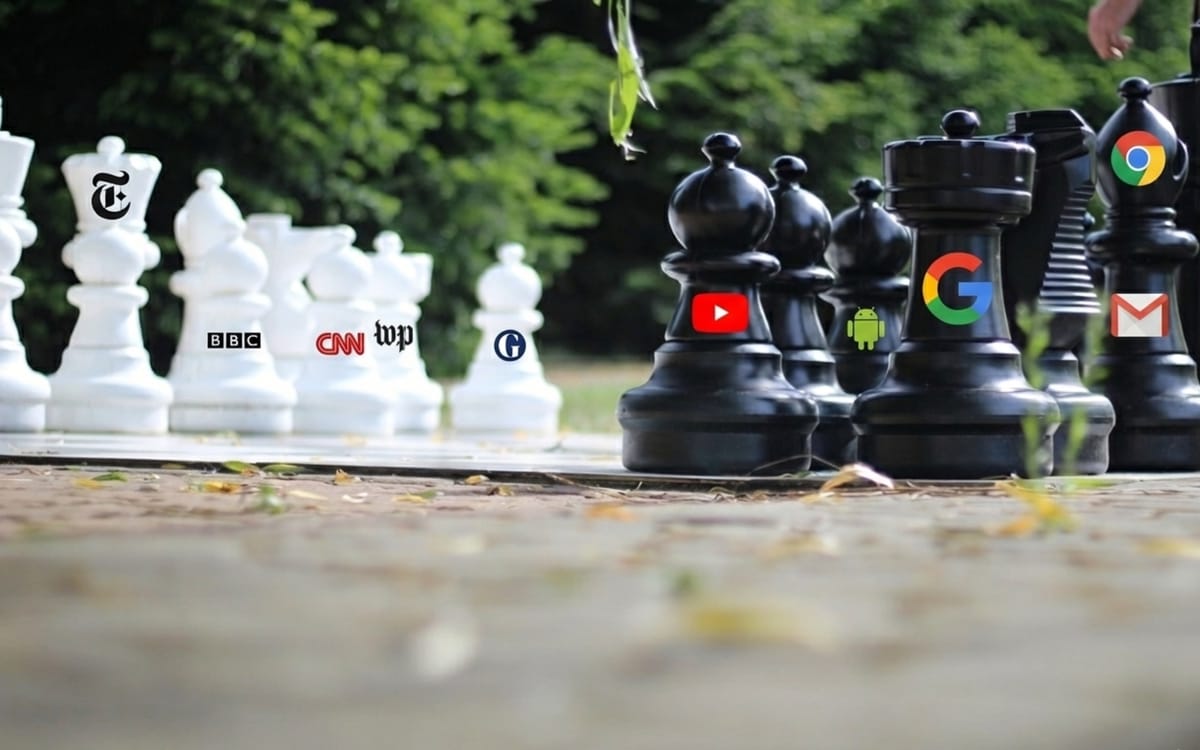
The digital advertising industry closed 2025 navigating simultaneous disruptions across search rankings, artificial intelligence infrastructure, and platform consolidation that fundamentally reshaped competitive dynamics during the year's most lucrative quarter. Multiple forces converged in the final weeks of December, from Google's extended algorithm deployment to massive investments in AI power systems and accelerating industry consolidation, creating a perfect storm that exposed the vulnerability of publishers dependent on platform traffic.
Google confirmed on December 29 the completion of its December 2025 core update after an 18-day implementation period that brought substantial ranking volatility across search results. The update, which began rolling out December 11 at 9:25 AM Pacific Time, exceeded typical deployment timelines and created consecutive weekend disruptions on December 13 and December 20. Website operators reported traffic declines ranging from 70-85%, with some experiencing a 98% drop in Google Discover impressions during the crucial holiday advertising season.
The timing proved devastating for publishers already struggling with platform dependencies. Research published in August 2025 found that Google Discover accounted for two-thirds of referrals to news and media websites, making the December decline particularly severe. Yet this algorithm disruption represented only one dimension of the broader transformation reshaping digital marketing's foundations.
Power infrastructure emerged as a critical battleground for AI development. Alphabet announced December 22 a definitive agreement to acquire Intersect for $4.75 billion in cash plus assumption of debt, addressing mounting energy challenges as artificial intelligence and data center operations drive unprecedented electricity demand. The acquisition brings multiple gigawatts of energy and data center projects to Alphabet, with Intersect operating separately under founder and CEO Sheldon Kimber. The transaction excludes existing operating assets in Texas and California developments, which will continue independently.
This move followed Google's first US nuclear deal with Kairos Power in August 2025 and October's transfer of water storage infrastructure to The Dalles, Oregon municipality. The acquisitions reflected industry recognition that AI infrastructure requires fundamentally different power solutions than previous computing generations. CEO Sundar Pichai stated the deal would help "expand capacity, operate more nimbly in building new power generation in lockstep with new data center load, and reimagine energy solutions to drive US innovation and leadership."
The infrastructure investments aligned with extraordinary capital commitments across Big Tech. Australia's competition authority documented on December 17 that Google, Meta, Microsoft, and Amazon collectively allocated A$627 billion in capital expenditure for 2025. OpenAI secured partnerships worth over US$1 trillion for infrastructure development, while Meta, Apple, ByteDance, xAI, and Anthropic pursued vertical integration strategies to self-supply computing resources. Competition for technical talent reached unprecedented levels, with pay packages for AI engineers and researchers hitting US$300 million over four years at leading technology companies.
Platform dominance tightened across advertising markets despite apparent retreats on specific initiatives. Big Tech platforms won 2025 even when they appeared to lose ground, with Google's decision to walk back third-party cookie deprecation in Chrome marking the effective end of the Privacy Sandbox experiment. After years of insisting Privacy Sandbox represented the future of web advertising, Google opted for optionality, confirming that open web economics proved harder to re-engineer than anticipated.
Amazon DSP's growth throughout the year came largely at independent ad tech's expense. Digiday research showed that in Q1 2024, Google DV360 and The Trade Desk ranked as marketers' most-used DSPs at 58% and 55% respectively. By Q3 2025, Amazon DSP captured second place with 50% usage, while Google maintained first at 54% and The Trade Desk dropped to third at 39%. The shift reflected Amazon's dominance in programmatic advertising and The Trade Desk's defensive repositioning as Amazon redrew competitive maps.
Amazon announced December 18 the introduction of content exclusion categories for its demand-side platform, enabling advertisers to manage brand suitability settings across Twitch and third-party inventory through unified controls. The feature launched immediately to all Amazon DSP self-service advertisers through console, API, and bulk tool access methods. The category-based approach represented a middle path between Microsoft's manual domain lists and Meta's removal of granular exclusions, which Meta had implemented in January 2025 while encouraging advertisers toward alternative audience controls.
Google advanced AI integration across search products during December's final weeks. The company deployed Gemini 3, its most advanced reasoning model, directly into search experiences on December 18, enabling dynamic interface generation and real-time simulations for complex queries across millions of users. The deployment represented the first time a frontier model with extensive coding and reasoning capabilities powered search results at scale from launch day.
Rhiannon Bell, Design Lead for Google Search, and Robby Stein, Product Lead for Google Search, discussed the technical implementation during an episode of the Google AI Release Notes podcast published December 18. The conversation covered how generative UI transforms search responses from static templates into dynamically constructed interfaces tailored to individual queries, creating differentiation through technical sophistication that competitors without frontier model development cannot easily replicate.
Google began testing December 1 a streamlined path from AI Overviews into AI Mode, eliminating friction between the two search experiences. Mobile users who expand AI Overview summaries now see an "Ask Anything" button that transitions directly into conversational AI Mode while preserving query context. The integration removes barriers requiring users to understand which AI search product handles different question types.
The technical sophistication raised questions about competitive dynamics. Smaller search engines and AI assistants without comparable design systems, component libraries, and model capabilities may struggle matching the experience quality Google delivers through Gemini 3 integration. WordStream found in July 2025 that 20 percent of AI responses to PPC-related questions contained inaccurate information when testing five major platforms, highlighting quality challenges across the industry.
Buy ads on PPC Land. PPC Land has standard and native ad formats via major DSPs and ad platforms like Google Ads. Via an auction CPM, you can reach industry professionals.
Gemini's integration with Google Maps launched December 13, providing users with photos, ratings, and location information directly within conversational AI interfaces. The feature rolled out immediately in English for both desktop and mobile Gemini interfaces, supporting multimodal inputs including voice commands and image uploads. Users can show Gemini a photograph of a restaurant and ask for similar nearby options, receiving visual cards showing comparable establishments with ratings and photographs.
Monetization details remained unclear. Google representatives told advertisers in December 2025 that ads would come to Gemini in 2026, though VP Dan Taylor publicly disputed these claims, creating confusion about the platform's commercial trajectory. Integration complexity increases as Google connects more services with Gemini, with each new data source introducing additional points of potential failure, accuracy issues, or user experience problems.
Regulatory scrutiny of AI systems intensified globally. The Australian Competition and Consumer Commission's December 17 assessment examined rapid advances in agentic systems, massive infrastructure investments, and mounting consumer protection concerns affecting advertisers and marketers. The 55-page analysis tracked generative AI's continued rise, emergence of agentic systems capable of autonomous decision-making, investment patterns across the AI supply chain, and consumer risks including data misuse, misleading conduct, fake reviews, and sophisticated scams.
Major platforms launched new model releases between March and December 2025, including Gemini 3 Pro, GPT-5, Claude Sonnet 4.5, and Grok 4.1. These models now exceed existing evaluation benchmarks, requiring development of new testing methodologies to assess capabilities accurately. Agentic AI emerged as the most significant technical development, with these systems operating autonomously to complete tasks with minimal human prompting, marking a shift from passive tools to active agents making independent decisions.
The advertising industry accelerated agentic AI adoption throughout 2025. Amazon introduced Ads Agent for automated campaign management November 11, processing natural language instructions to execute complex workflows across Amazon Marketing Cloud and DSP. LiveRamp announced agentic orchestration capabilities October 1, enabling autonomous agents to access identity resolution and audience activation platforms. Google expanded its Ads Advisor and Analytics Advisor to all English-language accounts in early December.
The ACCC snapshot identified significant risks from autonomous agent deployment, warning that agentic systems could enable collusion between competing agents, create liability questions when agents cause harm, complicate evidence gathering in disputes, and produce emergent behaviors not anticipated by developers. Platform providers released frameworks enabling developers to build and deploy agent systems, including Adobe's Agent Orchestrator, Google's Vertex AI Agent Builder, and OpenAI's AgentKit during the coverage period.
Google refined technical documentation for developers throughout December. The company released three critical updates to its JavaScript SEO documentation on December 18, addressing technical ambiguities affecting how developers implement JavaScript-powered websites for search engine visibility. The modifications clarified how Google's rendering systems handle error pages, canonical URLs, and noindex directives in JavaScript environments.
The updates occurred December 15, 17, and 18 as part of Google's ongoing documentation improvement program that averaged two significant updates per month throughout 2025. Publishers implementing JavaScript-based paywalls face additional complexity, as Google's guidance warns this design pattern "makes it difficult for Google to automatically determine which content is paywalled and which isn't," potentially affecting how paywalled content receives indexing treatment. The timing coincided with the December core update's broader algorithm volatility, complicating efforts to isolate technical SEO factors from algorithmic content quality assessments.
Industry consolidation accelerated through year-end. AdExchanger's December 24 comprehensive documentation showed strategic buyers accounted for 71% of scaled ad tech transactions during 2025's first three quarters compared with 58% during the same period in 2024. Major deals included T-Mobile's acquisition of Vistar Media for $600 million in January followed by its purchase of location data platform Blis for $175 million, and PE firm Novacap taking Integral Ad Science private for $1.9 billion in a deal that closed in December.
Subscribe PPC Land newsletter ✉️ for similar stories like this one
Omnicom's $13.5 billion acquisition of Interpublic Group, finalized in late November, cemented 2025 as a banner year for advertising, media, and marketing dealmaking. The mega-merger combined two of the largest agency holding companies, creating competitive pressure on rivals and driving consolidation across the industry. Michael Kassan observed that "the industrial logic there is clear. As we get to the next level of technology, the combination and the size they've been able to achieve is going to give an advantage."
Digital advertising revenues showed recovery in the fourth quarter after a challenging start to 2025. Digiday reported that revenues were mostly flat year over year in Q1 2025 for public digital media companies including BuzzFeed, Dotdash Meredith, Gannett and News Corp's Dow Jones business. However, four of six publicly traded publishers reported increases in digital advertising revenue in Q3 2025 year over year, including News Corp's Dow Jones businesses, The New York Times, USA Today Co. and Ziff Davis. The New York Times projected its digital advertising revenue would increase in the mid to high percentages year over year in Q4.
Publishers navigated increasingly complex relationships with platforms throughout the year. Digiday asked eight publishers for their views on how each tech platform stacked up in 2025 on key criteria including transparency, money paid to publishers, traffic impact, willingness to license, and crawler behavior. Third-party tools for tracking AI search visibility emerged as publishers sought data that tech companies refused to share directly. New monitoring services expanded to show AI visibility in Google's AI Overviews and AI Mode, providing publishers with analytics they needed to understand how, when and why their content appeared across platforms and AI products.
The concentration of power became increasingly evident. Google's December core update affected traditional search results and Discover traffic simultaneously, suggesting the update modified fundamental content evaluation systems rather than surface-level ranking factors. Some websites experienced complete disappearances from search results during the rollout. One forum participant whose site exceeded 10 years in age reported losing all rankings overnight despite never utilizing artificial intelligence for content generation.
Recovery prospects remained uncertain for affected sites. Google's guidance suggests that meaningful ranking improvements often require subsequent core update cycles rather than immediate content modifications. Historical data from previous updates shows limited recovery patterns even months after implementation. The June 2025 core update demonstrated some recovery patterns for sites previously impacted by the September 2023 Helpful Content Update, though many publishers experienced mixed results with recovery timelines varying considerably.
The December update represented the third confirmed core algorithm modification of 2025, following March and June updates. Google previously deployed the March 2025 core update on March 13, which concluded after 14 days on March 27. The June 2025 core update launched June 30 and required 16 days to complete, finishing July 17. This December deployment arrived approximately five months after the June update, breaking from typical quarterly patterns. Historical data shows Google generally releases core updates every three to four months, though the company maintains no fixed schedule for these algorithmic adjustments.
Google described the December update as "a regular update designed to better surface relevant, satisfying content for searchers from all types of sites." The company provided no additional guidance specific to the December deployment beyond standard recommendations to focus on content quality improvements rather than technical manipulation. Documentation updates published December 9—just two days before the update announcement—clarified that ranking improvements can occur without waiting for confirmed updates, noting that "we're continually making updates to our search algorithms, including smaller core updates."
The broader implications extended beyond individual ranking changes. Platform power consolidated around a handful of companies with resources to invest billions in AI infrastructure, develop frontier models, acquire energy assets, and reshape competitive landscapes through strategic acquisitions. Smaller players faced mounting challenges competing against integrated platforms combining search, AI, advertising, and infrastructure capabilities.
Digiday's year-end analysis noted that even for battle-worn publishers accustomed to rewriting playbooks, 2025 proved particularly rough. The stomach-dropping moments were easy to pinpoint: copyright challenges from AI engines' scraping, and erosion of referral traffic largely caused by the emerging competitive AI search landscape. Yet adaptability stopped being a nice-to-have years ago, becoming instead a survival skill. The difference now is that the muscle publishers built just to stay alive may finally work in their favor.
The advertising industry closed 2025 facing fundamental questions about traffic distribution, AI integration, platform power, and the viability of independent publishers in an ecosystem increasingly dominated by massive technology companies. Google's December core update completion on December 29 marked not just the end of an algorithm rollout but the conclusion of a transformative year that reshaped digital marketing's competitive landscape and set the stage for even more dramatic changes ahead.
Subscribe PPC Land newsletter ✉️ for similar stories like this one
December 22:
December 23:
December 24:
December 29:
December 30:
December 31:
Earlier December stories referenced in coverage: