Amazon Luna and Mattel bring He-Man to the living room on June 5
Amazon Luna and Mattel launch Masters of the Universe: Legends Unite on June 5, 2026, a free-to-Prime couch co-op game with roguelike deck-building mechanics across 14 countries.


Amazon Luna and Mattel launch Masters of the Universe: Legends Unite on June 5, 2026, a free-to-Prime couch co-op game with roguelike deck-building mechanics across 14 countries.
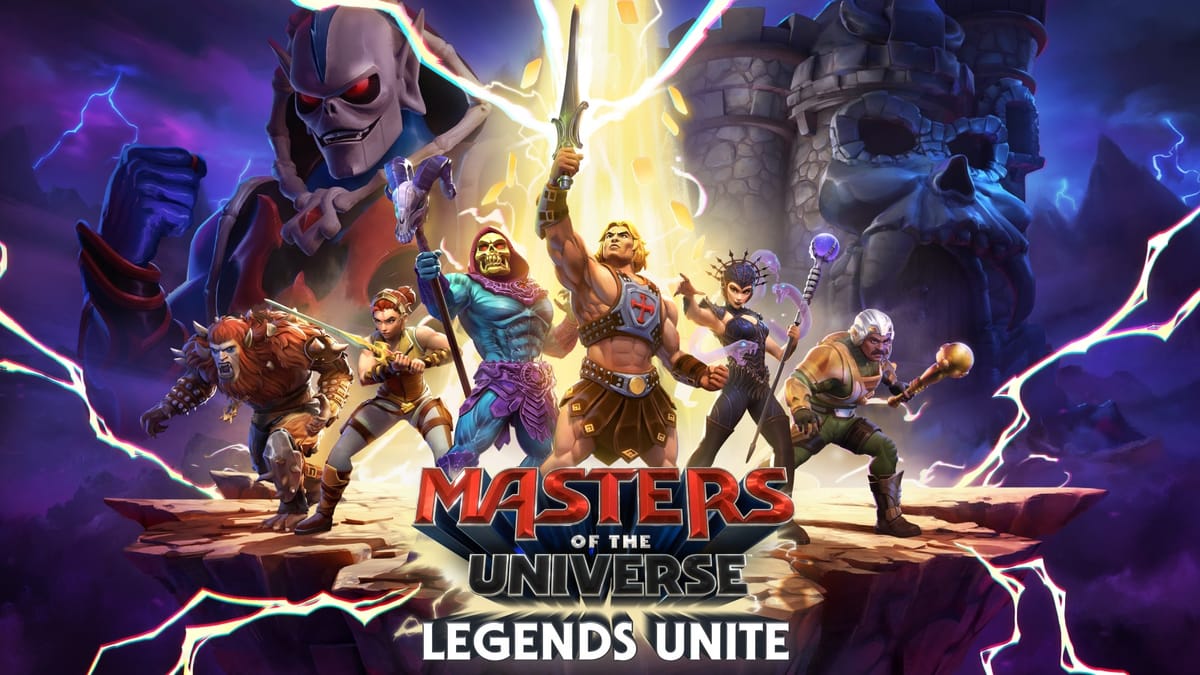
Amazon Luna and Mattel today announced Masters of the Universe: Legends Unite, a cloud-based couch co-op game launching exclusively on Luna on June 5, 2026 - the same day the live-action Masters of the Universe film opens in U.S. theaters. The announcement, dated March 31, 2026, positions the release as a deliberate day-and-date event: fans can watch the Amazon MGM Studios film and play the companion game within the same 24-hour window, a coordination that is rare in entertainment but increasingly central to Amazon's strategy of knitting together its Prime subscription, streaming, and gaming assets.
The game is developed by Bandit Island Studios and published by Amazon Games. It will be included with Prime membership at no additional charge and is also available to standalone Luna subscribers. According to the announcement, the title will be accessible to users in 14 markets: the United States, United Kingdom, Canada, Germany, France, Italy, Spain, Austria, the Netherlands, Poland, Sweden, Portugal, Belgium, and Luxembourg.
Masters of the Universe: Legends Unite enters Luna's GameNight lineup, a category of social party titles engineered specifically for living room play without requiring a gaming console or a PC. The technical premise is straightforward: connected televisions and streaming sticks handle the display output, while smartphones serve as controllers. Players use devices they already own, eliminating any hardware barrier to entry. This positions the game closer to streaming video than to traditional console gaming, which is consistent with Luna's infrastructure as a cloud-based platform.
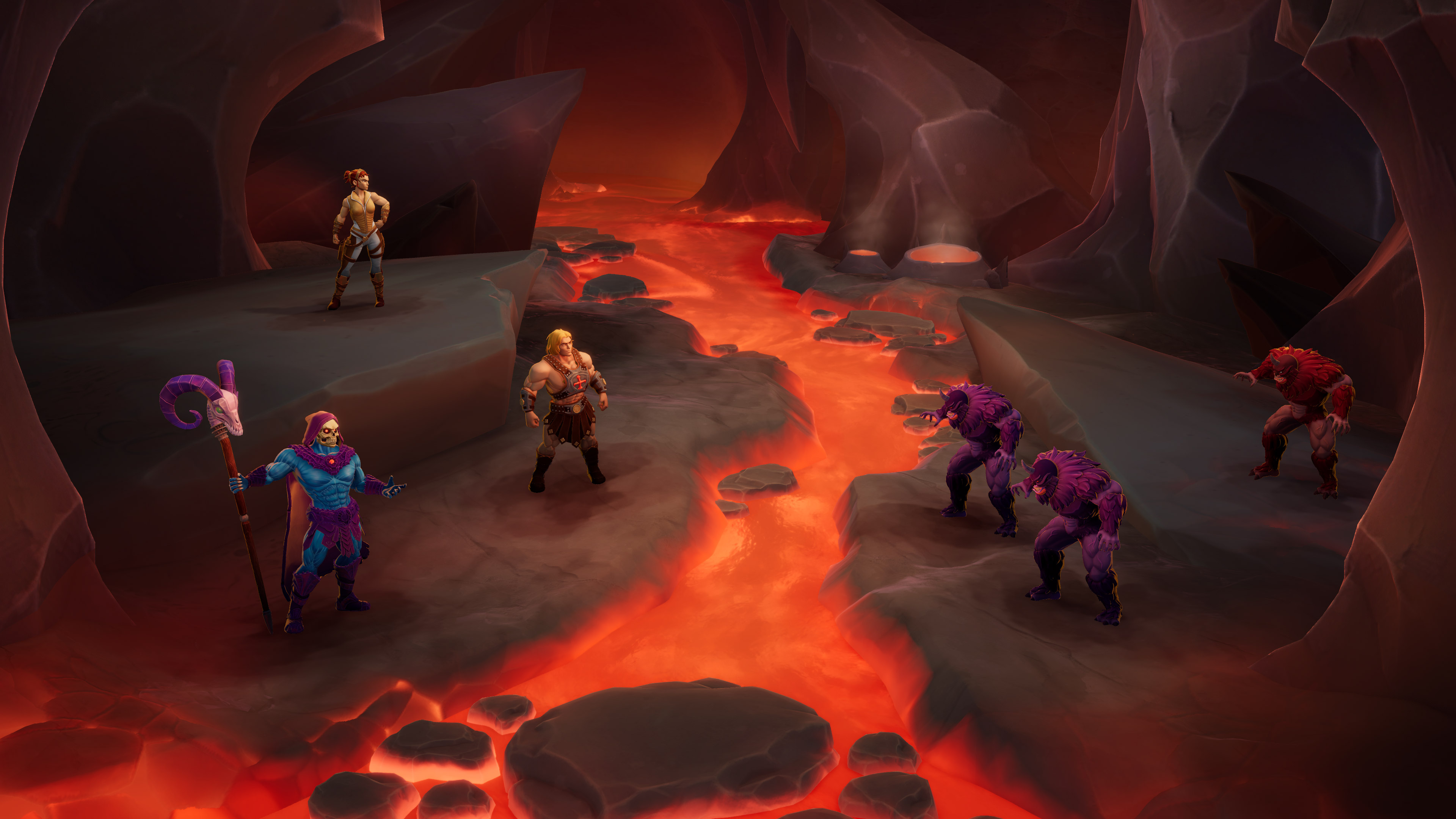
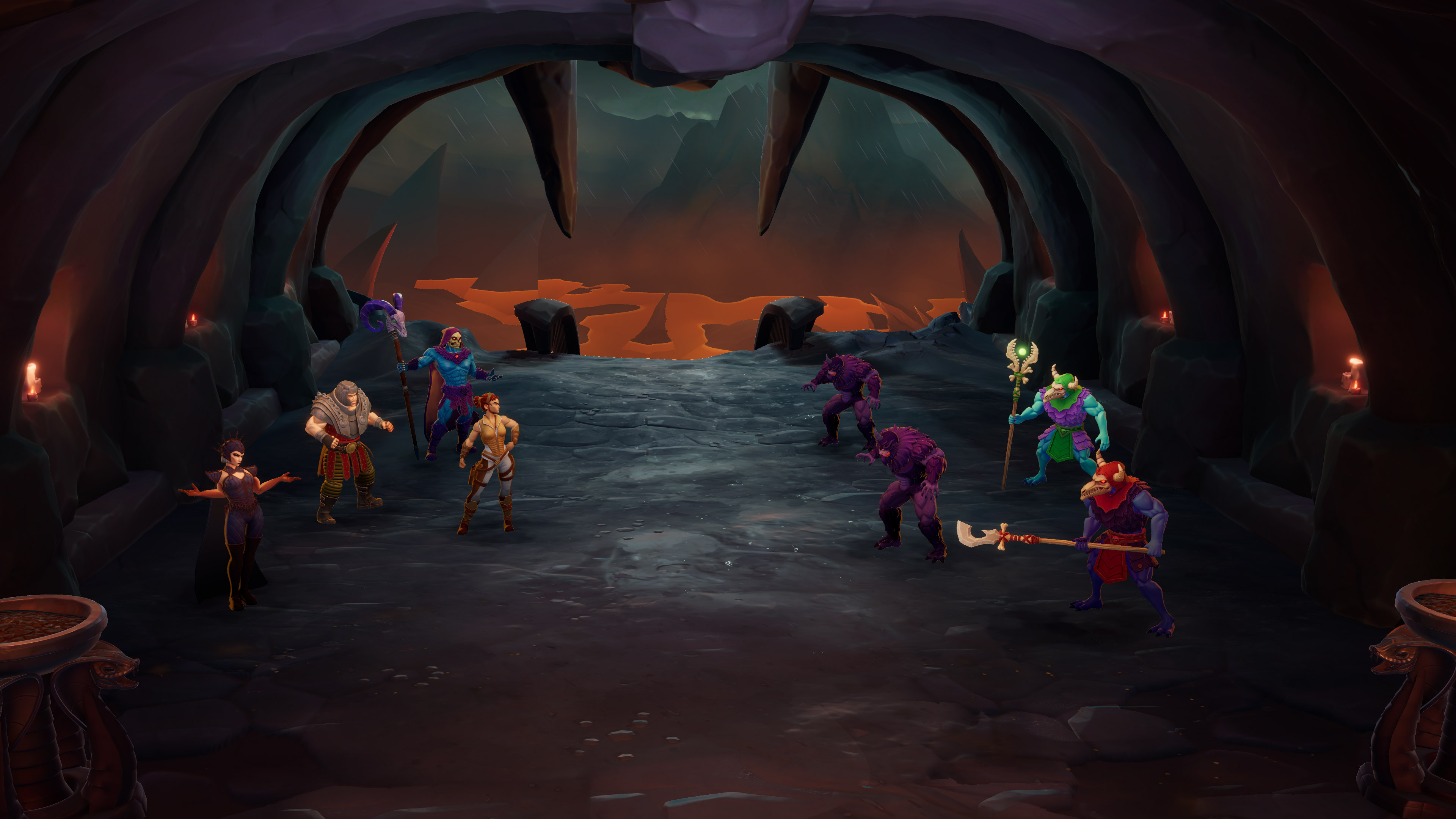
The game design blends two distinct mechanics. Roguelike deck-building forms the strategic core, where players gather cards across sessions, with each playthrough generating a different sequence of challenges. Arcade mini-games sit alongside the deck-building layer, adding variety and lighter competitive moments between the heavier strategic segments. According to the announcement, competitive trials within the game pit players against one another to claim bonuses - meaning cooperation and rivalry can coexist within a single session.
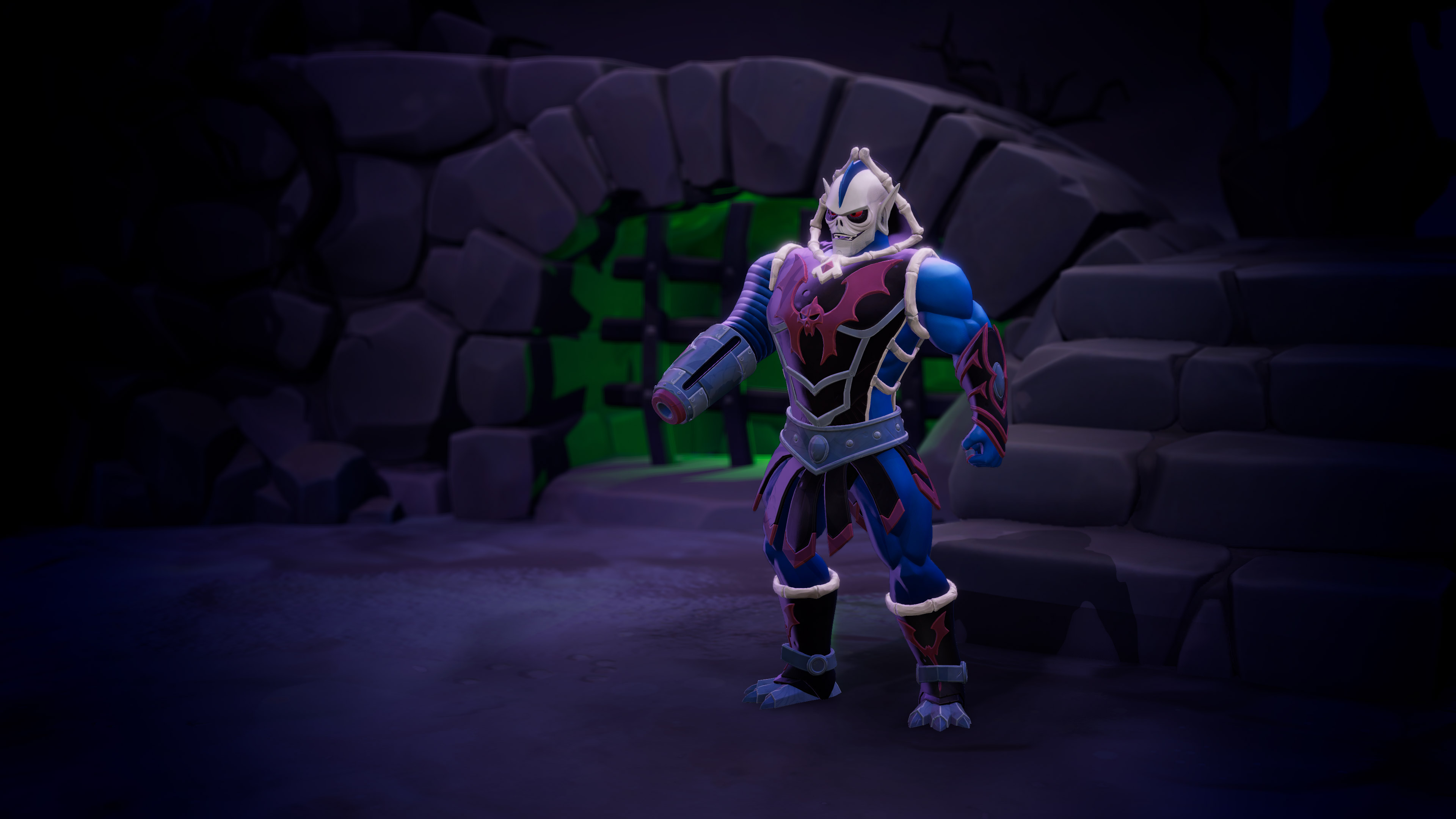
In Adventure Mode, the announcement describes a system where players deliver larger hits, accumulate increasingly powerful cards, and progressively strengthen their chosen characters. The game features multiple biomes, each presenting distinct challenge configurations. Enemies drawn from Eternian lore include Hordak - identified in the materials as Skeletor's former mentor - alongside environmental hazards such as Moaty, described as a gaze-based threat, and unnamed boulder sequences. The villain roster extends established Masters of the Universe mythology while incorporating characters introduced by the 2026 film.
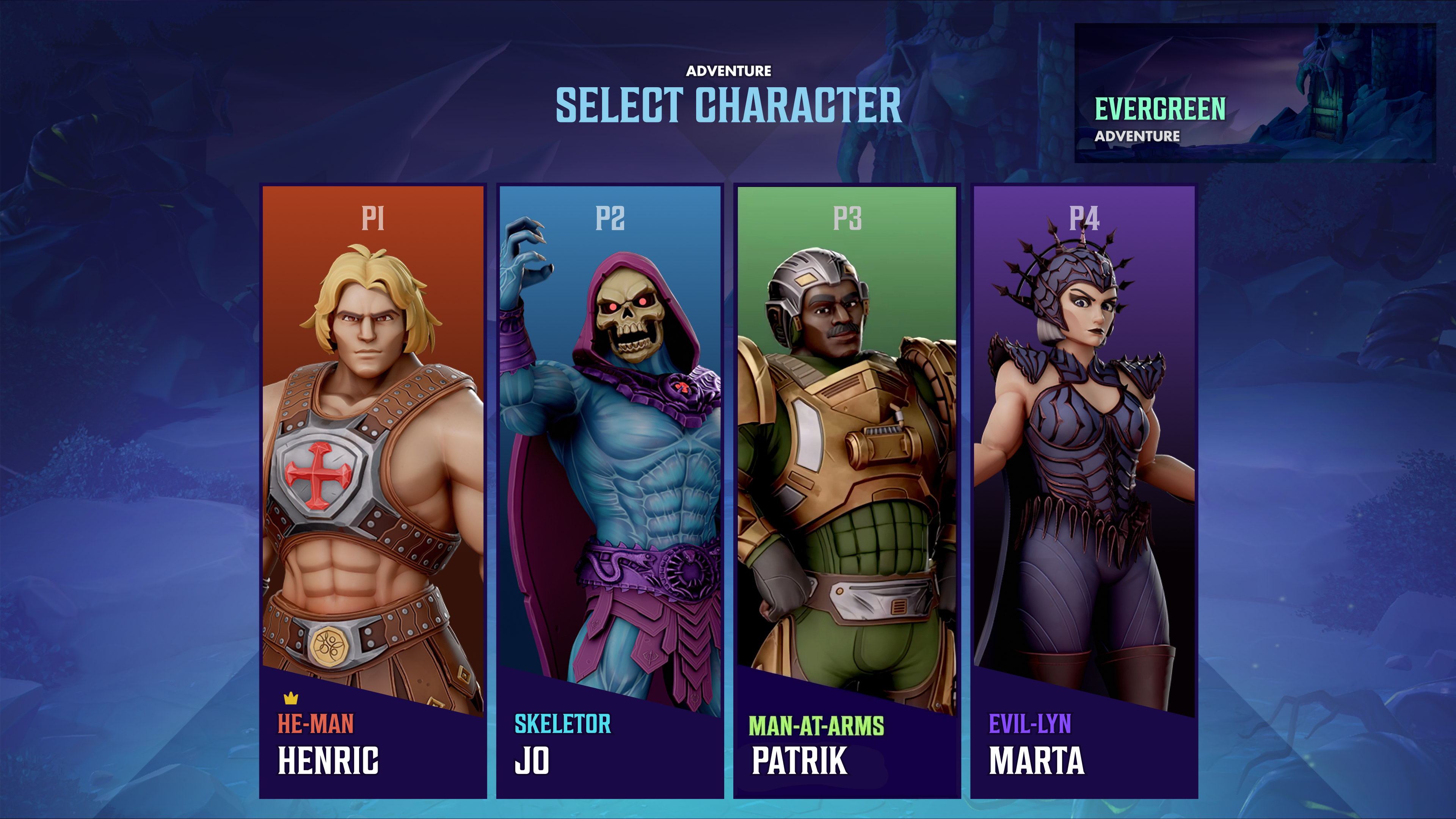
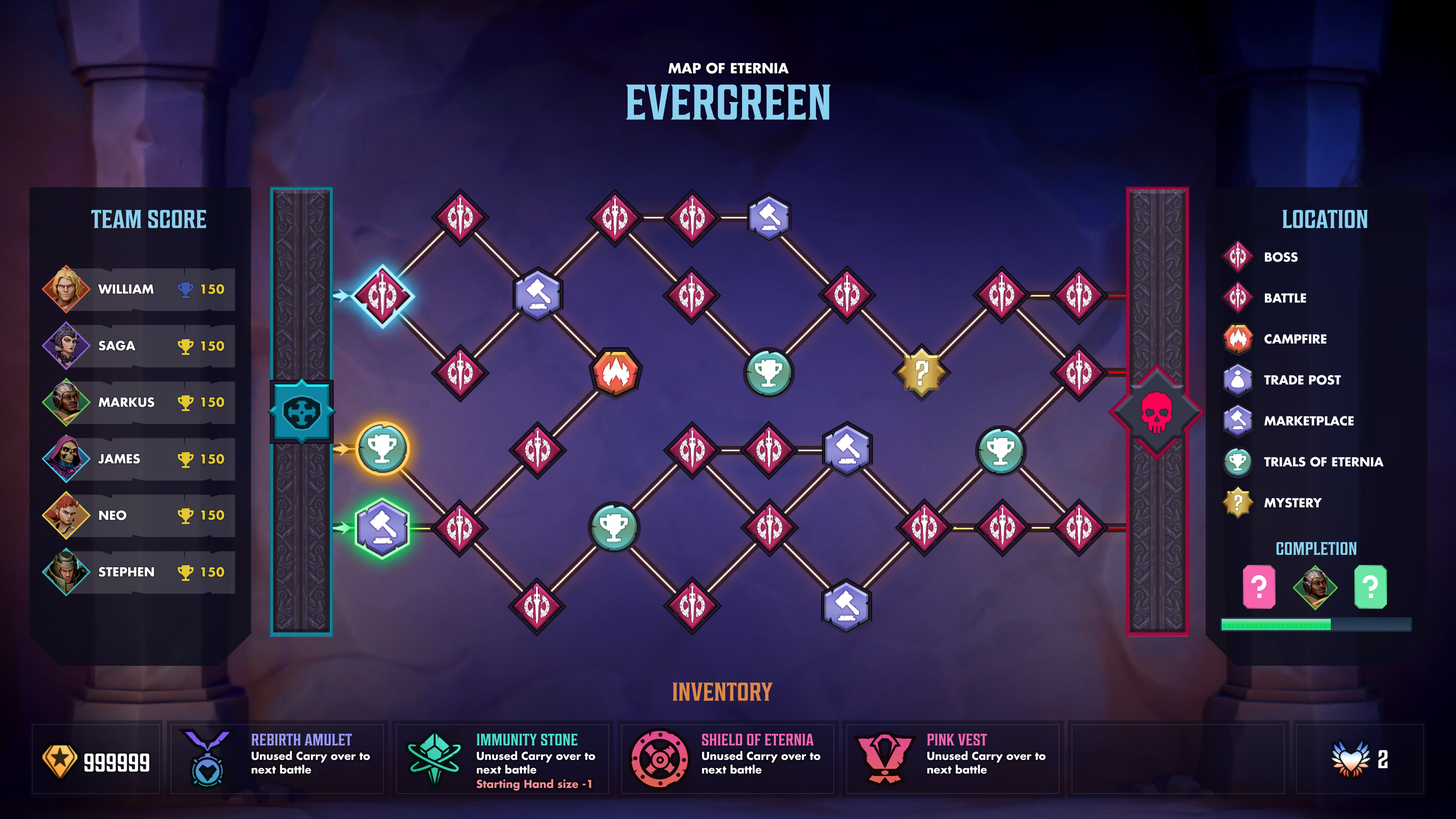
Four character slots appear in published screenshots: He-Man (named Henric), Skeletor (named JD), Man-At-Arms (named Patrik), and Evil-Lyn (named Marta). The character select screen indicates up to four simultaneous players, reinforcing the couch co-op framing. A map interface visible in promotional materials - labeled "Evergreen" - shows a branching node structure consistent with roguelike progression design, where players chart routes across interconnected decision points rather than following a fixed linear path.
Mattel, listed on Nasdaq under the ticker MAT, describes itself in the announcement as a leading global play and family entertainment company. The Masters of the Universe brand, which originated in the early 1980s with the He-Man toy line, has operated across toys, television animation, film, and games for more than 40 years. The 2026 live-action film is a production of Amazon MGM Studios and Mattel Studios; its U.S. theatrical release on June 5 is handled by Amazon MGM Studios, while Sony Pictures International Releasing manages international distribution, also in June 2026.
Mattel Digital Studios, the division behind the game partnership, describes its aim as extending physical play into digital environments by building interactive experiences around Mattel's intellectual property. The Legends Unite title fits within that declared strategy: it translates a toy and animation brand into a playable format that can reach adult fans and younger audiences simultaneously. The roguelike structure, which rewards repeated play through escalating card power and variable biome sequences, is particularly suited to creating sustained engagement rather than a one-time experience tied narrowly to a film release window.
Mattel had previously partnered with OpenAI to develop AI-powered toys and experiences, a collaboration announced in June 2025 that signaled the company's intent to push its IP into interactive digital formats across multiple technology partners.
The Legends Unite launch is one component of a larger pattern at Amazon. The company reported advertising services revenue of $21.3 billion in the fourth quarter of 2025 - a 23% year-over-year increase - as Prime Video reached 315 million global viewers. That scale gives the company significant leverage when coordinating entertainment events across its properties. A game included with Prime, launching alongside a Prime Video-affiliated theatrical release, creates multiple touchpoints within the same ecosystem on a single date.
Luna itself sits within Amazon's broader connected TV infrastructure. Nvidia's GeForce NOW launched on Amazon Fire TV devices in February 2026, positioning Fire TV as a multi-service cloud gaming hub with Luna as the first-party option. The Fire TV ecosystem spans nearly 300 million devices sold globally, making the distribution footprint for GameNight titles substantial before a single marketing campaign runs.
Amazon's advertising infrastructure, which consolidated first-party inventory across Fire TV, Fire Tablet, Alexa, IMDb, and Twitch in January 2025, now enables unified campaign management across these surfaces through Amazon DSP. A game launch tied to a theatrical release represents an advertising event as much as an entertainment one: it creates inventory opportunities across Prime Video, Fire TV, and Luna simultaneously, all attributable through the same measurement infrastructure.
Amazon Marketing Cloud launched Prime Video viewership signals in November 2025, enabling advertisers to analyze content engagement data and cross-reference it with shopping behavior. A couch co-op game with a theatrical film tie-in creates exactly the kind of multi-signal event that AMC is built to analyze: viewers who watched the film, players who launched the game, and buyers who responded to adjacent advertising could in principle be tracked within the same measurement environment.
The broader context for this launch is a gaming advertising market that has attracted growing institutional attention. A Kantar study published in February 2026, based on fieldwork from January of that year and surveying 2,500 U.S. adults, found that 71% of mobile gamers who purchased a product after seeing a game advertisement did so on the day of exposure. Among that group, 32% clicked an ad and purchased immediately, while 39% clicked, browsed, and completed the purchase later the same day. The speed of conversion in gaming environments is structurally significant for advertisers evaluating where to allocate budget.
Research from IAB Poland, published in August 2025, found that gamers consistently outspend non-gamers across multiple product categories, with higher engagement with product reviews and exclusive products compared to the general population. The study surveyed 1,001 participants and represented the first direct comparison of gamer and non-gamer purchasing behavior in Poland.
Microsoft began internal testing of an ad-supported Xbox Cloud Gaming tier in October 2025, applying approximately two minutes of preroll advertising before gameplay with a cap of five hours per month in testing parameters. That move signaled that cloud gaming - previously a subscription-only domain - is moving toward hybrid monetization models that include advertising. Amazon's approach with GameNight differs: the titles are included in existing Prime and Luna subscriptions, with no advertising interruption during play, but they generate engagement data and cross-promotional opportunities within Amazon's broader advertising ecosystem.
Gaming spending in podcast advertising grew 59% year-over-year in Q3 2025, making it the fastest-growing category among all industries tracked by Magellan AI across more than 50,000 podcasts. That growth rate reflects how media buyers are repositioning gaming as a priority channel rather than a supplementary one.
For marketing professionals, the Legends Unite announcement is relevant on several levels. First, the day-and-date coordination between a theatrical film and a cloud gaming title illustrates how IP owners are structuring entertainment launches to generate simultaneous engagement across multiple platforms - each capable of delivering advertising impressions and behavioral data. Second, the inclusion with Prime means the game's distribution is driven by subscription mechanics rather than unit sales, which changes how reach and engagement metrics are calculated.
Third, the 14-country rollout from day one - spanning Western Europe and North America - suggests confidence in Luna's infrastructure and in the cross-border appeal of the Masters of the Universe brand. European markets including Germany, France, and the UK have been central to Amazon's advertising expansion; the company held its first German advertising upfront in June 2025, announcing 17 million monthly Prime Video ad-supported viewers in that market alone.
Fourth, GameNight's smartphone-as-controller design is an implicit acknowledgment that controller hardware is a barrier to casual gaming adoption. By removing that barrier, Amazon expands the addressable audience for cloud gaming titles beyond dedicated gamers - and potentially into the demographic segments that mobile gaming research consistently identifies as valuable: households with strong purchasing power and high online shopping frequency.
Who: Amazon Luna, Amazon Games, and Mattel (Nasdaq: MAT), with the game developed by Bandit Island Studios. Available to Prime members and Luna subscribers across 14 countries.
What: Masters of the Universe: Legends Unite - a GameNight cloud co-op video game blending roguelike deck-building with arcade mini-games, supporting up to four players using smartphones as controllers on connected televisions, included with Prime at no additional cost.
When: Announced March 31, 2026; launching June 5, 2026, the same date as the theatrical U.S. release of the Amazon MGM Studios Masters of the Universe live-action film.
Where: Exclusively on Amazon Luna, available in the US, UK, Canada, Germany, France, Italy, Spain, Austria, the Netherlands, Poland, Sweden, Portugal, Belgium, and Luxembourg.
Why: The simultaneous game and film launch is a deliberate cross-platform strategy by Amazon and Mattel to activate the Masters of the Universe brand across entertainment and gaming on the same day, deepening subscriber engagement within Amazon's Prime ecosystem while extending Mattel's more than 40-year-old IP into interactive cloud gaming.