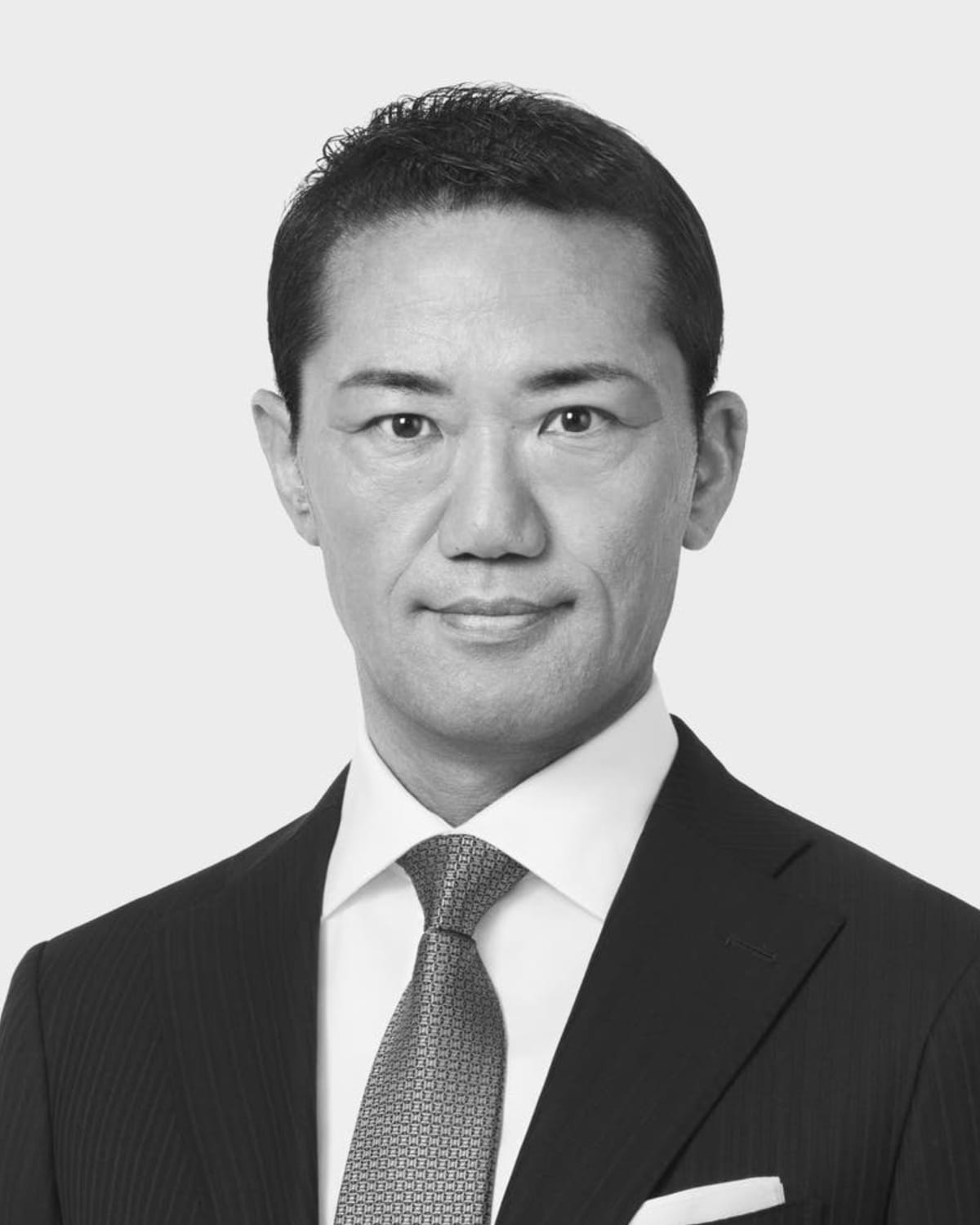
Dentsu this week installed Takeshi Sano as its new president and global CEO while abandoning efforts to sell its struggling international business, marking a dramatic shift in strategy following months of negotiations with potential buyers that ultimately collapsed.
The Japanese advertising giant announced the leadership change on February 13, 2026, naming Sano - currently CEO of Dentsu Japan and deputy global COO - to replace Hiroshi Igarashi effective March 27, 2026. The restructuring eliminates the global COO and global president positions entirely, creating a flatter organizational structure with regional CEOs and practice leaders reporting directly to Sano.
The announcement arrives as Dentsu faces severe financial pressure. Earlier this month, the company reported a ¥327.6 billion ($2.18 billion) net loss for fiscal 2025, driven primarily by a ¥310.1 billion ($2.03 billion) goodwill impairment tied to its international operations. The company also suspended its year-end dividend to preserve cash, marking the first time Dentsu has eliminated dividend payments.
According to a Campaign Asia report, Dentsu had been in discussions to sell its international business - which includes operations across the Americas, EMEA, and APAC outside Japan - but potential buyers walked away from negotiations. The company is now focused on fixing the international operations rather than divesting them.
Failed sale follows months of restructuring
The abandoned sale represents a reversal of strategy that emerged following Dentsu's dismal second-quarter results in August 2025, when the company announced 3,400 job cuts globally. By September, Dentsu had appointed Mitsubishi UFJ Morgan Stanley and Nomura Securities to explore strategic options for its international business, including potential sale of a minority stake or complete divestment.
The international operations at stake were built largely through Dentsu's 2012 acquisition of Aegis Group for £3.2 billion, which expanded the company's global footprint beyond its traditional Japanese market. The portfolio includes US-based digital marketing consultancy Merkle and various creative and media units across multiple regions.
Those discussions have now collapsed entirely. The company stated in its announcement that it is "eliminating the global COO and global president roles" and implementing "a new structure designed to enhance execution excellence and drive stronger growth outcomes for our clients."
The decision to retain and fix the international business rather than sell it creates significant challenges. Dentsu's overseas operations have generated substantial revenue - over $4.5 billion in net revenues during 2024 - but failed to deliver sustainable profits, leading to the comprehensive restructuring that included previously announced job cuts.
Sano inherits deeply troubled international portfolio
Sano takes on the task of reviving operations that have struggled for several consecutive years. The international business posted organic revenue declines across all three major regions during fiscal 2025, contrasting sharply with Japan's continued growth.
According to Dentsu's latest financial results, APAC excluding Japan posted the weakest performance with organic growth of negative 6.8% for the year, though the region showed tentative signs of stabilization in the fourth quarter. The Americas delivered organic growth of negative 3% despite improved margins through cost control, while EMEA recorded an organic decline of 1.8%.
The financial damage from international underperformance manifested in massive goodwill impairment charges. The ¥310.1 billion impairment recorded in the fourth quarter alone followed an earlier ¥86 billion impairment during the second quarter, bringing total goodwill charges for fiscal 2025 to ¥396.1 billion ($2.64 billion). These write-downs recognize that acquired international assets are worth substantially less than their recorded book values.
The company adopted what it termed an "extremely conservative" view of its pipeline and medium-term growth prospects for international markets when conducting the impairment tests. Under this revised framework, Dentsu slashed its total goodwill balance to ¥320.1 billion ($2.13 billion) at the end of 2025, less than half the ¥697.1 billion held a year earlier.
Despite the statutory loss, underlying profitability proved more resilient than headline numbers suggested. Dentsu's underlying operating margin reached 14.4% for fiscal 2025, ahead of November guidance projecting approximately 13%. The company stripped out any unrealized benefits from ongoing cost-reduction programs when establishing this guidance, creating what management described as a highly conservative baseline.
Leadership transition creates direct reporting structure
The new organizational structure eliminates multiple executive layers. Yoshimasa Watahiki, currently COO of Dentsu Japan, will become representative executive officer and executive vice president with the title Global Chief Corporate Affairs Officer. Shigeki Endo, currently global CFO, will be appointed to director status in addition to his executive officer role.
According to Dentsu's announcement, "Regional CEOs and practice leaders will now report directly to Sano" under the simplified structure. The company also created new global transformation and corporate affairs roles while continuing a cost-cutting plan that includes previously announced layoffs.
The changes eliminate positions previously held by Hiroshi Igarashi, who will resign as representative executive officer, president and global CEO, and Arinobu Soga, who will resign as representative executive officer, executive vice president and global chief governance officer.
Sano joined Dentsu in 1992 and has spent much of his career focused on business transformation. He previously led Dentsu Inc., the company's core Japanese business, through 11 consecutive quarters of revenue growth - a track record that stands in sharp contrast to the international operations' persistent declines.
Japan accounts for roughly 40% of group net revenue and more than half of underlying operating profit, making it Dentsu's financial backbone. The domestic business posted net revenue of ¥504.6 billion ($3.36 billion) for fiscal 2025 with organic growth of 0.5%, significantly outperforming international regions.
"Dentsu will continue to sharpen the distinctive value that sets us apart and position ourselves as a true growth partner, supporting clients consistently from strategy through to execution," Sano stated in announcing his appointment.
Continued investment in restructuring despite losses
Dentsu plans to invest another ¥26 billion ($173 million) in restructuring during fiscal 2026, targeting total annual cost savings of ¥42 billion ($280 million). The company aims to realize approximately ¥50 billion ($333 million) of recurring savings by fiscal 2027.
The company reduced headcount by 2,100 roles during fiscal 2025 and stated that a further 1,300 cuts are planned. Management described the dividend suspension as "regrettable" but necessary to strengthen the balance sheet and preserve financial flexibility amid the international business turnaround effort.
On costs, Dentsu is consolidating and reducing group companies while simplifying headquarters functions through business transformation built on artificial intelligence and automation. By January 2026, the company had halved the number of international entities from more than 1,000 in early 2021.
The company has also initiated processes to downsize, withdraw from, or divest certain underperforming businesses. According to its fiscal 2025 results announcement, Dentsu reviewed markets with more than ¥10 billion ($67 million) in cumulative investment losses. China and Australia, both loss-making since fiscal 2023, were returned to profit on an underlying operating profit basis during fiscal 2025 through these intervention efforts.
For fiscal 2026, Dentsu is guiding for another year of modest top-line expansion. The company forecasts group organic growth of 0% to 1%, with revenue of ¥1,491.5 billion ($9.94 billion) and net revenue of ¥1,230.2 billion ($8.2 billion), representing 2.7% year-over-year growth.
Broader context reveals sustained pressure on international operations
The leadership transition and strategic pivot occur against a backdrop of sustained difficulties in Dentsu's overseas markets. The company posted an organic revenue decline of 0.2% for the first half of 2025, prompting a lowering of its full-year growth forecast from 1% to broadly flat growth.
Creative and customer experience management (CXM) services dragged on performance despite better trends in media across international regions. According to fiscal 2025 results, media activity proved more stable than creative and CXM in all three international regions, though none achieved sustained positive organic growth for the full year.
In EMEA, media accounts for more than 60% of regional net revenue and held steady during fiscal 2025, but CXM and creative both remained in high single-digit negative growth ranges. The UK continued to face CXM headwinds during the fourth quarter, while Spain delivered positive growth "in all business domains," signaling increasing divergence within the region.
The Americas saw improved underlying operating margin despite negative organic growth, helped by strict cost control measures. The region's underlying operating margin improved by 40 basis points year-over-year as management implemented aggressive expense reduction.
During the second-quarter earnings call in August, outgoing CEO Igarashi acknowledged responsibility for the international struggles. "In regard to the impairment on this occasion, we, the management, take this seriously," Igarashi stated. "The judgment regarding risk may not have been strict enough."
Strategy reset planned for early fiscal 2026
Dentsu has withdrawn some of the fiscal 2027 financial targets and capital policies outlined in its February 2025 mid-term management plan, reflecting the weaker international outlook and the decision to reset goodwill carrying values. However, the company is maintaining its ambition to reach a 16% underlying operating margin by fiscal 2027.
Management stated it plans to outline a refreshed strategy "early" in fiscal 2026 to accelerate the transformation envisioned under its "One Dentsu" plan. This strategic refresh will need to address fundamental questions about the viability of Dentsu's international business model and whether the company can generate sustainable profits from operations outside Japan.
The company continues to maintain partnerships across its international operations. Dentsu recently expanded its Magnite partnership for connected TV advertising across EMEA markets and announced a comprehensive partnership with Criteointegrating commerce media platforms.
Dentsu executives will be nominated as candidates for director positions to be submitted to the company's 177th Ordinary General Meeting of Shareholders on March 27, 2026, when the leadership transition will be formalized.
The appointment of Sano represents a bet that the executive who successfully grew Dentsu's profitable Japanese operations can replicate that performance in troubled international markets. Whether that domestic success can translate to overseas operations - which face fundamentally different competitive dynamics and client expectations - remains the central question for Dentsu's future profitability.
Timeline
Summary
Who: Dentsu Group Inc., a Tokyo-listed advertising and marketing services company, appointed Takeshi Sano as its new president and global CEO while outgoing CEO Hiroshi Igarashi will resign. Sano currently serves as CEO of Dentsu Japan and deputy global COO.
What: Dentsu restructured its leadership team, eliminating global COO and global president roles while abandoning efforts to sell its international business following failed negotiations with potential buyers. The company reported a ¥327.6 billion ($2.18 billion) net loss for fiscal 2025, primarily driven by a ¥310.1 billion goodwill impairment on international operations, and suspended its year-end dividend for the first time.
When: The announcement was made on February 13, 2026, with the leadership transition scheduled to take effect on March 27, 2026, following the company's 177th Ordinary General Meeting of Shareholders.
Where: The restructuring affects Dentsu's global operations, with particular focus on troubled international businesses across the Americas, EMEA, and APAC regions outside Japan. The company's headquarters remain in Tokyo.
Why: The leadership change and strategic pivot respond to persistent underperformance in Dentsu's international operations, which posted organic revenue declines across all major regions during fiscal 2025 despite Japan achieving 11 consecutive quarters of growth. After months of discussions with potential buyers for the international business, negotiations collapsed, forcing management to pivot toward fixing operations rather than divesting them. Sano's track record leading profitable Japanese operations through sustained growth represents the company's bet that domestic success can translate internationally.
Share this article
The link has been copied!