Google and Apple's Gemini deal raises questions about AI market control
Google's Gemini models will power Apple Intelligence starting 2026. The multi-year partnership centralizes AI control amid industry criticism of platform dominance.


Google's Gemini models will power Apple Intelligence starting 2026. The multi-year partnership centralizes AI control amid industry criticism of platform dominance.
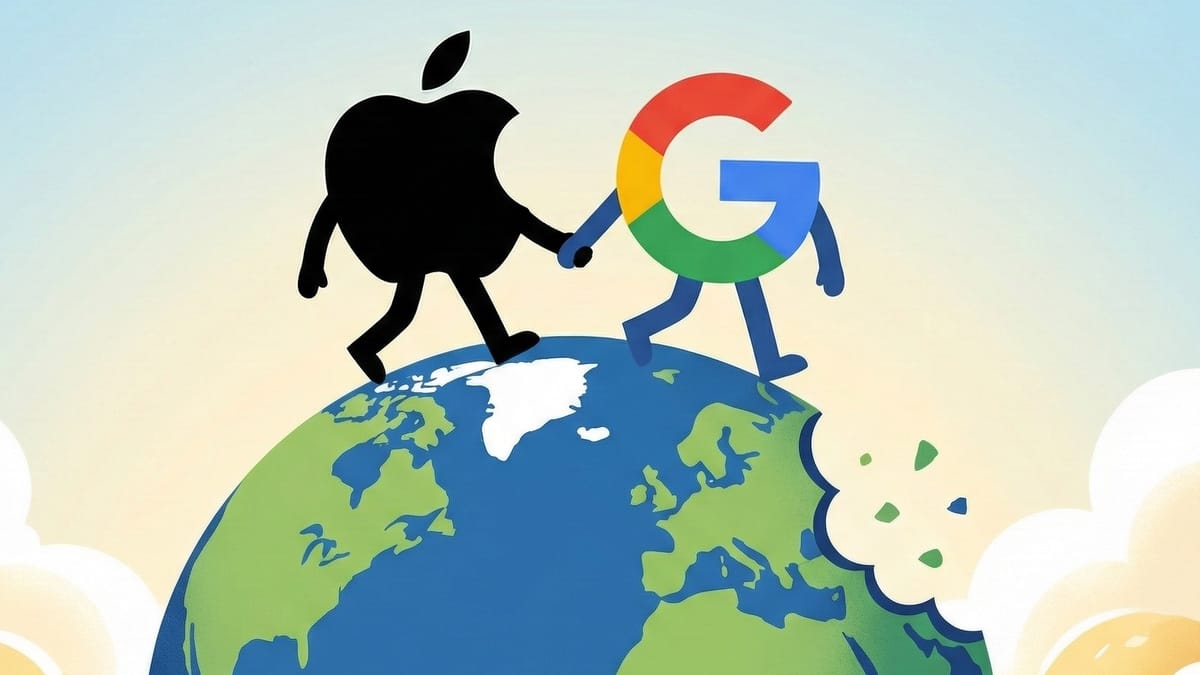
Google and Apple today announced a multi-year collaboration that positions Google's Gemini models as the foundation for the next generation of Apple Foundation Models. The partnership will enable future Apple Intelligence features, including enhanced Siri capabilities launching later this year.
The joint statement revealed that Apple conducted what it described as a "careful evaluation" before determining that Google's AI technology provides "the most capable foundation" for its artificial intelligence infrastructure. Apple Intelligence will continue operating on Apple devices and Private Cloud Compute while maintaining the company's privacy standards.
The announcement sparked immediate debate within the technology sector. Elon Musk, CEO of Tesla and xAI, responded within hours on X (formerly Twitter), stating: "This seems like an unreasonable concentration of power for Google, given that they also have Android and Chrome." His comment highlighted concerns about Google's expanding influence across multiple technology layers, from mobile operating systems and web browsers to artificial intelligence infrastructure.
The collaboration integrates Google's Gemini models with Apple's existing AI framework. Apple Intelligence has operated on a hybrid architecture combining on-device processing with Private Cloud Compute for tasks requiring additional computational resources. The addition of Gemini models expands this infrastructure by providing what Apple characterized as advanced foundational capabilities.
Google's Gemini API recently increased its inline file size limit to 100MB and added support for new file inputs from Google Cloud Storage buckets and HTTP/Signed URLs. These technical enhancements align with the requirements for powering expanded Apple Intelligence features across multiple device types and use cases.
The partnership preserves Apple's emphasis on privacy through continued reliance on Private Cloud Compute rather than solely cloud-based processing. This architectural approach processes sensitive data on Apple's controlled infrastructure while leveraging Google's model capabilities for core AI functions.
Buy ads on PPC Land. PPC Land has standard and native ad formats via major DSPs and ad platforms like Google Ads. Via an auction CPM, you can reach industry professionals.
The announcement amplifies existing discussions about market power in artificial intelligence and mobile technology. Google maintains dominant positions in web browsing through Chrome, mobile operating systems through Android, and search. Judge Mehta's August 2024 ruling found that Google's exclusive distribution agreements "froze" the search ecosystem and denied rivals access to the scale needed to compete effectively.
The company's advertising business generated $237.86 billion in 2023, representing approximately 77% of its total revenue. Google's market capitalization has reached over $2 trillion, making it one of the world's most valuable companies.
Apple controls the iOS ecosystem, which accounted for approximately 28% of global smartphone market share in 2024. The App Store serves as the exclusive distribution channel for iOS applications, giving Apple significant influence over which AI applications reach iPhone and iPad users.
PPC Land has documented how the antitrust case against Google carries implications beyond traditional search markets into artificial intelligence development. The remedies phase of the case examined how data-sharing requirements and competitive access could shape AI technology advancement across the industry.
Previous reporting by PPC Land has documented how major technology platforms increasingly integrate AI capabilities directly into their core products. Google has embedded Gemini across Search, Gmail, and Google Workspace. Microsoft partnered with OpenAI to power Copilot features throughout its product line. Amazon developed its own AI models for Alexa and AWS services.
The Google-Apple partnership consolidates AI model development among fewer companies. While Apple previously developed its own foundation models independently, the shift to Google's technology indicates the substantial resources required to compete in advanced AI development. Training large language models demands extensive computational infrastructure, specialized talent, and massive datasets.
Judge Mehta's September 2025 ruling acknowledged the challenge of predicting technology market developments, writing that "unlike the typical case where the court's job is to resolve a dispute based on historic facts, here the court is asked to gaze into a crystal ball and look to the future." The judge crafted remedies "with a healthy dose of humility" given challenges of forecasting technological changes in rapidly evolving markets. The Google-Apple partnership exemplifies this market fluidity, as Apple pivoted from independent AI development to reliance on Google's foundational technology within months of the antitrust ruling.
The collaboration raises questions about opportunities for smaller AI companies to establish partnerships with major consumer platforms. OpenAI maintains its existing relationship with Apple for ChatGPT integration, announced in June 2024. However, the selection of Google's Gemini as the foundational technology for Apple Intelligence represents a deeper integration into Apple's core AI infrastructure.
Anthropic, which develops the Claude AI assistant, has partnerships with various enterprise customers but lacks comparable consumer platform integrations. xAI's Grok remains limited to the X platform. Smaller AI startups face significant barriers to reaching the scale necessary for platform-wide integrations with companies operating at Apple's magnitude.
The partnership structure differs from typical cloud service agreements. Rather than Apple simply purchasing API access to Gemini, the collaboration involves Google's technology forming the foundation for Apple's own models. This deeper integration potentially creates switching costs and technical dependencies that extend beyond standard vendor relationships.
Subscribe PPC Land newsletter ✉️ for similar stories like this one
Apple emphasized that the partnership maintains its "industry-leading privacy standards." The company's approach combines on-device processing for sensitive operations with Private Cloud Compute for tasks requiring additional resources. This differs from purely cloud-based AI services where data processing occurs entirely on vendor-controlled infrastructure.
Google's privacy practices have faced scrutiny from regulators globally. The company settled a $391.5 million privacy case with 40 U.S. states in November 2022 regarding location tracking practices. The European Union's Digital Markets Act, which took effect in March 2024, designated Google as a "gatekeeper" subject to additional regulatory requirements.
The technical implementation of privacy protections within the Google-Apple partnership remains partially disclosed. Apple's statement indicated that Apple Intelligence "will continue to run on Apple devices and Private Cloud Compute," suggesting that Gemini models operate within Apple's controlled infrastructure rather than on Google's cloud platforms.
Neither company disclosed financial terms of the multi-year agreement. Such partnerships typically involve significant payments from the platform provider to the technology supplier. Google reportedly paid Apple between $18-20 billion in 2023 to maintain its position as the default search engine in Safari, demonstrating the scale of payments involved in Apple partnerships.
The collaboration provides Google with expanded distribution for its AI technology across Apple's device ecosystem, which includes over 2 billion active devices globally. For Apple, the partnership potentially reduces development costs and accelerates time-to-market for enhanced AI features.
Apple's decision to base its foundation models on external technology represents a strategic shift. The company historically emphasized vertical integration and internal development of core technologies. The iPhone's A-series processors, iOS operating system, and various services demonstrate this approach. The pivot to Google's AI technology suggests that foundation model development presents unique challenges in terms of scale, expertise, or resources.
The technology sector has witnessed several major AI partnerships over the past two years. Microsoft invested $13 billion in OpenAI between January 2023 and January 2024, integrating GPT models throughout its product portfolio. Amazon invested $4 billion in Anthropic in 2023 and 2024, making Claude available through AWS Bedrock.
These partnerships have established a pattern where large technology platforms with substantial cloud infrastructure and distribution capabilities align with specialized AI developers. The Google-Apple collaboration follows this model while adding complexity due to Google's existing consumer AI products and Apple's emphasis on privacy.
Previous discussions on PPC Land have examined how AI integration affects advertising and marketing technology. Google Ads increasingly relies on automated bidding and campaign optimization powered by machine learning models. The extension of Google's AI technology into Apple's ecosystem potentially creates additional data flows and targeting capabilities across both platforms.
The announcement occurs amid heightened regulatory scrutiny of major technology companies. U.S. District Judge Amit Mehta ruled on August 5, 2024, that Google illegally maintained monopolies in general search services and search text advertising markets. The 280-page decision found that Google controls approximately 90% of online search overall and 95% on smartphones, concluding that "Google is a monopolist, and it has acted as one to maintain its monopoly."
Judge Mehta delivered his remedies ruling on September 2, 2025, rejecting Department of Justice demands for Chrome divestiture while imposing behavioral restrictions. The decision required Google to end exclusive distribution agreements and share certain search data with competitors, including access to its "Glue" data system. The remedies will remain in effect for six years, with implementation beginning 60 days after final judgment entry.
The case revealed that Google paid $26.3 billion in 2021 alone to maintain default search engine status across smartphones and browsers. In 2022, Google paid an estimated $20 billion to Apple specifically for default placement on Safari, nearly double the 2020 payment. The European Commission has opened multiple investigations into both Google and Apple regarding competition concerns.
The Digital Markets Act requires designated gatekeepers including Google and Apple to ensure interoperability with third-party services and prevent self-preferencing of their own products. The Google-Apple partnership potentially faces examination under these regulations, particularly regarding whether the collaboration forecloses opportunities for competing AI providers.
State-level privacy legislation continues expanding across the United States. California's Consumer Privacy Act, Virginia's Consumer Data Protection Act, and similar laws in other states establish requirements for data handling that apply to AI systems processing consumer information. The technical implementation of privacy protections in the Google-Apple partnership will need to comply with these varying requirements.
The joint statement specified that enhanced Siri capabilities will launch "this year," indicating a 2026 release timeline. Siri has faced persistent criticism regarding accuracy and capability compared to competing virtual assistants. Integration with Gemini models potentially addresses these limitations through access to more advanced natural language processing.
Current Siri functionality relies on Apple's internal AI models combined with limited external integrations. The shift to Gemini-based foundation models represents the most substantial change to Siri's underlying technology since the assistant's introduction in 2011.
Enhanced Siri capabilities could include improved contextual understanding, more natural conversation flow, and expanded task completion abilities. These improvements would align Siri more closely with capabilities demonstrated by ChatGPT, Claude, and Gemini in their standalone forms.
The partnership affects developers building applications for Apple platforms. Apps utilizing Apple Intelligence features will indirectly rely on Google's AI technology, creating dependencies on both companies' infrastructure and policies. This has implications for app functionality, data handling requirements, and potential service disruptions.
Enterprise customers using Apple devices and services must consider the involvement of Google's technology in AI features. Some organizations restrict use of Google services due to data sovereignty requirements, competitive concerns, or regulatory constraints. The integration of Gemini into Apple Intelligence potentially complicates deployment decisions for these customers.
Apple's enterprise device management tools will likely need to provide controls for organizations that wish to disable or restrict AI features powered by Google's technology. The company has historically offered granular controls for enterprise IT administrators, a pattern that presumably extends to Apple Intelligence capabilities.
The Google-Apple partnership reinforces a market structure where a small number of companies control foundational AI technology. Training advanced large language models requires computational resources, data access, and expertise concentrated among major technology companies. This creates barriers to entry for new competitors and potential startups.
Research and development costs for frontier AI models have escalated dramatically. Training runs for the largest models can cost tens to hundreds of millions of dollars. Maintaining the specialized infrastructure and talent necessary for ongoing model development adds substantial recurring expenses.
The partnership potentially accelerates consolidation in the AI sector. Smaller companies may increasingly focus on specialized applications or vertical-specific solutions rather than attempting to develop general-purpose foundation models that compete with offerings from Google, OpenAI, Anthropic, and others with major platform partnerships.
Some industry observers view the partnership as a pragmatic business decision rather than evidence of problematic concentration. Apple gaining access to competitive AI technology allows the company to enhance products more rapidly than independent development would permit. Google obtains distribution across Apple's massive installed base while maintaining its competitive position against Microsoft-OpenAI.
The collaboration could benefit consumers through accelerated AI feature deployment and improved functionality. Competition among AI providers continues despite platform partnerships, as companies still compete for enterprise customers, API usage, and direct consumer adoption of their products.
Regulatory frameworks for AI remain under development. The European Union's AI Act, approved in 2024, establishes requirements for high-risk AI systems but does not specifically address platform partnerships or market concentration issues. U.S. regulatory approaches continue evolving as lawmakers and agencies develop policy frameworks for artificial intelligence.
Microsoft did not issue immediate public statements regarding the Google-Apple partnership. The company's existing relationship with OpenAI positions it differently in the AI market structure, with Copilot features integrated throughout Windows, Office, and Azure cloud services.
Meta, which develops open-source Llama models, has pursued a different strategy by making its AI technology freely available rather than pursuing exclusive platform partnerships. The company's approach aims to establish Llama as a standard for AI development while maintaining Meta's influence over the technology's evolution.
Amazon Web Services offers multiple AI models through its Bedrock service, including its own Titan models alongside Claude from Anthropic and others. This multi-model approach differs from the exclusive partnerships represented by Microsoft-OpenAI and now Google-Apple.
The announcement demonstrates how major technology platforms are solidifying AI strategies through formal partnerships with leading model developers. The pattern suggests that control over foundational AI technology will remain concentrated among a small group of well-capitalized companies with existing platform dominance.
Subscribe PPC Land newsletter ✉️ for similar stories like this one
Subscribe PPC Land newsletter ✉️ for similar stories like this one
Who: Google and Apple announced a partnership, with reactions from Elon Musk (xAI CEO). The collaboration involves Google's Gemini models powering Apple's Foundation Models.
What: A multi-year collaboration where Google's Gemini models will serve as the foundation for the next generation of Apple Foundation Models, enabling future Apple Intelligence features including enhanced Siri capabilities. The partnership maintains Apple's privacy architecture through on-device processing and Private Cloud Compute.
When: Announced January 12, 2026, with enhanced Siri features scheduled to launch later in 2026. The agreement spans multiple years, though specific duration was not disclosed.
Where: The partnership operates across Apple's device ecosystem globally, with Apple Intelligence continuing to run on Apple devices and Private Cloud Compute infrastructure. Technical implementation preserves Apple's privacy standards while utilizing Google's AI technology.
Why: Apple determined after evaluation that Google's AI technology provides the most capable foundation for Apple Foundation Models. The partnership addresses market concentration concerns raised by industry leaders, particularly regarding Google's expanding control across mobile operating systems (Android), web browsers (Chrome), and now AI infrastructure powering both its own products and Apple's ecosystem. The collaboration enables Apple to accelerate AI feature deployment while raising questions about competition, market access for smaller AI companies, and regulatory implications for technology platform power.