Google expands loyalty program ads to 14 countries and AI surfaces
Google Merchant Center expands loyalty program features to 14 countries, adding local inventory ads, regional Shopping ads, and AI Mode and Gemini surfaces for member benefits.


Google Merchant Center expands loyalty program features to 14 countries, adding local inventory ads, regional Shopping ads, and AI Mode and Gemini surfaces for member benefits.
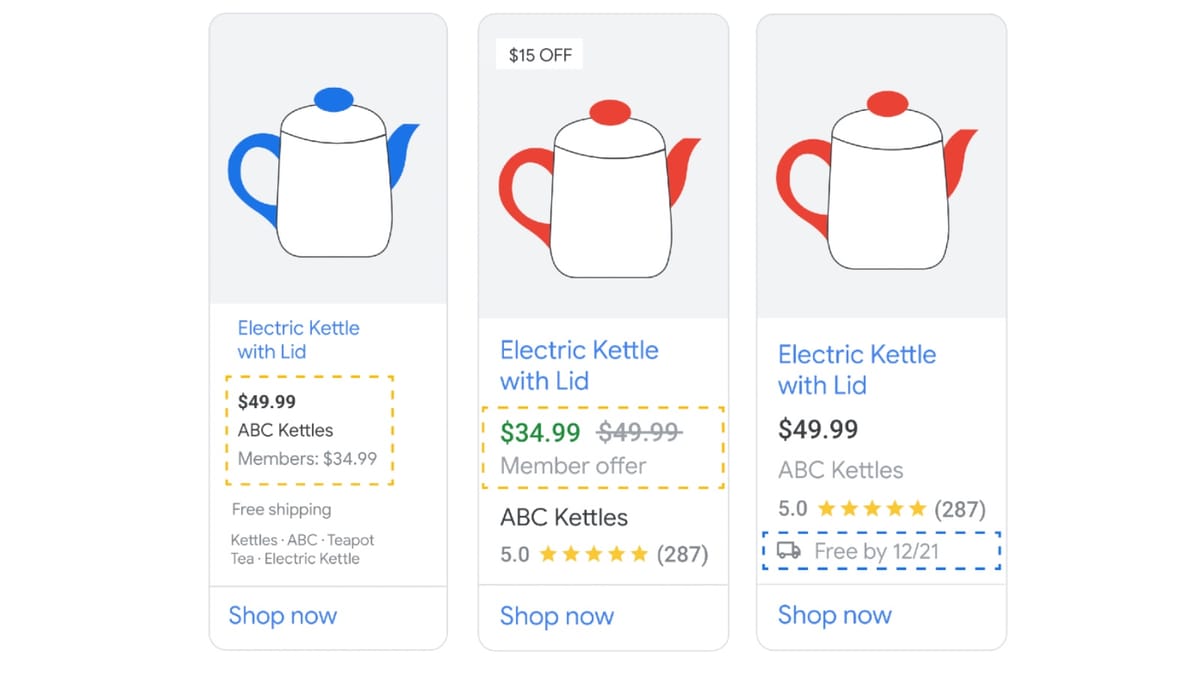
Google expanded its loyalty program features in Google Merchant Center and Google Ads on March 25, 2026, extending the capability to 14 countries and pushing member benefits onto AI-powered search surfaces for the first time. The update, announced through the Google Merchant Center Help Center, marks one of the broadest geographic rollouts the loyalty program has seen since the feature's initial launch and introduces a structural connection between traditional Shopping ads and Google's newer AI-first surfaces.
The 14 countries now supported are Australia, Brazil, Canada, France, Germany, India, Italy, Japan, Mexico, Netherlands, South Korea, Spain, the United Kingdom, and the United States. That list spans four continents and covers the majority of Google's highest-volume advertising markets. Until the March 25 announcement, the feature had been available in a more limited set of markets, making this expansion a significant milestone for international retailers managing loyalty programs through Merchant Center.
At its core, the expansion does four distinct things. First, it allows merchants to surface member pricing - exclusive discounts tied to loyalty tiers - directly on product listings. Second, it enables member shipping annotations, showing loyalty-specific delivery options on those same listings. Third, loyalty annotations have been extended to local inventory ads and regional Shopping ads, meaning in-store or region-specific benefits can now appear in those formats. Fourth, loyalty benefits are now visible on Google's AI-first surfaces, specifically AI Mode and Gemini.
That last point is notable. Google introduced shopping ads in AI Mode in February 2026, when the surface had already reached over 75 million daily active users. Connecting loyalty program data to a surface with that kind of scale creates a new distribution channel for retention-focused retailers. The question of whether Gemini itself will eventually carry ads remains open - Google VP Dan Taylor stated in January 2026 that there are no plans for ads in the Gemini app - but loyalty benefit visibility in AI surfaces operates differently from paid advertising placements.
According to Google's announcement, "we are now expanding Loyalty program features to help you build stronger customer relationships and drive long-term growth. By integrating your loyalty benefits directly into your product listings, you can reward existing members and encourage new shoppers to join your program."
The engagement data cited in the announcement is specific. According to Google, "some retailers have observed up to a 20% increase in click-through rates (CTR) when showing tailored offers to their existing loyal customers." That figure is drawn from retailers already using personalized loyalty ads and is presented as an upper-bound example rather than a guaranteed outcome. It does, however, give a sense of the performance signal that motivated the expansion.
Setting up the loyalty program inside Merchant Center requires a sequence of steps with distinct technical requirements at each stage. Merchants must first activate the loyalty program add-on in their Merchant Center account. Once the add-on is active, they add their loyalty program details, specifying member tiers and benefits. The third step involves configuring specific benefits, which breaks into two sub-components.
For member pricing, the configuration uses the [loyalty_program] attribute to submit tier-specific pricing. This attribute has a history at PPC Land worth noting - the platform reported in April 2025 on changes to Merchant Center product data specifications that required member prices to be submitted exclusively through the loyalty_program attribute after July 1, 2025, removing the option to place them in the primary [price] or [sale_price] attributes. That change aligned technically with today's expanded rollout: the attribute infrastructure required for broad multi-country deployment was already in place.
For member shipping, the setup uses shipping policies specific to each tier. When only certain products qualify for loyalty shipping benefits, merchants must use the [shipping_label] attribute nested within the [loyalty_program] attribute to identify eligible items. The distinction between full-catalogue and partial-catalogue shipping eligibility requires explicit feed-level configuration; there is no automatic inheritance.
The fourth and mandatory step is the setup of Customer Match lists in Google Ads. This is a hard requirement for two specific display behaviors: member shipping benefit annotations and green strikethrough pricing for known members. Both features depend on Customer Match to identify existing loyalty members among users seeing the ads, which means merchants without properly configured Customer Match audiences cannot display those two variants even if their product feed is correctly structured.
Customer Match itself has been subject to significant infrastructure changes in 2026. Google moved all Customer Match data uploads to the Data Manager API by April 1, 2026, blocking the older OfflineUserDataJobService and UserDataService routes through the Google Ads API. Any merchant implementing Customer Match as part of a new loyalty program setup after March 31 must use the Data Manager API from the outset rather than the legacy pathway.
According to Google's announcement, a pilot is currently running for US merchants to use Customer Match as a relationship data source for free listings - a further extension of the Customer Match infrastructure into organic Shopping surfaces. Participation in that pilot requires contacting Google's support team directly, as it is not automatically available.
The extension to local inventory ads and regional Shopping ads is significant for omnichannel retailers with physical store footprints. Previously, loyalty annotations were primarily associated with standard Shopping ads on Google Search and the Shopping tab. The March 25 update confirms that annotations can now carry into local inventory contexts, where in-store member benefits - such as region-specific pricing or pick-up perks - can appear alongside inventory availability data.
This connects to an earlier change in how Google handles product data for local inventory. Google required retailers to split product IDs for online and in-store versions by March 2026 where product attributes differ. Merchants implementing loyalty annotations on local inventory listings now need to ensure their in-store product IDs are correctly separated from their online counterparts, since the loyalty attribute configuration may vary by channel.
The regional Shopping ads dimension addresses markets where Shopping ad delivery is segmented by region rather than served nationally. Germany, for example, has regional retail dynamics that differ from a single-country model. The update appears designed to accommodate these regional configurations, though Google's announcement does not provide country-by-country technical detail on how regional segmentation is handled within the loyalty attribute structure.
The March 25 expansion did not arrive in isolation. Google has been constructing the technical and policy infrastructure for broad loyalty program integration since at least 2024. The mandatory upgrade to the new Merchant Center, completed in September 2024, introduced loyalty program management as a customizable add-on feature, placing it in the same tier as advanced tools rather than core defaults.
In April 2024, Google's annual Merchant Center product data specification update made the [loyalty_program] attribute available to US and Japan-based merchants for the first time. That initial rollout was geographically narrow. Japan's inclusion in that early group - and again in the March 2026 14-country list - reflects the market's importance to Google's Shopping strategy.
By February 2025, Google added a member pricing data type to merchant listings, introducing the validForMemberTierproperty in structured data. That update, announced on February 13, 2025, distinguished three price categories: active prices, strikethrough prices, and member prices - the foundation for the green strikethrough pricing display that now requires Customer Match for known member identification.
June 2025 brought loyalty program structured data markup under Organization schema, allowing merchants without Merchant Center accounts to configure loyalty program representation through structured data instead. That expansion of eligibility ran in parallel with the Merchant Center-native path rather than replacing it.
July 2025 documentation clarifications addressed implementation confusion, particularly around the two-tier structure - organization-level program definitions combined with product-specific benefit specifications - that now underpins the [loyalty_program] attribute configuration.
The April 2025 customer lifecycle goals expansion added retention-focused bidding modes to Google Ads, including win-back modes for lapsed customers in Performance Max campaigns. These bidding capabilities complement the loyalty annotation features but operate at the campaign layer rather than the product feed layer, giving advertisers a dual mechanism: loyalty program attributes to identify and reward members at the impression level, and lifecycle goals to guide bidding strategy around different customer segments.
The marketing community's interest in this update sits at the intersection of several pressures. Retail media competition has intensified, with major platforms offering in-house loyalty integrations. Connecting loyalty data directly to Shopping ad impressions - and now to AI Mode - positions Google's ecosystem as a loyalty management platform, not just an advertising channel.
Google's Holiday Essentials guide from November 2025 identified deepening loyalty as one of five core strategies for retailers, noting that 61% of shoppers reported being more selective with spending due to economic concerns. The loyalty program expansion follows that strategic framing directly.
The AI surface dimension also connects to a broader competitive dynamic. Google's Shopping Graph contains over 50 billion product listings, with 2 billion receiving updates hourly. As conversational shopping surfaces become a real part of the purchase journey, loyalty benefit visibility in those surfaces means member pricing and shipping perks can appear in responses to conversational product queries - not just in traditional grid-format Shopping results.
For performance marketers, the practical implication is that Customer Match list hygiene becomes a direct dependency for loyalty ad functionality. Lists that are outdated, poorly matched, or incorrectly configured will suppress the strikethrough pricing and member shipping annotations that the March 25 update now supports internationally.
[loyalty_program] attribute for US and Japan merchants: Google announces significant changes to Merchant Center product data specificationsvalidForMemberTier property for member pricing in structured data: Google adds member pricing data type to merchant listingsloyalty_program attribute for member prices after July 1, 2025: Google Merchant Center unveils key product data specification changes for 2025loyalty_program attribute onlyWho: Google, through the Google Merchant Center team, directed at retailers and e-commerce merchants operating loyalty programs in any of the 14 supported markets.
What: An expansion of Merchant Center loyalty program features covering four areas - member pricing annotations, member shipping annotations, extension to local inventory ads and regional Shopping ads, and integration with AI-first surfaces including AI Mode and Gemini - across 14 countries, with Customer Match list setup in Google Ads as a mandatory dependency for member shipping and strikethrough pricing display.
When: The announcement was published on March 25, 2026, through the Google Merchant Center Help Center.
Where: The features are available in Australia, Brazil, Canada, France, Germany, India, Italy, Japan, Mexico, Netherlands, South Korea, Spain, the United Kingdom, and the United States.
Why: Google is extending its loyalty infrastructure to help retailers drive repeat purchase behavior and distinguish loyalty members within Shopping ad impressions, local inventory ads, and conversational AI surfaces, at a time when consumer spending has become more selective and competition for returning customers across advertising platforms has intensified.