
Google Merchant Center's 24-hour update promise fails by nine days
Emmanuel Flossie exposes automatic import delays compromising Shopping ads and remarketing campaigns across retail accounts.

Emmanuel Flossie exposes automatic import delays compromising Shopping ads and remarketing campaigns across retail accounts.
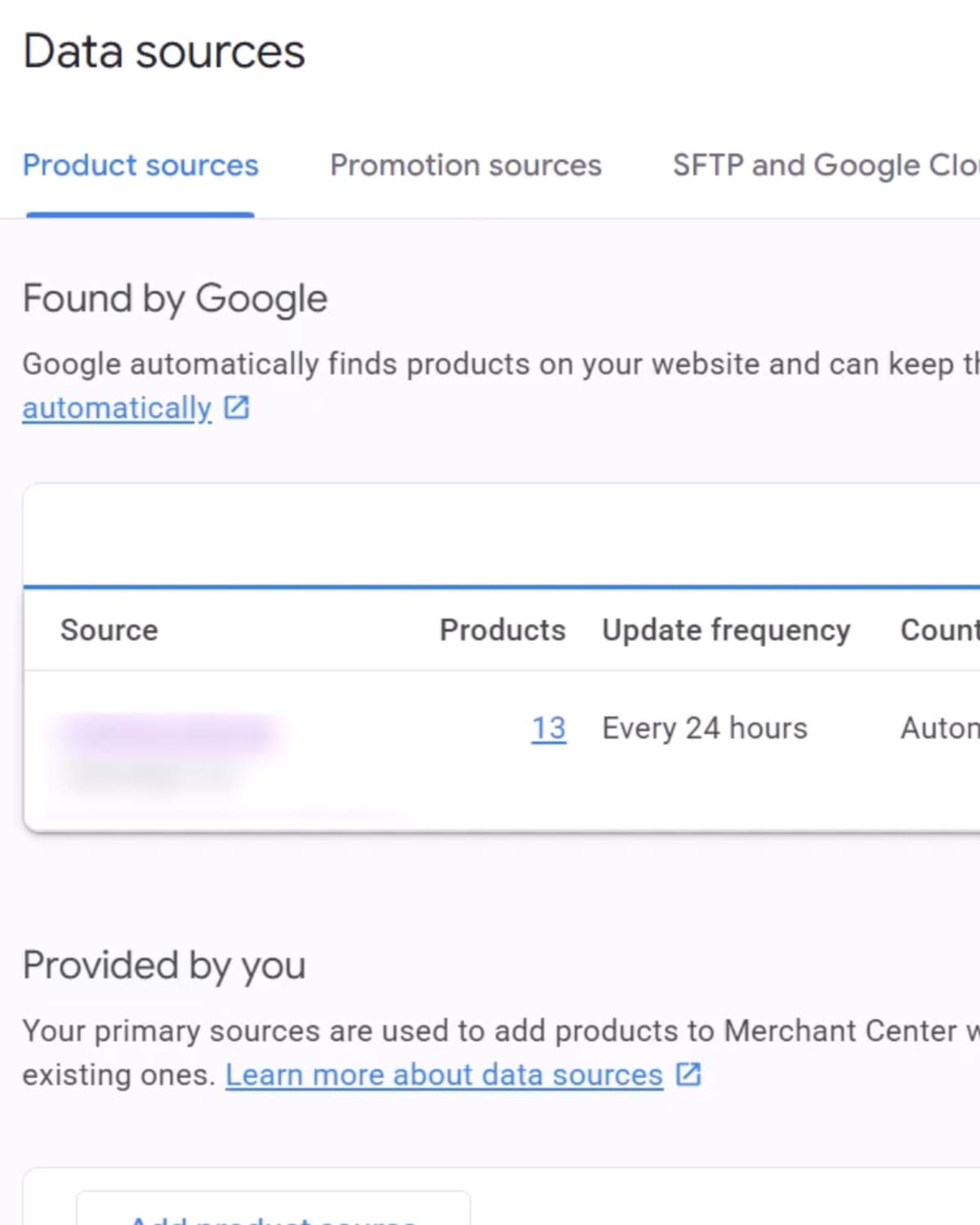
Google Merchant Center's automatic import feature, which the platform claims updates product data every 24 hours, showed products that were nine to ten days out of date when tested on January 13, 2026, according to Emmanuel Flossie, a Google Shopping Specialist and Google Ads Diamond Product Expert. The discrepancy between Google's stated update frequency and actual performance raises questions about the reliability of automatic imports for retailers managing Shopping campaigns and remarketing strategies.
Flossie tested the feature by examining product update timestamps in Merchant Center. "Google claims: Updates every 24 hours. Actual last update: January 4th. Date I checked: January 13th, 2026. That's a 9-day gap, not 24 hours," Flossie documented in a January 13 LinkedIn post analyzing the issue. The automatic import feature detects product information from merchant websites and populates product feeds without manual file uploads, a convenience feature introduced during Merchant Center Next's rollout.
According to Flossie's analysis, the outdated data represents only part of the problem. "When your product IDs don't match between your site and Merchant Center, your remarketing campaigns fall apart. Display ads show the wrong products. Your targeting becomes guesswork. Your ad budget gets wasted," Flossie stated in the post. The product ID mapping inconsistency creates specific challenges for dynamic remarketing campaigns that depend on accurate product identifiers to display relevant ads to previous site visitors.
Google's automatic import relies on structured data markup from merchant websites to detect and update product information. The system theoretically provides convenience for merchants without traditional feed management infrastructure, particularly businesses operating custom-built websites where feed generation presents technical challenges. Merchant Center Next streamlined this process by automatically populating merchant product feeds with information detected from websites, though merchants retain ability to edit or disable the feature.
The nine-day delay documented by Flossie contradicts Google's stated 24-hour update frequency displayed in Merchant Center's data source settings. When Flossie examined the automatic import data source configuration, the interface indicated that updates occur every 24 hours. This discrepancy between platform documentation and actual performance persists despite Google working on automatic import functionality for more than five years, according to Flossie's assessment.
Product ID consistency matters particularly for remarketing tag implementation. Google Ads remarketing relies on matching product IDs between Merchant Center feeds and website remarketing tags to display specific products in dynamic ads. When automatic imports assign different product IDs than those used in website structured data, the matching breaks down. Display campaigns cannot correlate user behavior with specific products, resulting in generic ads or mismatched product displays that waste advertising spend.
"The bigger issue? Inconsistent product ID mapping," Flossie emphasized in his analysis. The FeedArmy founder explained that retailers using automatic imports surrender control over product identifier assignment to Google's detection algorithms. These algorithms may interpret structured data differently than merchants expect, creating ID mismatches that compromise campaign targeting precision. The problem compounds for merchants running multiple campaign types that depend on consistent product data.
Google has required increasingly specific product data specifications throughout 2025, including modifications to installment pricing, energy efficiency classifications, and shipping attributes. The platform implemented changes to member pricing and sales tax requirements in July 2025. Additional updates required separate product IDs for multi-channel items when attributes differ between online and in-store versions, enforcement of which begins in March 2026.
These specification changes underscore Google's emphasis on product data accuracy and consistency. The automatic import delay contradicts this focus on precise product information, particularly when Google launched protocols for AI agents to shop across platforms requiring accurate, current product data for conversational commerce experiences. The platform announced dozens of new data attributes in Merchant Center designed for discovery through AI Mode, Gemini, and Business Agent on January 11, 2026.
Flossie's recommendation avoids automatic imports entirely. "Stop using automatic imports. Period," he stated in the LinkedIn post. Instead, Flossie advocates for proper feed uploads from e-commerce platforms for merchants using standard platforms like Shopify or WooCommerce. For businesses operating custom-built websites with limited product catalogs, he recommends using Google Sheets to maintain control over product IDs and ensure consistency with remarketing tag implementations.
The technical implementation Flossie describes involves maintaining product IDs consistent across website structured data, remarketing tags, and Merchant Center feeds. This consistency enables Google Ads to match user interactions with specific products, supporting dynamic remarketing campaigns that display previously viewed items to potential customers. When automatic imports disrupt this ID consistency, the entire remarketing system degrades.
Google Sheets as a feed management solution provides merchants direct control over product data without requiring sophisticated feed management software. Merchants manually input product information including IDs, titles, descriptions, prices, availability, and image URLs. The sheet connects to Merchant Center through Google's native integration, enabling scheduled updates that merchants control. This approach trades automation convenience for data accuracy and ID consistency.
Merchant Center's advanced data management tools introduced in July 2024 included attribute rules to identify and rectify common product data errors automatically. Supplemental data sources enable merchants to enrich primary product data with additional details. These capabilities theoretically address data quality concerns, yet the automatic import delay suggests that fundamental update mechanisms remain problematic despite advanced features.
The delay affects multiple aspects of Shopping campaign performance beyond remarketing. Product availability information that remains stale for nine days causes ads to display for out-of-stock items, creating poor user experiences and wasted clicks. Price changes take over a week to reflect in ads, potentially showing outdated pricing that doesn't match merchant websites. This discrepancy violates Google's policy requirements that product data in ads must match landing page information.
Marketing data quality research released September 2025 found that 45% of marketing data used for business decisions contains accuracy problems. The study surveyed 200 chief marketing officers who estimated that incomplete, inaccurate, or outdated data significantly affects decision-making. Automatic import delays contribute to this broader data quality crisis affecting campaign optimization and performance measurement.
The issue extends to campaign types introduced more recently. Google enabled fixed budgets for Search and Shopping campaigns on January 15, 2026, providing advertisers campaign total budget controls for promotional periods. These time-bound campaigns particularly require current product data to maximize promotional windows. Nine-day delays compromise time-sensitive promotions when product availability or pricing changes don't appear in ads until promotional periods end.
Performance Max campaigns incorporating Shopping inventory face similar challenges. These automated campaigns use product feed data to generate ads across Search, YouTube, Display, Discover, Gmail, and Maps. Stale product data limits Performance Max optimization, particularly for seasonal products or items with frequent stock turnover. The automation cannot optimize effectively when working with information that's over a week old.
Flossie's documentation included a YouTube video demonstrating the issue through Merchant Center interface examination. The video, titled "Google Merchant Center's Automatic Import is BROKEN," walked through checking product update timestamps and comparing them to Google's stated update frequency. The demonstration showed multiple products with identical January 4 update dates checked on January 13, confirming the systematic delay rather than isolated incidents.
"Google has been 'improving' this feature for 5+ years. And it's still this unreliable," Flossie noted in his assessment. The five-year timeline suggests automatic imports existed before Merchant Center Next's August 2024 rollout, though the feature gained prominence as part of the Next platform's simplified product data management approach. Google positioned automatic imports as reducing barriers for smaller merchants or businesses without technical resources for traditional feed management.
The feedback mechanism Flossie recommends involves clicking the question mark icon in Merchant Center's top right corner and selecting "Send Feedback." This in-platform feedback system allows merchants to report specific issues directly to Google's Merchant Center team. "The more voices they hear, the better," Flossie emphasized, suggesting that accumulated feedback might prompt Google to prioritize fixing the update delay.
Industry practitioners have documented other Merchant Center challenges throughout 2025. Google Shopping smart cropping distorted product images without merchant control in November 2025, requiring Google support contact to disable the feature. Brand usage restrictions in product titles clarified in October 2025 required resellers to use manufacturer brand names rather than their own company names in short_title attributes.
These recurring Merchant Center issues contrast with Google's broader platform modernization efforts. Google launched Merchant API in August 2025, establishing it as the primary tool for programmatic Merchant Center access while setting an August 18, 2026 shutdown date for Content API for Shopping. The new API features simplified interfaces and enhanced capabilities including gRPC support and improved batch processing, suggesting focus on technical infrastructure improvements.
The automatic import delay matters for marketing professionals managing retail advertising because it undermines fundamental assumptions about data freshness in automated advertising systems. Modern Shopping campaigns depend on current product information to function effectively. Nine-day delays create mismatches between merchant inventory, advertised products, and user experiences that damage campaign performance and waste budgets on outdated information.
Third-party feed management solutions avoid these delays by generating feeds directly from merchant databases or e-commerce platforms. Services like FeedArmy, DataFeedWatch, and GoDataFeed query merchant product databases on scheduled intervals, typically daily or more frequently. These solutions maintain complete control over product ID assignment and data formatting, ensuring consistency with remarketing implementations and other Google Ads features.
The recommendation against automatic imports applies particularly to merchants operating sophisticated remarketing strategies. Dynamic remarketing campaigns require precise product ID matching to display relevant products based on user behavior. Any inconsistency in ID assignment breaks the connection between user interactions and ad displays. Merchants investing in remarketing should prioritize feed control over convenience.
For merchants without technical resources to implement traditional feeds, Google Sheets provides an accessible alternative. The spreadsheet approach requires manual data entry but ensures complete control over product information and update timing. Merchants can refresh sheet data immediately when prices change or products go out of stock, avoiding multi-day delays that compromise ad accuracy.
The automatic import issue illustrates broader challenges in balancing automation convenience against data accuracy. Google's effort to simplify Merchant Center access for non-technical merchants created a feature that trades reliability for ease of use. Merchants relying on automatic imports assume their product data stays current based on Google's 24-hour update promise, but Flossie's testing demonstrates this assumption proves false.
Who: Emmanuel Flossie, Google Shopping Specialist and Google Ads Diamond Product Expert at FeedArmy, documented the automatic import delay affecting all merchants using Google Merchant Center's automatic import feature for product data management.
What: Google Merchant Center's automatic import feature, which Google claims updates product data every 24 hours, showed products that were nine to ten days out of date when tested. The delay causes outdated pricing and availability information in Shopping ads while creating product ID mapping inconsistencies that break remarketing campaign targeting.
When: Flossie tested the feature on January 13, 2026, discovering products with January 4 last update timestamps. He documented the issue through LinkedIn posts and a YouTube video published January 13, 2026, noting that Google has worked on automatic import functionality for more than five years.
Where: The issue affects Google Merchant Center's automatic import data source globally, impacting retailers using the feature for Shopping ads, free listings, and Performance Max campaigns across all markets where Merchant Center operates.
Why: The nine-day delay matters for marketing professionals because it creates mismatches between merchant inventory and advertised products, wastes advertising spend on outdated information, breaks dynamic remarketing campaigns through inconsistent product ID mapping, and contradicts Google's emphasis on accurate product data specifications. The delay undermines assumptions about data freshness in automated advertising systems while compromising time-sensitive promotional campaigns.