
Google Search Console adds social channel performance tracking
Google Search Console now displays clicks, impressions, and trending content for associated social media channels, marking platform's first cross-channel reporting integration.

Google Search Console now displays clicks, impressions, and trending content for associated social media channels, marking platform's first cross-channel reporting integration.
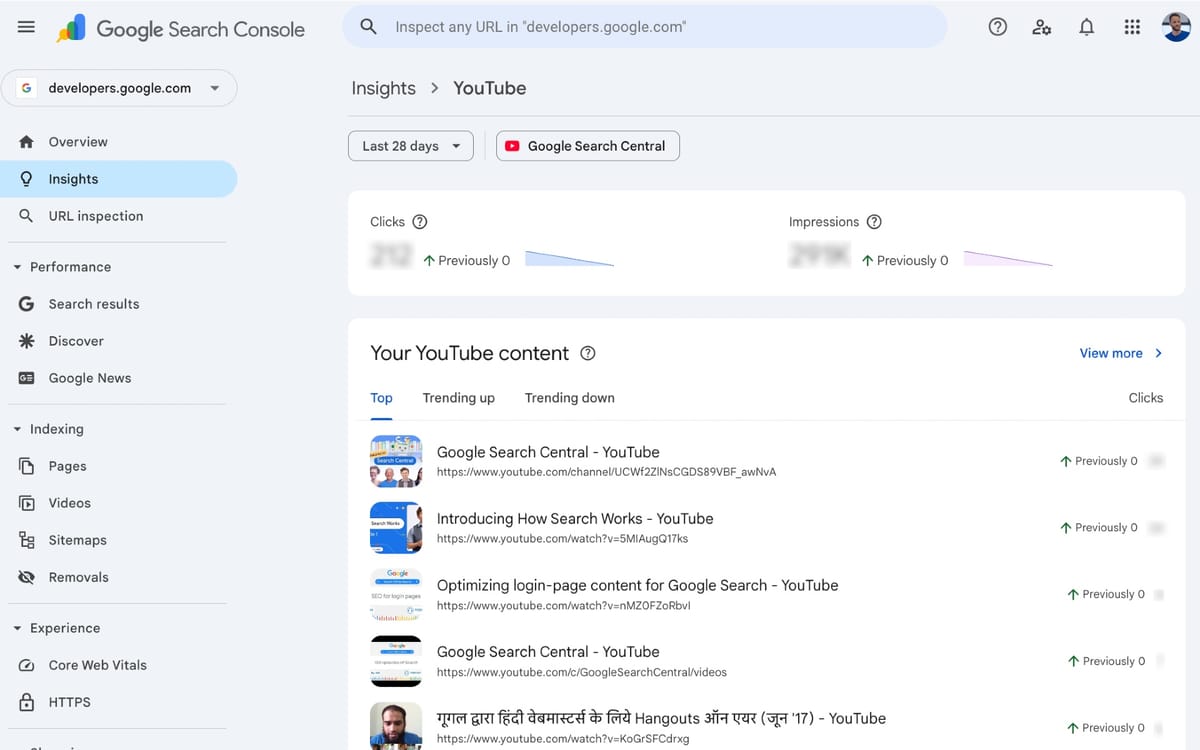
Google announced on December 8, 2025, an experimental feature enabling website owners to monitor their social media performance directly within Search Console. The integration expands the Search Console Insights report to include performance data from social channels associated with verified websites, providing the first unified view of how properties perform across both owned websites and social media platforms in Google Search results.
The experiment launches with automatic channel detection for a limited set of websites. According to the announcement, "We are rolling out these new insights for a limited set of websites. At this first stage, the insights are available only for sites and channels that Search Console has identified automatically." Property owners receive prompts within the Search Console Insights report to add social channels that the system has already associated with their websites.
Subscribe PPC Land newsletter ✉️ for similar stories like this one
The feature addresses a fundamental shift in digital presence management. "Many companies and organizations manage their digital presence using different platforms, including social media websites, in addition to their own websites," according to the announcement. "This aligns well with users who are increasingly drawn to different types of content formats and social media platforms." Website owners frequently maintain YouTube channels, LinkedIn profiles, and other social media presences as extensions of their primary web properties, yet lacked centralized reporting across these touchpoints until this integration.
Search Console displays five core metrics for integrated social channels. Total reach includes clicks and impressions driving traffic from Google to social channels. Content performance identifies top social channel pages alongside those trending upward or downward in search visibility. Search queries shows which terms lead users to social profiles through Google Search. Audience location breaks down which countries generate clicks to social channels in search results. Additional traffic sources encompasses clicks from Image Search, Video Search, News Search, and Google Discover.
The implementation mirrors existing Search Console reporting structures but applies them to social media properties. Each metric uses familiar Search Console terminology and calculation methods, maintaining consistency with how website owners already analyze their primary domains. Position metrics, impression counts, and click-through analysis translate directly to social channel performance, enabling property owners to apply existing analytical frameworks to social media search visibility.
Google product manager Hillel Maoz, identified as Search Ecosystem Engineering Manager, authored the announcement. The company provided feedback mechanisms through thumbs up and thumbs down buttons within report cards, a "Submit feedback" link in the interface, and opportunities for commentary through LinkedIn and the Google Search Central Community forum. The experimental designation signals that features may change substantially based on user input during this testing period.
Current availability restrictions limit the feature's immediate impact. Automatic channel identification determines which properties can access the experiment, preventing manual addition of social channels that Search Console has not independently associated with websites. The announcement provided no timeline for broader rollout or criteria that determine automatic channel detection eligibility. Website owners whose properties qualify for the experiment receive direct prompts within their Search Console interfaces, while others must wait for system expansion.
The social channel integration builds upon Search Console Insights enhancements that consolidated website performance reporting starting June 30, 2025. That update integrated the standalone beta version of Search Console Insights directly into the main interface, streamlining workflows and providing more cohesive access to performance data. The Insights report became Search Console's simplified analytics solution for content creators requiring accessible performance summaries without advanced data expertise.
Search Console's analytical capabilities have expanded substantially throughout 2025. Query grouping launched October 27, using AI to consolidate similar search queries into unified clusters. The feature addresses data fragmentation where dozens of query variations represent similar user intent. Custom annotations arrived November 17, enabling website owners to document infrastructure changes, plugin implementations, and content strategy shifts directly within performance charts.
AI Mode data integration began June 17, 2025, merging conversational search interactions with traditional Web Search totals. Unlike previous search features that received separate categorization, AI Mode data combines with existing metrics, preventing isolation of AI Mode performance from regular search results. This integration significantly increased Search Console reporting complexity as property owners gained visibility into enhanced search experiences without independent segmentation.
The social channel reporting introduces conceptual questions about attribution and channel ownership. Website owners typically control primary domains through direct property verification in Search Console. Social media channels exist as separate entities on third-party platforms with independent content management systems, audience relationships, and algorithmic distribution mechanisms. Search Console's automatic association between websites and social channels relies on signals that connect these previously distinct properties.
YouTube channels represent the most likely social media property for initial integration based on screenshot evidence in the announcement. The interface displays YouTube-specific metrics including video links, channel URLs, and content performance indicators. YouTube operates within Google's infrastructure, potentially simplifying technical integration compared to external platforms like LinkedIn, Facebook, or Instagram. Cross-platform data sharing agreements would complicate inclusion of social networks outside Google's direct control.
Marketing professionals managing multi-channel digital presences gain centralized visibility into how different content formats perform in search contexts. Social media posts, videos, and profiles often compete with traditional websites for search result placement, particularly for branded queries where users might encounter both official websites and social media channels simultaneously. Understanding which channels receive impressions and clicks for specific queries enables strategic content distribution decisions.
The Search Console performance analysis guidance updated December 4, 2024, emphasized systematic analytical sequences: understanding data context through controls and filters, reviewing chart areas for performance overviews, then examining tables for detailed insights. These principles extend to social channel reporting, where property owners must establish context before interpreting cross-channel performance patterns. Temporal comparisons become particularly important when evaluating whether social channels gain or lose search visibility relative to primary websites.
Platform infrastructure requirements affect which property owners can access experimental features. Search Console Insights rollout continued through July 14, 2025, with additional accounts gradually receiving access to the integrated reporting interface. The company implements new features through phased deployments over multiple weeks to ensure stability and gather feedback during implementation. Social channel integration follows similar staged rollout patterns, potentially taking months before reaching all eligible properties.
Buy ads on PPC Land. PPC Land has standard and native ad formats via major DSPs and ad platforms like Google Ads. Via an auction CPM, you can reach industry professionals.
Technical challenges have periodically affected Search Console operations during 2025. Performance data froze October 19, creating visibility gaps until resolution several days later. Display bugs showed zero traffic data on October 28, 2024, before Google adjusted default reporting behaviors. These reliability issues become more consequential as marketing teams adopt accelerated optimization cycles that depend on current performance data.
The experiment arrives as Google expands measurement capabilities across its advertising ecosystem. Social media channels serve dual purposes as both organic content distribution platforms and paid advertising placements. Brands building audiences on YouTube can now monitor both organic search visibility and paid campaign performance within separate but related Google products. Search Console tracks how users find channels through search, while Google Ads measures how video advertising drives conversions and engagement.
Data privacy considerations affect cross-platform reporting implementations. Search Console documentation emphasizes that annotations constitute "identifiable business data" shared with other property users, reflecting broader data governance requirements across Google's webmaster tools. Social channel performance data similarly represents business intelligence about audience behavior patterns, competitive positioning, and content effectiveness. Access controls determine which team members view integrated social channel reports within Search Console properties.
Search queries driving traffic to social channels differ substantially from those targeting websites. Users searching for video content, visual explanations, or platform-specific features tend toward social media channels in results. Website-oriented queries prioritize comprehensive information, detailed documentation, or transaction capabilities. Understanding query intent patterns helps property owners determine which content formats best serve specific audience needs and where to invest content creation resources.
The trending content indicators provide particularly valuable signals for social media strategy. Social platforms operate on algorithmic distribution systems where timing significantly affects content visibility and engagement. Identifying which social media posts trend upward in search results enables rapid amplification through additional promotion or strategic content development around popular topics. Conversely, trending downward signals suggest declining search interest that might inform content retirement or refresh decisions.
Audience location data addresses geographic distribution questions critical for international marketing operations. Social media channels often attract different geographic audiences compared to primary websites due to platform-specific adoption patterns, language preferences, and content format consumption habits. Markets where social channels outperform websites in search visibility might benefit from localized social media strategies rather than website translation initiatives.
The additional traffic sources metric acknowledges that social media content appears across multiple Google surfaces beyond traditional Web Search results. Video content surfaces in Video Search, Image Search for thumbnail impressions, News Search for timely coverage, and Google Discover for personalized content recommendations. Comprehensive cross-surface visibility affects total reach calculations and helps property owners understand full search ecosystem performance rather than isolated Web Search metrics.
Website owners cannot currently customize which social channels associate with Search Console properties during the experimental phase. The automatic detection system determines channel relationships based on undisclosed signals that might include website linking patterns, brand name matches, verified ownership indicators, or content similarity analysis. Manual channel addition could enable future implementations where property owners explicitly connect social media accounts through verification processes similar to website property claims.
The feature's experimental designation acknowledges substantial uncertainty about final implementation details, availability criteria, and long-term product strategy. Google frequently launches experiments that undergo significant modification before general availability or potentially sunset entirely based on user feedback and business priorities. Marketing professionals should treat current functionality as subject to change rather than stable infrastructure for permanent workflow integration.
Search Console's evolution toward multi-channel reporting reflects broader industry trends toward unified marketing measurement. Attribution systems increasingly track customer journeys across touchpoints including search, social media, direct traffic, and paid advertising. Fragmented reporting across separate platforms complicates comprehensive performance analysis and strategic budget allocation decisions. Centralized visibility into search-driven traffic across owned properties and social channels reduces analytical complexity.
The December 8 announcement provided no indication of expansion timelines, additional social platforms under consideration, or criteria that determine automatic channel detection. Property owners seeking access to the feature must rely on Search Console's automatic identification rather than requesting inclusion. The gradual rollout strategy suggests Google prioritizes quality control and infrastructure stability over rapid feature distribution.
Social media platforms themselves provide native analytics for channel performance, engagement metrics, and audience demographics. Search Console's social channel reporting supplements rather than replaces platform-specific analytics by focusing exclusively on how users discover channels through Google Search. This specialized perspective addresses the search visibility component of social media strategy without duplicating comprehensive platform analytics.
The integration potentially influences how organizations structure digital properties and content distribution. Website owners might adjust social media posting frequencies, content formats, or topic selection based on search visibility patterns revealed through Search Console reporting. Channels that generate substantial search traffic justify increased content investment, while underperforming channels might warrant strategic reevaluation or optimization efforts targeting search discoverability.
Subscribe PPC Land newsletter ✉️ for similar stories like this one
Subscribe PPC Land newsletter ✉️ for similar stories like this one
Who: Google Search Central announced the experimental social channel integration, with Hillel Maoz serving as Search Ecosystem Engineering Manager. The feature affects website owners, digital marketers, and organizations managing both websites and social media channels verified in Search Console.
What: Search Console Insights now displays performance data for social media channels automatically associated with verified websites. The integration provides total reach metrics, content performance indicators, search queries driving traffic, audience location breakdowns, and additional traffic sources across Image Search, Video Search, News Search, and Discover.
When: Google announced the experiment on December 8, 2025, with gradual rollout to limited websites where Search Console has automatically identified associated social channels.
Where: The feature appears within the Search Console Insights report interface for eligible properties. Social channels display performance data when Search Console identifies automatic associations with verified websites, though current availability restrictions limit immediate access.
Why: The integration addresses how organizations increasingly manage digital presence across multiple platforms including social media websites alongside traditional web properties, aligning with users drawn to different content formats and social media platforms. Google aims to provide unified performance visibility across owned digital properties and social channels discoverable through Google Search.