Google Search Console impressions bug ran for nearly a year unnoticed
Google confirms a Search Console logging error inflated impression data from May 13, 2025. A fix is rolling out, and impressions will drop in coming weeks.


Google confirms a Search Console logging error inflated impression data from May 13, 2025. A fix is rolling out, and impressions will drop in coming weeks.
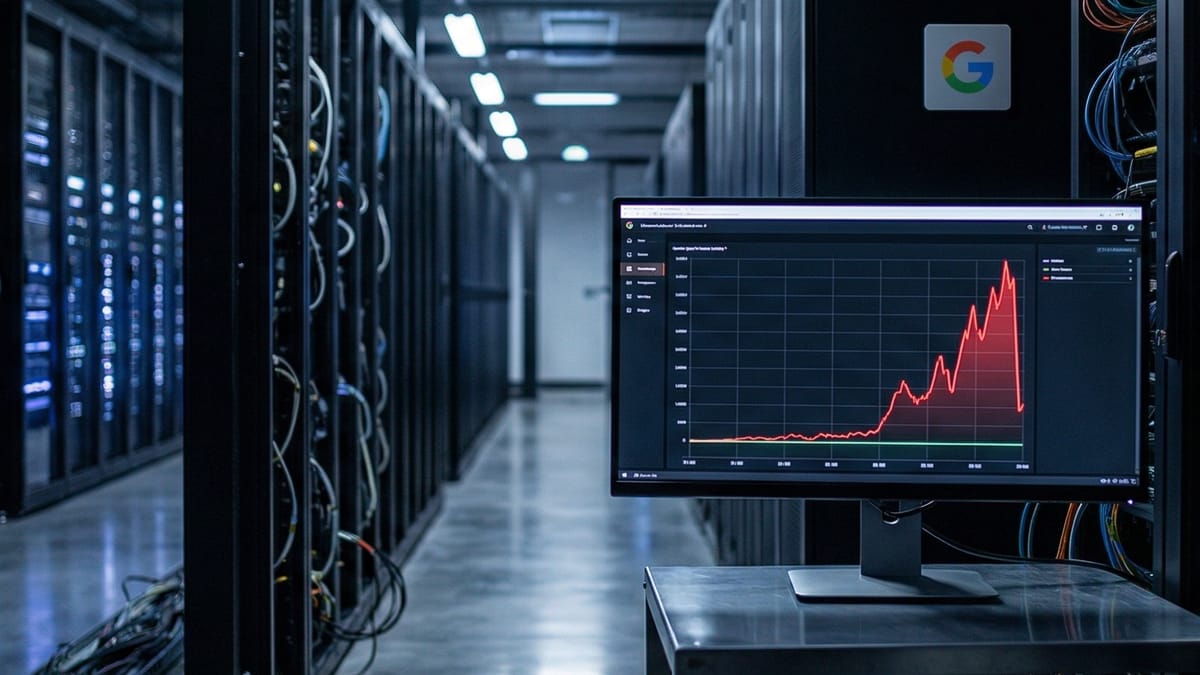
Google today confirmed a logging error that has been inflating impression counts in Search Console since May 13, 2025 - a period stretching nearly a year. The company updated its Data Anomalies in Search Console page on April 3, 2026, formally acknowledging the problem and warning that reported impressions will decrease as the fix rolls out over the coming weeks.
The issue affects the Performance report, one of the most widely consulted data sources among SEO professionals and marketing teams for measuring organic search visibility. Clicks and other metrics were not affected.
According to Google's updated Data Anomalies page, "A logging error is preventing Search Console from accurately reporting impressions from May 13, 2025 onward. This issue will be resolved over the next few weeks; as a result, you may notice a decrease in impressions in the Search Console Performance report. Clicks and other metrics were not affected by the error, and this issue affected data logging only."
A Google spokesperson separately confirmed the problem to Search Engine Land, stating, according to that publication: "We identified a reporting error in Search Console that temporarily led to an over-reporting of impressions from May 13, 2025 onward. Bug fixes are being implemented to ensure accurate reporting."
The fix does not restore historical data to accurate levels. Instead, as the correction deploys progressively across reporting infrastructure, the numbers visible in the Performance report will decrease. The timeline for a full rollout spans several weeks, according to Google.
Before Google's formal acknowledgment, independent SEO consultant Brodie Clark had already flagged unusual patterns in a LinkedIn post that circulated widely in the SEO community. Clark reported seeing impressions "skyrocketing for specific surfaces on desktop," particularly within the merchant listings search appearance filter.
The merchant listings surface is technically distinct from standard organic results. Historically, an impression in this surface is only recorded after a user selects a product from a grid result - a higher bar than the standard impression event triggered simply by appearing in search results. That specificity made the anomalies Clark observed harder to dismiss as normal noise.
According to Clark's post: "Across several large-scale eCommerce sites, CTR data is no longer accurate for desktop, with there now being many queries appearing that are clearly related to tools, with significant increases in impressions from this past week in particular."
One pattern stood out as particularly difficult to explain. Clark documented the repeated appearance of a generic query - the word "product" - for multiple unrelated businesses. That query does not trigger merchant listing-related results under normal conditions, making its appearance in merchant listings impression data illogical. Clicks for that query were being attributed to the merchant listings surface in Search Console, which has no corresponding result type for such a broad, non-commercial term.
Clark and several commenters in the LinkedIn thread initially considered rank-tracking tools and SERP scrapers as a partial explanation. Standard organic results have become increasingly difficult to scrape accurately as Google applies countermeasures. Some SEO tools were shifting their attention toward less-monitored surfaces such as product grids and Google Images results to extract ranking signals.
Commenter Razvan Antonescu, identified in the thread as a technical SEO consultant, noted: "Scraping. Is called scraping. Apparently, they managed to bypass filters again. There was another one around 13-28 February worldwide impacting web."
A separate theory emerged in the thread. Commenter Clément Prayal connected the timing - with the most obvious impression spikes occurring in the last week of March 2026, concentrated on US desktop - to OpenAI's launch of a product discovery feature in ChatGPT on March 24, 2026, which uses the Agentic Commerce Protocol to retrieve and display product data from the web. However, Clark noted this would fit "their previous strategies" but stopped short of drawing a firm conclusion.
Multiple practitioners who responded to the thread confirmed they were seeing the same patterns. One reported a 300-400% increase in merchant listings impressions on desktop starting around March 25, 2026, with no corresponding increase in clicks. CTR dropped from approximately 4% to under 1% overnight on affected properties. Another reported a single product query gaining 545% more impressions for one site. A third saw parallel spikes in both product snippets and merchant listings simultaneously.
Clark was also explicit that scrapers were not the complete explanation. The data anomalies were broader in scale than what rank trackers alone could produce, and they appeared in patterns that did not match tool behavior alone. Some commenters raised the possibility that AI systems using computer vision - capable of reading pages visually rather than parsing HTML - could be responsible, noting this might leave fewer conventional fingerprints in log data.
Clark later provided an update noting that Google had confirmed the issue. His follow-up post highlighted two points he considered particularly significant for SEO practitioners.
First, the anomaly had been active since May 13, 2025. That is approximately ten and a half months, not a few days or weeks. Anyone who has been tracking impression trends since that date has been working with data that overstated visibility.
Second, and perhaps counterintuitively, the formal notice from Google covered only impressions - not clicks. Clark pointed out that his original reporting had documented anomalies in clicks as well, specifically the attribution of merchant listing clicks to the nonsensical "product" query. The official scope of the fix is limited to the impression logging problem; whether click data also contains anomalies from the same root cause remains unclear.
The fix deploys progressively. Because the correction modifies how impressions are logged going forward rather than retroactively correcting historical records, the visible result will be a decline in impression numbers in the Performance report as the new logging behavior rolls out. That decline is not a loss of actual search visibility - it reflects a recalibration of how existing visibility was being counted.
For teams that have been benchmarking performance since May 13, 2025, or comparing current periods against that baseline, the upcoming shift creates a methodological problem. Year-over-year and month-over-month impression comparisons spanning the affected period will become unreliable as a measure of actual organic reach changes. Click data, which Google has said was unaffected, provides a cleaner signal for performance analysis during the transition.
The merchant listings surface deserves particular attention. This filter within Search Console is a key data source for eCommerce teams tracking how often their products appear in Google's shopping-adjacent surfaces in organic search - not to be confused with paid Shopping ads. If the logging error has inflated impression counts for this surface disproportionately, historical click-through rate benchmarks for merchant listing appearances will also be skewed, since CTR is calculated by dividing clicks by impressions.
Google Images represents a second surface that Clark flagged as showing similar anomalies. Desktop impressions within the Images filter were also described as "very out of whack" in his original post, though Google's formal notice does not specify which surfaces were most affected.
This disclosure is not the first time Search Console data has diverged from reality in ways that took time to surface officially. PPC Land has documented a series of Search Console reliability events over the past two years.
In October 2024, Search Console briefly displayed near-zero traffic data for all properties on October 28, a bug that Google resolved by 1:00 PM Eastern Time the same day by modifying default reporting behavior to stop showing same-day data automatically.
The following month, in October 2025, Search Console performance data stopped updating for several days starting October 19, with reports displaying 238 clicks and 239,170 impressions frozen at that date. The freeze created monitoring gaps for all properties and all user accounts.
Throughout 2025, the platform underwent a series of capability expansions that introduced new surfaces and data types. Google integrated AI Mode data into Search Console performance totals starting June 17, 2025, merging AI Mode clicks, impressions, and positions with existing Web Search figures. That change meant website owners could no longer isolate AI Mode performance from traditional search results within standard reports.
Google also launched a new version of Search Console Insights on June 30, 2025, integrating it directly into the main Search Console interface and replacing a standalone beta. In December 2025, weekly and monthly aggregation options were added to the Performance report to help site owners detect longer-term trends that daily views can obscure.
Each of these additions extended what Search Console tracks and reports. They also expanded the surface area for potential logging inconsistencies in a platform that has historically relied on daily data granularity and is now simultaneously tracking multiple search surfaces, AI-generated results, social channel performance, and multiple device types across a growing list of search appearances.
The implications of a ten-month-long impression inflation event are not trivial. Marketing teams and agencies that have been reporting organic search performance to clients or internal stakeholders since May 2025 have been using figures that overstated actual Search Console impression counts. The fix will produce a visible decline in reported impressions that has no corresponding cause in search rankings or actual traffic.
For eCommerce specifically, the merchant listings surface sits at the intersection of organic search and product discovery. Impression data from this surface informs decisions about product feed quality, structured data implementation, and whether organic product visibility is growing or declining relative to paid Shopping inventory. Inflated impression counts in this surface distort all of those assessments.
The timing of the fix also coincides with a period of broader measurement instability in search. The integration of AI Mode into Search Console totals from June 2025 onward already complicates like-for-like performance comparisons. Adding an impression logging correction on top of that means any impression trend line spanning mid-2025 to mid-2026 contains at least two significant discontinuities.
Teams using Search Console data in automated reporting dashboards or in machine learning models trained on historical performance data will need to account for the affected period explicitly. Treating May 13, 2025 as a data discontinuity point - similar to how teams annotate algorithm update dates - is a reasonable operational response until the full scope of the correction is understood.
Who: Google, as the operator of Google Search Console, confirmed the bug. SEO consultant Brodie Clark first raised the alarm publicly. The issue affects all website owners and marketing teams using Search Console Performance reports, particularly those in eCommerce relying on the merchant listings and Google Images search appearance filters.
What: A logging error caused Search Console to over-report impressions in the Performance report from May 13, 2025 onward. Clicks and other metrics were not affected. As fixes roll out, impression counts will decrease. The anomaly also produced illogical data including merchant listing click attribution for queries - such as the generic word "product" - that do not trigger merchant listing results in Google Search.
When: The logging error started May 13, 2025 and persisted until the fix began rolling out following Google's public acknowledgment on April 3, 2026 - a period of approximately ten and a half months. The fix will take several weeks to fully deploy.
Where: The issue affects the Search Console Performance report globally, with practitioner reports indicating the most visible recent anomalies on US desktop properties within the merchant listings and Google Images search appearance filters.
Why: Google has described the root cause as a logging error in the data pipeline underlying Search Console impression reporting. The formal acknowledgment did not specify the precise technical mechanism. The independent practitioner community had connected the most acute recent spikes to external factors including SERP scraping tools migrating toward less-monitored search surfaces and potentially AI-powered product discovery systems, though Google's confirmed cause is the internal logging error rather than any external actor.