
Google's out-of-stock buy button rule just got stricter for merchants
Google Merchant Center now requires buy buttons to be greyed out on out-of-stock product pages, replacing the previous practice of hiding or removing them entirely.

Google Merchant Center now requires buy buttons to be greyed out on out-of-stock product pages, replacing the previous practice of hiding or removing them entirely.
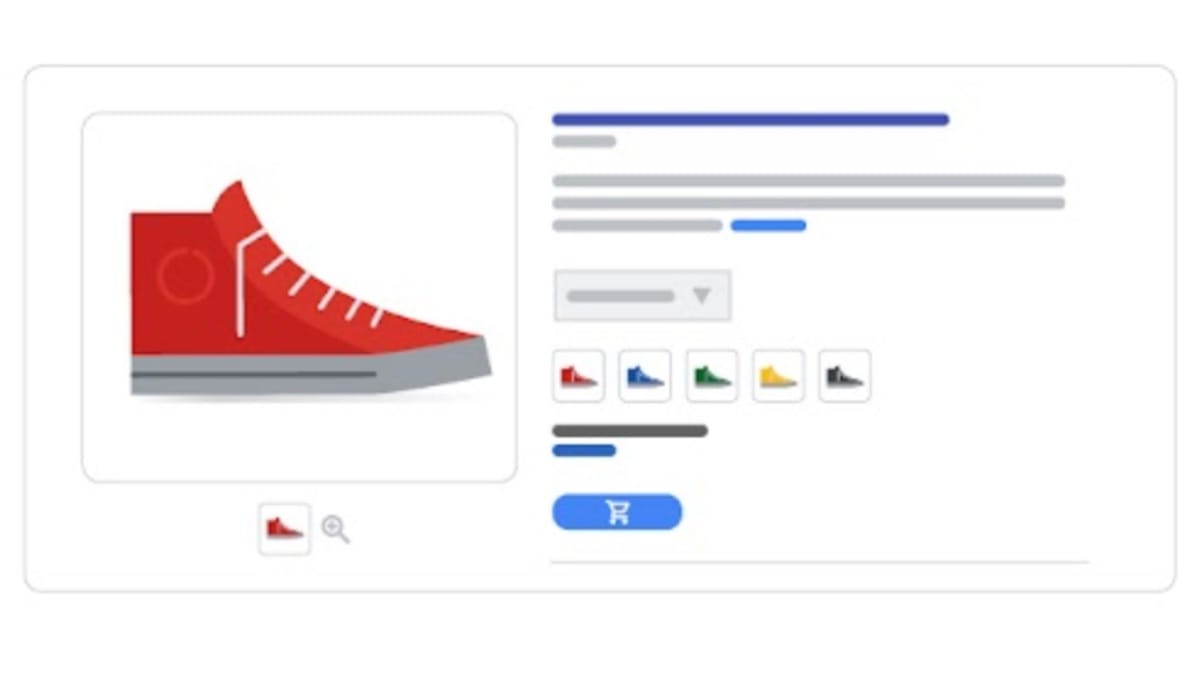
Google this month tightened its product landing page requirements for out-of-stock items in Google Merchant Center, mandating that the buy button must be visually greyed out and non-clickable rather than hidden or removed from the page. The policy change, highlighted in a video published on March 19, 2026 by Emmanuel Flossie, founder of FeedArmy and a Google Ads Diamond Product Expert, represents a concrete shift in how merchants must handle unavailable products across their shopping listings.
The update appeared in the official Google Merchant Center Help documentation under the landing page requirements section. According to the updated policy, "for 'out of stock' items, the 'Buy' button must be greyed out on your product landing page." This single sentence carries significant weight. Until this change, the common practice among online retailers was to either leave the add-to-cart button active while the item was unavailable - or to simply hide it altogether when stock ran out. Neither approach now meets compliance requirements.
The difference between hiding a button and disabling it may appear subtle at the level of user experience, but it is operationally significant. A hidden button leaves no visual cue for the shopper. A greyed-out button communicates clearly that the product exists, is currently unavailable, and cannot be purchased at that moment. According to the updated Google Merchant Center documentation, all key elements of a product - including the buy button - must be shown on the landing page. Hiding those elements violates the requirement to "avoid layouts that hide key elements of the page."
The technical implementation involves the HTML disabled attribute. In the video, Flossie demonstrated the change using browser developer tools, showing that adding disabled to a button element renders it visually inactive and prevents any click interaction. The implementation is straightforward: a standard button element in HTML, used for add-to-cart functionality, requires the word disabled added as an attribute. The result is a greyed-out button that cannot be clicked. Importantly, the availability status itself - whether "out of stock," "pre-order," or "back order" - must also be displayed on the product page, positioned between the product title and the buy button.
This is not merely a cosmetic requirement. The policy connects directly to how Google verifies product data consistency. According to the landing page requirements document, "all the information included in the data source will be verified against the information displayed on the landing page and the website." A mismatch between what appears in the product feed and what appears on the landing page - including availability status - is precisely the kind of discrepancy that triggers the Inaccurate Availability policy violation, which Google introduced in July 2021 as a replacement for the older "Delivery Issues" violation and which can result in account suspension.
One dimension of this update that has drawn particular attention among feed specialists is its implication for merchants who still want to accept purchases for unavailable items. Under the previous practice, a merchant could keep the add-to-cart button active even when stock was exhausted - effectively taking orders for products not yet in hand. That path is now closed. According to the updated policy, when a product is out of stock, the buy button must be disabled.
If a merchant wants to continue accepting orders for items not currently in stock, the correct route is to update the product's availability attribute in the data feed from out_of_stock to back_order. That change must be reflected both in the product data feed and on the landing page itself. The availability date attribute should also be present where applicable. According to the documentation, "if the availability date attribute for a product is set to 2023-05-06T13:00-0800, then update the product's landing page on your website to 'May 6, 2023'." If an exact date is not available, an estimated date - such as "May 2023" - is acceptable. The pre_order status follows the same logic for items not yet released.
Flossie described this as a meaningful operational shift. "This new change is actually quite big," he said in the March 19 video, "because before you were allowed to leave the button as add to cart when the items are out of stock, but now that has changed." The practical consequence is that retailers using add-to-cart buttons for items they were willing to supply on a delayed basis now need to explicitly declare that fulfilment model through the back_order attribute rather than relying on the default behaviour of an active button.
This policy update places fresh emphasis on the consistency between product data feeds and landing page content - a theme that has been central to Google Merchant Center compliance developments throughout 2025 and 2026. In January 2026, Flossie documented a separate issue in which Google Merchant Center's automatic import feature - which Google claims updates product data every 24 hours - showed products with timestamps nine to ten days out of date. Stale availability data in the feed, combined with an active buy button on the landing page, is exactly the kind of inconsistency that the Inaccurate Availability policy penalises.
The requirement for the availability attribute to match the landing page is explicit in the documentation. According to the policy, "if a product is out of stock on your landing page, then update the availability attribute in your product data to match." The reverse is equally important: if the feed says a product is in stock but the landing page shows it as unavailable, that discrepancy is also a violation. Both the feed and the page must tell the same story.
For merchants using JavaScript to generate page content dynamically - as many modern e-commerce platforms do - the policy documentation contains a specific caution. According to the landing page requirements, "dynamically generated markup can make Shopping crawls less frequent and less reliable, which can be an issue for fast-changing content like product availability and price." Google recommends including product information, particularly price and availability, in the initial HTTP response rather than rendering it client-side. This reduces the likelihood that Google's crawler encounters a page state that differs from what a human visitor would see.
Schema.org structured data is highlighted as a practical tool for maintaining this consistency. The use of structured data markup allows Google's systems to collect availability and price information directly from the website, supplementing or verifying what is declared in the product feed. Setting up automatic item updates through structured data is listed among the best practices, as it "can help your products stay approved" by reducing mismatches between live site data and feed data.
The policy applies to all landing pages submitted through the link attribute, the mobile_link attribute, and the ads_redirect attribute. It covers Shopping ads and free listings globally. The documentation makes clear that stable landing page requirements apply only to users arriving from Shopping ads - not from organic search results or text ads - but the underlying principle that landing page content must match product data applies across the board.
The timing of this update sits within a broader period of Google Merchant Center policy activity. March 2026 has seen several significant Merchant Center developments: the general availability of Merchant Center for Agencies in the US and Canada on March 11; guidance from Flossie on resolving the "product page unavailable" error on March 21; and now this clarification regarding the buy button requirement for out-of-stock items. The Merchant Center for Agencies dashboard, which provides a diagnostics page surfacing item-level issues across all client accounts, may help agencies identify products failing the updated buy button requirement at scale.
For context on how Google handles non-compliance, the Inaccurate Availability policy - in force since September 2021 - identifies a "non-functional buy button" as one of the primary triggers for a violation. The new greyed-out requirement adds specificity to that principle: the button must not only be present, but it must be visually non-interactive when the item is unavailable. An active button that does nothing on click would likely still constitute a non-functional buy button under that framework.
Broader Merchant Center compliance pressure has been building. The mandatory product ID split for online versus in-store items, announced by Google in January 2026 and taking effect in March 2026, requires merchants to use separate product identifiers when the same item differs between channels in price, availability, or condition. Taken together, these changes reflect a consistent pattern: Google is narrowing the acceptable gap between product feed declarations and what a customer actually encounters on a product page.
For merchants operating online stores, the immediate question is how their e-commerce platform handles out-of-stock product pages by default. Many platforms have configurable behaviour for unavailable items - some hide buttons, some show them, and some grey them out. The greyed-out behaviour is the only one now compliant with Google Merchant Center landing page requirements.
Custom-built stores using HTML button elements need the disabled attribute added programmatically when the availability status changes to out of stock. Platforms like Shopify and WooCommerce have theme-level settings and app-level integrations that may need adjustment depending on how the store's template currently handles this state.
The landing page requirements document specifies that the buy button must be "greyed out" - a visual state that communicates unavailability to the user while keeping the button present on the page. The disabled attribute in HTML achieves exactly this: it renders the button in a greyed-out, non-interactive state by default in all major browsers without requiring additional CSS. Developers implementing this change need only add disabled as an attribute to the button element when the inventory status is zero or the availability is set to out of stock.
The policy also applies to the data feed. A product showing in_stock in the feed but presenting a greyed-out button on the landing page creates a contradiction. The availability attribute in the feed must match what is shown on the page. Where back order is the intended status, the feed attribute must say back_order and the landing page must reflect that status clearly, including the availability date where it is known.
Who: Google, through its Merchant Center product team, is the issuing authority for the policy change. Emmanuel Flossie, founder of FeedArmy and a Google Ads Diamond Product Expert with 4,490 YouTube subscribers, brought the update to broad attention in a video published March 19, 2026. The affected parties are online retailers and e-commerce operators running Shopping ads or free listings through Google Merchant Center globally.
What: Google's updated landing page requirements now mandate that the buy button on product pages must be visually greyed out and non-clickable when a product is out of stock. Hiding or removing the button no longer satisfies the requirement. The HTML disabled attribute applied to the button element is the prescribed technical implementation. The availability status - out of stock, back order, or pre-order - must also be displayed on the page. Merchants wishing to continue accepting orders for out-of-stock items must update the availability attribute in their product data feed to back_order.
When: The policy is reflected in the current Google Merchant Center landing page requirements documentation, with Flossie's video calling attention to it on March 19, 2026.
Where: The requirement applies to all product landing pages submitted through Google Merchant Center - covering Shopping ads and free listings globally - via the link, mobile_link, and ads_redirect attributes.
Why: Google's stated objective is to ensure that landing pages provide a consistent, accurate experience for users who click product listings. A buy button that is active on an out-of-stock product creates a misleading interaction. The change aligns with the broader Inaccurate Availability policy, which treats inconsistency between product data and landing page content as a policy violation and can result in product or account disapproval.