Why cutting marketing budgets compounds faster than you think
Kraft mac and cheese fell to 39% share as zero-based budgeting proved marketing works multiplicatively, not additively—cutting 25% one year costs far more.


Kraft mac and cheese fell to 39% share as zero-based budgeting proved marketing works multiplicatively, not additively—cutting 25% one year costs far more.
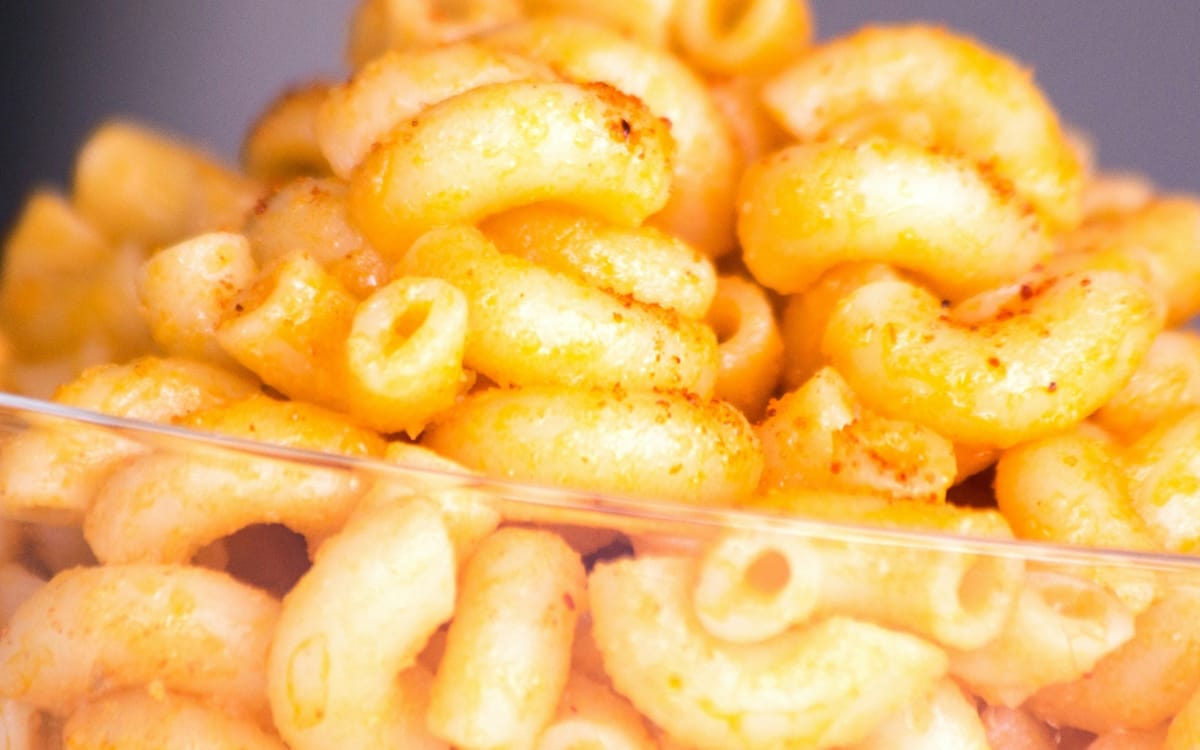
Kraft Heinz employees gathered in their Chicago headquarters several years ago for a product tasting that would reveal uncomfortable truths about their flagship brand, according to a Wall Street Journal investigation published in late December 2025. The team had purchased boxes of Goodles "Cheddy Mac," a new competitor promising healthier ingredients at premium prices. Some tasters found the flavor acceptable. Others questioned the noodle texture. The internal verdict was clear: Kraft mac and cheese needed upgrades. But with $1 billion in annual sales, executives weren't rushing to change course. Deliberations stretched on for years while competitors captured market share with innovations Kraft Heinz failed to prioritize.
The Journal's reporting, highlighted by industry analyst Ian Whittaker in a LinkedIn post on December 30, 2025, exposed a case study in corporate complacency and misguided cost optimization. Whittaker, a two-time City AM Analyst of the Year, characterized the situation with a subtitle that captured the essence of Kraft Heinz's failures: "Buzzy upstarts and supermarket knockoffs eat into market share of leading brand; years of cost cutting, underinvestment and corporate chaos."
That hesitation has proven costly, according to data from market-research firm Circana cited in the Wall Street Journal. Goodles now commands 6% of the U.S. mac and cheese market. Kraft Mac & Cheese has fallen to 39% market share, down from 45% in 2022. The decline illustrates how years of cost cutting, underinvestment, and corporate chaos left one of America's most recognizable food brands vulnerable to both premium competitors and cheaper supermarket knockoffs.
The erosion of Kraft's mac and cheese dominance reflects broader challenges facing legacy food companies struggling to balance heritage product formulas with changing consumer preferences. When Kraft and Heinz merged in 2015 to create a $26 billion food empire, the combined company promised renewed investment in iconic brands including Heinz Tomato Ketchup, Philadelphia Cream Cheese, and Kool-Aid. Instead, aggressive cost-cutting measures depleted organizational capabilities while buzzier startups and private-label alternatives eroded market position across multiple categories, according to the Journal's reporting.
Kraft Heinz sales have declined for eight consecutive quarters. The company announced in September 2025 it would split in two, undoing the 2015 merger. Tensions escalated in upper management as employees questioned who was calling the shots and which company they would join, creating further organizational disruption. On January 1, 2026, the company replaced chief executive Carlos Abrams-Rivera with veteran food executive Steve Cahillane, marking another leadership transition for the struggling conglomerate.
Buy ads on PPC Land. PPC Land has standard and native ad formats via major DSPs and ad platforms like Google Ads. Via an auction CPM, you can reach industry professionals.
Kraft mac and cheese first appeared on store shelves in 1937 for 19 cents per box. James L. Kraft, a Chicago cheese monger who began his career selling cheese from a horse-drawn wagon, created the product marketed as a meal for four. The convenient boxed dinner gained traction during World War II before finding broader success as a quick option for American families over subsequent decades.
The brand remained one of the food industry's most bankable assets for generations. After Warren Buffett and Brazilian private-equity firm 3G partnered to acquire ketchup giant Heinz in 2013, they orchestrated a merger with Kraft two years later, creating what became the world's fifth-largest food company at the time.
Kraft mac and cheese still dominated store shelves following the 2015 merger, with Velveeta Shells & Cheese also ranking as a top seller in the category. Consumer preferences were already shifting away from processed foods toward fresher, healthier alternatives. Competition intensified when General Mills acquired Annie's in 2014, adding an organic mac and cheese option to the market landscape.
During an earnings call following the merger, Kraft Heinz executives identified mac and cheese as a turnaround opportunity. The company revamped the recipe in 2016, replacing artificial dyes with colors derived from natural sources. This represented the most substantial product change in years, yet it failed to address deeper questions about nutritional content and flavor innovation that competitors would later exploit.
Kraft Heinz executives, many recruited from 3G, implemented aggressive cost-cutting through zero-based budgeting, which requires justifying all expenses anew each year rather than building on previous budgets. The company closed manufacturing plants and laid off thousands of workers, reducing annual spending by nearly $2 billion. Leadership claimed greater efficiency would free resources for brand reinvestment.
Dividends to stockholders jumped to $3.6 billion in 2016 from $1.3 billion the previous year. Kraft Heinz achieved the highest operating profit margin among food companies during this period. Former employees and Wall Street analysts observed that the organization lost experienced leaders along with marketing, research, and sales expertise. "On multiple levels, they depleted the organization," said Rob Moskow, an analyst at TD Cowen, according to the Journal.
The company struggled transitioning from cost-cutting to growth mode. Executives who excelled at trimming expenses faltered when tasked with building brands, according to former executives and other employees. Junior employees often received responsibility for increasing sales of struggling products with limited budgets. Poor sales performance and accounting errors in 2019 prompted Kraft Heinz to write down asset values by $17 billion.
The company brought in Miguel Patricio as chief executive in 2019, who pledged to reinvest in areas like marketing. Less than a year into his tenure, the pandemic began, and homebound consumers flocked to familiar brands including Kraft mac and cheese. The company expanded manufacturing capacity to produce more of its signature blue-and-orange containers and other key products.
Kraft Heinz sales climbed 5% in 2020, boosted by surging online orders. "We have sold nearly 90 million pounds of mac and cheese alone this year, which is equal to the weight of 41 Statues of Liberty," said Abrams-Rivera, then president of the U.S. business, during a presentation to investors, according to the Journal.
Paul Earle had been walking through Chicago grocery stores with notebook and pen in 2019 when he stopped before the familiar blue wall of Kraft boxes, according to the Wall Street Journal. The veteran consumer-goods entrepreneur had served as assistant brand manager for Kraft mac and cheese during a brief stint at the food company starting in the late 1990s. During that period, Earle recalled thinking the product could be made more nutritious to satisfy Americans' growing appetite for healthier options.
Earle had left Kraft and subsequently launched several companies, including ventures selling whiskey and shampoo. At the time of his Chicago store visit, he was searching for a new project. He purchased several mac and cheese brands, brought them home, and cooked them. His 10-year-old son spat out a healthier variety from a Kraft competitor, Earle said in the Journal article. Kraft's classic version still tasted good and evoked fond memories, but it didn't appear significantly healthier than when he worked there years earlier. "I knew there was a way to do it better," he stated.
Earle approached Jen Zeszut, who had run baby food startup Cerebelly. They agreed Kraft Heinz had left substantial opportunity for a mac and cheese challenger, according to the Journal. Goodles, led by Zeszut as chief executive, pitched itself as a fun, healthier interpretation of the classic product. The company infused its noodles with protein and nutrients from spinach, pumpkin, and kale. Goodles stated its ingredients and flavors justified a price exceeding twice what Kraft's sells for.
While Kraft Heinz and General Mills tried appealing to children with noodles shaped like SpongeBob and Disney characters, Goodles targeted a different demographic, according to the Journal. Earle and Zeszut believed many young adults were secretly eating mac and cheese, and others would consume it if the product could shed its dormitory food associations.
The pair sought help from Wonder Woman. Several years earlier, Zeszut had discussed a different business venture with Gal Gadot, an Israeli movie star who has portrayed the superheroine on screen, the Journal reported. The actress had passed on the earlier investment but signed on when Zeszut pitched Goodles. Gadot became a Goodles ambassador, posting videos of herself cooking and tasting the product for her more than 100 million Instagram followers. She said mac and cheese was her favorite comfort food during childhood, but established brands weren't healthy enough for her own four children, according to the Journal.
Goodles gained traction with consumers. Zeszut told the Journal that retailers earned higher profit on Goodles, converting them into supporters. "It's a higher-income consumer, it's a younger demographic," she explained. "It's exactly who they are trying to lure back to the center store."
Goodles reached store shelves during Kraft Heinz's pandemic boom, when sales grew for many consecutive quarters. Kraft Heinz executives weren't overly concerned about the new competition initially, former employees told the Wall Street Journal. Kraft mac and cheese remained the category's leading brand by substantial margins, selling more than one million boxes daily.
Other problems demanded attention, according to the Journal's reporting. Mac and cheese was losing customers to alternative quick foods such as ramen, and many Kraft mac and cheese buyers were switching to less expensive store brands like Walmart's Great Value. Price-conscious consumers hunting for deals in an inflationary environment posed challenges across the entire portfolio.
In 2022, a Kraft Heinz team proposed capturing shoppers' attention with more promotions, new flavors, and a high-protein variety, according to the Wall Street Journal. Employees assembled a proposal for new mac and cheese products, including versions using premium cheeses like Gruyere, Gouda, and Parmesan, plus herbs and spices.
Under a "design to value" approach the company had adopted, those employees needed to identify corresponding cost cuts, the Journal reported. They experimented internally with reducing the amount of cheese, mac and cheese's costliest component, testing the effect on taste, texture, mouthfeel, cheesiness, and "cling"—how the cheese sauce adhered to the noodles.
A year later, another team made similar recommendations to executives, presenting sales data and retailer intelligence about Generation Z and millennial shoppers, according to the Journal. Many were purchasing premium versions. Health-focused options and new flavors like truffle and cacio e pepe could help attract younger shoppers back to the category, they argued.
Executives faced larger troubles. Frequent restructuring and employee turnover led to shifting priorities, stalled projects, and frustration among retailers, according to the Journal. Brands such as Oscar Mayer and Maxwell House posed even bigger challenges than macaroni and cheese. Kraft Heinz sales started dropping in late 2023 as consumers grew increasingly fed up with inflation.
Patricio stepped down as chief executive, handing the position to Abrams-Rivera. Executives grew frustrated with Kraft mac and cheese, which continued losing market share, the Journal reported. Unhappy retailers wanted a growth strategy from Kraft, their biggest mac and cheese supplier. Costco wanted healthier products. Kraft Heinz sales employees felt frustrated too, believing their suggestions had fallen on deaf ears.
Abrams-Rivera acknowledged the mac and cheese challenges during an October 2024 earnings call. "We have quite a bit of work to do, and meaningful improvement will take some time," he told investors about several struggling brands.
Employees developed plans for new flavors, box sizes, and store promotions, according to the Wall Street Journal. Internally, they declared 2025 the "year of mac and cheese." The company launched limited-edition flavors including pizza, garlic Parmesan, and recently, apple pie. Jalapeño and ranch became permanent additions.
As part of a major initiative to boost its brands, Kraft Heinz conducted more mac and cheese taste tests with consumers, the Journal reported. Some results were disappointing, and executives told employees to fix problems, according to a person familiar with the matter cited by the Journal.
Diana Frost, the company's global chief growth officer, told the Journal that one conclusion was that the product billed in the 1990s as "the cheesiest" could use more cheese. The company increased the cheese content. It also introduced a bigger box that it says can feed a family of five for $2, and updated packaging to note the product doesn't contain artificial flavors, preservatives, or dyes.
In the 40 weeks ended November 2, 2025, Kraft mac and cheese sales declined 4% from the year-earlier period, according to Circana data shared by industry analysts and cited in the Journal. Abrams-Rivera said in October that mac and cheese was partly responsible for a 4% sales decline in the largest division of Kraft Heinz's North America grocery unit. More recently, the company stated Kraft mac and cheese sales in the four weeks ended November 16, 2025, were up 4% from the year-earlier period, according to the Journal.
"We know our brands better than we've ever known them," Frost said. "We are not happy with where results are, but we're seeing progress."
The company stated it plans to spend more than $60 million to boost Kraft mac and cheese in 2026, including the rollout of a higher-protein, higher-fiber variety that will be more affordable than competitors' versions. It is also developing a premium line featuring fancier cheeses and noodles with bolder flavors.
When Kraft Heinz announced its planned breakup in September 2025, executives said the mac and cheese business would be part of the new company focused on sauces, spreads, and seasonings rather than the entity selling grocery staples such as sliced cheese and deli meat. Wall Street analysts have questioned the plan for Kraft mac and cheese. Cahillane, the incoming chief executive slated to lead the sauces business, has said he may reassess the plans for brands including mac and cheese.
The Kraft Heinz mac and cheese decline carries significant lessons for marketing professionals navigating the balance between cost optimization and brand building. Ian Whittaker, who shared the Wall Street Journal article with his LinkedIn network on December 30, 2025, identified three critical takeaways that deserve attention from anyone managing advertising budgets.
"Complacency kills," Whittaker wrote in his analysis. "You buy a brand with 55% share of the market and you think you have time to coast and sort things out eventually. The world does not operate like that. Competitors saw the shortcomings in Kraft Heinz and exploited them."
The assumption that market dominance provides breathing room proved catastrophically wrong. While Kraft Heinz deliberated over product improvements, Goodles systematically built distribution, secured celebrity endorsements, and captured precisely the younger demographic that legacy brands struggle to reach.
Whittaker's second observation addressed the difficulty of reversing organizational damage: "The idea you can turn things round quickly and repair the damage swiftly is often a fallacy. When the management realised their approach wasn't working, they turned to emphasising rebuilding the brand. However, the expertise and skills had already left the organisation. To rebuild meant a lot more effort than anticipated."
This pattern appears repeatedly across the consumer packaged goods sector. According to the Wall Street Journal, Kraft Heinz laid off thousands of workers and closed plants while reducing annual spending by nearly $2 billion. The cost cuts delivered short-term margin improvements but depleted the organizational capabilities required for innovation and brand building. Former employees and Wall Street analysts observed the company lost experienced leaders along with marketing, research, and sales expertise.
Rob Moskow, an analyst at TD Cowen, told the Journal: "On multiple levels, they depleted the organization." Junior employees often received responsibility for increasing sales of struggling products with minimal budgets, creating a structure incapable of competing against well-funded challengers like Goodles.
Whittaker's third point proved most technically important for marketing professionals: "Beware of the latest consultancy fads. One of the core problems here was that management adapted the so-called 'zero based budgeting' approach whereby budgets are reset every year instead of being based on a standard approach of basing it on the previous years' numbers. I remember this well: like with many theories, it tended to fail in practice and led to discontinuities. It was particularly devastating with advertising."
Zero-based budgeting, which requires justifying all expenses anew each year, became Kraft Heinz's operating philosophy following the 2015 merger. The approach delivered dramatic cost reductions. Dividends to stockholders jumped to $3.6 billion in 2016 from $1.3 billion the previous year, according to the Journal. Kraft Heinz achieved the highest operating profit margin among food companies during this period.
The problem, Whittaker explained, lies in how management conceptualizes marketing investment. Most executives view advertising budgets as additive, where spending follows this pattern: 2+2+2+2 = 8. Under this mental model, cutting 25% from one year's budget simply reduces the total by that amount: 2+2+1.5+2 = 7.5.
"In actuality, though, advertising (particularly brand building) has more of a compounding, not additive, effect," Whittaker wrote. "So when you cut by 25%, the ripple effects are much greater - and the cost of catching up to where you left out are so much higher."
The true impact operates multiplicatively: 2 x 2 x 2 x 2 = 16. Cut 25% from one year, and the calculation becomes: 2 x 2 x 1.5 x 2 = 9. The difference between 16 and 9 substantially exceeds what simple arithmetic would suggest.
"The lesson: you need sustained and consistent brand building - otherwise your product will be worth a lot less than you think," Whittaker concluded.
Several LinkedIn commenters expanded on Whittaker's analysis. Daniel Heuser Prestes, Managing Director at Saga Innovation, noted the distinction between private equity methodology and consulting fads: "Kraft-Heinz is a 3G company, which makes ZBB a feature, not a latest consulting fad. It's been used on other companies from their portfolio and the market seems to be very OK with that element of their playbook."
François Godard from Enders Analysis observed: "Excellent maths Ian Whittaker! The whole industrial food sector suffers from PE mentality if not ownership. Tremendous legacy brands are squeezed between upstarts trendy innovators on the top and commodity/supermarket brands on the bottom because they took the easy ROI path instead of the long-term approach you advocate."
Colin Whaley, an experienced board director, agreed: "Brands in it for the long term need ongoing commitment to: Real insight. Shared understanding. Consistent (though evolving) products and standards. Relevant and reliable (up to date) messaging. Expectation-beating service. A commitment to honesty helps too!"
Dan Gee, focused on building media businesses, added: "Like muscles that get flabby when they aren't used, competitive edges wear down when they are left unsharpened."
Whittaker's mathematical framework for understanding marketing's compounding effect finds support in recent advertising research. Research from TransUnion and MMA Global revealed that brand campaigns lift favorability by 24% and drive conversion rates up to 4.7 times higher among favorable consumers. Brand marketing's long-term sales impact can reach six times greater than short-term performance metrics, yet traditional measurement approaches have created structural bias against longer-term brand investments during planning cycles.
Andrea Brimmer, Chief Marketing & PR Officer at Ally, stated in that research that the findings validated the company's decade-long commitment to brand-first strategy by demonstrating measurable business outcomes. Campbell's findings revealed that favorable consumers maintained a 21% higher retention rate than non-favorable customers.
The Brand as Performance framework addresses persistent challenges that CMOs face when defending brand budgets in boardroom discussions—precisely the situation Kraft Heinz management failed to understand when implementing zero-based budgeting. Traditional measurement approaches emphasize short-term performance metrics, creating the structural bias toward cost-cutting that Whittaker identified as devastating to advertising effectiveness.
The consumer packaged goods sector faces particular challenges as retail media networks expand, projected to exceed $300 billion by 2030 and capture 20% of global advertising revenue. CPG brands like Kraft Heinz must navigate this landscape while maintaining brand strength. Retail media adoption in Australia showed 62% of respondents had experience with retail media campaigns, with consumer packaged goods leading adoption across categories.
The fragmentation of advertising investment creates additional complexity for heritage brands. IAB Europe's retail media guide noted that brands working with four to six retail media networks doubled from 10% to 24% in 2025, signaling diversification strategies among advertisers. European retail media spending surged 22.1% in 2024 compared to 6.1% growth for the broader advertising market.
Kraft Heinz's struggles also intersect with broader digital advertising trends. Global advertising spending reached $1.14 trillion in 2025, with commerce advertising surpassing television for the first time at $178.2 billion. Food and beverage brands emerged as the highest spenders in Google advertising benchmarks with $214 million invested, but faced the steepest costs with CPMs reaching $28.59 and CPCs hitting $3.07.
The brand's predicament demonstrates how cost-cutting in marketing can compound over time, particularly when competitors invest aggressively in product innovation and brand building. Goodles' partnership with celebrity ambassador Gal Gadot represents precisely the type of brand-building investment that Kraft Heinz deprioritized during its cost-optimization phase.
Marketing professionals managing CPG brands should note that the "design to value" approach—requiring cost cuts to offset new product development—can create a downward spiral where innovation becomes increasingly difficult. When reducing the most expensive ingredient (cheese) becomes necessary to justify new product variants, the fundamental value proposition suffers.
The case also highlights retail dynamics in the CPG sector. Goodles succeeded partly because retailers earned higher profit margins on the premium product, creating incentive to allocate shelf space to the challenger brand. This illustrates how retail economics can accelerate market share shifts when established brands fail to innovate or maintain retailer relationships.
For digital marketers, the Kraft Heinz experience underscores the importance of continuous consumer engagement and product relevance. While the company sold over one million boxes daily at its peak, that volume couldn't protect market position when competitors offered products better aligned with consumer preferences for healthier ingredients and premium positioning.
The delayed response to Goodles—internal tastings leading to years of deliberation rather than swift action—mirrors challenges many large organizations face when attempting to compete with agile startups. By the time Kraft Heinz committed to significant changes in 2025 (declaring it the "year of mac and cheese"), Goodles had already captured 6% market share and established distribution and brand recognition.
New leadership under Cahillane faces the challenge of reversing these trends. The company plans to spend more than $60 million on Kraft mac and cheese in 2026, including higher-protein, higher-fiber varieties and premium lines with fancier cheeses, according to the Wall Street Journal. Whether this investment can recapture market share from entrenched competitors remains to be seen.
Steve Cahillane stated in mid-December 2025 that the industry "is clearly in a challenging moment," and that Kraft Heinz "has to meet the moment," according to the Journal. The question facing marketing professionals across the food industry is whether legacy brands can adapt quickly enough to changing consumer preferences while maintaining the operational scale that made them category leaders in the first place.
The broader lesson extends beyond mac and cheese to any established brand facing disruption from premium or value competitors. As Whittaker emphasized in his LinkedIn analysis, sustained brand investment, rapid innovation cycles, and organizational capabilities matter more than market dominance when consumer preferences shift. For marketing organizations, the Kraft Heinz case study provides a cautionary tale about the true cost of cost-cutting and the compounding effects of deferred brand investment.
Subscribe PPC Land newsletter ✉️ for similar stories like this one
Subscribe PPC Land newsletter ✉️ for similar stories like this one
Who: Kraft Heinz, the $26 billion food conglomerate formed through 2015 merger backed by Warren Buffett and private equity firm 3G, faces competition from Goodles, a premium mac and cheese startup founded by Paul Earle and Jen Zeszut with celebrity ambassador Gal Gadot. Leadership transitions include CEO changes from Miguel Patricio to Carlos Abrams-Rivera to Steve Cahillane. Industry analyst Ian Whittaker, two-time City AM Analyst of the Year, analyzed the case study on LinkedIn, identifying critical lessons about brand investment. Wall Street Journal reporters Jesse Newman and others investigated the company's decline.
What: Kraft Mac & Cheese market share declined to 39% from 45% in 2022, while competitor Goodles captured 6% market share, according to Circana data cited in the Wall Street Journal. Kraft Heinz sales have dropped for eight consecutive quarters. The company announced a planned split into two entities in September 2025 and replaced its CEO on January 1, 2026. Years of aggressive cost-cutting through zero-based budgeting depleted organizational capabilities, reduced annual spending by nearly $2 billion, and resulted in $17 billion asset write-down in 2019, according to the Journal's reporting.
When: The decline accelerated between 2022 and 2025, though underlying issues trace to cost-cutting measures implemented following the 2015 merger, according to the Wall Street Journal. Goodles launched during the pandemic boom years when Kraft Heinz experienced temporary sales growth. Internal proposals for product innovation in 2022 and 2023 faced delays, while the company declared 2025 the "year of mac and cheese" for renewed focus on the brand. Sales in the 40 weeks ended November 2, 2025, showed 4% decline year-over-year. The Wall Street Journal published its investigation in late December 2025, with Ian Whittaker sharing his analysis on December 30, 2025.
Where: The market share decline occurred in the U.S. mac and cheese category, with particular vulnerability to premium competitors targeting younger demographics and value competitors like Walmart's Great Value attracting price-conscious shoppers, according to the Journal. Retail distribution dynamics favored Goodles, which offered retailers higher profit margins. Kraft Heinz headquarters in Chicago became the site of product tastings and strategic deliberations that stretched for years.
Why: The decline resulted from years of cost-cutting that prioritized dividend payments ($3.6 billion in 2016) and operating margins over brand investment and product innovation, according to the Wall Street Journal. Zero-based budgeting depleted experienced marketing and research personnel. As Ian Whittaker explained in his LinkedIn analysis, management failed to understand that marketing operates with a compounding (multiplicative) effect rather than additive impact: cutting 25% for one year creates ripple effects far greater than simple arithmetic suggests. Competitors exploited gaps in Kraft's product lineup by offering healthier ingredients (protein, vegetables) and premium positioning at higher price points. Consumer preferences shifted toward fresher, less-processed foods while Kraft Heinz delayed innovation despite internal recommendations for new flavors and premium varieties, according to the Journal. Organizational chaos from frequent restructuring, leadership changes, and the announced company split created uncertainty that stalled strategic initiatives. The "design to value" approach requiring cost cuts to offset new product development limited innovation. Former employees and analysts told the Journal that the company lost experienced leaders and depleted organizational capabilities across multiple levels.