IAB Polska's 300-page AI guide expands Polish marketing playbook by threefold
IAB Polska released AI Guide 2.0 on January 8, 2026, expanding from 2024 edition to over 300 pages covering large language models, agents, and performance marketing.


IAB Polska released AI Guide 2.0 on January 8, 2026, expanding from 2024 edition to over 300 pages covering large language models, agents, and performance marketing.
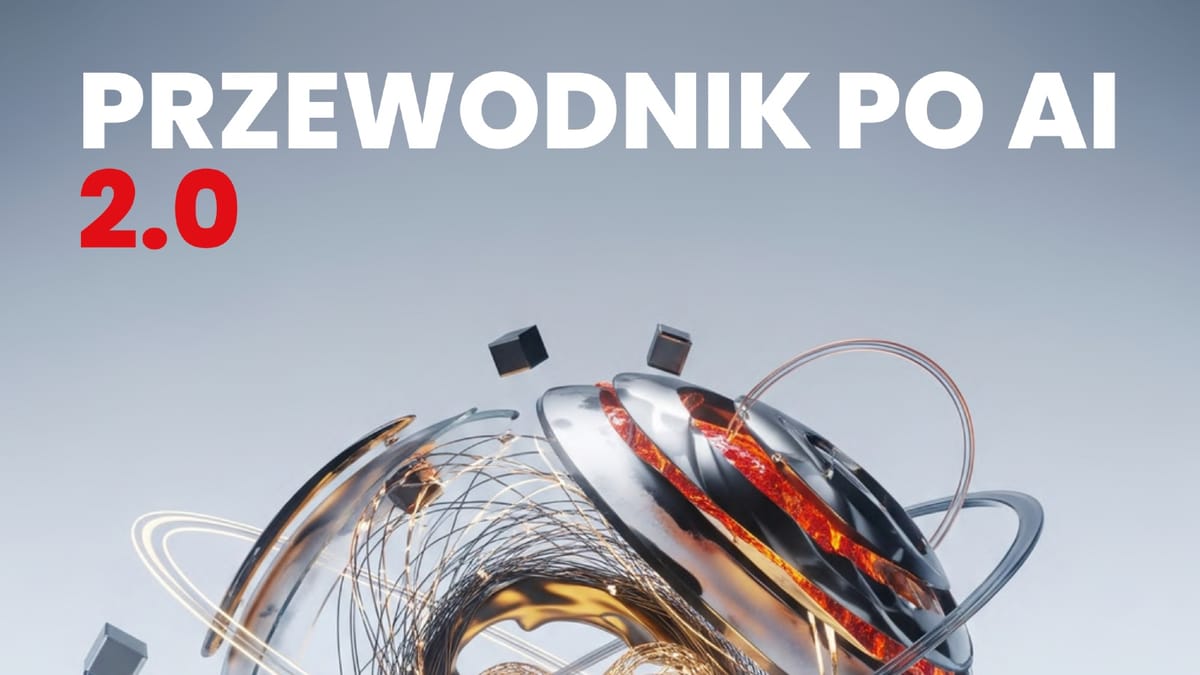
IAB Polska announced on January 8, 2026, the release of AI Guide 2.0, a comprehensive 300-page resource examining artificial intelligence applications across e-marketing, business operations, and digital team workflows. The publication represents a substantial expansion from the organization's 2024 edition, incorporating advanced technical frameworks alongside practical implementation guidance for Polish marketing professionals.
According to the announcement, the guide addresses professionals at multiple experience levels. Beginners receive foundational AI concepts and terminology, while experienced practitioners access technical depth covering large language models, retrieval-augmented generation systems, and AI agent architecture. The document targets marketers, strategists, performance specialists, content managers, team leaders, and anyone seeking to understand AI's role in e-marketing.
The guide's structure spans 21 chapters addressing implementation challenges facing Polish digital marketing teams. Coverage begins with AI fundamentals and history before progressing through technical specifications including LLM token economics, context window management, and edge computing deployment. Legal frameworks receive dedicated attention, with analysis of EU AI Act risk classifications and Poland-specific regulatory compliance requirements.
Industry consolidation around AI capabilities has accelerated throughout 2025. IAB Europe revealed 85% AI adoption rates across European digital advertising companies in September 2025, with 74% reporting at least one campaign function powered by artificial intelligence. That research, conducted between July and August 2025 across 95 companies, found targeting and content generation leading adoption patterns at 64% and 61% respectively.
The publication dedicates substantial coverage to practical tool evaluation and deployment. Chapter 10 examines copywriting platforms including Jasper AI, Copy.AI, Writesonic, MarketMuse, Grammarly Generative, and Sudowrite. Each tool profile addresses specific use cases, technical capabilities, and integration requirements with existing marketing technology stacks.
Graphic design tools receive separate analysis through Chapter 13, profiling Ideogram, Recraft, Pimento, ChatGPT-4o, Imagen, Nano Banana, Midjourney, Adobe Firefly, and Topaz Labs. The guide emphasizes multimodal capabilities emerging across platforms, particularly text-to-image generation and image editing workflows that have transformed creative production timelines.
Audio production capabilities span Chapter 14's examination of Suno, Fliki, ElevenLabs, Adobe Firefly audio features, and Murf AI. According to the guide, these platforms address voice synthesis, music generation, and audio editing requirements that Polish marketing teams previously outsourced to specialized production houses.
Video production receives comprehensive treatment across multiple sections. Chapter 15 divides video AI into preproduction workflows using LTX Studio for storyboarding, production execution through single-model tools and aggregators, and postproduction optimization. The chapter addresses avatar generation, node-based editing systems, and hybrid approaches combining AI automation with manual control.
Performance marketing implementation occupies Chapter 16, focusing specifically on Google Ads creative generation. The section examines built-in Google capabilities alongside external scaling tools that enable rapid creative variation testing across campaign structures. This focus reflects Google's dominant position within Polish digital advertising, where the platform continues expanding automation features alongside AI-driven optimization.
Chapter 11 addresses strategic AI integration within marketing organizations. The guide examines chatbot implementation, competitive analysis automation, audience research methodologies, and big idea generation workflows. It emphasizes knowledge base management as foundational infrastructure enabling consistent brand governance across AI-generated content.
Research and analysis capabilities receive dedicated coverage in Chapter 12. The section distinguishes between desk research leveraging proprietary materials and external research drawing from publicly available online sources. According to the guide, this distinction matters significantly for Polish organizations navigating data privacy requirements under GDPR while extracting competitive intelligence.
Agent and assistant architecture appears throughout Chapter 17, differentiating between autonomous agents, assistive systems, and workflow automation. The guide explains how agents execute tasks independently while assistants require human oversight at decision points. This technical distinction carries operational implications for Polish teams determining appropriate automation boundaries.
No-code and low-code development frameworks occupy Chapters 20 and 21. The guide positions these approaches as democratizing technology access within marketing organizations, enabling teams to build custom automation without traditional programming expertise. It profiles popular platforms and provides case studies demonstrating achievable efficiency gains.
Buy ads on PPC Land. PPC Land has standard and native ad formats via major DSPs and ad platforms like Google Ads. Via an auction CPM, you can reach industry professionals.
Chapter 5 examines risk classification under the EU AI Act, establishing three categories: limited risk, high risk, and unacceptable risk. According to the guide, most marketing AI applications fall into limited risk categories requiring transparency about AI involvement but facing minimal regulatory burden.
Chapter 6 addresses AI applications within financial services marketing, where regulatory requirements impose stricter governance standards. The section examines compliance requirements specific to banking, insurance, and investment product promotion under Polish financial supervision frameworks.
Copyright considerations receive analysis across Chapters 7 and 8. Chapter 7 examines whether AI systems can claim creator status under Polish copyright law, concluding that current frameworks recognize only human authorship. Chapter 8 addresses synthetic influencer deployment and image rights, particularly relevant as Polish brands experiment with AI-generated personalities for social media marketing.
Chapter 9 establishes standards for #GeneratedByAI content labeling. The guide provides specific recommendations about when and how to mark artificially generated materials, addressing both legal requirements and transparency best practices that maintain consumer trust.
Chapter 19 examines artificial intelligence capabilities within Microsoft Advertising, positioning the platform as an alternative to Google's dominance within Polish digital marketing. The section covers Copilot integration within the Microsoft Advertising interface, enabling conversational campaign management and automated optimization recommendations.
According to the guide, Microsoft's generative AI capabilities within the advertising panel can create ad copy variations, suggest targeting adjustments, and identify performance optimization opportunities. This functionality matters particularly for Polish B2B marketers where Microsoft's search engine Bing maintains stronger presence than consumer markets might suggest.
The chapter addresses how Polish advertisers can leverage Microsoft's ecosystem integration, connecting LinkedIn professional data with search advertising and display campaigns. This cross-platform capability enables account-based marketing approaches that target specific companies or job functions with coordinated messaging.
Chapter 4 establishes foundational knowledge about large language models. The section examines how contemporary LLMs process information, explaining the transition from simple word prediction to reasoning capabilities that businesses increasingly trust for complex tasks.
According to the guide, understanding model "thinking" processes helps marketing professionals craft more effective prompts and anticipate system limitations. The chapter explains token economics, addressing why organizations pay for computational time and tokens rather than simple query counts.
The section explores context window management, particularly relevant as models expand from thousands to millions of tokens. Polish marketing teams working with extensive brand guidelines, product catalogs, and historical campaign data benefit from understanding how context windows enable or constrain AI capabilities.
Retrieval-augmented generation receives detailed technical explanation. The guide positions RAG as solving accuracy challenges that previously limited AI reliability for business applications. By grounding responses in retrieved documents rather than relying solely on training data, RAG systems deliver factually accurate outputs essential for marketing claims and product descriptions.
The timing of IAB Polska's release aligns with accelerating AI infrastructure development across European advertising markets. IAB Europe published its comprehensive AI whitepaper on July 7, 2025, establishing policy frameworks for responsible AI deployment. That document identified AI revenue forecasts growing from approximately $200 billion in 2023 to $1.4 trillion by 2029.
Platform consolidation around AI capabilities intensified throughout 2025. Google made its Ads Advisor available to all English-language accounts on November 12, 2025, while Amazon launched AI agents for campaign management on November 11. These developments demonstrate major platforms racing toward AI-native advertising interfaces.
Infrastructure standardization efforts address interoperability concerns. IAB Tech Lab released its Agentic RTB Framework version 1.0 for public comment on November 13, 2025, introducing specifications for deploying containerized agents within real-time bidding systems. The public comment period extends through January 15, 2026.
Polish market dynamics present particular opportunities for AI adoption. Poland demonstrated strong programmatic expansion in IAB Europe's 2024 AdEx Benchmark Report, suggesting less mature markets offer greater programmatic adoption opportunities. This foundation positions Polish advertisers to integrate AI capabilities rapidly as platforms expand feature availability across European markets.
Consumer behavior shifts accompanying AI adoption create urgency around effective implementation. Equativ's October 2025 survey revealed 67% of North American and European consumers use AI weekly, with 38% searching less and 30% visiting fewer websites as large language models reshape information discovery. These patterns fundamentally alter how Polish marketers must approach audience engagement.
IAB Polska's AI Working Group developed the guide through collaborative input from multiple industry stakeholders. The working group structure enables continuous content updates as AI capabilities advance and new use cases emerge within Polish marketing practice.
The organization previously released attention measurement standards on September 18, 2025, through collaboration with Stowarzyszenie Content Marketing Polska and Polska Organizacja Reklamodawców. That initiative addressed measurement standardization as over 80% of industry experts identified market fragmentation as limiting attention metric adoption.
IAB Polska maintains multiple working groups addressing different aspects of digital advertising transformation. Beyond AI and attention measurement, the organization coordinates standards development around programmatic advertising, video advertising, and data privacy compliance. This structure positions IAB Polska as central coordinator for Polish digital advertising industry standards.
The guide is available for download through IAB Polska's website at no cost to industry practitioners. This distribution approach follows IAB Polska's established pattern of providing educational resources supporting Polish digital marketing professionalization.
Previous IAB Polska publications addressed video advertising fundamentals, programmatic advertising best practices, and data privacy compliance. The AI Guide 2.0 represents the organization's most substantial single publication, reflecting artificial intelligence's growing importance within marketing operations.
The document targets Polish-language readers specifically, addressing local market conditions, regulatory frameworks, and platform availability. While many AI tools and platforms operate globally, implementation considerations vary significantly across markets based on language capabilities, payment processing, and regulatory compliance.
The guide concludes with forward-looking analysis of AI development trends. Edge computing deployment enables AI processing on end-user devices rather than cloud infrastructure, reducing latency and addressing privacy concerns. This capability matters particularly for real-time personalization and conversational commerce applications.
Language-augmented models combining natural language understanding with action execution represent another emerging capability. These systems can interpret user intent and execute corresponding actions across connected systems, enabling true automation rather than assisted workflows.
Mega-context windows expanding to millions of tokens enable entirely new use cases. Marketing teams can load entire product catalogs, brand guidelines, competitive intelligence, and historical campaign data into single context windows, enabling AI systems to reason across comprehensive information sets previously fragmented across multiple systems.
The guide positions Polish marketing organizations to capitalize on these emerging capabilities by establishing foundational understanding and implementation practices today. As platforms continue expanding AI features and new tools emerge, the frameworks and evaluation criteria established in the guide provide consistent assessment methodology.
Subscribe PPC Land newsletter ✉️ for similar stories like this one
Subscribe PPC Land newsletter ✉️ for similar stories like this one
Who: IAB Polska's AI Working Group, comprising industry experts from publishers, agencies, advertisers, and technology providers within Poland's digital advertising ecosystem, created the comprehensive guide.
What: Publication of "AI Guide 2.0," a 300-page resource examining artificial intelligence applications across e-marketing, business operations, and digital team workflows, representing substantial expansion from the organization's 2024 edition with coverage spanning 21 chapters addressing everything from AI fundamentals through advanced agent architecture and no-code development.
When: Released January 8, 2026, following IAB Polska's earlier 2024 edition and arriving amid rapid AI infrastructure development across European advertising markets throughout 2025.
Where: Polish digital advertising market, addressing local regulatory frameworks, platform availability, and implementation considerations specific to Polish marketing organizations while drawing from global AI development trends and international standards.
Why: Dynamic AI development has made artificial intelligence one of digital marketing's key transformation pillars, supporting data analysis, process automation, campaign design, content creation, and customer communication, with IAB Polska responding to industry need for comprehensive, practical guidance addressing both beginners and experienced practitioners navigating rapid technological change.