JCDecaux locks in Melbourne's Yarra Trams for up to 14 more years
JCDecaux retained its exclusive advertising contract with Melbourne's Yarra Trams on March 5, 2026, securing up to 14 years with major digital expansion plans.


JCDecaux retained its exclusive advertising contract with Melbourne's Yarra Trams on March 5, 2026, securing up to 14 years with major digital expansion plans.
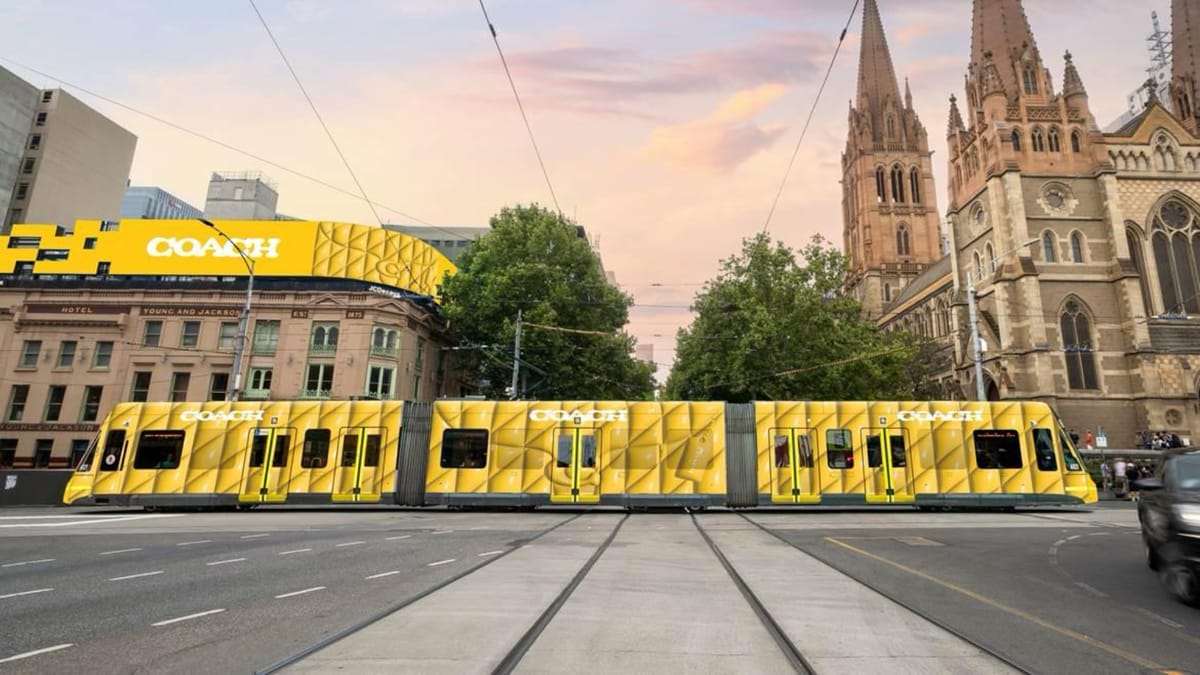
JCDecaux SE secured a renewed exclusive advertising contract with Melbourne's Yarra Trams network on March 5, 2026, following a competitive tender process. The announcement was made from Melbourne at the start of the Formula 1 Australian Grand Prix weekend. The agreement extends the French outdoor advertising company's presence across the world's largest operational tram system for a term of up to 14 years.
The contract retains JCDecaux's integrated concession across both the tram fleet and the tram shelter network. According to the announcement, the renewal will deliver a significant expansion of digital assets across Melbourne, including new Central Business District locations and a rollout into key suburban corridors. This makes the deal notable not just as a retention of existing business, but as a meaningful escalation of the company's digital infrastructure in Australia's second-largest city.
Melbourne's tram network is, by conventional measurement, the largest in the world. According to Wikipedia, the network operates with 250 kilometres of double track across 26 tram routes, including a free City Circle tourist tram and over 1,763 tram stops. As of May 2014, Yarra Trams operated 487 trams, and in 2015/16 alone the network recorded 203.8 million journeys. Each week, Yarra Trams operates 31,400 scheduled tram services, with trams running approximately 20 hours per day and a team of 24-hour operations staff maintaining network cleanliness and safety.
That scale matters in advertising terms. A tram network woven through the city's CBD, inner suburbs, and major event precincts creates a physical media environment that other formats struggle to replicate at comparable density. Melbourne's tram infrastructure connects the CBD with cultural, retail, education, and sporting precincts, including Melbourne Park and Albert Park - home to the Australian Open and the Formula 1 Australian Grand Prix respectively. Both events attract global audiences and significant international media attention, providing advertisers with elevated brand exposure during high-traffic periods that extend well beyond the local commuter base.
According to the announcement, Melbourne is currently ranked the most liveable city in Australia and fourth globally in the Global Liveability Index 2025. Greater Melbourne's population stands at 5.4 million people. These figures carry weight in media planning. A single transport advertising network reaching a metropolitan population of that size - concentrated through a system with no viable alternative for many inner-city journeys - represents dwell time and frequency that outdoor formats reliant on road-based viewing cannot easily match.
Yarra Trams has had a layered ownership and operating history since privatisation in the late 1990s. According to Wikipedia, in October 1997, the tram operations of Victoria's Public Transport Corporation were split into two business units: Swanston Trams and Yarra Trams. The split became effective on 1 July 1998.
The initial private operator was MetroLink Victoria Pty Ltd, a joint venture between Transfield Services (50%), Transdev (30%), and Egis (20%), which won the Yarra Trams franchise from 29 August 1999. After a period in which the State Government temporarily took over the other half of the network following National Express's exit, the two halves were reunited on 18 April 2004 under the Yarra Trams brand. Keolis Downer then won the subsequent franchise tender in June 2009, commencing on 30 November 2009. That franchise was extended in September 2017 until November 2024.
Most recently, in June 2024, the franchise was awarded to Yarra Journey Makers - a joint venture between Transdev (51%) and John Holland (49%). According to Wikipedia, the new operator commenced operations on 1 December 2024 and continues to use the Yarra Trams brand. It is the second time Transdev has been involved in operating the Yarra Trams network.
The fleet itself encompasses considerable variety. According to Wikipedia, as of January 2019, the fleet consisted of over 450 trams of W, Z3, A1, B2, C1, C2, D, and E class variants, operated from eight depots. One hundred E-class trams were delivered by Bombardier Transportation between 2013 and 2021. A further 100 Flexity 2 G-class trams are being manufactured by Alstom at Dandenong, with delivery starting from 2025. These newer, three-carriage G-class trams will progressively expand network capacity.
JCDecaux SE is listed on the Euronext Paris exchange under the ticker DEC and is part of the SBF 120 and CAC Mid 60 indexes. According to the announcement, the company reported 2024 revenue of €3,935.3 million and first-half 2025 revenue of €1,868.3 million. Its global footprint spans 3,894 cities with more than 10,000 inhabitants, encompassing 1,091,811 advertising panels across more than 80 countries and a daily audience of 850 million people. The company employs 12,026 people worldwide.
In transport advertising specifically, JCDecaux holds contracts at 157 airports and 257 contracts across metros, buses, trains, and tramways - totalling 340,848 advertising panels in that segment alone. It ranks first in outdoor advertisingacross Europe, Asia-Pacific, Latin America, and Africa, and second in the Middle East.
The Yarra Trams renewal sits within a broader pattern of JCDecaux securing and extending major transit advertising contracts across multiple continents. JCDecaux extended its Brussels STIB contract through 2038 in November 2025, covering metro stations, trams, and buses across Brussels' public transport network, with 180 to 200 new 75-inch digital screens deployed across 26 STIB stations. In December 2025, JCDecaux secured an 8-year Helsinki metro advertising contract with optional 2-year extension covering all metro station advertising spaces across 30 stations in Helsinki and Espoo, with new LED screen infrastructure to be installed beginning July 2026. And in early March 2026, JCDecaux was awarded a 10-year advertising contract at Denver International Airport, pending Denver City Council approval.
The Melbourne renewal reinforces a strategy of building long-term exclusivity across high-footfall urban transit environments. Up to 14 years is a substantial horizon for an advertising concession, particularly given the pace at which digital advertising technology is changing. Locking in an integrated concession across both tram vehicles and tram shelters means JCDecaux controls the complete advertising environment that a commuter or visitor encounters while using the system - from the shelter where they wait to the tram they board.
The renewed contract's emphasis on digital expansion is its most technically significant feature for the advertising community. According to the announcement, JCDecaux will deliver a significant expansion of digital assets across Melbourne, with new CBD locations and a rollout into key suburban corridors. The combination of CBD and suburban digital placements suggests a network designed to reach audiences at different points in their daily journeys - not just those passing through the central city, but also those using the outer tram routes that extend into residential and commercial suburban areas.
This digital push mirrors JCDecaux's global trajectory. JCDecaux's programmatic advertising revenues grew 45.6% in 2024, reaching €145.9 million and representing 9.5% of digital revenue. In the first half of 2024, programmatic revenue through VIOOH grew 61.8% to reach €59.7 million, representing 9% of JCDecaux's total digital revenue. Digital out-of-home revenue now represents 41.8% of JCDecaux's total company revenue as of Q3 2025, according to the company's third-quarter results.
VIOOH, the JCDecaux-majority-owned supply-side platform for programmatic DOOH, has been expanding its programmatic infrastructure aggressively across global markets. In February 2026, VIOOH and JCDecaux Ireland opened 32% of Ireland's digital out-of-home market to programmatic buyers, connecting 288 screens and generating 311 million monthly impressions. The platform currently operates programmatically in 35 markets and connects to more than 50 demand-side platforms globally. More recently, VIOOH announced a strategic partnership with OUTFRONT, adding more than 7,600 digital screens and 18 billion monthly impressions covering approximately 25% of the US DOOH market.
The Melbourne digital expansion should eventually feed into this programmatic ecosystem. Digital screens installed on trams and at tram shelters across Melbourne's CBD and suburban corridors create inventory that, once connected to JCDecaux's programmatic infrastructure, becomes addressable through automated buying systems used by agencies globally. For a media buyer assembling a programmatic DOOH campaign targeting Australian urban audiences, Melbourne tram inventory represents a distinct and high-value context: a captive commuter audience moving through one of the country's most populated and economically active cities.
JCDecaux launched a global programmatic DOOH airport advertising offer in February 2024, providing access to more than 70 million monthly passengers and 2 billion impressions across its airport estate. The Yarra Trams contract extends a comparable logic - premium transit environments with measurable audience flow - into the urban tram context.
Jean-François Decaux, Chairman of the Executive Board and Co-CEO of JCDecaux, made the announcement in Melbourne at the start of the Formula 1 Grand Prix. The timing is deliberate. According to the announcement, he stated: "Retaining the integrated Yarra Trams contract reflects the strength of our partnership with Melbourne's tram operator. Yarra Trams is central to Melbourne's identity and provides one of the most powerful Out-of-Home platforms in Australia. With global events such as the Formula 1 and the Australian Open placing Melbourne as the sporting capital of the world, the city provides brands with a uniquely powerful environment and access to world-class audiences at scale."
The Formula 1 Australian Grand Prix takes place at Albert Park, which is directly served by the Melbourne tram network. During race weekend, international visitors, corporate hospitality guests, and domestic fans move through the city using the tram system alongside regular commuters. The audience composition shifts considerably from an ordinary weekday, with higher proportions of international attendees and higher-income demographics. Making the contract announcement at this moment, in this city, communicates that the tram network's value proposition extends beyond the daily commuter and into the major event economy.
The Australian Open provides a comparable dynamic. Melbourne Park is connected to the tram network and each January draws hundreds of thousands of attendees over a fortnight, with global broadcast reach that amplifies the brand exposure of advertising placed along key routes.
JCDecaux has positioned sustainability as a central element of its corporate identity. According to the announcement, the company's Group carbon reduction trajectory has been approved by the Science Based Targets initiative (SBTi), and JCDecaux has joined the Euronext Paris CAC® SBT 1.5° index. The company holds Gold Medal status from EcoVadis and recognition from CDP (A), MSCI (AAA), and Sustainalytics (11.9). It was the first Out-of-Home Media company to join the RE100, committing to 100% renewable electricity.
For tram-based advertising specifically, the medium's environmental profile is relevant. Trams are electrically powered, produce no direct tailpipe emissions at the point of use, and move large numbers of passengers along fixed routes with high frequency. Advertising on a network of this type carries different sustainability optics compared to diesel bus-side advertising or large-format roadside billboards powered by non-renewable electricity. As environmental, social, and governance considerations influence advertising procurement decisions at major brands, the clean energy alignment of Melbourne's tram network becomes a meaningful differentiator in pitching the inventory to sustainability-conscious advertisers.
For marketing professionals, the Yarra Trams contract renewal has several practical implications. The commitment to digital expansion in CBD and suburban corridors means more digitally addressable inventory will become available in Melbourne over the coming years - creating opportunities for data-driven campaign planning, contextual targeting based on location and time of day, and integration with broader programmatic DOOH campaigns spanning multiple markets.
The 14-year maximum term provides a long planning horizon. Long-term concessions of this kind create stable inventory environments where JCDecaux can justify significant capital investment in infrastructure upgrades. When an operator knows it controls a network for over a decade, the business case for installing premium digital screens becomes considerably stronger. Advertisers benefit from the improved creative possibilities that digital formats enable, including dynamic content that can respond to real-time triggers such as weather, time of day, proximity to events, or audience data signals.
The integrated nature of the concession - covering both the tram fleet and the tram shelter network - is also commercially significant. According to the announcement, this integration ensures advertisers can plan city-wide campaigns across the full network. Consistent brand presence across both vehicle exteriors in motion and fixed shelter locations creates a layered reach that reinforces messaging at multiple points in a commuter's journey. What distinguishes this from a standard outdoor media buy is precisely that integration: two formats, one concession, one planning conversation.
Who: JCDecaux SE (Euronext Paris: DEC), the world's largest outdoor advertising company by revenue, headquartered in Paris, and Yarra Trams - the trading name for the operator of Melbourne's tram network, currently operated under franchise by Yarra Journey Makers, a joint venture of Transdev (51%) and John Holland (49%).
What: JCDecaux was re-appointed as the exclusive advertising partner for Melbourne's Yarra Trams network following a competitive tender process. The new agreement covers a term of up to 14 years and retains the integrated concession across both the tram fleet and the tram shelter network. The contract includes a significant expansion of digital assets across Melbourne, with new CBD locations and a rollout into key suburban corridors.
When: The announcement was made on March 5, 2026, at the start of the Formula 1 Australian Grand Prix weekend in Melbourne.
Where: Melbourne, Australia. The Yarra Trams network spans 250 kilometres of double track, 26 routes, over 1,763 tram stops, and connects the CBD with major cultural, retail, education, and sporting precincts including Melbourne Park and Albert Park. Greater Melbourne has a population of 5.4 million people.
Why: JCDecaux's renewal preserves its integrated concession across one of the highest-reach transit advertising networks in Australia, in a city ranked the most liveable in Australia and fourth globally. The digital expansion component positions Melbourne tram inventory for integration into programmatic DOOH buying workflows, as automated digital out-of-home advertising continues to grow as a share of JCDecaux's global revenue - reaching 41.8% of total company revenue as of Q3 2025. The contract's 14-year maximum term allows for sustained capital investment in digital infrastructure.