Microsoft lets advertisers add 50 search themes to Performance Max campaigns
Microsoft Advertising expands search theme capacity from previous limits, giving advertisers more control over automated campaign targeting signals.


Microsoft Advertising expands search theme capacity from previous limits, giving advertisers more control over automated campaign targeting signals.
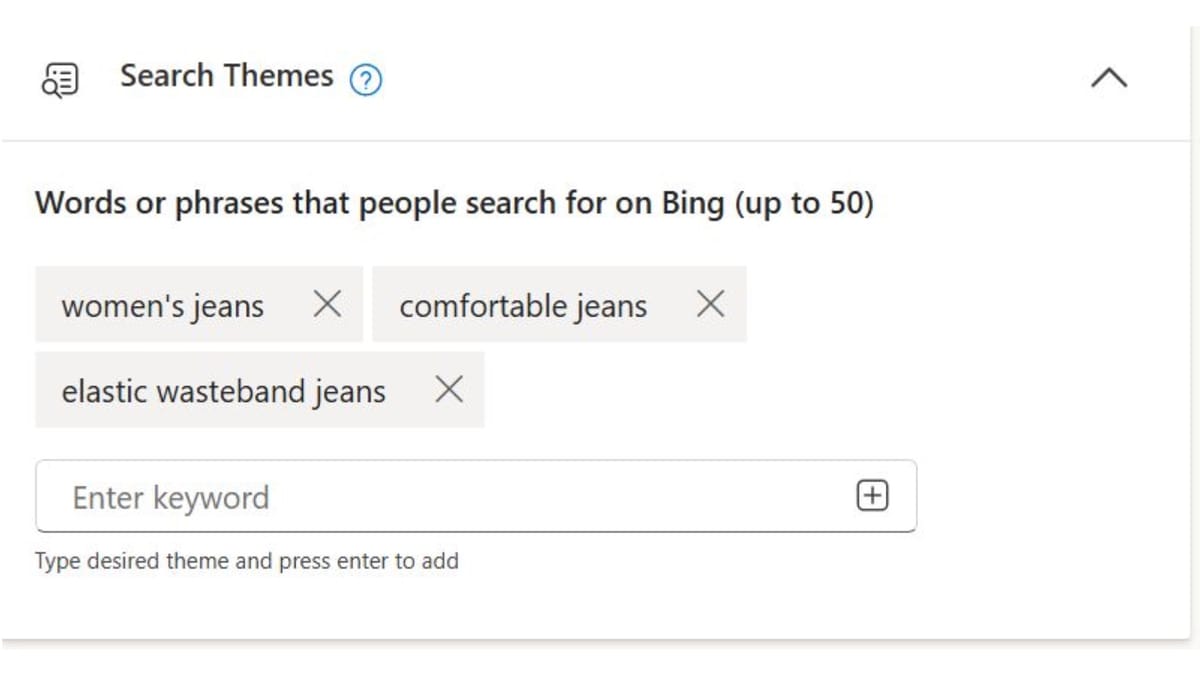
Microsoft Advertising expanded the search theme limit for Performance Max campaigns to 50 themes per campaign on January 9, 2026, according to Product Liaison Navah Hopkins. The update represents a significant increase from previous constraints and provides advertisers with more granular control over how automated campaigns interpret search intent.
According to Hopkins, who disclosed the update via LinkedIn and mentioned additional announcements scheduled for Wednesday, January 14, search themes function as "valuable guidance to help your PMax campaign understand the ways of searching you find useful for your business." The expanded capacity allows advertisers to provide more comprehensive signals to Microsoft's artificial intelligence systems that power Performance Max automation.
Search themes operate as words or phrases representing queries people might use when searching on Bing. Unlike keywords in traditional Search campaigns, themes don't restrict campaign reach but instead guide the learning algorithms toward relevant traffic patterns. Hopkins specified that advertisers can "partner Search themes with LinkedIn profile targeting and other audiences signals (including Impression Based Remarketing) to ensure your PMax campaign orients itself around your ideal customer."
Performance Max campaigns utilize search themes during initial learning phases to accelerate optimization. According to Microsoft's documentation, campaigns serving Product ads should begin generating impressions within three days of activation, while campaigns without Product ads typically start within four days. The learning period following optimization changes or new asset additions spans two to four weeks, or alternatively two to three conversion cycles—the time interval between a click and resulting conversion.
Microsoft defines conversion cycles as the duration from initial advertisement interaction to completed conversion action. This metric varies significantly across industries and purchase types. High-consideration products or services naturally require longer conversion cycles than impulse purchases or low-commitment actions.
The 50-theme limit applies at the campaign level rather than asset group level. Asset groups represent collections of creative assets including text headlines, descriptions, images, and logos that Performance Max combines algorithmically to create advertisements. Each Performance Max campaign can contain multiple asset groups targeting different product categories or audience segments.
The search theme expansion works in conjunction with Microsoft's audience signal capabilities. LinkedIn profile targeting enables advertisers to reach professionals based on job titles, company sizes, industries, or specific organizations. This targeting layer combines with search themes to create more precise campaign orientation.
Impression-based remarketing—one of the audience signals Hopkins mentioned—allows advertisers to target users who previously saw their advertisements but didn't necessarily click. This differs from traditional click-based remarketing and provides broader reach for brand consideration campaigns.
Microsoft's documentation notes that audience signals don't function as strict targeting parameters but rather as additional guidance layers for the artificial intelligence systems. The platform considers audience signals alongside search themes, asset performance, bid strategies, and historical account data when determining optimal advertisement delivery.
Performance Max campaigns represent Microsoft's shift toward automated advertising that doesn't require traditional keyword creation and management. According to the platform's documentation, advertisers need not create keyword lists for Performance Max campaigns, as "they don't use keywords."
However, negative keywords remain applicable at the account level through negative keyword lists. These lists prevent advertisements from appearing for specific search queries regardless of Performance Max automation. Microsoft recommends using negative keyword lists "to help prevent your ad from appearing in response to certain search queries."
The distinction between search themes and keywords reflects fundamental differences in how automated campaigns operate compared to traditional Search campaigns. Keywords trigger advertisements directly when search queries match specified terms and match types. Search themes merely inform the learning algorithms about potentially relevant queries without directly controlling advertisement delivery.
Microsoft's documentation confirms Support for Performance Max integration with SA360 (Search Ads 360), Google's enterprise advertising platform. The company also maintains partnerships with third-party tool providers including Skai, Adobe, SA360, and Marin Software, with additional integrations under development.
Third-party tool support enables enterprise advertisers and agencies to manage Performance Max campaigns alongside other advertising activities through unified interfaces. The integrations typically provide bulk editing capabilities, cross-platform reporting, and automated rule systems that operate across multiple advertising platforms simultaneously.
Performance Max campaigns undergo editorial review when advertisers add new asset groups. Most reviews complete within 48 hours according to Microsoft's documentation, though the company advises contacting Support if content displays "Under Review" status after two business days.
Disapproved asset groups indicate policy violations within creative assets. Microsoft's policies prohibit various content types including misleading claims, inappropriate imagery, restricted products, and intellectual property infringement. Advertisers can challenge disapprovals they believe comply with guidelines through Support channels.
Buy ads on PPC Land. PPC Land has standard and native ad formats via major DSPs and ad platforms like Google Ads. Via an auction CPM, you can reach industry professionals.
Microsoft supports website exclusions for Performance Max campaigns exclusively at the account level. However, the documentation specifies that first-party Microsoft domains cannot be excluded from Performance Max campaigns, including msn.com, outlook.com, outlook.live.com, microsoftcasualgames.com, windows.msn.com, ntp.msn.com, zone.msn.com, superapp.msn.com, and bing.com.
The first-party domain exclusion restrictions apply only to Performance Max campaigns. Other campaign types including Search, Audience, and Shopping campaigns can exclude these domains. Microsoft's documentation notes: "This only applies to Performance Max campaigns—these first-party domain exclusions will continue to apply to any other campaigns you have set."
Brand exclusion lists represent another control mechanism Microsoft provides for Performance Max campaigns. Advertisers can specify branded search queries where they prefer advertisements not appear, helping ensure brand context appropriateness. The feature isn't universally available yet according to Microsoft's documentation, which notes "Not everyone can use brand exclusions yet. If you can't, don't worry—it's coming soon!"
Performance Max serves advertisements across the entire Microsoft Advertising Network rather than limiting placement to specific channels or surfaces. The network encompasses Bing search results, Microsoft Start, MSN, Outlook, Microsoft Casual Games, and partner websites participating in the Microsoft Audience Network.
Unlike Smart campaigns, Performance Max doesn't support multi-channel management extending to non-Microsoft platforms like Google or Meta. Microsoft's documentation clarifies that multi-channel management "is only available with Smart campaigns," distinguishing the feature sets between campaign types.
Netflix inventory won't be included in Performance Max campaigns according to Microsoft's documentation. The streaming service represents premium video advertising inventory that Microsoft has been developing through separate initiatives.
Advertisers with existing Smart Shopping campaigns can upgrade them to Performance Max through the Campaigns interface. Microsoft preserves historical performance data from Smart Shopping campaigns for reporting purposes after conversion, enabling comparative analysis between campaign types.
The conversion process creates a new Performance Max campaign with approximately two weeks of learning period. Microsoft's documentation specifies that the learning period may be shorter than two weeks depending on various factors including conversion volume and campaign budget.
Smart Shopping campaigns represented Microsoft's earlier automated campaign type focused on product advertising. Performance Max expands the automation approach to encompass search, audience, and product advertisements within unified campaigns.
Hopkins indicated in her LinkedIn post that Microsoft plans to share additional updates through its blog during the week of January 13, 2026, with specific details arriving Wednesday, January 14. The nature of these forthcoming announcements wasn't disclosed, though Hopkins described them as "a number of exciting updates."
The scheduled announcement timing suggests coordinated release planning rather than ad hoc feature launches. Microsoft typically coordinates major feature announcements around industry events, quarterly business reviews, or strategic marketing initiatives.
The search theme expansion announcement came separately from the scheduled blog posts, suggesting Microsoft uses multiple communication channels for different announcement types. Product liaisons like Hopkins often preview updates through social media before official documentation appears, creating advance awareness among advertising practitioners and agency professionals.
Subscribe PPC Land newsletter ✉️ for similar stories like this one
Subscribe PPC Land newsletter ✉️ for similar stories like this one
Who: Navah Hopkins, Microsoft Ads Liaison and international speaker, announced the Performance Max search theme expansion affecting advertisers using Microsoft's automated campaign platform.
What: Microsoft Advertising increased the search theme limit for Performance Max campaigns to 50 themes per campaign, up from previous constraints. Search themes function as targeting signals that guide artificial intelligence systems toward relevant search queries without restricting campaign reach. The expansion allows advertisers to provide more comprehensive guidance to Performance Max automation while maintaining the campaign type's automated optimization approach.
When: Hopkins disclosed the update January 9, 2026, through LinkedIn, indicating the feature was immediately available to advertisers. Microsoft scheduled additional updates for announcement Wednesday, January 14, 2026, though specific details weren't disclosed in the initial announcement.
Where: The search theme expansion applies across Microsoft's entire advertising network including Bing search results, Microsoft Start, MSN, Outlook, Microsoft Casual Games, and Microsoft Audience Network partner websites. The feature works at the campaign level rather than asset group level, affecting how Performance Max campaigns interpret search intent across all placement surfaces.
Why: The expansion addresses advertiser feedback requesting more granular control over automated campaign targeting while preserving Performance Max's core automation benefits. Search themes help reduce learning periods and accelerate campaign optimization by providing explicit signals about relevant customer search patterns. The update enables advertisers to combine more comprehensive search guidance with audience signals including LinkedIn profile targeting and impression-based remarketing, creating more precise campaign orientation around ideal customer profiles without abandoning automation advantages.