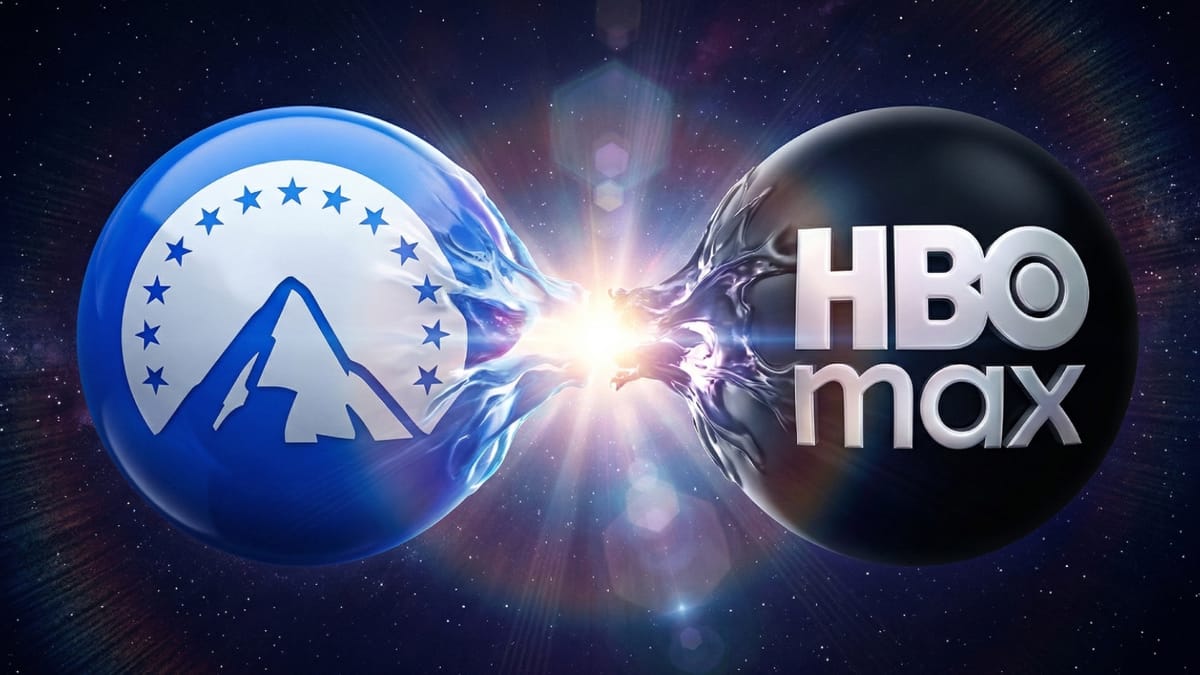
Paramount today confirmed plans to merge Paramount+ and HBO Max into a single direct-to-consumer streaming platform, a move that would unite two of the industry's most recognisable brands under one service and create a combined subscriber base of approximately 200 million users worldwide. The announcement, made by Paramount CEO David Ellison during an investor call today, follows the formal agreement for Paramount to acquire Warner Bros. Discovery (WBD) - a deal concluded after a months-long bidding contest that saw Netflix eventually step aside.
The disclosure came just days after the merger between Paramount and WBD was formally announced on Friday, February 27, 2026, and it represents one of the most consequential shifts in the streaming landscape in years. Ellison was direct about the intent. "As we said, we do plan to put the two services together, which today gives us a little over 200 million direct-to-consumer subscribers," he told analysts. "We think that really positions us to compete with the leaders in the space."
A deal that took months to close
The road to this moment was neither smooth nor short. Paramount, which completed its own merger with Skydance Media in mid-2024, began pursuing WBD in late 2025 as Warner Bros. Discovery explored strategic alternatives following disappointing financial performance and mounting debt. Netflix announced a deal to acquire WBD's studio and streaming businesses on December 5, 2025, at $23.25 in cash per share plus Netflix stock and a stake in a planned linear cable spin-off called Discovery Global.
Paramount entered the contest with a $30 per share all-cash offer on December 8, 2025, backed by $41 billion in equity from the Ellison family and RedBird Capital, and $54 billion in debt commitments from Bank of America, Citi, and Apollo. The WBD board initially rejected Paramount's proposal, describing it as inadequate. Paramount then amended its bid in late December, adding a ticking fee of $0.25 per share - equivalent to roughly $650 million per quarter - for every quarter the deal remained unclosed beyond December 31, 2026. The total enterprise value of the combined Paramount-WBD entity sits at approximately $110.9 billion, according to figures disclosed at the time of the Q4 2025 earnings call on February 25, 2026.
By late February 2026, Paramount raised its offer further to $31 per share. WBD's board accepted that proposal as a "superior offer," and Netflix declined to increase its own bid. The formal merger announcement followed on Friday, February 27, 2026.
The mechanics of how the two services will merge have not been fully defined. Ellison acknowledged during the March 2 investor call that the specific architecture - whether HBO Max will appear as a distinct tile within a larger service or whether the two platforms will be fully integrated - had not yet been determined. What he did make clear is that both brands carry significant weight, and Paramount intends to preserve the HBO identity rather than subsume it.
"Our viewpoint is HBO should stay HBO," Ellison said. "They built a phenomenal brand. They are a leader in the space, and we just want them to continue doing more of it. But by bringing the platforms together, all of our content will be able to reach even a broader audience than we can do standalone."
Casey Bloys, who has led HBO and its content operations, is expected to retain that role and operate with a degree of editorial independence from Paramount's broader management structure. Ellison was explicit about this, describing Bloys and his team as doing "absolutely a remarkable job at HBO" and reiterating that HBO should be able to "operate with independence, so that HBO can, candidly, do what it does incredibly well."
The framing is notable. It echoes the approach that some media companies have taken with prestige brands acquired through consolidation - maintaining the label's distinct creative identity while folding it into a larger distribution infrastructure. Whether that independence survives integration pressures will likely become a central question for the industry to watch.
The subscriber math
At the time of the merger announcement, Paramount+ had 79 million global subscribers, a figure the company reported in its Q3 2025 results. That quarterly total represented growth of 17% year-over-year, with 1.4 million net additions during the quarter and direct-to-consumer revenue of $1.77 billion. HBO Max, which restored its original brand name in July 2025 after a two-year period operating as "Max," had reached 128 million subscribers by the third quarter of 2025, according to Warner Bros. Discovery's own reporting.
Taken together, those figures produce the approximately 200 million subscriber estimate that Ellison cited. That number would place the combined service in the same tier as the industry's largest platforms. Netflix, by comparison, reported over 300 million subscribers globally in early 2026. Amazon Prime Video does not break out streaming subscriber counts separately, but Disney+ reported around 120 million paid subscribers in recent quarters.
The combined platform would rank second globally by subscription streaming scale if the 200 million figure holds through integration - a significant competitive position, though subscriber counts alone say little about revenue quality, average revenue per user, or churn.
The tech consolidation challenge
Ellison flagged during Paramount's Q4 2025 earnings call on February 25 that the company was already managing a complex technology stack consolidation even before the WBD deal. Paramount had inherited three separate streaming stacks running on multiple cloud environments independently of one another when Skydance took over. According to Ellison, that convergence would be completed "in the coming quarters."
The prospect of then merging that consolidated Paramount stack with HBO Max's own infrastructure adds another layer of complexity. HBO Max operates its own streaming technology platform, which has undergone significant development since the service launched in May 2020. Bringing the two together while maintaining service quality, personalisation capabilities, and advertising systems will require careful coordination.
Ellison drew on Paramount's existing consolidation experience as evidence that a similar approach could be applied to the combined platform. "At Paramount, by the middle of this year, we'll have completed the consolidation of our three services under one unified stack, and you can see us taking a similar approach to this platform going forward," he said. The implication is that the eventual merger of Paramount+ and HBO Max would follow a methodical, phased process rather than an immediate technical rebrand.
HBO Max's Germany launch in January 2026, carried out as Warner Bros. Discovery was completing its own platform expansion strategy, added further operational surface area to manage. Warner Bros. Discovery had been targeting 150 million global subscribers by the end of 2026 prior to the Paramount deal. Those expansion plans, including launches in Germany, Italy, and the United Kingdom, are now part of the combined company's considerations.
Advertising implications
The merger carries meaningful consequences for the streaming advertising market. Both Paramount+ and HBO Max operate ad-supported subscription tiers, and both have made significant investments in programmatic ad infrastructure. Paramount Australia's partnership with Magnite for programmatic access to Paramount+ inventory, announced in July 2025, illustrated the company's push to attract performance-oriented advertisers alongside traditional broadcast buyers.
Warner Bros. Discovery, for its part, had reported that streaming advertising revenue was growing even as linear television advertising declined sharply. The company's StreamX platform, which was designed to unify media planning and measurement across linear, digital, and streaming inventory, represents another asset that the combined company will need to rationalise alongside Paramount's own advertising technology infrastructure.
A combined platform with 200 million subscribers offers advertisers a meaningful scale advantage in negotiations. Programmatic buyers and agencies that currently split budgets across separate Paramount and HBO Max deals would face a different negotiating dynamic if the inventory is unified. Exactly how Paramount plans to structure the combined advertising offer - whether through a merged self-service platform, consolidated upfront commitments, or some hybrid - remains to be seen.
Taboola and Paramount had launched a connected TV performance tool in October 2025 aimed at small and medium-sized businesses, extending Paramount's advertising reach beyond premium video buyers. That initiative is part of Paramount Ads Manager, the company's self-service buying platform. How these tools evolve post-merger, and whether Warner Bros. Discovery's advertising technology will be folded in or run in parallel, will be a key operational question for advertising buyers.
HBO's brand integrity under scrutiny
The history of streaming rebrands offers cautionary examples. Warner Bros. Discovery itself retired the HBO Max name in May 2023 - renaming the service simply "Max" - in an attempt to broaden consumer perception beyond premium drama and encompass Discovery's reality programming. Consumer research subsequently showed that users favoured the HBO brand and its associations with premium content. The company reversed course and restored the HBO Max name in July 2025.
That episode will likely inform how Paramount approaches the eventual branding of the combined service. The question of whether to lead with the HBO Max name, the Paramount+ name, or an entirely new identity has not been answered. Ellison's remarks suggest a preference for preserving the HBO brand's integrity, but the commercial logic of unifying two separate services - with all the marketing, subscriber communications, and distribution renegotiations that entails - inevitably creates pressure toward a single name.
For advertisers and media buyers, brand continuity matters for audience positioning. HBO Max has built a distinct reputation for prestige drama and adult-skewing scripted content. Paramount+ is more broadly positioned, with a mix of CBS programming, live sports including the NFL and UFC, and original series. Merging those propositions without alienating existing subscribers in either camp will require careful product thinking.
Regulatory path ahead
The Paramount-WBD deal still requires regulatory clearance in multiple jurisdictions. Paramount certified compliance with a Federal Trade Commission second request for information on December 23, 2025, initiating a 10-day waiting period. Germany's foreign investment authorities had cleared the deal by January 27, 2026. The combined company had framed the merger as "pro-consumer, pro-creative talent and therefore pro-competitive" in regulatory filings, arguing that it strengthens Hollywood's ability to compete with tech and streaming giants.
Antitrust scrutiny of large media mergers has intensified in recent years. The FTC and Department of Justice have both taken more active stances on media consolidation, and the combination of two major subscription streaming platforms with a combined content library spanning HBO originals, Warner Bros. theatrical releases, Paramount pictures, CBS broadcast programming, and Nickelodeon's children's content represents exactly the kind of deal that draws regulatory attention.
The eventual approval timeline will shape when a combined streaming platform can actually launch. Until the deal closes, Paramount+ and HBO Max will continue operating as separate services.
Timeline
- May 2020 - HBO Max launches as Warner Bros. Discovery's flagship streaming platform
- March 2021 - Paramount+ launches, rebranding from CBS All Access
- May 2023 - Warner Bros. Discovery rebrands HBO Max to "Max" to broaden platform appeal
- July 9, 2025 - Warner Bros. Discovery restores HBO Max brand name after two-year experiment
- July 15, 2025 - Paramount Australia partners with Magnite for programmatic streaming ad access
- November 6, 2025 - HBO Max reaches 128 million global subscribers in Q3 2025
- November 9, 2025 - HBO Max announces January 2026 launch in Germany as Sky partnership ends
- November 15, 2025 - Paramount+ reaches 79 million subscribers in Q3 2025 with 17% DTC revenue growth
- December 5, 2025 - Netflix announces deal to acquire Warner Bros. Discovery at $23.25 per share
- December 8, 2025 - Paramount launches $30 per share all-cash tender offer for WBD
- December 23, 2025 - Paramount certifies FTC second request compliance; 10-day waiting period begins
- January 8, 2026 - RTL+ and HBO Max announce exclusive bundling partnership in Germany
- January 13, 2026 - HBO Max officially launches in Germany
- January 27, 2026 - Germany foreign investment authorities clear Paramount's WBD acquisition
- February 25, 2026 - Paramount reports Q4 2025 earnings; WBD board accepts $31 per share offer as "superior proposal"; Netflix declines to counter
- February 27, 2026 - Formal Paramount-WBD merger announced on Friday
- March 2, 2026 - Paramount CEO David Ellison today confirms Paramount+ and HBO Max will merge into a single platform during investor call; combined subscriber base cited at approximately 200 million
Summary
Who: Paramount, a Skydance Corporation led by CEO David Ellison, and Warner Bros. Discovery, owner of HBO Max. Casey Bloys, Chairman and CEO of HBO and Max Content, is expected to retain editorial leadership of the HBO brand post-merger.
What: Paramount confirmed it plans to merge Paramount+ and HBO Max into a single streaming platform following the completion of its acquisition of Warner Bros. Discovery. The combined service would have approximately 200 million direct-to-consumer subscribers. HBO will retain editorial independence within the merged platform, according to Ellison. The architecture of the combined service - including branding, technology stack, and advertising infrastructure - has not yet been finalised.
When: The announcement was made on March 2, 2026, during an investor call. The formal Paramount-WBD merger was announced on February 28, 2026. The platform merger itself is contingent on deal close, which requires ongoing regulatory approvals.
Where: The announcement was made in the context of a global streaming merger, with implications across all markets where Paramount+ and HBO Max operate, including the United States, Latin America, Europe, and Asia-Pacific. Regulatory proceedings are underway in the United States and other jurisdictions.
Why: Ellison cited competitive positioning as the primary rationale. A 200-million subscriber platform would place the combined entity in a stronger negotiating position with distributors and advertisers, and give the company greater scale to compete with Netflix and other leading streaming services. The merger also enables a consolidation of technology infrastructure, advertising systems, and content investment that Paramount argues will improve profitability and long-term shareholder value.
Share this article
The link has been copied!