Pinterest cuts 780 jobs while investors question the AI pivot strategy
Pinterest reduces workforce by 15% to fund AI development, but shares sink 9.61% as analysts question whether automation addresses competitive pressures from Meta and TikTok.


Pinterest reduces workforce by 15% to fund AI development, but shares sink 9.61% as analysts question whether automation addresses competitive pressures from Meta and TikTok.
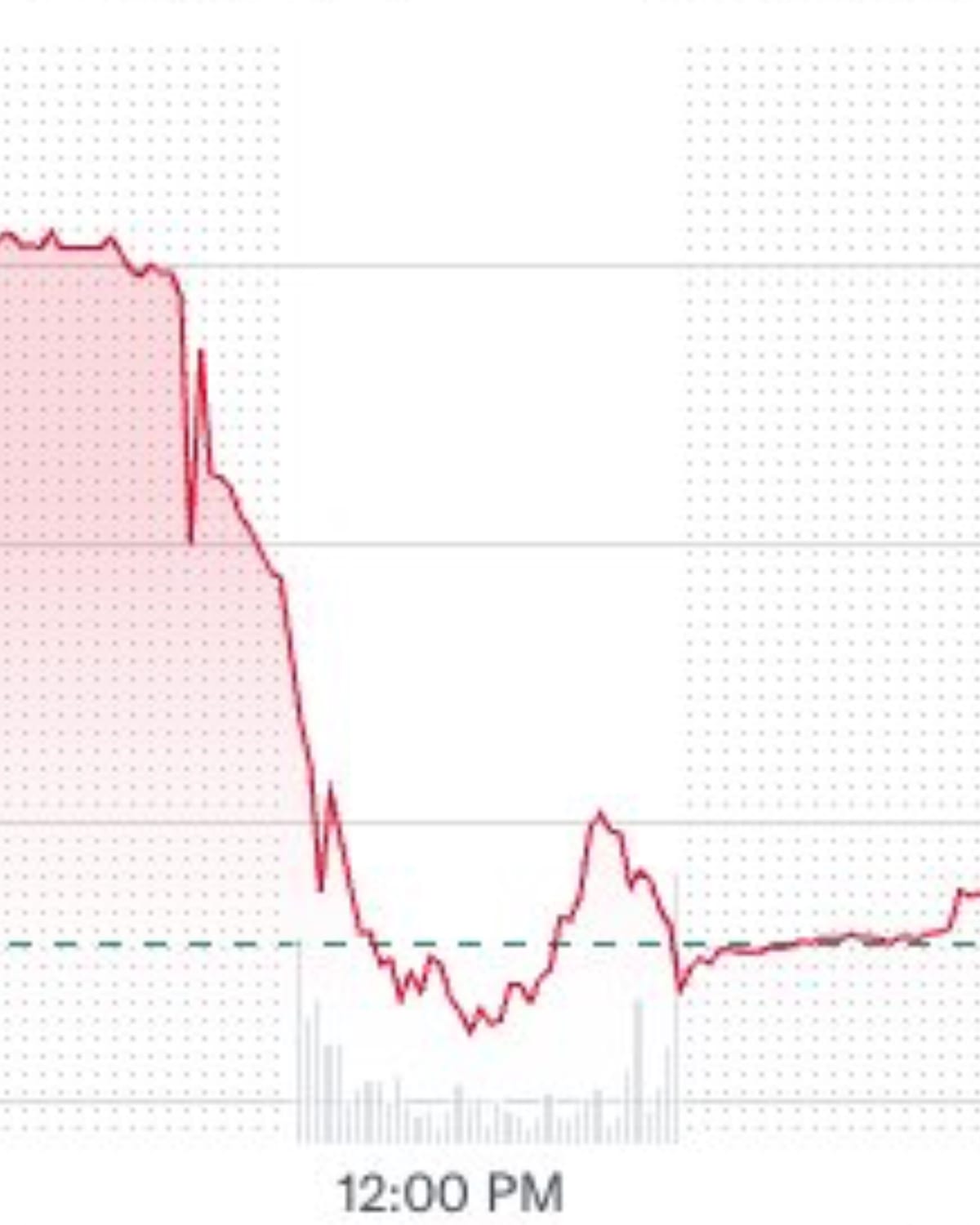
Pinterest this week announced workforce reductions affecting less than 15% of employees as the visual discovery platform reallocates resources toward artificial intelligence-focused roles, but investor reaction suggests skepticism about whether automation alone can address competitive pressures from Meta and TikTok.
The San Francisco-based social media company disclosed the layoffs on January 27, 2026, through a statement that emphasized strategic resource reallocation rather than financial distress. According to Reuters, Pinterest employed 5,205 full-time workers as of September 2025, making the reduction approximately 780 positions. Shares tumbled nearly 10% following the announcement, with the stock dropping from $23.57 to close at $23.41, down $2.49 or 9.61% for the trading session.
"Without clear cost savings or a concrete path to AI-driven revenue growth, these cuts look more defensive than strategic," Emarketer analyst Jeremy Goldman stated in response to the announcement. The assessment highlighted investor concerns about whether Pinterest's AI investments address fundamental competitive challenges rather than merely optimize existing operations.
Pinterest structured the announcement around artificial intelligence strategy, stating plans to "reallocate resources to its artificial intelligence-focused roles and strategy." The company also indicated intentions to close smaller office spaces related to previous acquisitions, suggesting broader operational consolidation beyond headcount reductions alone.
The workforce reduction arrives during a period of sustained revenue growth for Pinterest. The platform reached 600 million monthly active users in the third quarter of 2025, with revenue climbing 17% year-over-year to $998 million. This juxtaposition of growth and layoffs mirrors patterns observed across technology companies throughout 2025, where automation enables efficiency gains that reduce headcount requirements even as revenue expands.
The timing follows significant product launches and platform expansions throughout 2025. Pinterest launched Top of Search ads on September 25, 2025, achieving 29% higher click-through rates than standard campaigns during testing phases. The company announced plans to acquire tvScientific on December 11, 2025, marking its first major expansion into connected television advertising. These initiatives suggest aggressive platform development even as the company reduces workforce.
Danni Hewson, head of financial analysis at AJ Bell, characterized the workforce decision as part of broader industry patterns. "Many companies are having to show investors that their substantial spend on AI is not only worth it but also that they are making cuts elsewhere in order to fund it," Hewson stated. The observation connected Pinterest's actions to similar moves across the technology sector, where companies increasingly justify AI investments through offsetting workforce reductions.
Pinterest has already deployed multiple artificial intelligence-powered features throughout 2025, raising questions about what additional capabilities justify workforce restructuring. The company launched Performance+ AI-powered advertising suite in October 2024, delivering automated campaign optimization with early results showing 10% improvement in cost per acquisition for most advertisers. Retail advertisers spending on Performance+ campaignsexperienced, on average, 24% higher conversion lift compared to those spending only on traditional campaigns.
The platform rolled out Pinterest Assistant shopping tool for personalized product recommendations alongside the Performance+ ad suite for automating campaigns. These automation capabilities reduce manual optimization requirements for advertisers while improving campaign performance through machine learning-based targeting and budget allocation decisions. The system requires 50% fewer inputs during campaign creation compared to traditional campaign management interfaces.
Pinterest added AI features to boards in October 2025, transforming organizational tools into shopping destinations through dynamic collages and personalized recommendations. The "Styled for you" feature creates AI-generated fashion combinations from saved Pins, while "Boards made for you" combines editorial curation with algorithmic recommendations. Implementation remains limited to United States and Canada markets during testing phases.
Pinterest operates within an increasingly competitive landscape where multiple platforms compete for visual discovery and shopping activities. Meta completed the global expansion of advertising on Threads on January 26, one day before Pinterest's layoff announcement. The text-based social platform now reaches more than 400 million monthly active users with advertising delivery expanding from select markets to worldwide availability.
Instagram and Facebook continue dominating social commerce with sophisticated AI-powered advertising systems that deliver personalization across Meta's platform family. TikTok maintains strong growth in product discovery features, particularly among Generation Z users who increasingly prefer visual search capabilities over traditional text-based platforms. The competitive pressure creates urgency for Pinterest to differentiate its value proposition beyond inspiration and planning use cases.
According to data tracked by Layoffs.fyi cited in the Reuters report, more than 123,000 employees were laid off from 269 technology companies in 2025. This broader context positions Pinterest's workforce reduction within industry-wide trends rather than isolated circumstances. However, most documented layoffs involved companies explicitly citing AI automation as justification for workforce reductions, creating questions about whether these explanations represent genuine strategic shifts or convenient narratives for planned cost cutting.
Pinterest's user engagement patterns differentiate the platform from social networking competitors. The company emphasized during November 2025 earnings that nearly 85% of users come directly to the mobile app rather than through search engines or referral sources. This direct traffic indicates strong user intent and habitual usage patterns. Generation Z represents the largest and fastest-growing cohort, comprising over 50% of the user base. Platform positioning emphasizes planning and inspiration rather than social connection, creating opportunities for advertisers to reach consumers during high-intent moments before purchase decisions finalize.
Top executives at the World Economic Forum's annual meeting earlier in January 2025 had indicated jobs would disappear while new roles spring up, with two executives telling Reuters that AI would be used as an excuse by companies planning layoffs regardless of automation justifications. This assessment suggested skepticism about whether stated AI strategies genuinely drove workforce decisions or provided convenient rationale for cost reductions.
Design software maker Autodesk announced 7% job cuts on January 23, 2026, to redirect investments toward AI efforts, establishing a pattern of technology companies citing automation initiatives alongside workforce reductions. Statista cut 80 jobs in October 2025 as the data company shifted toward automation, affecting content teams despite reaching 18% year-over-year growth momentum. These precedents demonstrated industry-wide trends connecting AI adoption with headcount reductions, though outcomes varied significantly across implementations.
Tailwind CSS laid off 75% of its engineering team on January 6, 2026, after revenue declined approximately 80% despite growing framework popularity. The CSS framework's situation illustrated how AI coding tools can undermine business models built around documentation and educational content. Pinterest faces different dynamics given its advertising-based revenue model, though AI-powered content generation tools potentially reduce advertiser reliance on platform guidance and manual campaign management.
The marketing community observes these workforce adjustments carefully given implications for platform capabilities and advertiser support. Reduced headcount potentially affects account management quality, feature development speed, and technical support responsiveness. Conversely, successful AI automation could enable improved service levels with smaller teams if systems effectively handle routine inquiries and optimization tasks.
Pinterest expects pre-tax restructuring charges between $35 million and $45 million related to the workforce reduction and office closures. The company stated it would complete the restructuring plan by the end of its third quarter, establishing a timeline extending through September 2026 for full implementation.
The restructuring primarily affects roles deemed redundant due to artificial intelligence automation rather than specific departments or geographic regions. Pinterest provided no detailed breakdown of affected positions by function or location, maintaining general statements about resource reallocation toward AI-focused roles. This approach differs from some technology company layoffs that explicitly identify eliminated departments or consolidated geographic operations.
Office closures related to previous acquisitions suggest Pinterest is consolidating physical infrastructure alongside headcount. The tvScientific acquisition announced December 2025 will continue operating under its existing brand following transaction completion expected in the first half of 2026, though integration plans remain undisclosed. Earlier acquisitions may face different treatment as Pinterest rationalizes real estate footprint and operational structure.
Emarketer analyst Jeremy Goldman's assessment that the cuts "look more defensive than strategic" articulated concerns about whether Pinterest adequately communicated how workforce reductions connect to specific AI capabilities that drive revenue growth. Successful AI strategies typically demonstrate clear pathways from automation investments to improved business outcomes, whether through cost savings, revenue expansion, or competitive differentiation.
Pinterest's existing AI deployments already deliver measurable performance improvements. Performance+ campaigns generate 24% higher conversion lift for retail advertisers, while Top of Search ads achieve 29% higher click-through rates compared to standard campaigns. These results demonstrate functional AI implementation rather than aspirational capabilities, raising questions about what additional functionality requires workforce restructuring to fund.
The platform's position as a visual discovery destination differentiates it from text-based social networks and traditional e-commerce platforms. Users demonstrate planning behavior spanning months rather than days, creating longer optimization windows for advertising campaign performance. This extended engagement window results from users saving content to boards and returning repeatedly throughout purchase consideration phases. AI systems excel at pattern recognition across extended timeframes, potentially creating advantages for platforms with planning-oriented user behavior.
Pinterest's AI roadmap remains partially disclosed through product announcements rather than comprehensive strategic communication. The company continues testing features in limited markets before broader rollouts, suggesting measured approaches to capability deployment. Multimodal search launched in May 2025 for women's fashion, allowing users to refine searches with both image and text inputs. Expansion to additional categories and markets likely requires engineering resources allocated toward AI development.
Amazon, Google, and Meta command approximately 72% of US digital advertising spending in 2025, according to data tracked by PPC Land. The triopoly's dominance creates substantial challenges for alternative platforms seeking advertising budget share. Pinterest operates outside this triopoly while competing directly for visual discovery and shopping advertising dollars against Meta's Instagram and emerging platforms like TikTok.
The platform's monetization challenges differ from Meta's Instagram due to fundamental architectural differences. Instagram integrates shopping directly within social networking features, enabling seamless transitions from content consumption to purchase exploration. Pinterest positions itself as a separate discovery destination rather than social networking platform, creating different user intent patterns but potentially limiting spontaneous shopping behavior.
Recent product launches address these positioning challenges. Local inventory advertising introduced in September 2025 enables retailers to display real-time prices for in-stock merchandise within shoppers' local store radius. This functionality bridges online discovery with offline fulfillment, addressing omnichannel shopping experiences increasingly important for retail advertisers. Canadian Tire Company testing showed 16.5% higher in-store visit rates when incorporating local inventory ads into overall shopping strategies.
Third-party demand through programmatic access complements direct advertiser relationships. Pinterest expanded programmatic access through Index Exchange and Criteo on January 28, 2025, one year before the workforce announcement. The expansion created multiple pathways for advertisers to reach Pinterest's user base through demand-side platforms, potentially increasing fill rates and revenue per user. Most efforts focused on bringing new sources of demand to the platform rather than cannibalizing existing direct relationships.
Bill Ready, Pinterest's chief executive officer, has consistently positioned the company around performance measurement rather than brand awareness alone. The tvScientific acquisition announcement emphasized solving measurement limitations preventing television from functioning as a true performance channel. "People plan and shop across multiple screens and advertisers need performance solutions that reflect that reality," Ready stated. The integration enables advertisers to evaluate television with the same clarity expected from digital performance channels.
This measurement emphasis aligns with broader advertiser demand for attribution clarity across fragmented media landscapes. Connected television advertising budgets doubled from 14% of total media spending in 2023 to 28% in 2025 according to industry data. Growth created mounting pressure for measurement solutions connecting television exposure to tangible business outcomes beyond traditional brand awareness metrics. Pinterest's acquisition strategy addresses these measurement gaps through deterministic attribution technology designed for streaming environments.
Ready highlighted during November 2025 earnings calls that 100% of reported users are logged in, providing valuable first-party intent signals. These signals power recommendation engines and create improved user shopping experiences through personalized content discovery. The logged-in user base differentiates Pinterest from platforms relying on cookie-based tracking or probabilistic identification methods increasingly restricted by privacy regulations.
The company explored very early testing of how valuable its audience could be beyond its own platform, given strong commercial intent demonstrated through user behavior. This audience extension strategy potentially creates new revenue streams through data licensing or clean room collaborations with retail media networks and advertising technology vendors. Implementation details remain undisclosed, though industry trends favor privacy-safe audience activation through standardized clean room technologies.
McKinsey research released November 2025 revealed that while 88% of organizations use AI regularly, only approximately one-third have begun scaling implementations across enterprises. The research indicated 32% of respondents at enterprise level predicted overall workforce reductions of 3% or more within the year ahead due to AI implementation. Pinterest's announced 15% reduction significantly exceeds these projections, suggesting either aggressive automation deployment or workforce rationalization independent of stated AI strategy.
Organizations reported differing perspectives on how AI might affect workforce size. A plurality expected little or no effect on total employee counts despite regular AI use in business functions. This discrepancy between AI adoption rates and limited workforce impact challenged narratives connecting automation directly to headcount reductions. Most respondents noted their organizations hired for AI-related roles over the past year, with software engineers and data engineers most in demand.
The marketing technology sector faces particular pressure regarding AI implementation. Advertiser expectations for sophisticated targeting while maintaining ease of use create competing demands on platform development. Automation features that improve campaign performance reduce manual optimization requirements, potentially decreasing advertiser dependence on platform account management and technical support. This dynamic creates workforce implications distinct from other software categories where AI augments rather than replaces human decision-making.
Pinterest's Performance+ suite demonstrates successful automation implementation that improves advertiser outcomes while reducing manual intervention requirements. The system handles targeting and budget allocation decisions through machine learning, requiring 50% fewer inputs during campaign creation. Among mid-market and smaller managed advertisers, Performance+ campaign adopters exhibited, on average, 12% higher monthly growth rate in spend on Pinterest post-adoption when compared to non-adopters. These adoption patterns suggest advertiser acceptance of automated systems when performance improvements justify reduced control.
Who: Pinterest Inc., a visual discovery platform with 600 million monthly active users and 5,205 full-time employees as of September 2025. Emarketer analyst Jeremy Goldman and AJ Bell's Danni Hewson provided industry analysis. Bill Ready serves as chief executive officer.
What: Pinterest disclosed workforce reductions affecting less than 15% of employees, approximately 780 positions, to reallocate resources toward artificial intelligence-focused roles and strategy. The company also plans to close smaller office spaces related to acquisitions. Shares dropped nearly 10% following the announcement, falling from $23.57 to $23.41. Pinterest expects pre-tax restructuring charges between $35 million and $45 million.
When: The announcement occurred on January 27, 2026, with restructuring completion planned by the end of third quarter 2026. The decision follows a period of 17% year-over-year revenue growth to $998 million reported in November 2025.
Where: The workforce reduction affects Pinterest's global operations, with office closures targeting locations related to previous acquisitions. The company maintains headquarters in San Francisco while operating internationally across multiple monetized markets.
Why: Pinterest positioned the workforce reduction as strategic resource reallocation toward AI development rather than financial distress. However, analyst commentary suggested investor skepticism about whether automation addresses fundamental competitive challenges from Meta and TikTok or represents defensive cost cutting during sustained revenue growth.