Recipe creators prove Google's AI generates dangerous "Frankenstein" dishes
Inspired Taste bakes AI-generated key lime pie on February 11 to expose how Google's algorithms create inaccurate recipes while stealing brand names and photos from publishers.
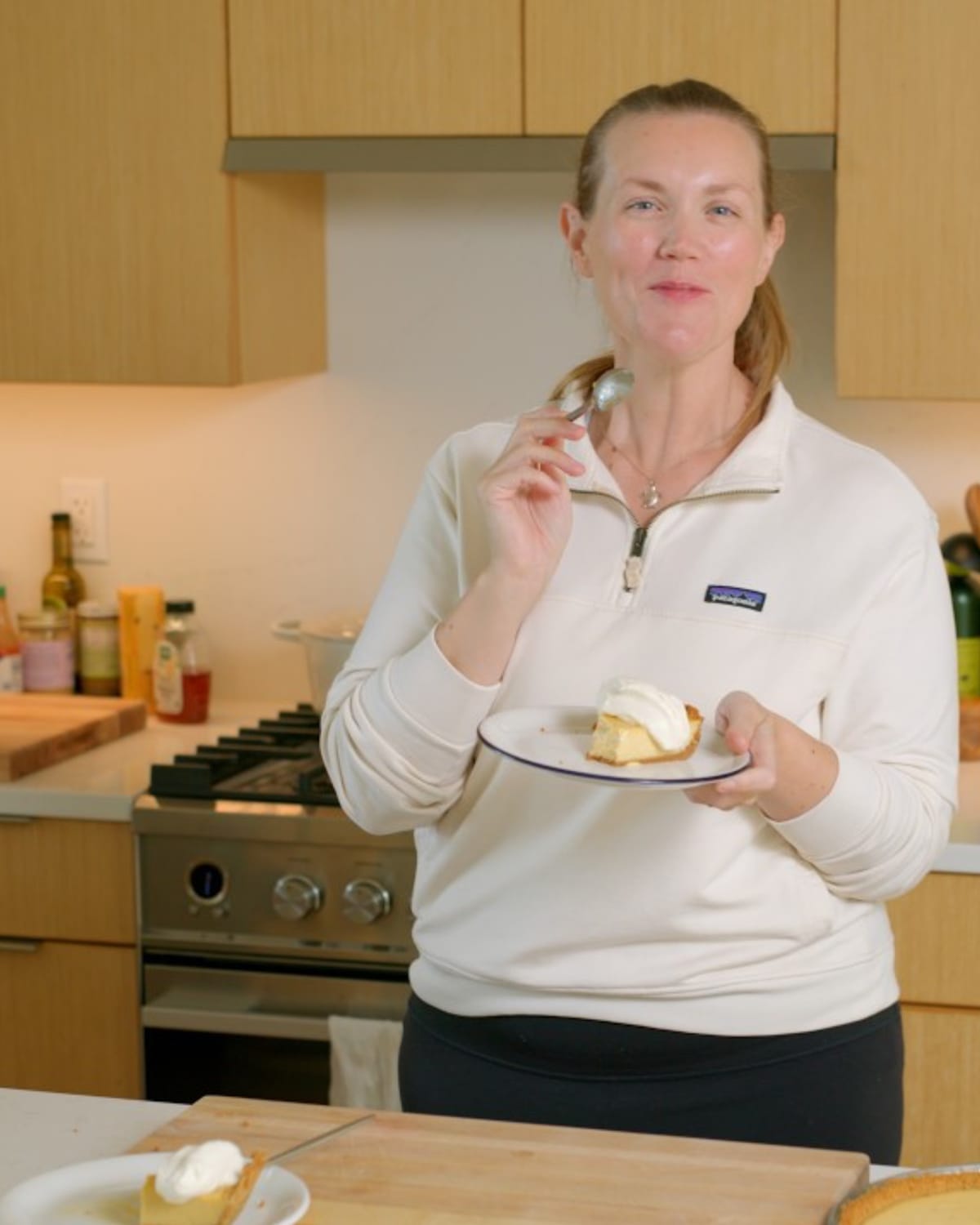
Joanne Gallagher tests AI-generated key lime pie recipe against Inspired Taste original version
Joanne Gallagher tests AI-generated key lime pie recipe against Inspired Taste original version
Food bloggers Adam and Joanne Gallagher published a video this week comparing their tested key lime pie recipe against a version generated by Google's AI Mode that claims to be theirs but contains completely different ingredients and instructions. The demonstration arrived three months after the couple first confronted Google executives about AI systems displaying plagiarized recipes using their brand name and photographs without permission.
"Joanne and I compare an AI Mode Frankenstein recipe to our trusted Key Lime Pie to show how harmful AI Frankenstein recipes are to our brand and search trust," according to the video description posted on the Inspired Taste YouTube channel. The footage shows side-by-side preparation of both versions, revealing fundamental differences in ingredient measurements, cooking methods, and final results.
Critical ingredient discrepancies
The authentic Inspired Taste recipe calls for five egg yolks, lime zest, lime juice, sugar, one can of sweetened condensed milk, and cream. According to the video documentation, the cream represents what makes their recipe distinctive among key lime pie variations. The AI Mode version demands two cans of condensed milk - double the amount in the original - alongside five egg yolks and less lime juice. The generated recipe eliminates cream, lime zest, and sugar entirely.
"The ingredients are different, the cook time is different, and frankly, other than being a pie, it really isn't similar to our recipe at all," according to the video narration. The Gallaghers tested multiple searches and received different AI-generated versions each time, highlighting inconsistency in how the system constructs recipes from their brand.
SEO consultant Glenn Gabe encountered a completely different AI-generated version when conducting research for his analysis of personal intelligence features. "For example, Glen Gabe, when doing a really useful deep dive into personal intelligence, was presented with a branded version of our key lime pie, and his version was completely different to the AI mode version we shared earlier," the couple stated in the video.
The behavior extends across multiple AI platforms. "This trend of AI tools being so comfortable presenting a full recipe in a zero-click environment as default isn't sustainable," according to the video statement posted February 11. ChatGPT displays similar patterns of generating complete recipes attributed to specific publishers without verification or testing.
Zero-click environments eliminate traffic
The technical implementation creates what industry analysts call zero-click searches - queries answered entirely within the AI interface without requiring users to visit source websites. Research published by Similarweb on July 2, 2025 found that zero-click searches on Google increased from 56% to nearly 69% after AI Overviews launched in May 2024. Traditional search previously directed users to publisher websites where they could access complete recipes, cooking videos, troubleshooting advice, and community discussion.
"It's extremely misleading, competes against us, and it's hurting our brand," according to the Inspired Taste video statement. The couple operates a recipe blog they have maintained for over 15 years, building content libraries and developing testing protocols that ensure recipe accuracy before publication.
Cloudflare CEO Matthew Prince warned on May 21, 2025 that content scraping ratios had deteriorated from one visitor per six pages scraped six months earlier to one visitor per 15 pages currently. The acceleration indicates search platforms extract increasing value from content without providing proportional traffic to original creators.
Professional recipe development requires weeks of testing. Publishers verify ingredient measurements, document cooking temperatures and timing specifications, and review final versions for clarity and safety before publication. Recipe testers note problems and refinements across multiple iterations. AI systems generate hundreds of recipes in minutes without any testing, creating potential food safety hazards when incorrect cooking temperatures or unsafe ingredient combinations reach consumers.
Brand impersonation without attribution
Google's AI features display professional food photography sourced from the original publishers alongside generated recipes. "These AI products boldly use our brand name and photos with an AI generated Frankenstein recipe," according to the video description. Users see images of finished dishes next to cooking instructions that will not produce those results.
"Just like many human creators out there, we go to the store to buy groceries, test, fail, test again, and can actually taste the recipes we make," according to the Inspired Taste statement posted February 11. The couple emphasized that their published recipes include extra context, videos, and comment section discussions to ensure reader success - elements AI systems cannot replicate.
"In addition to our recipes, we have extra context on the page and make videos to make sure our readers succeed when they are making our recipes," the statement continues. "We also have conversations with them on our recipe page in the comment section and on social media channels. Google and ChatGPT don't do any of these things. They only scrape and slap our brand name on these AI recipe outputs. It is just plain wrong."
The couple stressed that even completely accurate AI-generated recipes with proper citations create unsustainable competition. "We believe it is important to note that even if the branded AI recipe is completely accurate and has a tiny link, it is in a zero click environment and directly competes against creators at scales that is well beyond ok. It isn't sustainable," according to the video description.
Testing methodology exposes accuracy problems
The Gallaghers deliberately chose to test a recipe that would produce edible results rather than selecting one of the many AI-generated versions that would end in complete disaster. "We could have gone with the low blow in our video by making one that ended in complete disaster. It was very tempting!" according to their response to Barry Schwartz on February 11.
"When deciding which AI Frankenstein recipe to test we searched many times and pretty much got just as many different Frankenstein recipe results," the couple explained in the social media discussion. This variability demonstrates that AI systems lack consistency even when generating recipes attributed to the same source.
The video concludes with the couple confirming they preferred their original tested recipe, though they avoided detailed taste comparisons. "Because we know you're going to ask, yes, we definitely preferred ours," according to the video narration. The measured response reflects their strategic decision to focus on broader systemic issues rather than sensationalizing failed recipe outcomes.
SEO consultant Gabe encouraged deeper analysis in his social media response. "I wanted to hear more about the Frankenstein recipe, though! Like how was it, what was the difference taste-wise, texture-wise, etc. You preferred yours, which makes total sense, but was the Frankenstein recipe really bad, or close?" Gabe wrote on February 11.
The Gallaghers responded that they "felt that it was much more important to point out the bigger picture problem that is happening. The direction they are taking isn't sustainable."
Industry support and media attention
The video demonstration received substantial engagement from search marketing professionals. Barry Schwartz, founder of Search Engine Roundtable, shared the content with his commentary: "so cool you tried out the AI Frankenstein version :)" His support reflects broader industry frustration with AI features that display publisher content without generating proportional traffic.
Glenn Gabe amplified the message to his professional network: "This is great. Inspired Taste started baking Frankenstein recipes (which AI generates from their real recipes). I look forward to seeing more of them and seeing how they came out... The first (key lime pie) sounded meh. So don't fall for those Frankenstein recipes. Demand the real ones!" Gabe's post accumulated 2,386 views within hours of publication on February 11.
The campaign builds on the couple's December 2025 appearance on NBC News, where they warned consumers about dangerous errors in AI-generated recipes. "Google needs to stop using our brand name to try to trick users into trusted them," Adam Gallagher wrote after the national broadcast aired December 21.
Industry analyst Joe Youngblood corroborated the problems through personal experience. "We made an AIO recipe recently, we'll never use Google's AIO's for a recipe again. It wasn't good at all," Youngblood stated on February 12 in response to the video.
The timing proves significant as multiple platforms expand AI features that compete directly with publisher content. Google launched AI Mode to UK users on July 28, 2025, following the feature's expansion to India in June 2025. These deployments utilize customized versions of Gemini 2.5 models specifically designed for search applications.
Publishing industry mobilization
Recipe creators face distinct challenges compared to other publishers affected by AI content generation. Food safety concerns add urgency that distinguishes recipe problems from other AI content issues. Incorrect cooking temperatures for poultry, improper food handling procedures, or unsafe ingredient combinations can cause serious illness when AI systems generate recipes without safety review.
The advertising technology company DoubleVerify published research on August 1, 2025 identifying concerning trends where generative AI tools create content and build recipe sites "with minimal human effort." The verification firm's proprietary detection models found that InsanelyGoodRecipes.com attracts over 3 million visits per month despite analysis indicating "the textual content on this site and many more like it is AI-generated."
Publishers have responded with systematic campaigns demanding regulatory intervention. Mediavine, representing over 17,000 independent digital publishers, launched a petition on August 7, 2025 demanding immediate action from the U.S. Copyright Office to protect content creators from generative AI exploitation. "When it comes to AI crawling sites without permission, attribution, or compensation, the market won't fix this problem on its own. The time to act is now," Mediavine stated.
The company's policy explicitly prohibits monetizing "low-quality, mass-produced, unedited or undisclosed AI content that is scraped from other websites." Mediavine also refuses to "tolerate publishers using AI to create untested recipes or any other form of low-quality content that devalues the contributions of legitimate content creators."
Google's inconsistent responses
Google's approach to AI-generated content has produced contradictory signals throughout 2025. The company updated its quality rater guidelines in January 2025 with new definitions for generative AI and expanded spam classifications. These guidelines directed quality raters to identify pages with main content created using automated or generative AI tools and potentially rate them as lowest quality.
However, Google's own AI systems generate content at scale through features like AI Overviews and AI Mode. The company serves over 1.5 billion users monthly through these features. Search chief Liz Reid stated in October 2025 that "AI-generated content doesn't necessarily equal spam," distinguishing between low-value automated content and legitimate AI-assisted creation.
Google Search Relations team members stated on December 17, 2025 that optimizing for artificial intelligence-powered search requires no fundamental changes from traditional search engine optimization practices. "Everything we do and all the things that we tailor and all the things that we try to improve, it's all about how do we reward content that human beings find satisfying," Danny Sullivan stated during the Search Off the Record podcast.
The guidance does not address the fundamental problem recipe creators identify - that AI systems display complete recipes within zero-click environments regardless of whether those recipes have been tested or verified for accuracy and safety.
Google began testing a Quick View feature for recipes on October 10, 2024. The feature appears as a button overlaid on recipe images in search results. When clicked, it displays recipe summaries including ingredients, instructions, and sometimes user comments, all within Google's interface rather than directing users to original websites.
Technical attribution failures
The Gallaghers detailed specific technical problems in their December 2, 2025 complaint to Nick Fox, Senior Vice President of Knowledge & Information at Google. "However, we would like to point out that we are still seeing branded searches for us and multiple recipe sites with full plagiarized recipes riddled with errors, using our photos (Gemini Thinking model), our videos, using our brand name, with no citations to our domain recipe page at all, or the citations are incorrect altogether," according to the LinkedIn exchange.
Fox had announced December 1 that Google was "launching a new feature that highlights links from your news subscriptions so you can get more value from your subscriptions - coming soon to the Gemini App, AI Overviews, and AI Mode." He also noted Google was "increasing the number of inline links in AI Mode responses and adding a short explanation so you get more context on why the links might be helpful to visit."
These features address different problems than those the Gallaghers identified. Subscription highlighting benefits users who already pay for content access, while inline link increases apply to AI Mode rather than standard search results or branded queries where recipe publishers report issues.
The gap between Google's stated publisher support objectives and reported creator experiences highlights implementation challenges. While Google announces features designed to increase publisher visibility and maintain web ecosystem health, recipe creators report AI systems displaying complete content with errors, using photographs without attribution, and providing incorrect or missing citations.
"This needs to be fixed and we need an official channel to resolve it," Adam Gallagher stated in the December 2 LinkedIn exchange. The request identifies a procedural gap - publishers experiencing content appropriation issues lack clear mechanisms for reporting problems or receiving responses.
Business model sustainability questions
Traditional recipe publishing depends on website traffic to generate advertising revenue, affiliate marketing income, and sponsored content opportunities. When AI features display complete recipes within their interfaces, traffic declines while hosting costs remain constant. Publishers have reported measurable business impacts from AI Overview presence, with some documenting revenue losses as Google's features keep users on its platform.
The Gallaghers emphasized that their 15 years of work building content libraries and brand recognition now faces systematic appropriation. "We have been working hard on our site and brand for over 15 years," Adam Gallagher wrote in December. "Never in a million years did we ever consider that Google would ever turn on us and the entire web by doing anything like this."
The economic pressures extend beyond individual publishers to affect the broader content ecosystem. As Matthew Prince explained in his May 21 CNBC interview, deteriorating traffic ratios indicate search engines extract increasing value from content without providing proportional benefits to original creators, raising concerns about sustainable content ecosystem economics.
Marketing professionals must now reconsider how they measure content success, moving beyond traditional metrics like page views and click-through rates to focus on brand authority and direct audience relationships. The shift toward zero-click searches requires strategies that balance visibility in AI-powered search results with the need to drive direct engagement and conversions.
Inspired Taste announced plans to continue their media campaign until Google implements changes. "We have more interviews scheduled with major news outlets. We are not going to stop until something changes," Adam Gallagher wrote on December 21. "What Google and other platforms are doing with our brand name and content is wrong. It is theft, plain and simple."
The video published today represents the latest escalation in their systematic campaign to force platform accountability. The couple's persistence reflects broader frustration among content creators who face AI-generated competition that operates at scales far beyond traditional content appropriation challenges.
Timeline
October 10, 2024: Google begins testing Quick View feature for recipes in search results
May 2024: Google launches AI Overviews feature in United States
February 11, 2026: Inspired Taste publishes video demonstrating AI Frankenstein recipe problems
Summary
Who: Adam and Joanne Gallagher, founders of Inspired Taste, a recipe blog operated for over 15 years, with support from SEO consultants Glenn Gabe and Barry Schwartz.
What: The couple published a YouTube video comparing their tested key lime pie recipe against an AI Mode-generated version that claims to be theirs but contains completely different ingredients - two cans of condensed milk instead of one, no cream, no lime zest, and no sugar. The demonstration exposes how Google's AI systems generate inaccurate recipes while using publisher brand names and photographs without permission.
When: The video was published on February 11, 2026, three months after the couple first confronted Google executives about AI plagiarism in December 2025 and following their December 21, 2025 NBC News appearance.
Where: The content appropriation occurs across Google's AI Mode, AI Overviews, and ChatGPT platforms, which display complete recipes in zero-click environments that prevent users from visiting original publisher websites. The video was published on Inspired Taste's YouTube channel and amplified across professional networks.
Why: The demonstration aims to prove that AI-generated recipes damage publisher brands, create food safety risks through untested instructions, and threaten business sustainability by displaying complete content without generating website traffic. The campaign seeks to force platform accountability and establish proper attribution mechanisms as zero-click searches increased from 56% to 69% after AI Overviews launched, while content scraping ratios deteriorated from 6:1 to 15:1 according to Cloudflare analysis.
Share this article
The link has been copied!
Your link has expired. Please request a new one.
Your link has expired. Please request a new one.
Your link has expired. Please request a new one.
Great! You've successfully signed up.
Great! You've successfully signed up.
Welcome back! You've successfully signed in.
Success! You now have access to additional content.