Shoppers click more but buy less
Consumers researched extensively but purchased selectively in 2025 as clicks surged 2% while transactions fell 5% across 2,300 U.S. retail brands, signaling fundamental changes in purchase journeys.


Consumers researched extensively but purchased selectively in 2025 as clicks surged 2% while transactions fell 5% across 2,300 U.S. retail brands, signaling fundamental changes in purchase journeys.
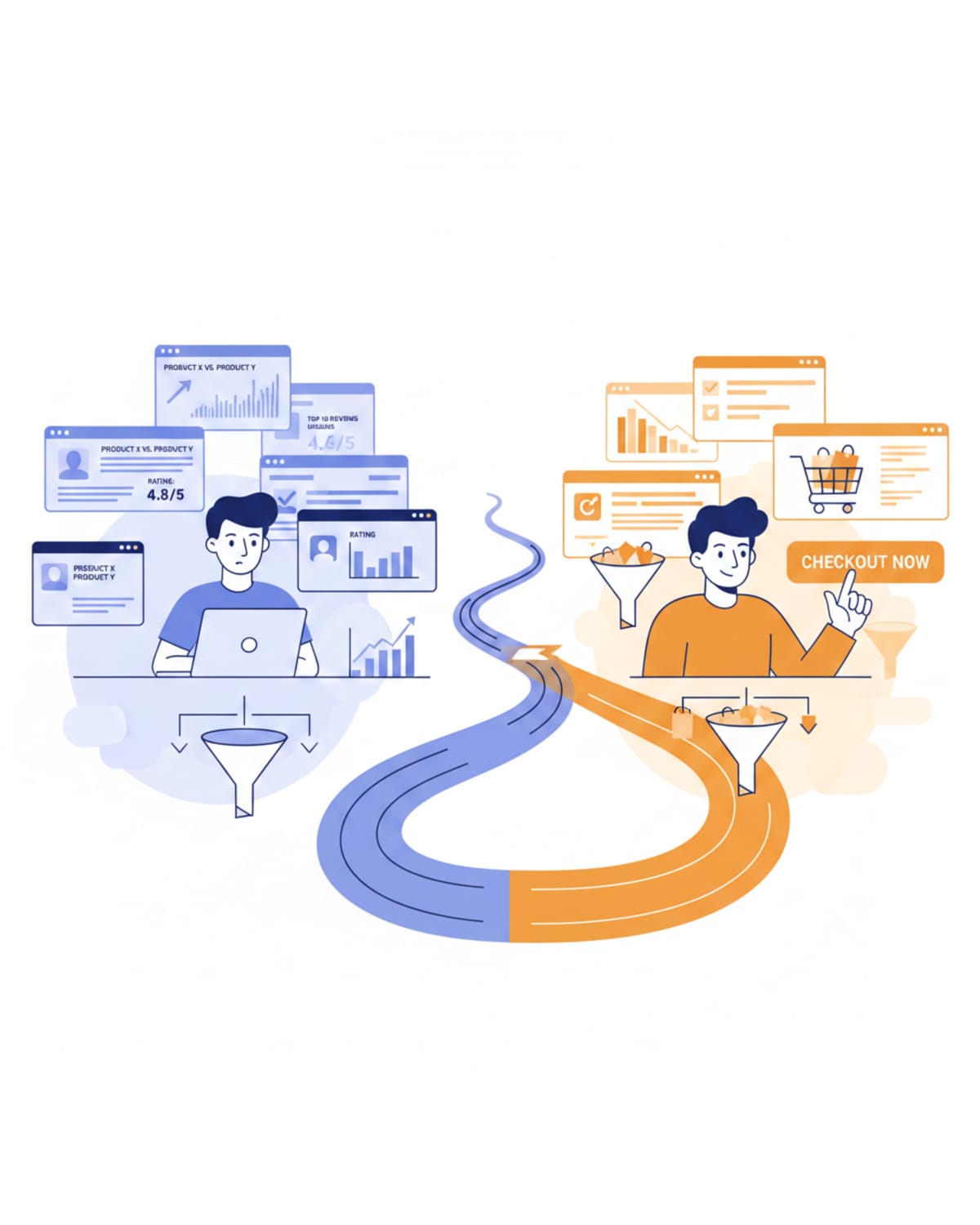
impact.com yesterday released its 2025 Industry Benchmark Report, analyzing performance data from more than 2,300 U.S. retail brands operating through its partnership platform. The findings document a structural shift in consumer behavior characterized by increased research activity, declining conversion rates, and higher spending when purchases occur.
Clicks increased 2% year-over-year while transactions declined 5% and conversion rates fell 6%, according to the report analyzing data from January 1 through December 31, 2025, compared to the same period in 2024. Shoppers demonstrated extended consideration phases followed by compressed purchasing windows, particularly during Black Friday and Cyber Monday.
Average order value rose 4% from $118 to $123, driven by consumers adding 8% more items per order even as overall transactions dropped. Consumer spending declined just 1% year-over-year despite the 5% reduction in transactions, indicating shoppers consolidated purchases into fewer, higher-value checkouts.
November recorded the year's most dramatic disconnect between engagement and conversion. Clicks surged 45% year-over-year while transactions remained nearly flat at down 1% and conversion rates reached their lowest point of the year. The pattern suggests consumers spent significant time browsing and validating choices before committing to purchases.
Q4 accounted for 33% of annual clicks, up from 29% in 2024. The concentrated research activity preceded the December 1 Cyber Monday date, when shoppers who had monitored prices and compared options across multiple partners executed prepared purchase decisions.
Network partners drove 45% of clicks, up from 41% in 2024, while content review partners contributed 18% of clicks. Influencers represented 6% of clicks, up from 4% in 2024, indicating growing consumer reliance on creator recommendations during product research.
March and April recorded the highest conversion rates of the year. Without holiday promotion noise, traffic during these months demonstrated higher intent and more decisive purchasing behavior compared to Q4's research-heavy patterns.
The 5% year-over-year transaction decline occurred despite increased engagement across affiliate marketing channels. November illustrated this disconnect most clearly, showing clicks increased 45% while transactions remained nearly flat.
The purchase window compressed into early December. With Cyber Monday falling on December 1, shoppers delayed final checkouts until they validated deals they had monitored throughout November. Unlike 2024, when December transactions spread more evenly across the month, 2025 data indicates purchases concentrated in the first few days.
Throughout Q1 through Q3, transaction patterns remained stable. Each quarter contributed 22-23% of annual transactions, with Q4 accounting for 32%, consistent with 2024 patterns.
Technology solutions and influencers demonstrated the strongest conversion improvements. Technology solutions improved conversion rates by 25% year-over-year while influencers increased theirs by 8%. Transaction volume from influencers grew 65%, tech solutions 16%, and media arbitrage 12%.
Loyalty and rewards partners continued driving half of all transactions at 50%, capturing shoppers at the moment they completed purchases. These execution partners maintained the most efficient performance, generating equal shares of transactions and consumer spend.
Items per order increased from 2.3 to 2.5, representing 8% year-over-year growth. Average item value declined 3% from $50 to $49, but the volume increase drove net average order value growth of 4%.
Shoppers added more lower-priced items together, likely optimizing for free shipping thresholds or bulk discounts. This strategic bundling kept total consumer spending nearly flat despite 5% fewer transactions.
Partner efficiency varied significantly at checkout. Loyalty and rewards partners captured 50% of transactions and 50% of consumer spend, demonstrating the highest efficiency. Voucher and coupon partners represented 10% of consumer spend, down from 11% in 2024.
Influencers generated 6% of transactions and 3% of consumer spend, recording 37% year-over-year growth. Technology solutions contributed 5% of consumer spend and 5% of transactions, also achieving 37% growth. While these partners increased consumer spending substantially, their overall share contribution remains small but growing.
Total brand spending increased just 1% year-over-year in 2025, matching the modest 1% growth in commission payments. Non-commission costs grew 3%, including bonuses, placement fees, and fixed payments to secure visibility during competitive windows.
Non-commission costs increased their share of total spend to 14%, up from 13% in 2024. Commission payments represented 86% of total spend, down from 87% in 2024. Brands reallocated spending rather than expanding budgets.
The reallocation concentrated in November. Total brand spend increased 6% that month, with commission payments up 10%. Brands raised commission rates by 7% to compete for placement during the year's highest-traffic research period.
Spending efficiency varied dramatically by partner type. Loyalty and rewards partners consumed 33% of total brand spend but generated 50% of transactions, delivering the strongest return. Network partners used 20% of brand spend to produce 18% of transactions, maintaining balanced efficiency.
Content review partners consumed 24% of brand budgets but drove just 9% of transactions and 18% of clicks, reflecting their role earlier in the purchase funnel during research. Influencers remained highly efficient, consuming 4% of brand spend while generating 6% of transactions.
Commission payments increased despite fewer transactions because brands raised commission rates strategically, paying more per transaction to defend market share during compressed shopping periods.
The strongest affiliate programs in 2025 built portfolios covering the entire journey from research through decision to execution, according to the report's analysis of partner performance.
Research partners generated awareness and comparison shopping. Network partners produced 45% of clicks, 18% of transactions, and consumed 20% of brand spend, offering broadest reach during research. Content review partners contributed 18% of clicks, 9% of transactions, and consumed 24% of brand spend, providing deep product comparison and education.
Decision partners moved shoppers from consideration to intent. Technology solutions generated 6% of clicks, 5% of transactions, and consumed 5% of brand spend, helping ready-to-buy shoppers finalize decisions. Influencers produced 6% of clicks, 6% of transactions, and consumed 4% of brand spend, providing validation and social proof.
Execution partners captured ready-to-buy shoppers. Loyalty and rewards programs generated 15% of clicks, 50% of transactions, and consumed 33% of spend, converting shoppers at the moment of purchase. Voucher and coupon partners contributed 6% of clicks, 9% of transactions, and consumed 6% of spend, closing price-sensitive shoppers.
Programs that judged all partners by last-click efficiency systematically undervalued research partners. Network and content review partners consumed 44% of total brand spend but drove only 27% of transactions, appearing inefficient until considering they generated 63% of total clicks. These partners created conditions for sales rather than closing them.
Technology solutions and influencers showed the strongest efficiency gains in 2025. Conversion rates increased 25% and 8% respectively, helping bridge the gap between research and execution stages.
The 2025 data documents three fundamental shifts affecting marketing strategy, according to the report's analysis.
Journey-based value replaces last-click attribution. Partners driving clicks in November often received no credit for conversions in December. Content and network partners generated 63% of total clicks but only 27% of transactions, not because they underperformed but because they operated earlier in the journey.
Order value supersedes transaction volume. Shoppers bought 5% less but spent only 1% less overall. Average order value increased 4% as consumers bundled strategically. Programs optimizing for transaction volumes missed the shift toward fewer, larger purchases.
Moment-based investment replaces always-on spend. Total brand spending increased just 1% year-over-year, but November spending jumped 6%. Brands concentrated spending around peak research and conversion windows rather than distributing spend evenly across the year.
Cristy Garcia, CMO at impact.com, characterized the behavioral change in the announcement: "We're not seeing consumers pull back - we're seeing them slow down and get smarter and more intentional. Shoppers are spending more time researching across creators, publishers, and deal partners, then moving quickly once they're confident in the value. The brands performing best are the ones showing up earlier in that journey and recognizing the partners that influence decisions, not just the moment of conversion."
The report analyzed 2,368 North American retail brands across the full 2025 calendar year, comparing performance with 2024 to understand how the buyer journey reshaped affiliate performance. The analysis encompassed nearly 1 billion transactions, over $116 billion in GMV, and more than $10 billion in GTV.
Retail and shopping sub-categories included in the analysis covered apparel, shoes, and accessories; computers and electronics; health and beauty; home and garden; sport, outdoor, and fitness; arts and entertainment; and flowers, food, gift, and drink.
The research documented that affiliate journeys lengthened at the front and compressed at checkout, requiring budgets and partner strategy to align with research-heavy periods and narrow conversion windows. Rising clicks alongside falling conversions signaled comparison behavior rather than weaker demand.
Programs needed to measure partner impact across consideration stages, not just last-click sales. Fewer transactions did not mean less value as shoppers bundled strategically, lifting average order value. Evaluating partners by revenue per order mattered more than transaction volume.
Winning programs reallocated spend to key moments instead of increasing budgets, concentrating investment where visibility or conversion influence was highest. The findings suggest marketing professionals must build flexibility into budgets, adapt spending to research-heavy moments, and recognize influence across the full funnel rather than focusing solely on conversion peaks.
The pattern intensified during Q4 when 33% of annual clicks occurred, up from 29% in 2024. Shoppers used affiliate links for dual purposes: research and purchase. They clicked to compare prices, monitor deals, and build knowledge across multiple partners before converting.
Affiliate marketing attribution systems face ongoing challenges around transparency and measurement. Publishers compete for the final click before purchase, sometimes through practices that create attribution complexity when research activity spreads across weeks but purchases compress into days.
Success metrics may need to evolve beyond transaction volume, placing greater emphasis on order value and the impact of individual partners throughout extended customer journeys. Performance models should recognize influence across the full funnel, not just last-click conversions.
Who: impact.com, a partnership management platform, analyzed performance data from more than 2,300 U.S. retail brands operating across its network. Cristy Garcia, CMO at impact.com, provided commentary on the findings. The analysis affects advertisers, affiliate publishers, content creators, influencers, and loyalty program operators.
What: The 2025 Industry Benchmark Report documented fundamental changes in consumer shopping behavior and affiliate marketing performance. Clicks increased 2% year-over-year while transactions declined 5% and conversion rates fell 6%. Average order value rose 4% from $118 to $123 as shoppers added 8% more items per order. November recorded 45% year-over-year click growth with nearly flat transactions. Brand spending increased 1% overall but rose 6% in November, with commission rates up 7% that month. Influencer transactions grew 65% year-over-year while technology solutions improved conversion rates by 25%.
When: The report analyzed data from January 1 through December 31, 2025, comparing performance against the same period in 2024. November emerged as the critical research month, with purchase execution compressed into early December around the December 1 Cyber Monday date. impact.com released the findings on February 12, 2026.
Where: The analysis covered 2,368 North American retail brands across multiple categories including apparel, electronics, health and beauty, home and garden, sports, and food. Performance data encompassed nearly 1 billion transactions, over $116 billion in GMV, and more than $10 billion in GTV processed through impact.com's partnership platform.
Why: The report matters for marketing professionals because it documents structural changes in purchase journeys requiring strategic adaptations. Consumers now research extensively across multiple partners before making consolidated purchases in narrow windows. Attribution models must recognize influence across the full funnel rather than crediting only last-click conversions. Budget allocation needs flexibility to concentrate spending during peak research and conversion moments rather than distributing evenly. Partner evaluation should emphasize order value and journey-stage contribution instead of transaction volume alone. The findings indicate traditional always-on spending approaches no longer match how shoppers actually behave, requiring programs to fund the complete customer journey from research through execution.