Sponsored products coverage climbs 7% as retailers shift to dynamic ad placement
Pentaleap's H2 2025 benchmarks report reveals major retail media networks expanding keyword coverage while adopting fluid grid strategies over fixed ad slots.


Pentaleap's H2 2025 benchmarks report reveals major retail media networks expanding keyword coverage while adopting fluid grid strategies over fixed ad slots.
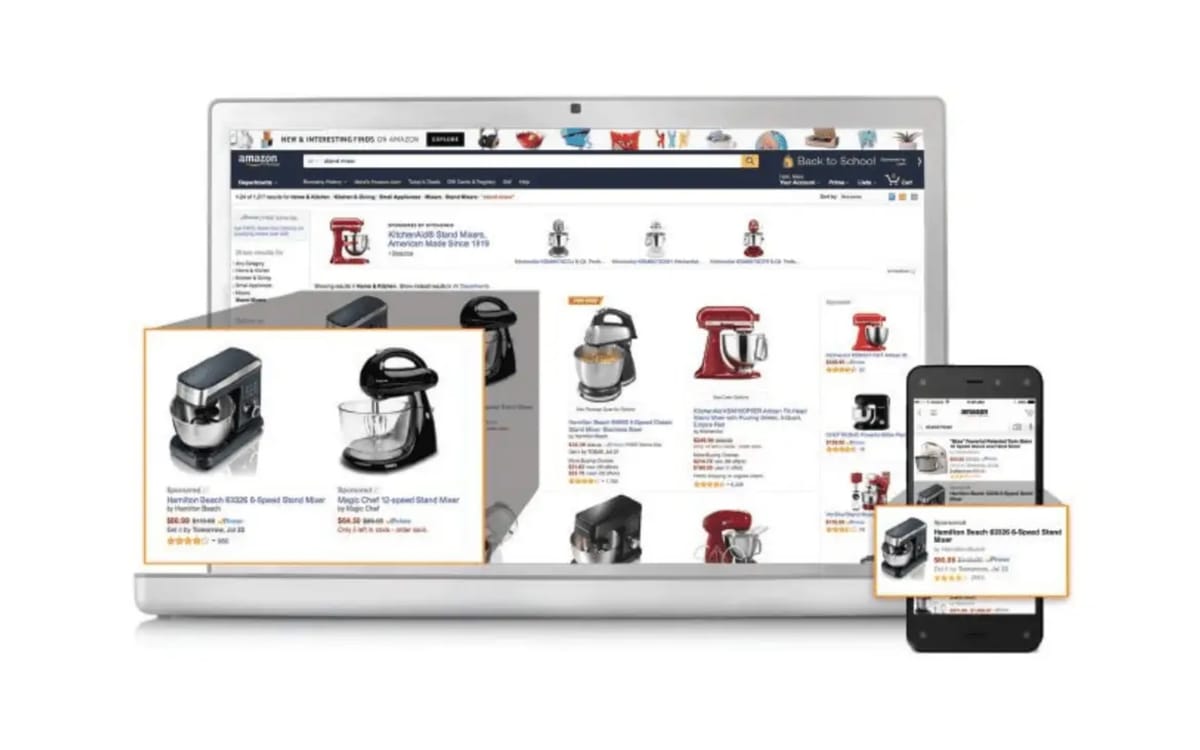
Sponsored product advertisement coverage across major United States retail media networks increased 7% year-over-year in the second half of 2025, with retailers demonstrating a fundamental shift from static ad placements toward dynamic, algorithm-driven product positioning, according to data released by Pentaleap in its H2 2025 Sponsored Products Benchmarks Report.
The report, published December 2025, analyzed desktop search results from 12 leading retail media networks including Amazon, Walmart, The Home Depot, Target, Staples, Macy's, Kroger, CVS, Lowe's, Albertsons, Best Buy, and Office Depot across the April through September 2025 period. Pentaleap collected publicly available data covering 2,500 representative keywords across grocery, pharmacy, beauty, fashion, electronics, office, and furniture categories, tracking more than 3,500 identifiable brands.
The coverage expansion reflects growing advertiser demand for retail media placements, but the report identifies a more significant development: retailers are fundamentally changing how they monetize search inventory. A growing number of networks now place advertisements dynamically throughout product grids rather than reserving specific fixed positions, enabling more flexible inventory management and improved relevance matching.
Subscribe PPC Land newsletter ✉️ for similar stories like this one
Walmart achieved 100% sponsored product coverage across tracked search queries in Q2-Q3 2025, maintaining a relatively unchanged position from the previous year. Amazon remained at 99% coverage during the same period. However, several mid-tier retail media networks demonstrated substantial coverage improvements, with Albertsons recording an 81% increase to reach 73% coverage, The Home Depot growing 20% to achieve 94% coverage, and Lowe's expanding 35% to reach 49% coverage.
The Home Depot's expansion proved particularly notable from a strategic standpoint. The retailer increased coverage from an already substantial base while simultaneously shifting toward more distributed ad placement across product grid positions. This represents a departure from concentrated sponsorships in predetermined slots toward fluid positioning that harmonizes paid placements with organic search results.
CVS and Macy's emerged as standout examples of retailers fully embracing dynamic ad delivery. Both networks now distribute sponsored products across all ten grid positions based on performance signals rather than maintaining fixed premium slots. Macy's specifically transitioned from a fixed-slot approach observed in 2024 toward complete grid flexibility by September 2025, according to the benchmarking data.
Andreas Reiffen, CEO and co-founder at Pentaleap, stated in the report: "The biggest shift we're seeing isn't about who has the most coverage—it's about how retailers are using it. Many major U.S. retailers tracked in this report are adding inventory. But beyond simply adding more slots, a growing number are placing ads dynamically or using a Fluid strategy, harmonizing ads and organic to maximize both relevance and performance."
The fluid approach enables retailers to evaluate each search query individually, determining optimal ad placement based on contextual relevance, product availability, pricing, and user intent signals rather than simply filling predetermined positions with highest bidders. This methodology theoretically improves both shopper experience and advertising performance by ensuring promoted products maintain relevance to search context.
Category-level analysis revealed uneven expansion across product verticals. Electronics maintained strong sponsored product presence throughout the tracking period, with leading brands Samsung, TCL, and GE demonstrating year-over-year impression volume increases of 11%, 136%, and 82% respectively among the top advertisers in that category.
Fashion category impressions grew more modestly, with the top ten brands in that vertical recording collective 18% year-over-year growth. However, individual brand performance varied significantly, with Jockey increasing 176%, Levi's expanding 36%, and Tops growing 79%, while other fashion advertisers showed declining sponsored presence.
Beauty brands demonstrated consistent growth throughout the April-September period, with Neutrogena emerging as the category leader after increasing sponsored presence 182% year-over-year. L'Oréal and Revlon maintained strong positions with 98% and 120% growth respectively. The beauty category's sustained expansion reflects increasing retailer investment in higher-margin product categories where sponsored placements can drive significant incremental revenue.
Grocery showed the most volatility among major categories tracked. Ben's Original, Starbucks, and Jimmy Dean's fluctuated substantially month-to-month, with Ben's Original absent from sponsored auctions in early spring before returning to category leadership by September, though still below prior-year volumes. This pattern suggests either budget reallocation or strategic testing among consumer packaged goods advertisers in retail media channels.
Furniture recorded the strongest year-over-year growth among all categories analyzed, with the top ten advertisers collectively expanding impression volumes 182%. New entrants including Costco, Bestier, and EnHomeC drove this expansion, while established furniture retailers maintained relatively stable presence. The category's rapid growth aligns with broader e-commerce expansion in home goods following pandemic-accelerated digital adoption.
Retailers demonstrated improved capability to monetize both short-tail and long-tail search queries during the tracking period. Amazon, Walmart, Staples, Kroger, and Target maintained consistent sponsored product coverage across one-word, two-word, three-word, and four-word queries, indicating mature algorithmic systems capable of matching advertiser inventory to diverse search contexts.
The Home Depot recorded particularly strong improvement in two-word query coverage, expanding from approximately 40% in Q2-Q3 2024 to roughly 70% in Q2-Q3 2025. This development suggests the retailer enhanced its keyword matching algorithms or expanded advertiser participation across more specific product searches.
CVS and Albertsons both achieved more than 30 percentage point increases in one-word query coverage year-over-year, reaching the mid-80% range. However, both networks showed declining coverage as query complexity increased, suggesting their ad serving systems perform better with broad category searches than specific product requests. This pattern indicates potential optimization opportunities as these networks mature their sponsored product technologies.
Office Depot maintained relatively flat coverage across all query lengths, hovering in the low-to-mid 20% range regardless of keyword specificity. This consistent performance across query types, while substantially below category leaders, suggests a deliberate strategy focused on specific product categories or advertiser segments rather than comprehensive keyword monetization.
Buy ads on PPC Land. PPC Land has standard and native ad formats via major DSPs and ad platforms like Google Ads. Via an auction CPM, you can reach industry professionals.
Average in-grid sponsored products per page load remained relatively stable year-over-year for most retailers, with strategic adjustments occurring at the margins. Amazon continued to lead with approximately 17 in-grid placements supplemented by 23 carousel positions and 6 additional format placements per average page load. Walmart followed with 10 in-grid placements alongside 13 carousel positions and 3 additional formats.
The Home Depot reduced average in-grid placements slightly from approximately 7 to 6 per page while simultaneously expanding overall coverage by 20 percentage points. This trade-off suggests the retailer prioritized relevance over density, opting to show fewer sponsored products per search but extending coverage to more search queries overall.
Albertsons demonstrated a similar pattern, decreasing from roughly 7 in-grid placements to 6.5 while achieving 81% coverage growth. This strategic adjustment likely reflects the retailer's transition toward more selective ad serving based on relevance signals rather than maximizing fill rate across all available inventory.
Target and Walmart both increased average ad load modestly, with Target growing from approximately 4.5 to 4.8 in-grid placements and Walmart expanding from 8.5 to 10.5 placements. These increases occurred alongside corresponding coverage improvements, suggesting both retailers identified additional monetizable inventory without compromising shopper experience.
Staples, Best Buy, and Office Depot concentrated the majority of sponsored products above the fold, delivering more than 50% of placements in the top half of search results pages. This approach contrasts with Amazon and Walmart, which distributed advertisements more evenly throughout the entire page, balancing premium positioning with comprehensive keyword coverage.
The distribution of sponsored product impressions shifted notably toward mid-tier and smaller brands during the tracking period. Across all retailers analyzed, the "tail" segment—defined as brands appearing in ad slots at frequencies below 0.2%—increased from 33% to 35% of total impression share year-over-year. Meanwhile, "head" brands appearing at frequencies exceeding 1% declined from 36% to 34% of impressions.
The Home Depot and Kroger demonstrated the most dramatic shifts in advertiser mix. The Home Depot reduced head brand impression share from 31% to 15% while expanding tail brand share from 32% to 47%. Kroger similarly decreased head concentration from 45% to 24% while growing tail representation from 17% to 25%. These changes indicate both retailers successfully onboarded numerous smaller advertisers or that auction dynamics shifted to favor long-tail brand participation.
Amazon increased head brand concentration slightly from 8% to 13% while maintaining strong tail brand representation at 60% of impressions, down from 67% the prior year. This pattern suggests the largest retail media platform experienced renewed investment from major advertisers while retaining robust participation from emerging and mid-tier brands.
Marketplace-enabled retailers collectively maintained 76% of impressions in the tail segment compared to 30% for non-marketplace retailers. This substantial difference reflects the structural advantage marketplaces possess through third-party seller participation, which naturally expands available advertiser inventory beyond traditional vendor relationships.
Walmart demonstrated the most balanced advertiser distribution among major networks, with only 3% head concentration, 23% torso representation, and 75% tail participation. This distribution indicates highly competitive auction dynamics with limited brand dominance, likely driven by the retailer's extensive marketplace operations and aggressive retail media expansion.
Electronics brands commanded the highest sponsored product impression volumes across all tracked categories, with Samsung generating approximately 32,000 brand appearances across monitored search queries in Q2-Q3 2025. Office supplies followed, led by HP with approximately 48,000 appearances despite lower overall category coverage, reflecting the concentration of advertising investment in this vertical.
Beauty and fashion brands demonstrated strong year-over-year growth in sponsored presence. Neutrogena's 182% expansion positioned it as the fastest-growing major advertiser in the beauty category, while Calvin Klein and Wrangler achieved 79% and 75% growth respectively in fashion. These gains reflect increased retail media investment from consumer packaged goods manufacturers and apparel brands seeking to protect market share in competitive categories.
Furniture advertisers collectively achieved 182% impression volume growth, the strongest performance among all categories tracked. Costco emerged as the category leader with approximately 31,000 appearances, demonstrating how large-scale retailers can rapidly build sponsored product presence when committing resources to retail media expansion. The furniture category's growth aligns with broader trends in home goods e-commerce and suggests retailers are successfully monetizing higher-consideration product categories.
Grocery brands showed inconsistent performance patterns throughout the tracking period. Ben's Original fluctuated from minimal presence in spring to category leadership in fall, ultimately recording 30% year-over-year decline despite the September recovery. Starbucks maintained more consistent presence with 166% growth, while smaller brands like Olipop and Hostess achieved 248% and 150% expansion respectively. This volatility indicates grocery advertisers are actively testing seasonal strategies and budget allocation models in retail media channels.
Most retailers maintained consistent sponsored product format offerings year-over-year, with in-grid placements remaining the dominant unit type. All 12 networks tracked utilize in-grid sponsored products, while 10 of 12 offer product carousel formats. Brand carousel and video carousel adoption remained limited, with only 7 and 4 networks respectively implementing these enhanced formats.
Macy's added brand carousel capability during the tracking period, joining Amazon, Walmart, The Home Depot, CVS, Staples, and Best Buy in offering this format. Albertsons introduced video carousel placements, becoming only the fourth network alongside Amazon, Walmart, and Best Buy to provide this premium format option. These additions indicate continued format experimentation among mid-tier networks seeking differentiation and enhanced advertiser engagement.
Target launched brand carousel offerings in late 2024 or early 2025, expanding format diversity for advertisers on that platform. The timing aligns with Target's broader retail media expansion following its Roundel rebranding and suggests the retailer is investing in competitive feature parity with larger networks.
Despite format expansion among some networks, adoption of enhanced units remains limited compared to standard in-grid placements. This pattern likely reflects both technical implementation complexity and advertiser demand dynamics, with most brands prioritizing basic sponsored product coverage before investing in premium format testing.
The concentration in core formats aligns with retail media growth patterns documented by IAB Europe, which reported sponsored products as the central driver of the sector's 22.1% expansion in 2024 compared to 6.1% growth in the broader advertising market. Standardized formats enable easier advertiser adoption and scalability across networks, supporting rapid market expansion.
The retail media infrastructure supporting sponsored products has evolved substantially during 2025, with multiple technology providers introducing solutions that enable programmatic access to onsite inventory. Pentaleap and Teads announced an industry-first RTB integration in July 2025 that enables real-time bidding for sponsored product advertisements across multiple retail networks, addressing speed limitations that previously prevented programmatic solutions from functioning in retail environments.
Criteo became the first onsite retail media partner for Google Search Ads 360 in September 2025, providing advertisers access to sponsored product inventory across more than 200 retail partners through Google's established advertising interface. The integration aims to address operational complexity that has limited advertiser adoption of retail media platforms beyond dominant players.
The Trade Desk partnered with Koddi in October 2025 to enable programmatic purchase of onsite retail media inventory including sponsored product advertisements through unified campaign management infrastructure. The collaboration launched initially with Gopuff, with additional retailers expected to join in subsequent months.
These programmatic integrations reflect broader industry trends toward platform interoperability rather than fragmented walled-garden approaches. As documented by IAB Europe research cited in the Pentaleap report, brands working with four to six retail media networks doubled from 10% to 24% year-over-year, signaling clear diversification strategies among advertisers that require more efficient cross-network management capabilities.
Macy's integration of Amazon Retail Ad Service in November 2025 represents a different approach to infrastructure consolidation, with the department store adopting Amazon's advertising technology to enable sponsored product campaigns through Amazon's existing campaign management tools. This partnership provides advertisers who already use Amazon Ads a streamlined method to engage Macy's digital audience without building separate campaign infrastructure.
The technology developments during 2025 address fundamental challenges that have characterized retail media expansion. Historically, each retail media network required separate campaign setup, creative adaptation, reporting infrastructure, and optimization workflows. This fragmentation created operational barriers for advertisers seeking to activate campaigns across multiple retail environments, particularly for mid-tier and smaller brands lacking dedicated retail media resources.
The shift toward fluid ad placement strategies carries significant implications for advertisers managing sponsored product campaigns. Dynamic positioning based on relevance signals rather than fixed premium slots reduces the predictability of placement location but theoretically improves overall campaign performance through better matching of products to shopper intent.
Advertisers accustomed to bidding aggressively for top grid positions may need to adjust strategies as more retailers adopt fluid approaches. Rather than focusing primarily on achieving position one or two, campaign optimization should emphasize relevance signals including product content quality, pricing competitiveness, availability, and alignment with search context.
The expansion of long-tail brand participation suggests retail media platforms are becoming more accessible to smaller advertisers. Networks that previously concentrated impression share among dominant brands are now distributing inventory more broadly, creating opportunities for emerging brands and niche products to achieve visibility in sponsored placements.
However, the increased competition for sponsored inventory also creates challenges. As more brands participate in auctions and retailers expand monetizable keywords, cost-per-click rates may increase even as impression volumes grow. Advertisers should monitor efficiency metrics carefully and adjust bidding strategies based on actual conversion performance rather than simply maximizing impression share.
The category-level performance variations documented in the report indicate retailers are monetizing some product verticals more effectively than others. Electronics and office supplies command high impression volumes, suggesting mature auction dynamics and strong advertiser demand. Furniture's rapid growth indicates emerging opportunity as retailers develop capabilities in higher-consideration categories.
For retail media networks, the benchmarking data reveals substantial headroom for coverage expansion among mid-tier platforms. Networks operating below 80% keyword coverage have clear opportunities to increase monetization through improved algorithms, expanded advertiser recruitment, or enhanced campaign management tools that reduce barriers to participation.
The fluid placement strategies adopted by leading networks demonstrate a recognition that relevance drives performance in retail media environments. Shoppers conducting product searches expect to see items matching their intent, whether organic or sponsored. Networks that harmonize paid and organic results through intelligent positioning may achieve better shopper experience metrics alongside improved advertising performance.
Subscribe PPC Land newsletter ✉️ for similar stories like this one
Subscribe PPC Land newsletter ✉️ for similar stories like this one
Who: Pentaleap analyzed sponsored product performance across 12 major United States retail media networks including Amazon, Walmart, The Home Depot, Target, Staples, Macy's, Kroger, CVS, Lowe's, Albertsons, Best Buy, and Office Depot, tracking more than 3,500 identifiable brands.
What: Sponsored product advertisement coverage increased 7% year-over-year across tracked retailers during Q2-Q3 2025, with significant shifts toward dynamic "fluid" ad placement strategies that distribute sponsored products throughout product grids based on relevance signals rather than fixed premium positions. The Home Depot, Albertsons, and Lowe's recorded the strongest coverage growth at 20%, 81%, and 35% respectively.
When: The analysis covered the April through September 2025 period (Q2-Q3 2025), comparing performance against the same period in 2024. Pentaleap released the benchmarking report in December 2025.
Where: The study focused exclusively on desktop search results within the United States market across 2,500 representative keywords spanning grocery, pharmacy, beauty, fashion, electronics, office, and furniture categories.
Why: The report matters for marketing professionals because it documents fundamental changes in how retail media networks monetize search inventory, shifting from fixed ad slots toward algorithm-driven placement that prioritizes relevance. This transition affects campaign strategy, bidding approaches, and competitive dynamics as smaller brands gain increased access to sponsored inventory while major advertisers adapt to more distributed placement patterns. The findings also demonstrate substantial headroom for coverage expansion among mid-tier networks and reveal category-specific growth opportunities for advertisers.