
TikTok Shop turns one in Germany: Gen X drives 37% of sales revenue
TikTok Shop marks one year in Germany with seller revenues nearly doubled, 25,000 active sellers, and Gen X holding 37% of total value share - defying platform stereotypes.

TikTok Shop marks one year in Germany with seller revenues nearly doubled, 25,000 active sellers, and Gen X holding 37% of total value share - defying platform stereotypes.
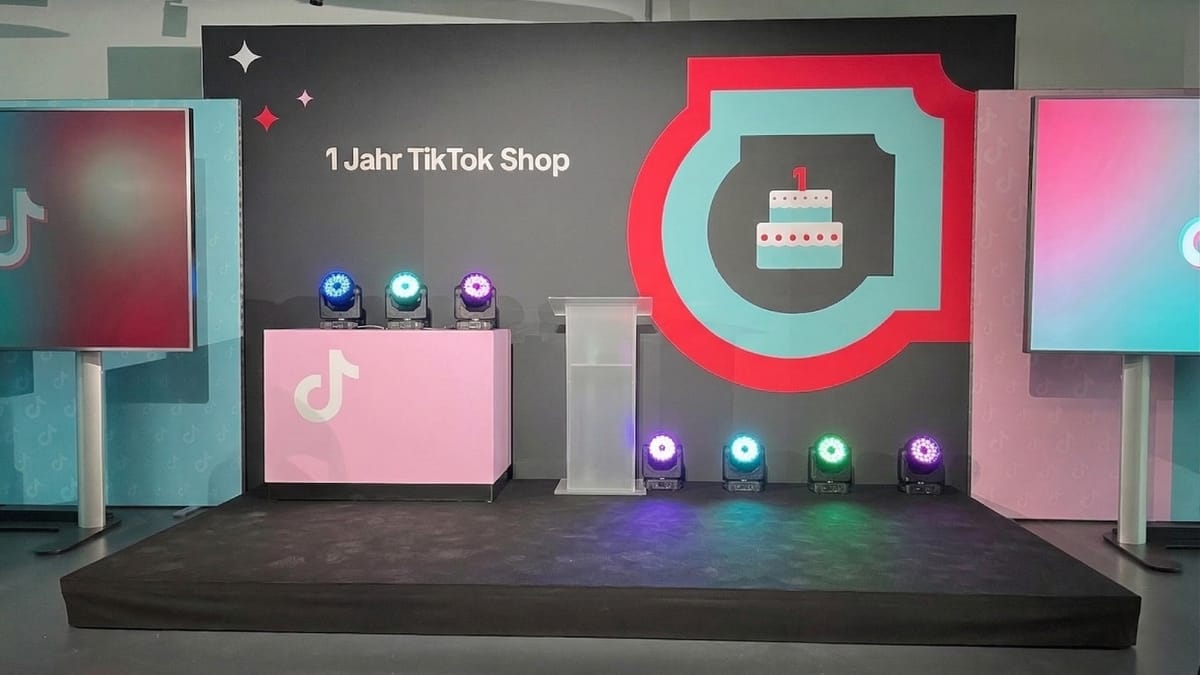
TikTok Shop marked its first anniversary in Germany on 24 March 2026, publishing data showing that seller revenues on the platform have nearly doubled over the past six months, with more than 25,000 active sellers and a monthly reach of over 27 million users. The figures come from a combination of TikTok's internal data and an independent panel study conducted by NielsenIQ (NIQ), covering a 48-week observation period from 31 March 2025 to 1 March 2026.
The platform launched in Germany in March 2025, extending its European footprint after earlier rollouts in the United Kingdom and other markets. Since that initial launch, it has grown into a channel serving brands ranging from drugstore chain Rossmann and electronics giant Philips to smaller regional names based in Bavaria.
Discovery commerce - the label TikTok uses to describe its model of blending entertainment, short-form video and direct purchasing - is the structural concept underlying the platform's expansion pitch. It is a format that PPC Land has tracked since TikTok's logistics policy changes in the US and its integration with Amazon's Buy with Prime checkout, both of which reflect the platform's increasing complexity as a commerce infrastructure.
One of the more striking data points from the anniversary event, held in Munich, concerns which demographic group accounts for the largest share of spending. According to NielsenIQ data cited at the event, Gen X holds 37% of total value share on TikTok Shop Germany. Gen Z, the age group most commonly associated with the platform in popular perception, ranks below that figure.
This single statistic has direct implications for how media buyers and brand managers think about TikTok as an advertising environment. A platform frequently categorised as a youth channel is, at least in Germany, generating its largest revenue share from consumers born between 1965 and 1980 - a demographic with substantially higher disposable income than teenagers or young adults.
According to Dr. Stefan Heidenreich of NielsenIQ: "Unsere Daten zeigen, dass rund 15 % der Online-Shopper in Deutschland im Panel TikTok Shop mindestens einmal genutzt haben - nach etwa 10 % im Oktober letzten Jahres. Das deutet darauf hin, dass 'Discovery E-Commerce' zunehmend als ergänzender Kanal im digitalen Einkauf genutzt wird."
Translated, Heidenreich stated that NielsenIQ data shows approximately 15% of online shoppers in Germany in the panel had used TikTok Shop at least once, up from around 10% in October of the previous year. That five-percentage-point increase over roughly five months signals a meaningful acceleration in adoption, though the absolute penetration rate still places TikTok Shop well below established e-commerce platforms by volume.
The NielsenIQ data covers a panel of online shoppers. Its scope is therefore defined by the panel methodology rather than representing TikTok Shop's full transactional universe. That distinction matters when interpreting the 15% figure: it reflects a share of a measured panel, not a verified percentage of all German internet users.
Sellers on TikTok Shop Germany generate, on average, 60% of their revenues through shoppable videos and live shopping formats, according to the TikTok announcement. Among leading global brands using the platform, that share rises to 70%. The gap between average and top performers suggests that brands committing resources specifically to video and livestream production are outpacing those using the channel in a more passive capacity.
The average order value recorded on TikTok Shop Germany stands at 29.80 euros, based on actual transaction data cited at the Munich event. That figure places the channel's typical basket size in territory comparable to mid-range impulse purchase categories - below the average order value for considered purchases like electronics, but above typical fast-moving consumer goods transactions.
Live shopping as a commerce format has a complicated track record in Western markets. eBay reintroduced live auctions in Germany in late 2025, positioning scheduled live events as a complement to its core marketplace. Amazon has invested in Amazon Live but the product has struggled to attract consistent viewership. Amazon deprecated its Posts social commerce feature entirely in June 2025 after declining engagement. TikTok's advantage in this space appears to rest on its algorithmic feed distributing shoppable content passively to users rather than requiring them to navigate to a dedicated live shopping destination.
The seller roster TikTok published for the anniversary spans a wide range of business sizes and categories. Among the globally recognised names: L'Oreal, Samsung, Crocs, Philips, PepsiCo, The Body Shop, QVC, Tefal and WMF. New additions named in the press release include Rossmann, the German pharmacy and drugstore chain, which launched with its own-brand Isana Korean skincare line, and SharkNinja, which enters the German market having already operated TikTok Shops in the United States and the United Kingdom.
Rossmann's arrival carries particular significance for the German market. As an established brick-and-mortar retailer with a large existing customer base, its decision to launch on TikTok Shop signals willingness among legacy retail formats to test social commerce as an incremental sales channel rather than a purely digital-native play.
Among the Bavaria-based businesses specifically supported by TikTok's Munich team: Bears with Benefits (Munich), Fruchtschmaus (Ebersberg), GirlGotLashes (Munich), Kijimea (Grafelfing), Koffer Kopf (Augsburg), Georgios Papazof Feinkost GmbH (Munich), and Reinarzt Babyland (Grafelfing). According to TikTok, an Oxford Economics study published in 2026 quantified the combined economic contribution of these and similar sellers in millions of euros, though the exact figure from that report was not disclosed in the announcement text.
TikTok also detailed a programme called SOAR - Supporting Our Artisans and Retailers - developed with Impact Hub. SOAR is a five-month, free, online programme designed to support small businesses entering e-commerce. Its structure and curriculum were not described in detail in the announcement.
Several brands provided statements for the anniversary announcement. Iulia Dobre, Marketing Director Beverages DACH and Italy at PepsiCo Deutschland GmbH, described a multi-layered approach combining advance product launches, advertising and affiliate networks: "Durch die strategische Kombination aus Vorab-Produkt-Launches, gezielter Werbeprasenz und unserem Affiliate-Netzwerk at scale schaffen wir ein geschlossenes Okosystem fur unsere Marken."
Stephanie Vanderplank-Jones, Commercial Leader for TikTok Shop and Marketplaces Western Europe at Philips, framed the channel as a strategic addition to existing sales infrastructure: "TikTok Shop dient dabei als entscheidende strategische Erganzung zu unseren bestehenden Kanalen."
Stefan Meurer, Vice President Platforms at QVC, drew a direct line between TikTok's live shopping model and QVC's own 30-year history: "Live-Shopping, authentische Beratung, Storytelling, starke Hosts und Community-Aufbau sind seit jeher unser Geschaft. Wir sind uberzeugt, dass dieses Modell auch auf TikTok funktioniert."
Tom Albold, Managing Director Central Europe at SharkNinja Germany, described the entry into TikTok Shop as a logical extension for a brand that positions itself around social-first distribution: "Die Plattform ist ein logischer nachster Schritt und eine wertvolle Erganzung unserer Vertriebskanale."
TikTok cited 27 million monthly active users in Germany as the potential audience sellers can reach through the platform. TikTok Shop is restricted to users aged 18 and above. According to the announcement, the Shop tab and any content containing product links is not visible to minors - either in the For You feed or in search results - and access is restricted immediately in the event of a policy violation.
The platform describes a moderation architecture combining automated technology with manual review to assess product listings. Sellers and products violating policies are removed. Product listings span categories including beauty, electronics, fashion, home and living, and consumer goods. Among the most-purchased items cited for the platform's first year in Germany: wireless doorbells with cameras, cordless drill and screwdriver sets, luggage sets, collagen powder, cat scratching posts, treadmills and eyelash serums.
TikTok also referenced its Project Clover data security programme, which involves a 12-billion-euro investment over ten years. The NCC Group, a British security company, is described as the independent expert conducting auditing and monitoring of data access under the programme.
Dr. Fabian Mehring, Bavaria's State Minister for Digital Affairs, provided a statement for the TikTok anniversary release, noting the platform's Munich base: "TikTok Shop zeigt eindrucksvoll, wie die Digitalisierung unseren Handel transformiert. Dass die Plattform ihren Erfolgskurs vom Standort Munchen aus steuert, unterstreicht Bayerns Attraktivitat als fuhrender Tech-Hub in Europa."
The political endorsement adds a layer of institutional recognition to TikTok's German operation at a time when the platform continues to face regulatory scrutiny elsewhere in Europe. German courts have examined TikTok's algorithmic practices under the Digital Services Act and GDPR, and the European Commission found TikTok in breach of DSA transparency obligations in October 2025. Those proceedings are separate from the commercial operation of TikTok Shop but form part of the regulatory environment within which the platform is expanding.
The data released for the German anniversary matters to media planners and performance marketers for several reasons. First, the Gen X value share figure directly challenges standard audience assumptions that shape how budgets are allocated across platforms. If the highest-spending cohort on TikTok Shop Germany is Gen X rather than Gen Z, targeting strategies built on demographic assumptions about TikTok's user base will systematically misallocate spend.
Second, the 60-70% revenue share from video and live shopping formats establishes a clear performance signal: brands treating TikTok Shop purely as a product listing channel, without investing in shoppable video or livestream production, are likely leaving the majority of the channel's conversion potential untapped.
Third, the near-doubling of daily seller revenues over six months - starting from a March 2025 baseline - represents a compounding growth rate that, if sustained, would position TikTok Shop as a material component of the German e-commerce landscape within two to three years. The 15% online shopper penetration rate, while still modest relative to Amazon or established German marketplaces, reached that level in under a year of operation.
NielsenIQ's integration of consumer and retail data into unified measurement platforms makes it increasingly possible to track TikTok Shop's share of category spending with precision. That measurement infrastructure matters as brands begin evaluating TikTok Shop as a media investment with its own attribution logic rather than simply an experimental channel.
For brands already operating across multiple e-commerce channels, Amazon's German MCF launch in March 2026 means that inventory managed through Amazon's fulfillment network can now serve TikTok Shop orders as well, reducing the logistics complexity of running parallel channel strategies.
Who: TikTok Shop Germany, operating from Munich under country head Max Burianek, together with NielsenIQ (the data provider), and a seller base of more than 25,000 businesses including Rossmann, Philips, PepsiCo, Samsung, L'Oreal, The Body Shop, QVC, tonies and SharkNinja.
What: TikTok Shop published first-anniversary data for its German operation, reporting that seller revenues have nearly doubled over the six months preceding the anniversary, that 15% of German online shoppers in the NielsenIQ panel have made at least one purchase on the platform (up from 10% in October 2025), and that Gen X holds the largest value share of any demographic group at 37%. The average order value stands at 29.80 euros, and 60-70% of revenues are generated through shoppable video and live shopping formats.
When: TikTok Shop launched in Germany in March 2025. The anniversary data was published and the event was held on 24 March 2026, covering a 48-week NielsenIQ observation period ending 1 March 2026.
Where: TikTok Shop Germany is operated from Munich. The anniversary event took place in Munich. The platform reaches over 27 million monthly TikTok users in Germany.
Why: The announcement matters because it provides the first systematic, third-party-validated data on TikTok Shop's commercial performance in Germany. The Gen X spending dominance challenges standard assumptions about the platform's demographic profile. The revenue split toward video and live formats signals where brands need to invest creative resources to compete effectively on the channel. Together, these figures give media buyers and brand strategists a clearer basis for evaluating TikTok Shop's role within a broader German e-commerce and paid media strategy.