WHOOP picks Viant as its CTV ad platform in a multi-year deal
WHOOP selects Viant Technology as its DSP of Record for CTV advertising, targeting household-level precision and measurable business outcomes in a multi-year deal.


WHOOP selects Viant Technology as its DSP of Record for CTV advertising, targeting household-level precision and measurable business outcomes in a multi-year deal.
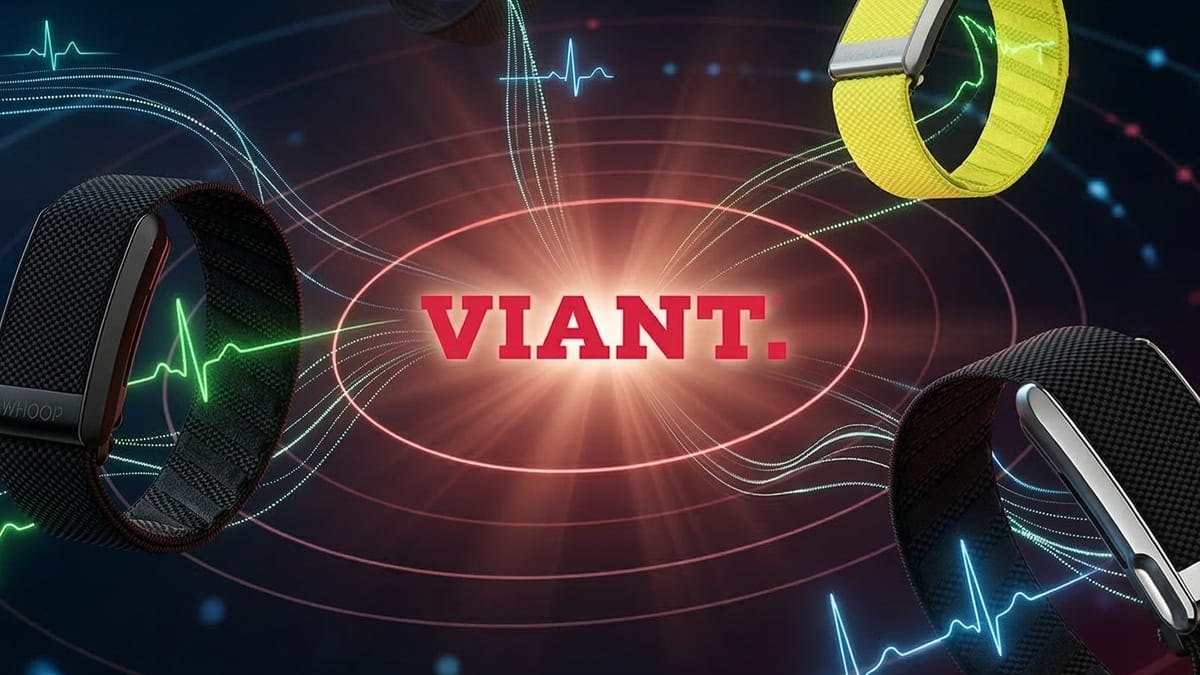
Viant Technology this month announced a multi-year strategic partnership with WHOOP, naming the programmatic platform as the DSP of Record for the Boston-based wearable technology company. The agreement, disclosed on March 5, 2026, through a press release issued from Irvine, California, positions Viant's connected television infrastructure as the backbone of WHOOP's paid media strategy as the fitness brand pursues broader audience growth in North America and across its 56 international markets.
The deal centers on household-level CTV activation - a targeting method that links media exposure to measurable business outcomes at the level of individual households rather than devices or cookies. WHOOP has identified connected television as a primary channel for reaching new members, and the selection of Viant reflects a deliberate choice of a platform whose core architecture is built around identity resolution and CTV precision rather than search or social inventory.
"CTV is the most powerful platform for brands to drive new customer growth, and its full value is unlocked through intelligence," said Tim Vanderhook, CEO and co-founder of Viant Technology, according to the announcement. "Viant provides WHOOP a deeper understanding of the content environments their CTV ads run alongside, the precision to activate against premium programming, and the ability to measure true incrementality at scale."
The term "DSP of Record" signals something more than a standard media buying arrangement. It mirrors how large advertisers historically designated a single agency of record for media planning, but applied here to a demand-side platform. WHOOP is effectively concentrating its programmatic advertising execution within one platform rather than spreading budget across multiple buying tools. That consolidation matters for attribution - when a single DSP handles all CTV purchases, campaign measurement becomes more unified, reducing the multi-touch attribution complications that arise when multiple platforms count the same household impression separately.
WHOOP, founded in 2012 by Harvard student-athlete Will Ahmed alongside John Capodilupo and Aurelian Nicolae, began as a device for elite athletes and has progressively extended its reach. According to Wikipedia, the company raised $200 million from SoftBank in August 2021 at a valuation of $3.6 billion, with additional backing from investors including IVP, the NFL Players Association, Kevin Durant, Patrick Mahomes, and Rory McIlroy. In May 2024, Cristiano Ronaldo became both an investor and global ambassador for the brand.
The company now ships to 56 markets worldwide and has raised more than $400 million in venture capital in total, according to the press release. Its current device lineup includes WHOOP 5.0 and WHOOP MG, with features such as cardiovascular health screening including an FDA-cleared ECG, a Healthspan metric that measures pace of aging, and wearable blood pressure insights. The subscription model - which requires a monthly fee for the device to function - creates a recurring revenue dynamic that makes customer acquisition cost and lifetime value calculations particularly important for the marketing team.
John Sullivan, WHOOP's Chief Marketing Officer, described the reasoning behind the Viant selection in measured terms. "Our focus is on building authentic connections with our audience," Sullivan said, according to the announcement. "Viant's expertise in CTV helps us better understand where and how to engage, so we can continue to grow the brand in thoughtful, impactful ways."
Sullivan's comments emphasize transparency and understanding over reach or scale alone. That framing aligns with the technical commitments Viant has publicly made around supply chain transparency and fee disclosure, both of which were cited in the press release as factors reinforcing Viant's selection.
Viant Technology (NASDAQ: DSP) has spent the past several years building infrastructure specifically oriented around connected television identity. A January 2025 partnership with TransUnion enabled the company to match its Household ID against 95% of U.S. adults aged 18 and above, creating a cookieless identity layer that can persist across CTV environments where cookies never existed. In March 2025, the company acquired Lockr, a first-party data collaboration platform, a move designed to reduce technical friction in identity matching for publishers and brands.
The CTV share of Viant's platform spend reached 46% of total advertiser spend in Q3 2025 - an all-time high - according to earnings results reported on November 10, 2025. PPC Land's coverage of those Q3 results noted that nearly half of that CTV spending flowed through Viant's Direct Access program, which provides pathways to inventory on Disney+, Paramount+, NBCUniversal, Tubi, and Samsung. Revenue for the third quarter reached $85.6 million, exceeding analyst expectations.
The company has also built contextual intelligence capabilities on top of its identity layer. An August 2025 integration with Wurl made Viant the first DSP to deliver scene-level contextual intelligence across CTV, using BrandDiscovery technology and IRIS_ID classification to align ad messages with on-screen content in real time. A July 2025 integration with LG Ad Solutions extended that addressability across LG's 45 million connected devices in the United States. These layered capabilities - identity resolution, contextual alignment, and premium supply access - form the technical package now available to WHOOP.
The WHOOP partnership follows an earlier multi-year agreement with Molson Coors Beverage Company, which was announced in November 2025 and was set to commence in 2026. Both deals reflect a broader pattern of established brands with subscription or repeat-purchase dynamics choosing Viant as their primary CTV execution platform rather than building multi-DSP setups.
A recurring phrase in the announcement is "true incrementality." This refers to the capacity to measure whether a consumer who saw a CTV ad actually converted because of that ad, rather than because they would have converted regardless. Incremental measurement is notoriously difficult in television advertising, where panels and modeled attribution have historically been the norm. WHOOP's marketing team, described in the press release as "grounded in performance science, research and data," has imported a quantitative rigor from the company's core product discipline into its advertising strategy.
Viant's Household ID technology underpins the incrementality measurement capability. By resolving ad exposures to a household identifier rather than a probabilistic device graph, the platform can in principle construct cleaner test-and-control comparisons. The IRIS_ID layer, inherited from Viant's November 2024 acquisition of IRIS.TV, adds content-level data - enabling analysis of whether ads placed in particular content environments drove higher incremental lift than others.
The press release notes that supply and fee transparency, along with a "high-touch client support model," were explicit factors in WHOOP's selection of Viant. These are not technical differentiators but operational ones. Fee transparency has become a meaningful competitive dimension in programmatic advertising, with some DSPs facing scrutiny over the gap between gross media spend and net working media. Viant's exclusively buy-side positioning - it does not operate a supply-side platform - removes one structural conflict of interest present in vertically integrated advertising stacks.
The alignment between WHOOP's product and CTV as a channel has a demographic logic. WHOOP's core customer base includes health-conscious adults with disposable income, athletes, and professionals who track sleep and recovery. This segment over-indexes in CTV consumption relative to linear television, and tends to respond to brand-building advertising that communicates product depth rather than simple promotional messages.
The subscription nature of WHOOP's business model - the device ceases to track without an active membership - means the brand must continuously acquire new members to grow. As the company has expanded from elite athletes into broader health-conscious demographics, the audience definition has widened. CTV offers the reach of television alongside the targeting precision of digital, making it structurally attractive for a brand that needs to introduce itself to millions of potential subscribers who may not be reached efficiently through search intent alone.
WHOOP has demonstrated an appetite for high-profile partnerships that extend brand awareness. In January 2026, the company became the official health and fitness wearable partner of the Ferrari Formula One team, according to Wikipedia. That arrangement places WHOOP branding on the SF-26 race car and team apparel while providing biometric monitoring for drivers, pit crew, engineers, and team personnel. The Ferrari partnership targets global brand visibility, while the Viant deal targets measurable U.S. household acquisition through CTV.
The company's product trajectory also matters for the advertising story. In September 2023, WHOOP released WHOOP Coach, powered by OpenAI, offering conversational health and fitness coaching. In September 2025, the company launched Advanced Labs, integrating clinical blood test data with wearable health metrics. Each new capability expands the pool of potential subscribers beyond sport-focused users, broadening the audience WHOOP needs to reach through paid media channels.
The WHOOP-Viant deal is one of several recent examples of brands formalizing single-DSP CTV strategies rather than maintaining multi-platform buying approaches. The DSP of Record structure, borrowed from the agency model, gives brands cleaner attribution data and potentially stronger commercial terms from premium publishers. It also concentrates campaign intelligence - targeting signals, frequency data, and performance metrics - within one system, which simplifies optimization.
For the broader marketing community, the announcement is notable as a data point in the ongoing shift of brand media budgets toward programmatic CTV. CTV's share of media budgets has been tracked doubling from 14% in 2023 toward 28% projected for 2025, with the majority of that growth flowing through programmatic channels rather than direct publisher deals. The selection of a platform explicitly built for CTV - rather than a scaled DSP with CTV as one channel among many - reflects a judgment that CTV requires specialized infrastructure to deliver the measurement guarantees that performance-oriented brands require.
The announcement does not disclose the financial terms of the agreement, the volume of media spending committed, or the duration of the partnership beyond the description "multi-year." Viant is publicly traded and WHOOP remains private, having raised its last disclosed round in 2021.
Who: Viant Technology Inc. (NASDAQ: DSP), an Irvine, California-based AI-powered programmatic advertising platform, and WHOOP, a Boston-based wearable technology company founded in 2012 by Will Ahmed.
What: A multi-year strategic partnership in which Viant is designated as the DSP of Record for WHOOP, handling the brand's connected television advertising through household-level targeting, contextual intelligence, and incrementality measurement.
When: Announced on March 5, 2026, with the partnership described as multi-year in duration. Financial terms and precise start date were not disclosed.
Where: The partnership operates across the open internet and connected television environments in the United States, with WHOOP shipping its products to 56 markets worldwide.
Why: WHOOP sought a CTV partner capable of delivering precision targeting, supply chain transparency, fee transparency, and measurable business outcomes as it shifts toward connected television as a primary channel for subscriber acquisition. Viant was selected based on its Household ID identity infrastructure, contextual intelligence capabilities through IRIS_ID, and its exclusively buy-side platform model, which removes certain conflicts of interest present in vertically integrated advertising stacks.