YouTube Create finally arrives on iPhone after year-long Android exclusivity
YouTube brings its free video editing app to iOS on December 15, 2025, offering creators automated captions, royalty-free music, and AI-powered tools.


YouTube brings its free video editing app to iOS on December 15, 2025, offering creators automated captions, royalty-free music, and AI-powered tools.
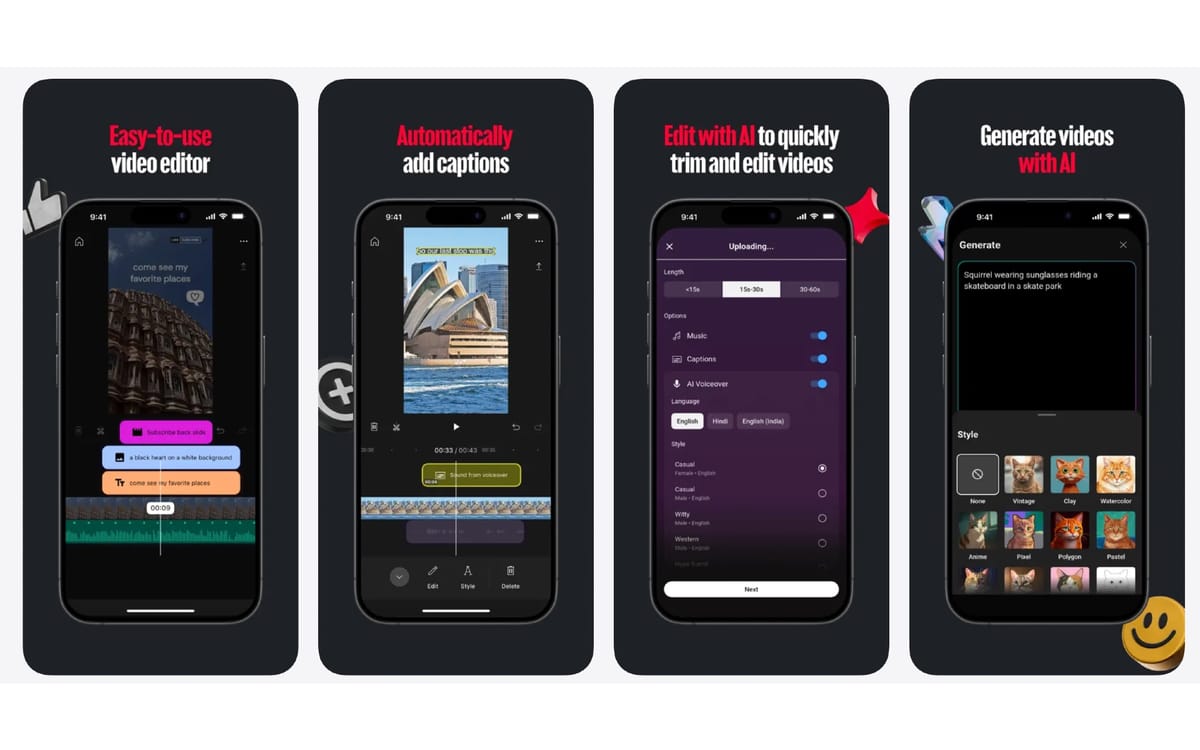
YouTube released its mobile video editing application YouTube Create for iPhone on December 15, 2025, ending more than a year of Android exclusivity. The app provides creators with free editing tools including automated captions, royalty-free music libraries, and direct YouTube publishing capabilities designed to simplify content production.
The iOS launch marks a significant expansion for the application, which first appeared on Android in select markets during 2023 as a beta product. According to App Store documentation, YouTube Create requires iPhone XR or later running iOS 17 or later. The platform describes the tool as an "easy-to-use video editing app" offering "filters & effects, royalty-free music, voiceover, auto-captions and more to easily make amazing videos that will captivate your audience."
Subscribe PPC Land newsletter ✉️ for similar stories like this one
YouTube announced the iOS availability through its official Creators account on X on December 15, stating "editing on your phone just got way easier the YouTube Create app is now available on iPhone in select locations with captions, filters, effects, royalty-free music + more." The company had previously detailed November 2024 plans to bring the Android application to iOS in 2024, but actual deployment stretched into late 2025.
The application provides comprehensive video editing functionality within mobile form factors. Users can combine videos, photos, and audio files within a single editing timeline, with tools for trimming, clipping, and cropping individual clips. The interface offers more than 40 transitions for blending content segments together, along with speed adjustment controls for creating slow-motion or time-lapse effects.
Caption generation represents one of the application's most prominent features. According to YouTube's documentation, creators can "automatically add captions or subtitles to your videos with just one tap" in select languages. This automated transcription capability previously required third-party applications or desktop editing software for most mobile creators.
Audio processing tools include background noise removal through what YouTube describes as "the audio clean up tool." The application also enables creators to remove video backgrounds using "the cut out effect," providing chromakey-style functionality without requiring physical green screens or desktop post-production software.
Music integration draws from thousands of royalty-free tracks and sound effects available within the application. The beat matching feature helps creators synchronize video clips to soundtrack rhythms, while in-app voiceover recording allows narration without requiring separate recording applications or audio equipment.
Visual enhancement options include adjustable saturation, brightness, and other color parameters. Customizable filters set mood and aesthetic tone, while various effects options aim to increase visual engagement. The application provides hundreds of fonts and animated text effects, along with libraries of stickers, GIFs, and emojis for creative customization.
Export capabilities support multiple aspect ratios including portrait (9:16), landscape (16:9), and square (1:1) formats. According to technical specifications, final videos export at either 720p standard resolution or 1080p high resolution, with 30fps frame rate regardless of source material frame rates. Creators can upload finished videos directly to their YouTube channels through in-app publishing tools.
The application functions as a standalone product rather than integration within the main YouTube mobile app. This architectural decision separates content creation workflows from content consumption interfaces, mirroring YouTube's broader strategy of maintaining distinct applications for different user functions as established with YouTube Studio.
YouTube Create enters a competitive landscape for mobile video editing tools. TikTok pioneered simplified mobile editing interfaces enabling rapid content production, while Instagram Reels adopted similar approaches leveraging Meta's existing creator base. YouTube's entry brings established advantages including existing creator relationships, comprehensive monetization infrastructure, and integration with both long-form and short-form content formats.
The application directly addresses barriers YouTube identified in creator feedback. "Edit with AI handles the initial heavy lifting of content creation by arranging the best moments from your camera roll so you can jump straight to the fun part of editing: refining the story, perfecting the timing, and adding your own personal style," according to YouTube's announcement of similar features in the Edit with AI tool launched November 3, 2025.
The free distribution model contrasts with subscription-based editing applications common in mobile marketplaces. YouTube generates revenue through creator advertising participation rather than charging for editing software access, aligning economic incentives with content production volume rather than tool licensing fees.
This approach supports YouTube's broader creator monetization strategy. The platform paid $70 billion to creators, media companies, and music partners over three years through 2024, with 3 million channels earning revenue through the YouTube Partner Program. Lowering technical barriers to content creation potentially expands the creator base eligible for monetization.
The timing follows several major creator tool announcements throughout 2025. YouTube expanded Communities features to all eligible creators in June 2025, launched collaboration features for video partnerships in August 2025, and introduced brand pulse reporting tools in October 2025 connecting paid advertising with organic content performance.
Buy ads on PPC Land. PPC Land has standard and native ad formats via major DSPs and ad platforms like Google Ads. Via an auction CPM, you can reach industry professionals.
The application's iOS availability expands the potential creator base capable of producing YouTube content without desktop editing infrastructure. For brands utilizing Partnership Ads to leverage creator videos in marketing campaigns, this expanded creator pool potentially increases available partnership opportunities across demographic segments.
Mobile editing tools particularly impact short-form video production for YouTube Shorts, where vertical formats and rapid publishing cycles favor mobile-optimized workflows. YouTube Shorts achieved revenue per watch hour parity with traditional video in the United States during Q3 2025, validating short-form content as commercially viable advertising inventory.
The automated caption feature addresses accessibility requirements increasingly important for brand content. Captions improve comprehension for viewers in sound-off environments common in mobile consumption contexts, while supporting hearing-impaired audiences and enabling content consumption in noise-sensitive settings like offices or public transportation.
Brand safety considerations require attention as expanded mobile editing capabilities could accelerate content production volume. The YouTube Partner Program maintains monetization eligibility requirements including subscriber and watch hour thresholds, while all content must comply with community guidelines regardless of editing tools used for production.
For advertisers utilizing YouTube Promote for campaign management, increased creator content production potentially improves targeting options through expanded inventory. The platform's August 2025 enhanced targeting tools enable advertisers to specify conversion objectives beyond basic traffic generation, creating opportunities for performance-focused campaigns.
YouTube's expansion of creator tools aligns with the platform's infrastructure supporting brand-creator collaboration. The YouTube Activation Partners program launched October 2025 provides advertisers with third-party expertise in campaign optimization, while Creator Essentials packages announced May 2025 enhanced advertiser tools for identifying collaboration opportunities.

Google's privacy documentation for YouTube Create indicates the application collects multiple data types linked to user identities. According to App Store listings, these include location data, contact information, user contacts, user-generated content, search history, identifiers, usage data, diagnostics, and other unspecified data categories.
The application also collects usage data not linked to specific user identities, according to Google's privacy disclosures. Data encryption applies during transmission, and users can request data deletion through standard procedures. Privacy practices may vary based on feature usage patterns and user age, according to developer statements.
These data collection practices reflect standard patterns across Google's application portfolio, where user data informs advertising targeting, content recommendations, and platform improvement efforts. For creators concerned about data privacy, the comprehensive collection represents a tradeoff for accessing free editing capabilities with direct YouTube integration.
The 30fps export limit represents a notable constraint for creators working with high-frame-rate source material. Smartphones increasingly capture video at 60fps or higher frame rates, but YouTube Create exports standardize at 30fps regardless of input format. This limitation impacts action content, sports highlights, or other fast-motion material where higher frame rates improve visual smoothness.
Audio format support requires evaluation for creators working with professional external microphones or multi-track recording setups. The application's audio cleanup tool addresses background noise but may not provide the granular control available in desktop digital audio workstations commonly used for podcast-style content or music video production.
The mobile form factor inherently limits certain editing capabilities compared to desktop alternatives. Complex multi-layer compositions, advanced color grading, and frame-precise editing prove challenging on small touchscreens regardless of software optimization. YouTube acknowledges these limitations by positioning YouTube Create as complementary to desktop editing workflows rather than complete replacement.
Storage requirements deserve consideration for regular users. The 229.7 MB application size consumes meaningful space on devices with limited capacity, while project files containing multiple video clips and assets can grow substantially. Creators producing regular content need adequate device storage for source footage, editing projects, and exported final videos.
YouTube Create supports 76 languages beyond English, according to App Store documentation. This multilingual support extends the application's utility across global creator markets, though specific feature availability varies by language and region.
The caption generation feature operates in "select languages" according to YouTube's documentation, without comprehensive specification of supported languages. This limitation potentially restricts the automated transcription tool's utility for creators working in languages outside YouTube's initial implementation scope.
The iOS announcement specified availability "in select locations" without comprehensive geographic breakdowns. Android availability patterns suggest phased rollouts by market, with expanded availability following initial deployment periods. The European Union and United Kingdom frequently receive delayed access to new YouTube features, reflecting regulatory complexity in those jurisdictions.
YouTube Create exists as a standalone application separate from the main YouTube mobile app and YouTube Studio creator dashboard. This separation creates workflow implications for creators managing channels across multiple interfaces. Uploads require switching between applications, while analytics and monetization settings reside in YouTube Studio rather than the editing environment.
The direct publishing capability enables immediate video uploads from the editing interface to YouTube channels. Creators can set titles, descriptions, and privacy settings within YouTube Create before publishing, streamlining the workflow from editing completion to public availability.
Integration with YouTube's music library addresses copyright concerns that frequently trouble mobile content creators. The thousands of royalty-free tracks available within the application eliminate risks of copyright claims that occur when creators use unauthorized music from streaming services or personal music libraries.
The application's development reflects YouTube's recognition that content creation increasingly occurs on mobile devices. According to platform data, 70% of YouTube watch time occurs on mobile devices, suggesting that creation tools optimized for mobile workflows align with consumption patterns.
YouTube Create competes directly with established mobile editing applications including CapCut, InShot, and KineMaster in the iOS App Store. These applications already serve millions of mobile creators with similar feature sets, though most charge subscription fees for premium functionality.
The free distribution model provides YouTube significant competitive advantage. By absorbing editing tool costs as creator acquisition expenses rather than monetizing the application directly, YouTube can offer capabilities matching or exceeding paid alternatives without recurring charges.
TikTok's CapCut represents the most direct competition, combining free editing tools with algorithmic platform integration similar to YouTube Create's YouTube channel publishing. Both applications aim to reduce friction between content creation and platform publishing, accelerating the cycle from ideation to public availability.
Instagram and Facebook's native editing tools within their primary applications offer alternative approaches to mobile creation. Rather than standalone editing applications, Meta integrates tools directly into posting workflows, prioritizing convenience over comprehensive functionality.
YouTube's strategy positions YouTube Create as both creator enablement tool and platform investment. Each video produced using YouTube Create represents potential advertising inventory, making the application's development costs recoverable through the advertising revenue those videos generate.
The current iOS version 0.100.11 released two days before the December 15 announcement. This version numbering suggests ongoing beta development, with regular updates expected as YouTube refines functionality based on user feedback.
YouTube stated the application "will continue to get better over time with new features" in App Store documentation. This commitment to iterative improvement reflects the beta designation maintained during Android availability, where YouTube added features including AI-powered editing capabilities throughout 2025.
The Android version currently maintains a 4.0 star rating across approximately 14,500 reviews on Google Play, with 1 million downloads. Common user feedback cited the need for additional features including transparent image overlays, keyframing capabilities, and improved export controls.
iOS user reviews remained limited at launch, with only two ratings yielding a 5.0 star average. The "simple38" user stated "I created a video and I think it's truly wonderful" in a review posted two days ago. These early reviews provide insufficient data for comprehensive quality assessment.
YouTube's phased rollout approach suggests continued expansion of both geographic availability and feature capabilities. The Android-to-iOS progression mirrors typical Google product development patterns, where initial deployment in constrained markets enables refinement before broad distribution.
Integration with YouTube's expanding AI-powered creation tools represents likely development direction. The platform introduced more than 30 AI programs in September 2025 designed to simplify video creation, including tools that generate videos from text descriptions and automatically edit highlight reels from raw footage.
Desktop version development remains unconfirmed. YouTube stated it lacks "plans to expand to desktop/web at this time as YouTube Create is built specifically for mobile-first creation" according to FAQ responses from 2024. This mobile-focused strategy acknowledges that significant content creation already occurs on smartphones, particularly for short-form video formats.
Additional music and sound effect libraries could expand creative options for users. The current "thousands" of royalty-free tracks represent substantial resources but may require periodic refreshing to maintain novelty and relevance across evolving music trends.
Advanced features including multi-track editing, more sophisticated color grading, and professional audio mixing could differentiate YouTube Create from competitors as development progresses. Balancing feature expansion against mobile usability constraints represents ongoing product management challenges.
Subscribe PPC Land newsletter ✉️ for similar stories like this one
Subscribe PPC Land newsletter ✉️ for similar stories like this one
Who: YouTube, owned by Google LLC, developed YouTube Create for content creators seeking simplified mobile video editing tools. The platform serves 3 million channels currently earning revenue through the YouTube Partner Program.
What: YouTube Create is a free mobile video editing application providing automated captions, royalty-free music libraries, filters, effects, transitions, and direct YouTube publishing capabilities. The iOS version requires iPhone XR or later running iOS 17 or later, with exports at 720p or 1080p resolution at 30fps frame rates.
When: YouTube announced iOS availability on December 15, 2025, through its official Creators account on X. The App Store listing shows version 0.100.11 released December 3, 2025, with the application becoming publicly available December 15. Android availability began during 2023 in select markets.
Where: The application launches on iOS App Store in select locations, with specific geographic availability not comprehensively disclosed. Android availability spans United States, France, Singapore, Germany, South Korea, India, United Kingdom, Indonesia, Argentina, Australia, Brazil, and Canada. The application supports 76 languages beyond English.
Why: YouTube positions the application as reducing technical barriers to content creation, enabling creators to produce videos without desktop editing infrastructure or paid software subscriptions. The free model supports YouTube's creator ecosystem expansion strategy, as each video produced represents potential advertising inventory generating platform revenue.